
Custom No Joint Crocodile Belt: Size, Color, Finish and Personalization Guide

공유
Custom No-Joint Crocodile Belt: A Guide to Size, Color, Finish and Personalization
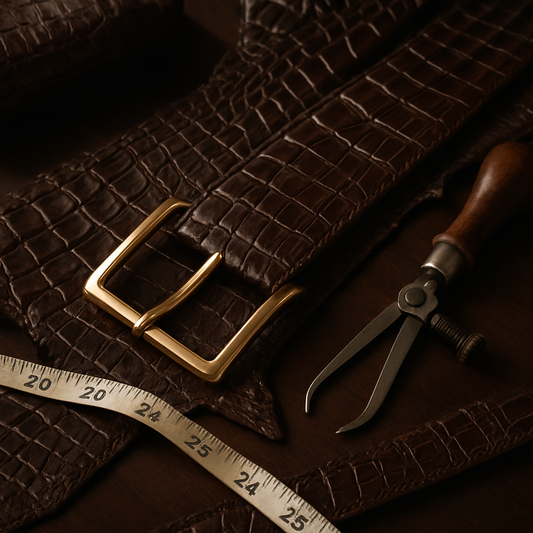
A no-joint crocodile belt uses one continuous visible crocodilian leather panel for the main belt face, although the finished belt may still include a lining, buckle and other separate components.
That definition matters because “no joint” can describe the visible strap panel rather than every layer of the belt. Before ordering, confirm whether the maker means one-piece belly leather, one continuous cutting section, or simply a belt with no visible seam across the front.
What “no-joint” means in a crocodile belt
For a custom belt, the phrase usually refers to the visible crocodilian section being cut from one continuous piece instead of being assembled from shorter leather sections. This creates a continuous scale flow along the strap and avoids a transverse join interrupting the belly pattern.
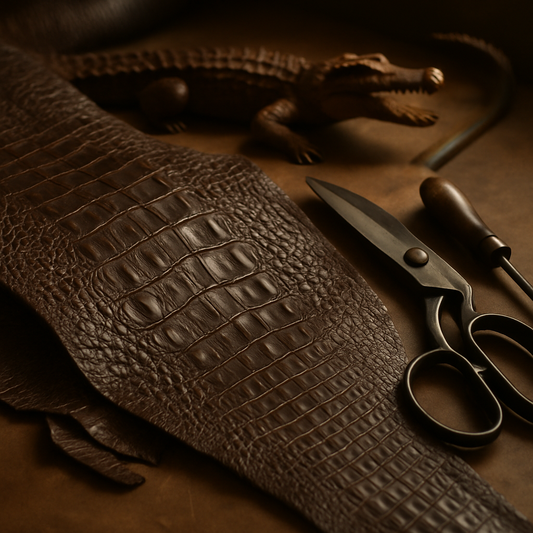
The cut should also be specified. Belly, or ventral, leather comes from the smoother underside and is commonly selected for belts. Dorsal leather comes from the back and retains a more pronounced back-scale appearance. A belt described only as a “crocodile leather belt” does not, by that wording alone, identify whether it uses belly or dorsal leather.
At CrocodileViet, in-house manufacturing allows the belt dimensions, visible cut, lining and hardware requirements to be discussed together. That is useful because a requested outside length does not by itself determine the leather length, finished width, buckle fold or internal construction.
Crocodile or alligator: what you should check
A crocodile and an alligator can look similar in photographs, especially after dyeing and finishing, so a single visual characteristic should not be treated as proof of species or authenticity.
Alligator belly leather commonly has a comparatively regular, balanced scale arrangement and may show an elongated, webbed umbilical scar. Crocodile belly leather varies more by species and individual hide, and often shows visible sensory pores, also called integumentary sensory organs or ISOs. Crocodile lacks the alligator-style umbilical scar described above.
Scale layout, pores and scars can help with discussion and inspection, but they do not replace appropriate documentation. Color names such as black, brown or navy, and finishes such as matte or glossy, describe appearance or surface treatment rather than species.
If international delivery is involved, ask which CITES documents or permits apply to the species and trade route. International trade in recognizable crocodilian leather goods generally involves applicable permits or certificates, subject to the relevant species, countries and exemptions. CITES documentation concerns regulated trade; it should not be presented as standalone proof that a belt is genuine.
Choosing the belt size
Start with the measurement that reflects how the belt will be worn, not your trouser label. The most useful method is to measure from the buckle’s point where the leather folds to the hole used most comfortably. A second method is to measure a belt that fits well from the buckle fold to the hole you use most often.
- Waist measurement: measure around the position where the belt will sit, over the clothing normally worn with it.
- Existing belt measurement: measure the buckle fold to the preferred hole, rather than measuring the full belt end to end.
- Length request: clarify whether the requested figure means total strap length, buckle-to-middle-hole length or buckle-to-end length.
- Hole spacing: ask for the number and spacing of holes if you need a larger adjustment range.
- Width: confirm the finished width in millimetres, since belt loops and buckle openings can vary.
For remote orders, send the measurement method with the number. “Waist 34” can refer to trousers, body measurement or an existing belt, and those figures may not match. Photos of the belt laid flat beside a ruler can also help clarify the starting and ending points, but the exact measuring instructions from the workshop should take priority.
Width, wide fit and instep considerations
A wider belt may suit jeans or larger belt loops, while a narrower belt can sit more easily through formal trouser loops. Check the internal width of the buckle and the narrowest belt loop before selecting a wide fit. The visible crocodile panel, lining and edge construction must all be compatible with that finished width.
For trousers worn at a higher or lower position, measure at that actual position rather than relying on a standard size chart. Body shape, clothing layers and belt-loop placement affect the required length.
“Instep” is primarily a footwear measurement, but it can become relevant when a belt is ordered as part of a coordinated outfit or when the wearer has a pronounced midsection and needs the belt to sit at a particular rise. In that situation, give the workshop the waist or hip position, clothing thickness and preferred belt width instead of asking for a generic size.
Color selection for a custom crocodile belt
Choose color by considering the shoes, watch strap, trousers and the setting in which the belt will be worn. Black usually coordinates with black footwear and formal tailoring. Dark brown can work with brown shoes, denim and earth-tone trousers. Tan, burgundy or other colors may suit a less formal wardrobe, but the right selection depends on the rest of the outfit and the requested finish.
Leather color can appear different under daylight, indoor lighting and phone-camera processing. Ask for a current color reference and confirm whether the sample is matte, semi-gloss or glossy. Dyeing changes the visible tone, while the hide’s scale layout, pores, scars and other marks remain individual to the leather.
For a custom order, specify whether you want the color across the full strap, a contrasting lining, a matching keeper or a different edge color. If a particular color is important, request confirmation before placing the order rather than assuming every pictured variant is available.
Matte, glossy and other finishes
A matte finish reduces surface shine and can suit casual clothing or a restrained business wardrobe. A glossy finish reflects more light and makes the scale pattern more visually prominent. Between those options, a lower-sheen finish can provide some surface reflection without the stronger visual effect of a high gloss.
Finish is separate from species, hide section and durability. A glossy surface does not prove that the leather is crocodile, and a matte surface does not indicate a lower or higher grade. Ask what finish is being applied, how much shine is expected and whether the edge finish will match the strap.
Photographs can exaggerate reflections, particularly on curved scales. If the distinction matters, request images taken under neutral lighting or ask for a description of the shine level in ordinary indoor use.
Personalization options worth specifying
Personalization can cover functional measurements as well as visible details. Discuss the following before the leather is cut:
- finished belt width and total length;
- buckle shape, color and removable or fixed attachment;
- lining material and lining color;
- edge color and edge finish;
- hole count, hole spacing and hole shape;
- keeper-loop configuration;
- initials or other permitted marking;
- belly or dorsal cut, if the appearance is important;
- preferred scale direction and placement where the hide allows it.
Initials should be positioned where they will not interfere with the buckle fold or the most visible scale area. On a one-piece visible panel, the usable cutting area and hide shape can limit how much of the pattern can be shifted. Ask for a layout confirmation if the placement of scars, pores or the central scale rows matters to you.
How grading affects the order
Leather grading is not a universal cross-industry scale. A supplier may grade by visible defects in the prime belly area, the usable cutting area, overall appearance or another internal standard. Labels such as Grade 1 or Grade A therefore need the seller’s own definition beside them.
Ask whether the quoted grade refers to the entire hide or only the section selected for the belt. Also ask how the workshop treats small marks, uneven scale spacing, pores and the umbilical area. Visual grade describes appearance and usable cutting quality; it does not by itself establish durability.
Price factors for a no-joint crocodile belt
The price of a custom no-joint crocodile belt depends on several concrete variables:
- Leather area: a longer or wider belt requires more usable cutting length and width.
- Continuous-panel requirement: finding a suitable uninterrupted section can reduce the number of usable hides compared with a joined construction.
- Hide section: belly and dorsal cuts differ in scale structure and cutting requirements.
- Visible marks: a cleaner selected area can affect material use and sorting.
- Color and finish: special dye requests, sheen level and edge-color matching may change the work involved.
- Hardware: buckle material, plating, shape and attachment method affect the finished specification.
- Construction: lining, keeper details, hole layout and personalization add material or workshop operations.
Rather than comparing prices by the words “genuine crocodile belt” alone, compare the species, cut, continuous-panel definition, finished measurements, lining, buckle and grading method. Those details make quotations more meaningful.
Care for crocodile leather
Wipe the belt with a clean, dry, soft cloth after wear to remove surface dust and skin oils. Keep it away from prolonged moisture, strong heat and direct sunlight during storage. If it becomes wet, blot it gently and allow it to dry naturally away from heaters.
Do not apply household oils, alcohol-based products or an untested leather cream. Crocodilian finishes differ, and an unsuitable product can alter sheen or color. There is no useful fixed care schedule for every belt; the right frequency depends on wear, climate, finish and exposure.
Store the belt flat or in a relaxed curve without pressing heavy objects against the scale surface. Avoid folding it sharply at the same point, since repeated stress can affect the leather and lining.
Styling a custom crocodile belt
For business wear, match the belt family to the footwear and keep the buckle proportionate to the trouser loops. A black matte crocodile leather belt can work with dark tailoring and black shoes, while a dark brown finish can coordinate with brown leather shoes and navy or grey trousers.
With denim, a wider belt and a more visible scale pattern can suit the heavier fabric. A glossy finish may be more noticeable under evening lighting, so balance it with simpler accessories. If the belt has a strong color, keep the shoes or watch strap within a related color family rather than introducing several competing leather tones.
For more guidance on a men’s alligator leather belt for office clothing, see How to Choose Alligator Leather Belt Men for Business Wear. For online inspection points, see 7 Things to Check Before You Buy Crocodile Leather Belt Online.
Frequently Asked Questions
Does a no-joint crocodile belt contain only one piece of leather?
Usually, “no-joint” refers to one continuous visible crocodilian panel. The finished belt can still contain a lining, buckle, keeper and other components. Confirm whether the maker means one-piece belly leather or another construction definition.
Is belly crocodile leather better than dorsal crocodile leather for a belt?
They provide different appearances. Belly leather has smoother underside scales and is commonly selected for belts, while dorsal leather preserves back scales. The preferred option depends on the pattern, width and styling you want; visual grade is not the same as durability.
How should I measure for a custom crocodile belt?
Measure a belt that fits well from the buckle fold to the hole you use, or measure around the position where the new belt will sit over normal clothing. State whether your number is a body, trouser or buckle-to-hole measurement, and confirm the finished width.
Can color and gloss prove that a belt is crocodile?
No single color or finish proves species. Dyed, matte and glossy describe appearance or surface treatment. Species discussion should also consider the specified material, hide section and applicable documentation, including CITES requirements for regulated international trade.
View CrocodileViet’s belt collection at CrocodileViet crocodile belts and confirm the continuous-panel definition, measurements, color and finish before ordering. WhatsApp is available for remote size and personalization details.