
Why Crocodile Handbags Are Back in the Luxury Spotlight: Gucci and Prada’s Milan Moment

공유
Why Crocodile Handbags Are Back in Luxury’s Spotlight: Reading Gucci and Prada’s Milan Presence Carefully
A specific shared Gucci–Prada “Milan moment” for crocodile handbags is not verified by the available evidence, so any claim that both brands have definitively brought the material back at Milan Fashion Week needs brand- or event-specific support.
That distinction matters because a luxury crocodile bag can attract renewed attention for several separate reasons: the visible structure of its scale pattern, the limited usable area of a high-grade skin, the skill required to place panels, and the regulations surrounding international trade. Those factors explain the material’s continuing place in luxury fashion without turning an unverified runway narrative into fact.
What makes crocodile handbags visually prominent?
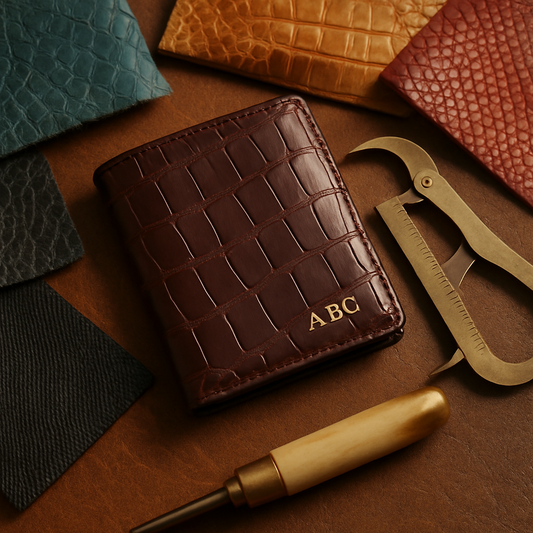
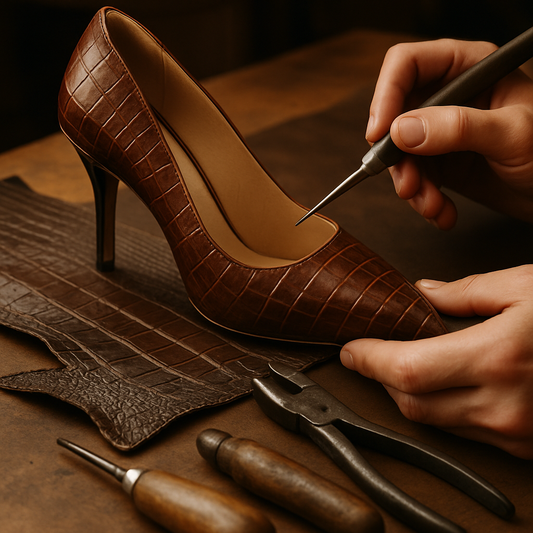
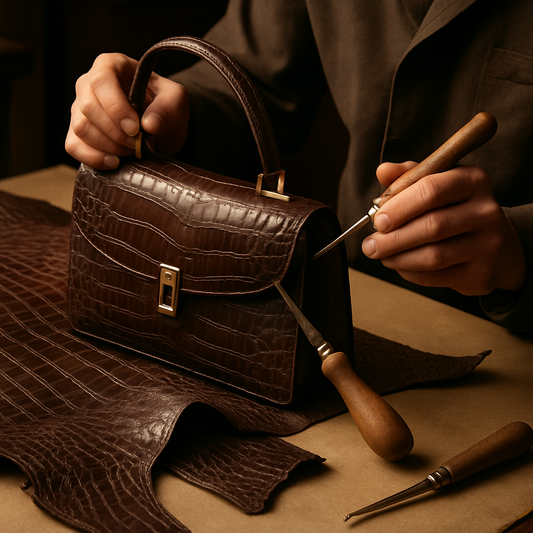
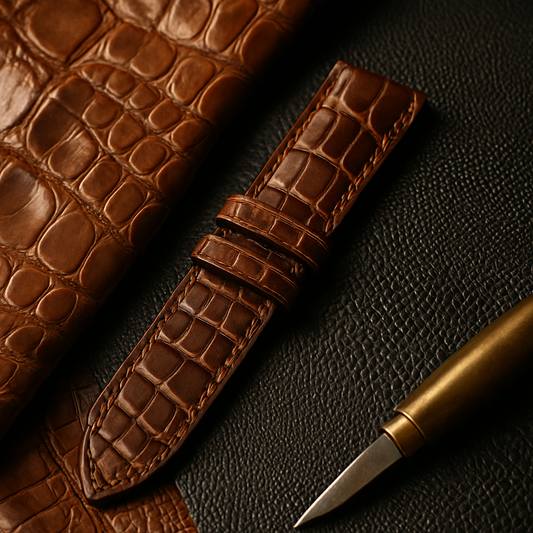
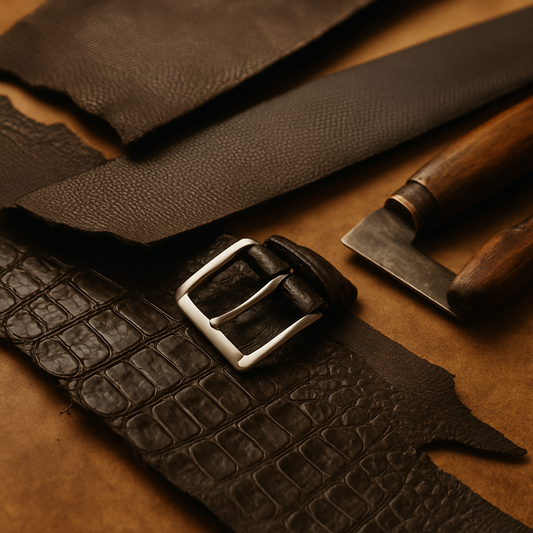
Crocodilian skins have a surface identity that printed leather cannot reproduce. Belly-cut leather is generally flatter and more regularly scaled, which makes it suitable for prominent handbag panels. Crocodile patterns vary by species and skin location, however, so two bags described broadly as crocodile may have noticeably different scale proportions and layouts.
A hornback cut produces another effect. It preserves raised dorsal scutes along the back, creating a ridged surface rather than the flatter appearance associated with a belly cut. Flank cuts can show their own scale arrangement and curvature. The cut is therefore part of the design language, not a minor technical label.
When assessing a bag, identifying the species and cut matters because customers should know whether they are comparing a flatter belly panel with a raised hornback surface. “Crocodile,” “alligator,” “belly,” and “hornback” describe different things: species and anatomical cut should not be treated as interchangeable terms.
Why the material can return to fashion conversations
The renewed visibility of exotic leather bags can be linked to several practical qualities rather than to one confirmed Milan event.
- Scale regularity: a balanced belly pattern can give a structured bag a clear visual rhythm.
- Panel character: each skin has its own scale size, shape, and natural marks, so panel placement affects the finished appearance.
- Surface depth: crocodile leather has physical texture that remains visible across simple silhouettes and restrained colors.
- Limited cutting area: clean, usable belly sections are valuable for large front and back panels, while scars, cuts, stains, and other blemishes can affect grading.
- Traceability requirements: international trade involves species- and shipment-specific rules, giving provenance greater importance in the buying decision.
These characteristics help explain why a crocodile leather handbag can attract editorial and customer interest even without relying on a particular brand appearance. They also show why visual appeal alone is not enough to assess a bag.
What Gucci and Prada can—and cannot—prove about the Milan trend
Gucci and Prada are influential names in Italian luxury, but their association with Milan does not by itself prove a shared crocodile-handbag event, collection, or current return to prominence. A reliable claim would need a dated runway record, official collection material, or a brand statement identifying the relevant product or show.
The phrase “Milan Fashion Week crocodile” can therefore be useful as a search topic, but it should not be used as evidence on its own. A runway photograph may also show a crocodilian-looking material without confirming species, cut, or legal documentation. One sensory feature or a surface impression cannot establish authenticity.
For buyers, the more useful question is whether the bag’s material description, construction, documentation, and fit are clear. Brand visibility may start the conversation, but those checks determine whether a particular luxury crocodile bag suits its intended use.
Luxury crocodile bag buying decisions: a comparison table
| Decision factor | What to examine | Why it matters |
|---|---|---|
| Species and cut | Ask whether the material is crocodile or alligator and whether the panels use belly, flank, or hornback sections. | Species and cut change the scale pattern, surface relief, and overall appearance. |
| Usable panel area | Inspect the front, back, gussets, and flap for scars, stains, cuts, or irregular marks. | Grading generally relates to defects and their position in the valuable cutting area; labels vary by supplier or tannery. |
| Scale layout | Look for a regular, balanced arrangement on the main panels, without expecting identical scales. | Panel layout strongly affects how the bag reads from a distance and how its material is priced. |
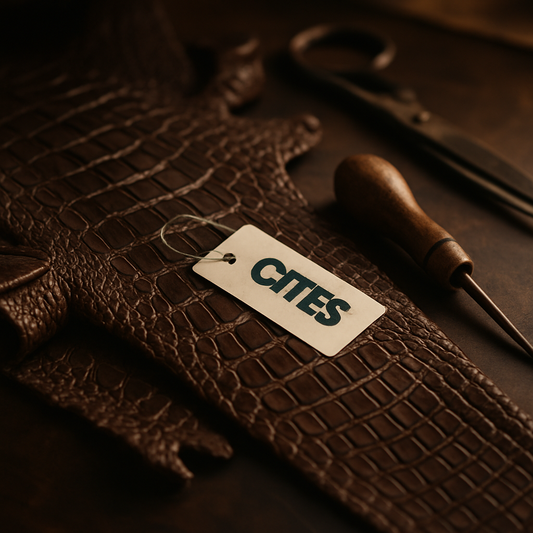
| Documentation | For international purchases, ask which permits, certificates, tags, or exemptions apply to the species and shipment. | CITES requirements depend on species, source, route, product, and applicable rules; CITES compliance is not proof of authenticity by itself. |
Alligator should also be assessed separately. Alligators belong to a different genus from crocodiles. A commonly used visual clue is that crocodile belly scales may show small sensory-pit marks, while alligator scales generally lack them, but this single trait should not be presented as conclusive proof of species or authenticity. Alligator belly leather is also commonly described as comparatively regular in pattern.
Price factors beyond the word “luxury”
The price of a crocodile handbag reflects more than a supplier’s grade label. Relevant factors include the species, the cut, the size of the usable belly area, the number of skins required, panel matching, hardware, lining, construction complexity, finishing, and the amount of material lost during cutting. A larger bag can require more usable skin, while a design with a broad uninterrupted front panel may place stricter demands on the cutting area.
Grade I–IV terminology appears in some supply chains, but grading systems are not universal. A higher label should be read alongside the actual panel condition and the supplier’s grading explanation. Visual grade is not the same as durability: a bag with fewer visible blemishes is not automatically stronger or longer-lasting.
Fit, proportions, and daily use
For a handbag, check length, height, base width, handle drop, and strap adjustment rather than judging size from photographs alone. A compact bag may suit formal use but hold less than expected once a phone, wallet, keys, and glasses are inside. A wider base can improve capacity, while a structured narrow body may keep its shape but limit bulky items.
For buyers comparing a crocodile bag with business accessories, the intended laptop or document dimensions should be measured directly. A 13-inch laptop, A4 folder, and large tablet do not occupy the same space. Remote customers can send their preferred measurements and ask for the bag’s internal dimensions, opening width, gusset depth, and strap drop before ordering.
For business styling, a balanced belly pattern and moderate hardware can work with tailoring, knitwear, or a plain dress without competing with every other detail. A hornback surface has stronger relief and may work better as the main focal element with quieter clothing. Color, scale size, and bag structure should be assessed together rather than separately.
Care for a crocodile leather handbag
Use a dry, soft cloth to remove ordinary surface dust. If the bag becomes wet, blot it gently and allow it to dry naturally away from direct heat, hairdryers, and strong sunlight. Avoid household cleaners, alcohol-based products, and untested conditioners because they can alter the finish or leave uneven marks.
Store the bag upright with its shape supported, keep hardware from pressing into the leather, and avoid overfilling the body. There is no useful fixed care schedule for every bag: frequency depends on handling, climate, finish, and storage conditions. A specialist should assess serious staining, deep scratches, peeling finish, or significant water exposure.
View CrocodileViet’s crocodile bag collection to learn more about bag shapes and material options. For measurements, customization questions, or purchase details, contact us on WhatsApp.