
Custom 20Mm Alligator Watch Strap: Size, Color, Finish and Personalization Guide

공유
Custom 20 mm Alligator Watch Strap: Size, Color, Finish, and Personalization
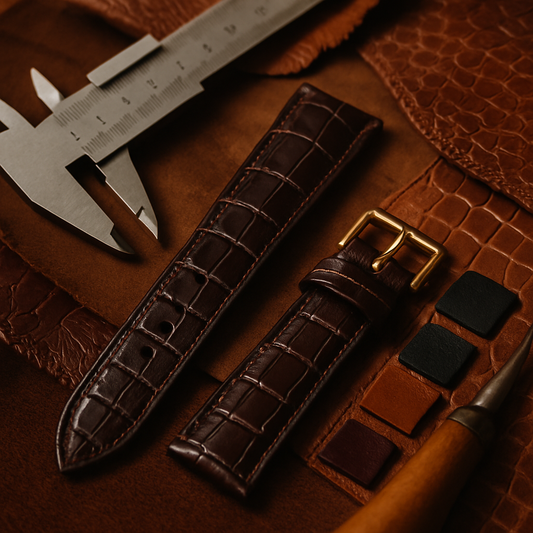
A 20 mm watch-strap measurement refers to the distance between the watch’s lugs, so a 20 mm alligator watch strap needs a 20 mm lug width to fit correctly.
What “20 mm” means for a custom strap
The number describes the strap width at the spring-bar end, not necessarily its width across the whole strap. A tapered design may be specified as 20/18 mm: 20 mm at the lugs and 18 mm at the buckle. This proportion can make the strap look less heavy on the wrist while preserving the required fit at the watch case.
Before ordering, measure or confirm these points:
- Lug width: The space between the watch lugs should correspond to 20 mm.
- Buckle width: Tell the workshop whether you are keeping the original buckle and its internal strap width.
- Strap length: Wrist circumference alone does not determine the correct short-side and long-side lengths.
- Thickness: A thick watch case may accept a more substantial strap, while a slim case often suits a lower-profile construction.
- Spring-bar clearance: Curved ends, fixed bars, and tight lug gaps can affect the usable shape.
Taking a photograph of the watch from above and measuring a current strap can help clarify the proportions. For a remote custom request, include the lug width, current strap dimensions, wrist circumference, buckle size, and a photograph showing how the existing strap sits on your wrist.
Alligator leather for a 20 mm watch strap
Alligator belly leather is commonly chosen for a watch strap because its scale pattern is comparatively regular and balanced across the usable surface. The scales are generally smooth and do not show the small sensory pores associated with true crocodile leather. That distinction matters because “alligator” and “crocodile” describe different materials, even though both are crocodilian leathers.
The belly area usually provides a more orderly visual layout than flank sections. A custom strap can therefore be positioned so the central scales run consistently along the length of the strap. The final appearance still depends on the individual hide, the cut, and the direction chosen for the pattern; no two skins produce an identical result.
Crocodile leather can show more variation between species and may retain visible sensory pores as small dots after tanning. An alligator watch strap should not be relabeled as a crocodile watch band simply because the pattern resembles one. Species identification should come from documented material information rather than a single visual characteristic.
Alligator belly leather may also show an umbilical scar. Crocodile leather generally lacks that feature. Neither scale layout nor one mark alone proves species, however, because tanning, cutting, finishing, and lighting can change what is visible.
How hide grading affects a custom strap
Ask what a supplier’s grade refers to before comparing quotations. In many alligator grading systems, the grade describes visible defects in the central belly and flank areas. It does not automatically measure every part of leather performance, color quality, thickness, or finishing quality.
Published grading labels differ between suppliers and tanneries. One convention may use a low number for fewer belly defects and a higher number for more visible defects, while another supplier may use different labels or criteria. The practical question is not whether a hide has a certain number attached to it, but what that supplier’s number covers.
For a 20 mm strap, the usable cutting area is relatively narrow. A small mark may be hidden by the strap edge, stitching, keeper, or buckle fold, while a defect crossing the central scales may remain noticeable. Ask for clear photographs of the proposed belly section and request an explanation of how the stated grade is defined.
Grade and durability should be assessed separately. A cleaner visual grade may reduce visible marks in the finished strap, but the strap’s service life also depends on leather thickness, construction, lining, edge treatment, hardware, moisture exposure, and daily use.
Choosing the color
Color is a separate decision from species, grade, and surface finish. Belly leather’s smooth, pliable surface can accept dye evenly, but the scale structure still affects how light travels across the strap.
Common custom directions include:
- Black: A direct pairing for black, steel, or dark-coated watch cases.
- Dark brown: Useful with brown shoes, belts, and warm metal tones.
- Tan or medium brown: Shows more scale variation and can work with casual leather accessories.
- Blue, green, burgundy, or other colors: These can create a stronger contrast with the dial, but the final shade depends on the dye and finishing system.
A screen image cannot reproduce leather color precisely. Ask for color references under neutral light, especially if the strap needs to coordinate with an existing belt or briefcase. Also distinguish between a solid color and a shaded or hand-finished effect. A shaded finish can make the centers and edges of scales appear different even when the base dye is the same.
Gloss, matte, and other finish options
Gloss and matte are surface-finish choices, not indicators of species or hide grade. A glossy strap reflects more light from the scale surface, while a matte finish gives a quieter appearance and may make the grain look less reflective.
Choose the finish in relation to the watch:
- A high-gloss finish can echo polished case hardware and formal dials.
- A matte finish can sit comfortably beside brushed steel, tool watches, and casual clothing.
- A semi-gloss surface can provide contrast when the case combines polished and brushed sections.
Finish also changes how scratches, fingerprints, and color variation are perceived. It does not turn one species into another or establish that a hide belongs to a particular grade.
Personalization options for a custom 20 mm strap
Personalization should begin with the watch’s physical requirements and then move to visual details. Useful specifications include:
- 20/20 mm or 20/18 mm width
- Short-side and long-side lengths
- Straight or curved lug end
- Strap thickness and taper
- Stitching color and stitch visibility
- Leather lining color and material
- Polished, matte, or intermediate surface finish
- Buckle finish, buckle width, and deployment-clasp compatibility
- Number and placement of keepers
For a restrained result, match the stitching to the strap and use a buckle finish close to the case. For a more visible custom design, contrast stitching or a colored lining can provide detail without changing the 20 mm fit. A wide wrist may call for longer strap sections rather than a wider strap, since the lug width is fixed by the watch.
Fit and sizing: length, wrist shape, and buckle position
Measure the wrist snugly with a flexible tape, then compare that measurement with the dimensions of a strap you already wear comfortably. Record the length of each side separately. Two straps with the same total length can fit differently if one uses a longer buckle side or places the holes at different intervals.
EU, US, and UK sizing systems are not normally used to define watch-strap length in the same way they define shoes or clothing. A strap is usually specified by millimeters, such as 115/75 mm, rather than by an EU, US, or UK size. If a seller lists a general size, ask for the actual short-side and long-side measurements.
Wide-fit requirements may involve more than wrist circumference. A high instep or pronounced wrist bone can require additional length, more flexible leather, or a different hole position. A deployant clasp can also change the amount of strap needed around the wrist. Send remote measurements in millimeters and state whether you wear the watch loosely, close to the wrist, or over a shirt cuff.
Price factors for a custom alligator watch strap
A responsible quote should identify what is included rather than rely only on a grade label. Main price factors include:
- Usable hide area: A wider, cleaner belly section can produce a more consistent scale layout and may involve more material selection.
- Strap dimensions: Extra length, greater thickness, and a large fold-over section require additional leather and construction work.
- Taper and shaping: A 20/18 mm taper requires a different cut from a straight 20/20 mm strap.
- Lining: The lining material, color, and thickness affect the specification.
- Finish: Gloss, matte, shading, and other surface treatments can involve different finishing work.
- Hardware: A standard buckle and a custom or deployant-compatible arrangement do not carry the same component requirements.
- Personalization: Special stitching, unusual colors, curved ends, and non-standard dimensions can change the quotation.
Because supplier grading conventions vary, compare the material description, measurements, construction, lining, hardware, and finish together. A higher grade label by itself does not describe the complete strap.
Care for an alligator leather watch band
After wearing the strap, wipe it with a clean, dry, soft cloth to remove perspiration and surface dust. Let it air-dry away from direct heat, radiators, hair dryers, and strong sunlight. Water, perfume, sunscreen, and alcohol-based products can affect dyed and finished leather, so keep them away from the strap where possible.
Do not use household leather cleaner, saddle soap, wax, or oil unless the product is specifically suitable for finished exotic leather and has been tested on an inconspicuous area. A cloth is the safer default for routine care. There is no useful fixed cleaning schedule because wear depends on climate, perspiration, swimming, exercise, and how often the strap is worn.
Rotating straps gives each one time away from moisture. If the leather becomes saturated, remove it from the watch if practical, blot without rubbing, and allow it to dry naturally. Persistent odor, peeling finish, deep staining, or loose stitching is a reason to seek professional assessment rather than applying more product at home.
Styling a 20 mm alligator watch strap
Use the watch case, dial, clothing, and other leather accessories as the reference points. Black alligator can support a dark suit and polished case, while brown or burgundy can connect with leather shoes and a belt. A matte strap generally works well with brushed metal and casual tailoring; gloss can coordinate with polished hardware and formal clothing.
Matching every leather item exactly is not required. Coordinating the color temperature—warm brown with warm brown accessories, for example—often looks more deliberate than forcing an identical shade. A colored strap can work with a neutral dial when the rest of the outfit stays quiet.
Species documentation and CITES considerations
Crocodilian species are CITES-listed, and international trade in recognizable crocodilian leather goods generally involves applicable permits or certificates. Requirements depend on the species, transaction, destination, and whether a limited personal-effects exemption applies.
CITES identifies watch straps among small manufactured crocodilian-leather products, but that classification does not by itself exempt a strap from trade controls. CITES paperwork also should not be treated as proof of species authenticity on its own. Before ordering across borders, confirm the documentation and import requirements with the seller and the relevant authorities in the destination country.
For additional material background, read Alligator Watch Strap: Complete Guide for 2026–2027. If you are choosing a strap for office clothing, How to Choose Crocodile Watch Band for Business Wear covers related styling decisions.
Frequently Asked Questions
Does a 20 mm alligator watch strap fit any 20 mm watch?
It should fit a watch with a 20 mm lug width, but lug shape, spring-bar clearance, strap thickness, and buckle compatibility also matter. Confirm the case measurements before ordering.
What is the difference between a 20/20 mm and a 20/18 mm strap?
A 20/20 mm strap stays 20 mm wide from the lug end toward the buckle. A 20/18 mm strap starts at 20 mm at the lugs and tapers to 18 mm at the buckle.
Can a glossy alligator strap be considered a higher grade?
No. Gloss describes the surface finish, while grade labels usually describe specified hide defects under a particular supplier’s grading convention. Finish and grade are separate factors.
How should I measure for a custom alligator leather watch band remotely?
Provide the lug width, buckle width, current strap dimensions, short-side and long-side lengths, wrist circumference, preferred fit, and photographs of the watch and existing strap. Mention a wide fit, high instep, or deployant clasp if relevant.
View CrocodileViet’s watch band collection for custom 20 mm alligator strap specifications and available design directions. For measurements or material questions, contact CrocodileViet through WhatsApp.