
Why Alligator Leather Is Back in the Luxury Conversation: From Farm to Finished Goods

Condividi
Why Alligator Leather Is Returning to Luxury Goods: From Farm to Finished Product
The luxury appeal of alligator leather rests on its distinct belly pattern, workable surface, and the documented path from a regulated crocodilian hide to a finished product.
Why alligator leather is back in the luxury conversation
Luxury buyers are paying closer attention to how a material is identified, sourced, graded, and made. Alligator leather fits that discussion because it offers a recognizable surface without being interchangeable with crocodile, caiman, or other reptile materials.
The most sought-after area for many goods is the smooth ventral hide, commonly called the belly. It is different from hornback leather, which comes from the back and includes bony scutes. That difference affects the surface, hand feel, cutting options, and the appearance of the finished item.
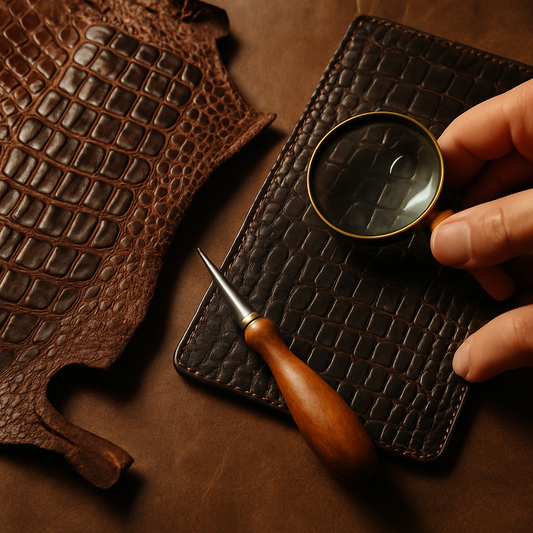
For American alligator leather, the belly generally has a regular, balanced scale pattern. The scales are not geometrically identical, and scale size varies by animal and species. A distinct umbilical scar may also appear on an alligator hide. Crocodile bellies can vary more by species and often retain visible sensory pores, also known as integumentary sensory organs or ISOs, after tanning.
These visual clues support material identification, but one feature alone does not prove authenticity. Documentation, supplier information, and applicable trade permits remain important parts of alligator leather sourcing.
From source animal to usable hide
“Farm to finished goods” should not be treated as one identical process for every supplier. The source, species, country, and trade purpose affect the documentation required. CITES rules are a key sourcing check for international trade in crocodilian skins and products, but the relevant permit requirements depend on the particular circumstances.
At the material stage, suppliers commonly assess the belly or midsection rather than treating the head and tail as part of the graded area. A quoted grade therefore may describe only the prime working section of the hide. Grading labels also vary between suppliers and tanneries, so one company’s Grade 2 should not automatically be compared with another company’s Grade 2.
Grade generally reflects the number and position of visible defects in the usable belly or midsection. It does not directly measure durability. A hide with a higher visual grade is not automatically stronger than one with more visible marks. Tanning, thickness, cutting, construction, and use all influence how the finished product performs.
Why the belly matters in finished goods
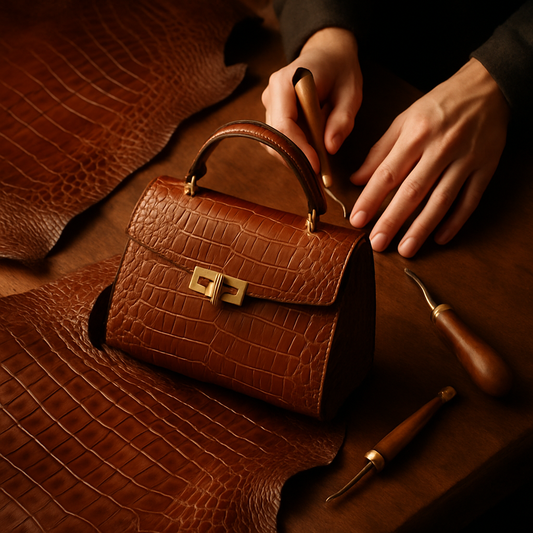
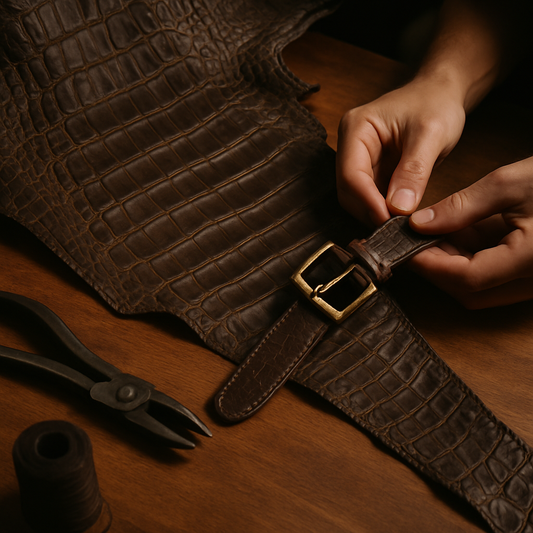
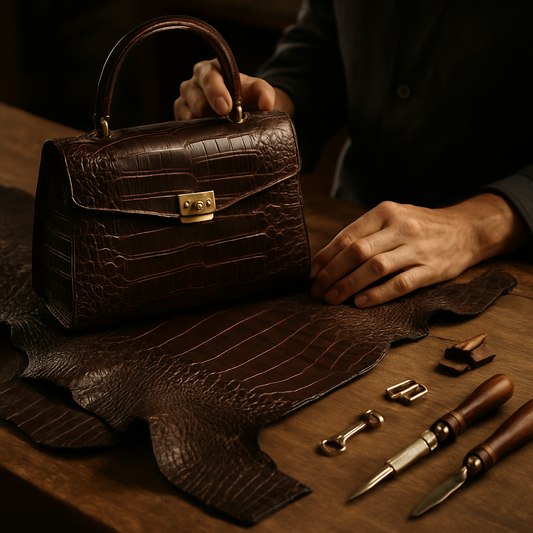
Manufacturers choose belly leather for products where a balanced scale layout and relatively smooth surface are important. Depending on the hide and pattern, a maker may use the central belly for a watch strap, wallet panel, belt section, or shoe vamp. The cut must account for the scale arrangement, the direction of the hide, natural marks, and the dimensions of the pattern piece.
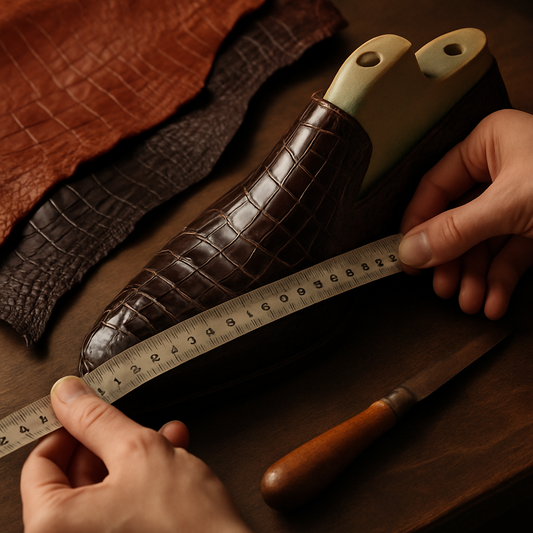
In our in-house workshop, matching the cut to the hide matters because a small leather panel can show the scale layout very clearly. For an alligator leather watch strap, for example, the centerline and scale transition affect the visual result more than they would on a large, heavily structured item. For alligator leather shoes, the vamp must also be planned around foot movement, creasing, and the shoe’s construction.
Hand finishing and construction influence the result as much as the hide itself. Edge treatment, lining, stitching, folding, reinforcement, and hardware should be selected for the item’s intended use. A visually attractive hide can still produce a poor product if the pattern is unsuitable or the construction does not support the leather.
How price is determined
Alligator leather goods do not have one standard price because several separate costs are involved:
- Species and legal sourcing: American alligator leather and crocodile leather are distinct materials, with different sourcing and supply conditions.
- Usable dimensions: American alligator skins have traditionally been sold by length, while many crocodile skins are priced by belly width. Current supplier conventions should be confirmed rather than assumed.
- Pattern and defects: A balanced belly layout with fewer visible defects may provide more usable surface for a product pattern.
- Leather preparation: Tanning, dyeing, finishing, thickness, and surface treatment affect the material cost.
- Product construction: A lined strap, structured shoe, or hand-finished small leather item requires different labor and components.
- Hardware and customization: Buckles, clasps, watch fittings, lining materials, monograms, and unusual dimensions add separate costs.
Ask whether a quoted grade refers to the whole hide or only the belly or midsection. That question gives a more useful comparison than the grade number by itself.
Fit and sizing for alligator goods
For shoes, provide foot length and width, the usual EU, US, or UK size, and whether you need a wide fit. Instep height also matters because a high instep can require more volume over the top of the foot. A standard size alone may not describe the fit accurately.
For a belt, measure the distance from the buckle’s pin to the hole you use most often, rather than relying only on trouser size. For an alligator leather watch strap, provide wrist circumference, lug width, buckle width, and the preferred short-side and long-side lengths. A remote measurement can be made with a flexible tape or a strip of paper, provided it is held comfortably rather than pulled tight.
Care for alligator leather
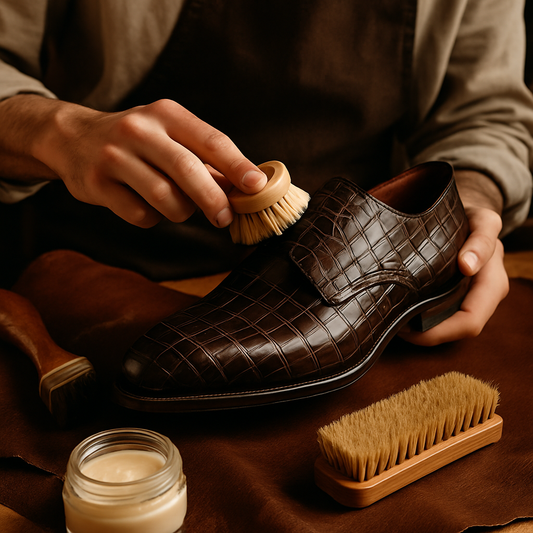
Start with a dry, soft cloth to remove surface dust. Keep the item away from prolonged moisture, high heat, solvents, and direct exposure that may dry or discolor the finish. If the leather becomes wet, blot it gently and let it dry at room temperature away from a heater.
Do not apply a household cream or leather product without checking that it is suitable for alligator or crocodilian leather. Conditioning needs depend on the finish, climate, frequency of use, and storage conditions, so a fixed calendar schedule is less useful than checking the surface. Store shoes with support, keep straps relaxed, and avoid stacking items in a way that presses the scales.
Styling alligator leather in modern wardrobes
A small alligator panel can work as a controlled point of texture rather than covering an entire outfit. A dark strap pairs naturally with a simple steel or precious-metal watch and plain tailoring. Alligator leather shoes can sit with wool trousers, a quiet suit, or dark denim when the rest of the clothing has a restrained texture.
For business wear, coordinate the leather’s color temperature with the belt, shoes, or watch rather than trying to match every surface exactly. Brown, black, and deeper neutral shades usually make the scale pattern the main visual detail. If you want more context on material differences, read Alligator Vs Crocodile Leather: Complete Guide for 2026–2027.
Frequently Asked Questions
How can I distinguish alligator belly leather from crocodile leather?
Alligator belly leather generally has a regular, balanced scale arrangement and often lacks the repeated sensory pores visible on crocodile belly scales. An alligator may also show an umbilical scar. These clues support identification, but sourcing records and supplier documentation are still needed.
Is a higher alligator leather grade more durable?
Not necessarily. Grades usually describe visible defects in a specified belly or midsection area, and grading labels vary by supplier or tannery. Durability also depends on tanning, thickness, construction, finishing, and use.
Is belly leather the same as hornback leather?
No. Belly leather comes from the smooth ventral hide and is commonly used for goods requiring a flatter surface. Hornback leather comes from the back and contains bony scutes, producing a different texture and appearance.
What measurements should I provide for an alligator leather watch strap?
Provide wrist circumference, lug width, buckle width, and the preferred lengths for the short and long sides. These measurements help the maker account for the watch case, clasp, and your wearing position.
View CrocodileViet’s alligator leather collection to compare finished goods and available formats. For measurements or material questions, contact CrocodileViet through WhatsApp.