
Alligator Shoes Sizing: Complete Guide for 2026–2027

Condividi
Alligator Shoe Sizing: A Practical Fit Guide for 2026–2027
Alligator shoes generally stretch less than calfskin, so the maker’s own size chart and measurements matter more than assuming a familiar leather shoe will break in the same way.
Why alligator shoe sizing needs a different approach
Alligator leather can feel firm at first, but the important sizing issue is limited stretch compared with many calfskin shoes. A shoe that feels slightly short or too narrow at purchase may not gain enough length or width through wear to solve the problem.
Start with the brand’s last, size chart, and fitting instructions. A nominal EU, US, or UK size gives a useful starting point, but it does not describe the complete internal shape of the shoe. Two shoes marked EU 42 can differ in toe volume, heel hold, width, and instep height.
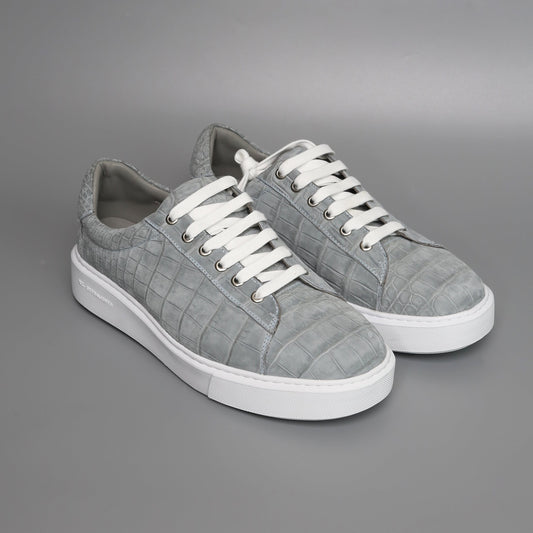
Alligator belly leather has a comparatively regular, balanced scale pattern, often with broader rectangular tiles. That appearance identifies part of the hide presentation, not the shoe size or fit. A belly cut shows the smoother underside, while a hornback cut retains raised spinal ridges or scutes; these are hide-section and cut descriptions rather than separate size systems.
Measurements to take before ordering
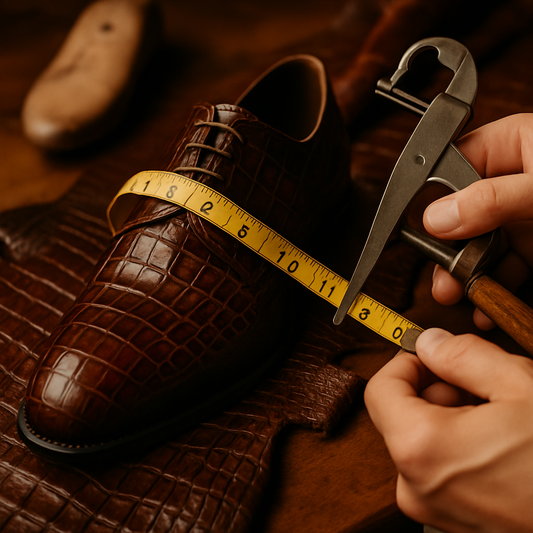
Measure both feet because one foot commonly differs slightly from the other. Take measurements at the end of the day, when your feet may be at their largest, while wearing the socks intended for the shoes.
| Measurement | How to record it | Why it matters for alligator shoes |
|---|---|---|
| Foot length | Stand on paper and measure from the heel’s back edge to the longest toe. | Helps select the base EU, US, or UK size and limits toe pressure. |
| Ball width | Measure across the widest part of the forefoot while standing. | Shows whether a standard last may feel restrictive. |
| Instep circumference | Wrap a tape around the highest part of the foot and under the sole. | Useful for loafers and slip-ons, where upper volume affects entry and hold. |
| Heel width and circumference | Record the heel area and note whether your heel commonly slips. | Helps assess whether the shoe can hold the foot without excessive tightening. |
Record the measurements in centimeters and send the larger foot’s figures to the maker. A useful remote fitting request also includes your usual sizes in EU, US, and UK systems, the brand and model of a shoe that fits well, and a photo or tracing if the workshop requests one.
Length, width, instep, and wide feet
Length should be assessed with the toes lying naturally rather than pressing against the front. A little space at the toe is useful, but extra length cannot reliably compensate for a narrow forefoot because the foot may slide forward.
For wide feet loafers sizing, ball width and instep circumference deserve as much attention as the marked size. A loafer that is long enough but tight across the forefoot can create pressure over the alligator tiles and may not loosen substantially. A high instep can also make entry difficult, particularly in a slip-on with a low-cut opening.
Do not assume sizing up solves every width issue. It may create heel movement and excess space at the toe. Ask whether a wider last, a different loafer shape, or custom shoe measurements would address the actual point of pressure.
At CrocodileViet, we use the customer’s length, width, and instep information to discuss fit remotely because a printed size alone does not show how the foot fills the shoe. Send measurements for both feet and explain whether your current shoes feel tight at the toes, ball, instep, or heel; each symptom points to a different fitting issue.
How hide grade and scale layout relate to fit
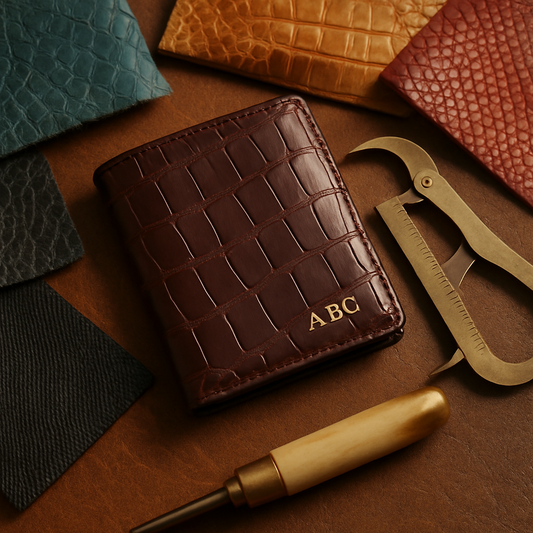
Hide grading generally describes visible defects and the usable pattern area. Suppliers may use letter or numeric labels, and some assess the belly or midsection rather than the complete hide. For that reason, a grade label from one supplier cannot automatically be compared with a label from another.
A higher grade commonly indicates fewer or less consequential visible defects in the assessed area. It does not automatically mean a better fit, because grading concerns appearance and cutting yield rather than shoe length, width, or instep volume. Likewise, a lower visual grade does not by itself indicate weaker wear performance or an incorrect size.
Ask which area was graded and whether the quoted shoe uses belly leather, another hide section, or a particular cut. Crocodilian hides may also be sold by belly-width measurements in centimeters, but that figure describes the hide, not the wearer’s shoe size.
What affects the price of fitted alligator shoes
Price can reflect several separate items: the alligator hide section, the usable belly width, the supplier’s grading system, the amount of visible pattern needed for the design, the shoe size, and any requested fit adjustment or custom shoe measurements.
Before comparing quotes, ask whether the price covers the finished pair, the selected hide area, sizing adjustments, shipping, and any documentation required for international movement. American alligator products can fall under CITES Appendix II controls, so applicable permits or certificates depend on origin and shipment circumstances. CITES paperwork concerns regulated trade; it is not proof by itself that a shoe is genuine.
Care after the shoes arrive
Use a dry, soft cloth to remove surface dust after wearing the shoes. Let them air out away from direct heat or strong sunlight if they become damp, and follow the maker’s instructions before applying conditioner or polish. Different finishes can react differently to products, so test any approved product on a concealed area first.
There is no useful fixed care schedule for every wearer. Frequency depends on climate, rotation, exposure to rain, and how often the shoes are worn. Keep the pair supported in its intended shape and avoid treating surface marks with household cleaners.
Styling and fit checks in real use
For business wear, check the fit with the trousers and socks you normally use. A dark alligator loafer can work with tailored wool trousers or a restrained suit, while a lighter shade may suit cotton trousers or an unstructured jacket. The scale layout should sit consistently across the visible vamp without forcing the foot into a smaller size.
Walk indoors on a clean surface when trying the shoes. Check for toe contact, pressure at the widest part of the foot, instep compression, and heel movement. A short fitting session should reveal whether the issue is length, width, or upper volume rather than simply whether the shoe feels firm.
Frequently Asked Questions
Should I order my usual EU, US, or UK size in alligator shoes?
Use your usual size as a starting point, then compare it with the maker’s own chart and fitting advice. Alligator leather may stretch less than calfskin, and internal shape varies between lasts, so the marked size alone does not settle the fit.
Can alligator loafers suit wide feet?
They can, provided the last offers enough ball width and instep volume. Measure both feet and ask about a wider last or custom shoe measurements instead of sizing up automatically, since extra length may cause heel movement.
Does a higher alligator hide grade mean the shoes will fit better?
No single grade label determines fit. Grading usually concerns visible defects and usable pattern area, while fit depends on the shoe’s length, width, instep, heel shape, and last. Grading terms also vary by supplier.
Are belly-width measurements the same as shoe sizes?
No. Belly-width measurements in centimeters describe the usable hide area and may be taken differently by species or supplier. They should not be converted directly into EU, US, or UK footwear sizes.
Request a measured fit
For sizing advice based on your foot length, width, and instep, contact CrocodileViet about alligator shoe sizing. You can also mention your measurements and fit concerns through WhatsApp for a remote assessment.