
What Makes Nubuck Alligator Mules Worth Buying? Quality, Craft and Longevity

Condividi
Are Nubuck Alligator Mules Worth Buying? Quality, Craft and Longevity
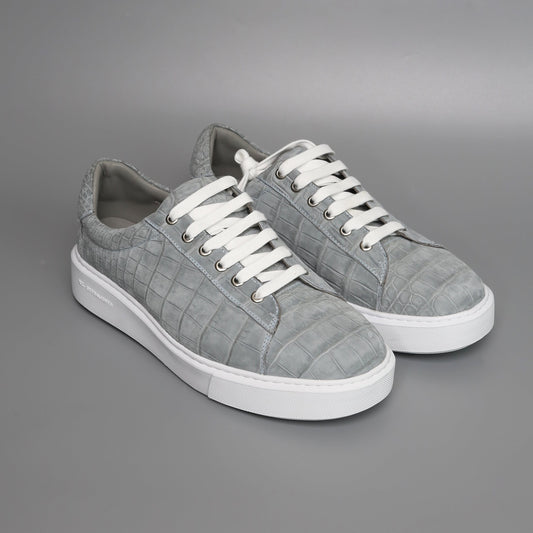
Nubuck alligator mules combine a short, velvety surface with the regular, tile-like scale pattern of alligator belly leather, giving the shoes a matte appearance and a tactile finish rather than a glossy shine.
What “nubuck alligator” means
Nubuck is alligator leather that has been lightly buffed or sanded on the grain side to raise a short nap. The result is a soft-feeling, low-reflective surface that shows light differently from polished or heavily coated alligator leather. Nubuck should not automatically be called suede: the terms are often used loosely in product listings, but nubuck is more precisely leather buffed on its outer surface.
For mules, this finish changes both the appearance and the maintenance requirements. A smooth finish can make marks easier to wipe away, while nubuck can show rubbing, pressure marks and moisture more readily because its surface is intentionally exposed and minimally coated.
The alligator part is equally important. American alligator leather commonly used in footwear is associated with Alligator mississippiensis. Belly cuts are frequently chosen for shoe uppers because the scales are comparatively regular, broad and square or tile-like. On a mule, that pattern is especially visible across the vamp, so the cut has a direct effect on the finished appearance.
Why alligator belly matters on a mule
A mule leaves much of the upper visible because there is no enclosed heel counter. The front vamp therefore carries most of the visual weight. Alligator belly helps create a balanced scale layout across this area, with less abrupt variation from one scale row to the next.
Regular does not mean perfectly identical. Alligator remains a natural hide, so small differences in scale size, texture and tone are expected. Those differences should be assessed as part of the leather rather than treated as a manufacturing defect automatically.
In our own workshop, we separate visual grade from wearing performance when assessing an alligator upper. A cleaner hide with fewer visible marks may produce a more controlled appearance, but that alone does not prove that the mule will resist flexing, fit better or wear longer. Construction, usable leather area, the way the upper is shaped and the quality of the sole and lining also affect service life.
Quality factors that affect the buying decision
| Factor | What to inspect | Why it matters on nubuck alligator mules |
|---|---|---|
| Species and cut | Confirm that the upper is alligator and ask whether the visible vamp uses belly leather. | The species and hide section influence scale shape, regularity and the amount of usable surface available for the upper. |
| Hide grade | Ask what the supplier’s grade means and whether the hide contains natural marks, scars or uneven areas. | Higher visual grades usually show fewer blemishes, but grading labels vary between suppliers and tanneries. Grade is not a universal durability rating. |
| Scale matching | Look at the scale flow from the centre of the vamp toward the sides and compare the two mules as a pair. | Controlled placement makes the pair look intentional, while abrupt changes can distract on a large exposed vamp. |
| Nubuck surface | Check that the nap looks short and consistent, without shiny patches caused by excessive rubbing. | A consistent nap supports the matte appearance. Uneven compression may be visible immediately under direct light. |
| Construction | Inspect the topline, vamp attachment, lining, insole, sole and heel connection. | Mules flex at the front and receive repeated pressure as the foot enters and leaves the shoe, so these areas affect comfort and wear. |
| Usable leather area | Ask how much of the hide can be used for the upper rather than judging only the total hide size. | Natural marks, edge shape and scale layout can reduce the area suitable for a clean, well-positioned vamp. |
| Handwork | Look for even edge finishing, clean transitions and secure attachment at high-flex points. | Handwork is most useful where small adjustments improve the way the leather sits around the foot; it should be judged by the result, not by the label alone. |
Does nubuck alligator offer useful longevity?
Nubuck alligator can provide long service when the shoes are used in suitable conditions and maintained according to the finish. It should not be bought with an assumption that the surface will hide every mark. The short nap can flatten at the toe, darken after contact with liquid or develop visible pressure changes where the foot bends.
Longevity depends on several interacting factors: the thickness and condition of the hide, the amount of daily flexing, exposure to water and dirt, the fit, sole construction, storage and how quickly marks are dealt with. A good-looking grade does not remove these variables.
For this reason, nubuck alligator mules make more sense for an owner who values the matte texture and is willing to handle the shoes carefully. Someone wanting a highly resistant surface for wet commuting or rough outdoor use may need a different leather finish. That is a use-case decision, not a claim that nubuck is weak.
Price: what you are actually paying for
The price of nubuck alligator mules is shaped by more than the word “alligator.” Concrete cost factors include the species, the hide grade, the usable area of the skin, the amount of regular belly leather available, scale placement, pattern matching between the pair, construction method, lining and sole materials, and the handwork required for shaping and finishing.
Small hides or hides with more natural marks can produce less usable upper material. A workshop may also need to position the vamp carefully so an attractive scale flow is retained on both mules. That affects material use and labour without changing the basic shoe size.
Supplier grading requires caution. “Grade 1” often describes a hide with very few visible blemishes, but grading systems are not universal. One supplier’s first grade may not correspond exactly to another supplier’s label. Ask what the grade covers, whether it refers to appearance only, and how the workshop evaluates the finished upper.
Fit and sizing for slip-on mules
A mule should hold the foot without relying on excessive toe gripping. The topline must sit securely around the forefoot, while the toe box should allow the toes to spread without pressing against the front. Because the heel is open, an overly loose upper can make the shoe slide during walking.
- Compare systems: Check the maker’s conversion between EU, US and UK sizing instead of converting from memory. A nominal size can vary between lasts.
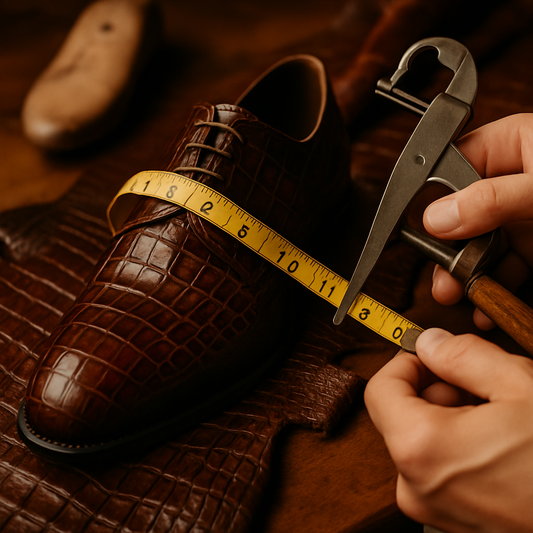
- Measure length: Measure both feet while standing and use the larger foot as the reference. Record heel-to-longest-toe length in centimetres or millimetres.
- Check width: Give the workshop the widest forefoot measurement. A wide fit may need a different last or additional room rather than simply a longer size.
- Measure the instep: An instep measurement helps when the vamp must accommodate a higher-volume foot. This is particularly useful for slip-on designs because there is no lacing system to adjust pressure.
- Use remote measurements: Send a tracing, foot length, forefoot width and instep measurement when trying the shoes in person is not possible. Include the socks or bare-foot use intended for the mules.
- Try them in person when available: Walk on a clean indoor surface and check whether the heel lifts excessively, the topline cuts into the foot or the toes grip to keep the mule in place.
In-person fitting and remote measurement are both valid routes, but they answer different questions. A measurement sheet gives the maker useful dimensions; a physical try-on reveals movement, pressure and whether the last suits the individual foot.
Care for nubuck alligator leather
Start with a dry, soft cloth or a nubuck-appropriate brush to remove loose dust. Use light strokes so the nap is not polished flat. Do not apply ordinary leather cream, oil or wax unless the maker specifically confirms that the product is compatible with nubuck alligator; products intended for smooth leather can darken or compress the surface.
If a small mark requires more than dry cleaning, use moisture only as a last resort. A barely damp cloth can be applied carefully to a limited area, followed by air drying away from direct heat. Do not soak the leather, place the mules near a heater or use a hair dryer, as rapid drying can affect the surface and shape.
There is no useful fixed conditioning schedule for nubuck alligator. The correct approach depends on handling, climate and the condition of the nap. If the surface becomes shiny, stiff, heavily soiled or uneven after an accident, consult the workshop before applying a treatment.
Store the mules in a dry, ventilated place with their shape supported. Keep them away from perfumes, wet floors, abrasive storage compartments and prolonged direct sunlight. If they become wet, remove surface moisture gently and let them dry naturally before brushing.
How to style nubuck alligator mules
The matte surface makes nubuck alligator mules easier to place in outfits that would look too reflective with polished exotic leather. The scale pattern still provides texture, so the rest of the outfit can stay controlled.
- Office setting: Wear them with tailored trousers, a fine-gauge knit or an unstructured blazer. Brown or deep neutral tones can sit comfortably beside navy, charcoal and muted olive.
- Smart-casual lunch: Pair them with straight-leg chinos, a cotton shirt and a lightweight overshirt. Keep the trouser opening clear of the vamp so the scale layout remains visible.
- Evening use: Use darker trousers with a clean hem and a textured jacket. A matte belt or simple leather accessory can support the shoes without repeating the scale pattern everywhere.
- Warm-weather dressing: Wear them with linen-blend trousers or tailored shorts where appropriate. Select a shirt colour that relates to the shoe tone rather than trying to match every leather accessory exactly.
Questions buyers often ask
Is nubuck alligator the same as suede?
No single retail vocabulary is used consistently, but nubuck is more precisely leather buffed on its outer grain surface to create a short nap. Suede generally refers to leather finished on the flesh side. A product description should state how the surface was made rather than relying on the word “suede” alone.
Can a visual feature prove that a mule is genuine alligator?
No single visual trait proves authenticity. A seller’s documentation, material description and traceability are more useful than judging scale shape alone. Alligator belly commonly has a regular scale arrangement, but natural variation is expected. CITES documentation concerns legal trade compliance; it is not, by itself, proof of the leather’s identity or quality.
Why can two pairs with the same grade look different?
Grade labels vary by supplier and tannery, and the final appearance also depends on the selected hide section, scale placement, nubuck nap and colour treatment. Ask for clear photographs of the actual pair or a precise description of the grading system before comparing prices.
Are nubuck alligator mules suitable for rainy weather?
They are better suited to controlled, dry use because the exposed nap can react visibly to moisture. If unexpected rain occurs, remove surface water gently, allow the shoes to dry naturally and avoid brushing aggressively until the leather is dry.
Final assessment
Nubuck alligator mules are worth buying when their specific strengths match your use: a matte tactile surface, visible alligator belly scales, slip-on convenience and a willingness to maintain the leather carefully. The buying decision should rest on species, usable hide area, scale matching, construction, fit and documented material information—not on a grade label or shine alone.
View the nubuck alligator leather slip-on loafers from CrocodileViet for a related in-house option. For sizing questions or remote measurements, contact CrocodileViet through WhatsApp.