
Luxury Exotic Leather Sneakers Care: How to Protect Texture, Shape and Finish

Condividi
How to Care for Luxury Exotic Leather Sneakers: Protect Texture, Shape, and Finish
Luxury exotic leather sneakers need careful handling to preserve their texture, shape, and finish. When moisture, heat, friction, or unsuitable products are managed properly, the upper is less likely to develop avoidable staining, distortion, or surface damage.
For luxury exotic leather sneakers, the safest routine is straightforward: remove dust gently, blot moisture instead of rubbing it, dry the pair gradually, use only compatible care products, and store the shoes with sensible shape support. The correct method also depends on the leather and finish. Smooth crocodilian leather, polished leather, coated leather, and nubuck should not all be treated in the same way.
Identify the leather and finish before cleaning
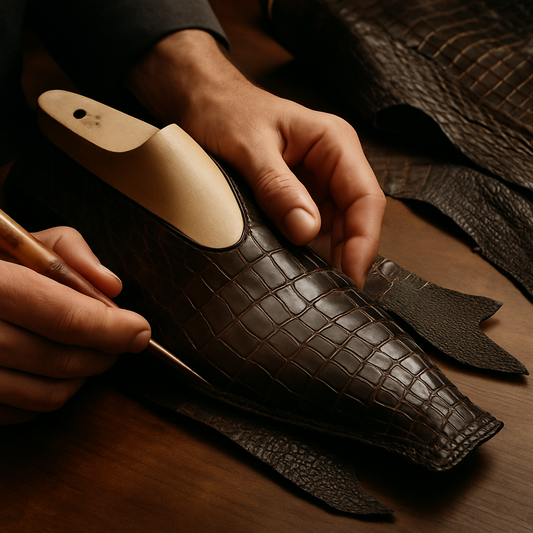
Before applying any product, check the maker’s material description and care instructions. Genuine crocodilian sneakers may be made from alligator, crocodile, or caiman, while “croc-embossed” refers to another material printed or pressed with a crocodilian-style pattern. The finish is equally important: a glossy surface, matte coating, and nubuck nap can respond very differently to moisture and conditioners.
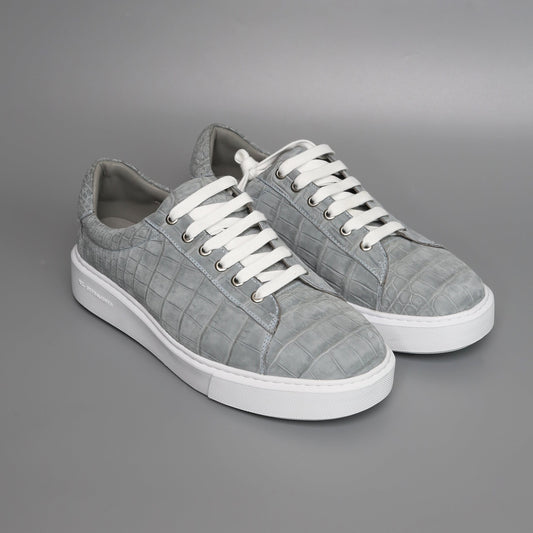
Nubuck alligator sneakers, for example, have a fine surface texture that can be flattened or darkened by excess liquid. Do not treat nubuck with a conditioner intended for ordinary smooth leather unless the product specifically states that it is suitable. If the material or finish is unclear, ask the maker or a specialist before cleaning the visible upper.
Do not assume that a single visible feature determines how the leather should be handled. Scale size and arrangement, surface pores, color variation, and natural marks can differ across a hide. These characteristics may help describe the material, but they do not replace the maker’s material information or care guidance.
Daily handling for less surface wear
Small habits prevent many of the problems that require aggressive cleaning later. Handle the shoes with clean hands, avoid placing them on dirty or wet surfaces, and do not drag the upper against rough flooring or furniture.
- Remove dry dust: Use a clean, soft cloth and light strokes. Follow the direction of the scale pattern rather than scrubbing across raised edges.
- Check the soles: Remove grit from the outsole and welt area before storing the pair. Grit can transfer to the upper when the shoes are placed together.
- Rotate wear: Allow the sneakers to rest between wears so perspiration and humidity can dissipate.
- Keep them away from transfer risks: Damp floors, dark denim that releases dye, solvents, and rough bags can mark or abrade the finish.
- Use clean storage materials: A breathable dust bag is preferable to sealed plastic for routine storage.
Light dusting after wear is usually less disruptive than repeated wet cleaning. Avoid cleaning simply because a fixed number of days has passed. The right frequency depends on use, climate, perspiration, dust, and the finish of the leather.
What to do when luxury exotic leather sneakers get wet
Moisture should be handled promptly but gently. A spill that is rubbed into the surface can spread farther and may leave a more visible mark than the original drop.
- Remove excess moisture: Use a clean, dry, absorbent cloth to blot the affected area. Press lightly and lift the cloth rather than wiping back and forth.
- Remove removable inserts: If the insoles are damp, take them out so the interior can dry more evenly.
- Support the shape: Place suitable shoe trees or soft, clean supports inside the sneakers. They should hold the form without forcing the vamp, pressing sharply into the scales, or stretching the leather.
- Dry gradually: Leave the pair in a dry, well-ventilated area at room temperature.
- Wait until fully dry: Do not condition, polish, or brush the upper while it is still damp.
Keep the sneakers away from radiators, hair dryers, heated floors, fireplaces, and strong direct sunlight. Rapid drying can make the leather or finish less flexible and may contribute to cracking, distortion, or uneven color. Do not place the shoes in a clothes dryer or use newspaper that could transfer ink.
If the shoes are soaked through, develop a strong dye stain, or show a change in finish after drying, stop experimenting with household cleaners. A specialist familiar with exotic leather is safer than repeated attempts to correct the problem.
Cleaning the upper without disturbing the texture
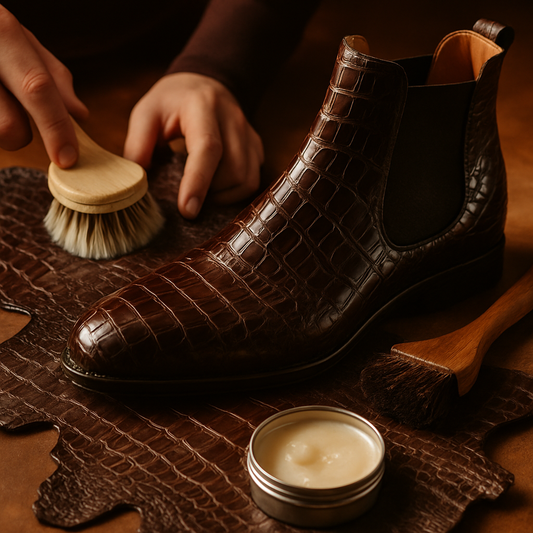
For ordinary surface dust, begin with a dry, soft cloth. Use minimal pressure and avoid catching the cloth on the edges of the scales. A soft brush may be appropriate for some finishes, but the brush should be approved for the specific material; a firm brush can roughen nubuck or create uneven gloss.
Do not use household soap, alcohol, disinfectant wipes, baby wipes, or multipurpose cleaners on the upper. These products may contain ingredients that dry the leather, alter the color, leave residue, or affect a protective coating. Water alone can also leave a mark on some finishes, so avoid saturating the surface.
For a small mark, follow the manufacturer’s instructions and test any approved product in a discreet area first. Testing reduces the risk of an obvious change, but it is not a guarantee that the product will behave identically across the entire shoe. If the test area darkens, becomes sticky, loses its nap, or changes sheen, stop using the product.
Conditioning and finish-specific care
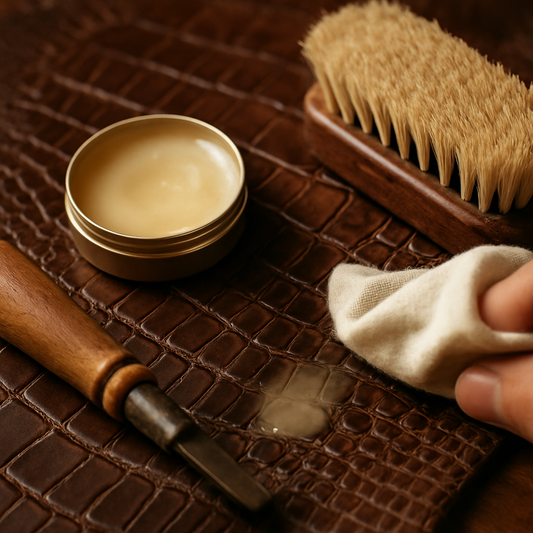
Conditioning is not automatically necessary for every pair of exotic leather sneakers. Use a product only when it is explicitly suitable for the leather and finish, and apply it sparingly to clean, completely dry material.
For smooth crocodilian leather, an appropriate conditioner may help maintain flexibility when the maker recommends one. Excess product can darken the leather, leave an oily film, soften the finish unevenly, or collect in the spaces around the scales. Apply a small amount with a soft cloth rather than pouring or spraying product directly onto the shoe.
Nubuck requires a different approach. Creams, oils, and standard smooth-leather conditioners can flatten the nap or create dark patches. A product designed for exotic nubuck should still be used cautiously and according to its instructions. Do not try to restore a flattened area by aggressive brushing.
Glossy, painted, or coated surfaces may require no regular conditioning at all. In these cases, the finish itself is part of the appearance, and an unsuitable product can change the sheen permanently. When the care label is limited or unclear, contact the maker before treating the upper.
Protecting shape, fit, and high-contact areas
Good fit supports both comfort and shape retention. A shoe that is too short, too narrow, or too tight across the instep can crease under concentrated pressure. A shoe that is too large may slip at the heel and develop repeated rubbing in the lining.
- Length: Leave practical space in front of the longest toe without allowing excessive heel movement.
- Width: A broad forefoot may need a wider last rather than simply moving to a longer size.
- Instep: Pressure across the tongue or vamp can indicate that the volume is unsuitable even when the length seems correct.
- Heel: Minor movement can occur in a new sneaker, but persistent slipping creates friction and may deform the rear structure.
- Break-in: Do not forcefully stretch an exotic upper or wear a painful pair for long periods in the hope that it will quickly adapt.
Measure both feet while standing and compare length, forefoot width, and instep volume with the maker’s size chart. EU, US, and UK labels are useful reference points, but conversions are not identical across brands. For a remote order, provide the measurements and any information requested by the workshop before wearing the sneakers outdoors.
Storage between wears
Store luxury exotic leather sneakers in a cool, dry place with moderate air circulation. Avoid damp closets, enclosed plastic containers, direct sunlight, and areas exposed to large temperature changes. Keep the pair away from solvents, cleaning chemicals, and materials that may transfer dye.
Use shoe trees or other shape supports that fit without forcing the shoe open. Cedar or another suitable material may help manage interior moisture, but the support should not press hard against the vamp or distort the scale layout. If the sneakers have a delicate finish, wrap them individually in clean, uncolored tissue or use the supplied dust bags.
Do not stack other shoes on top of the pair. Pressure can crease the upper and leave marks that are difficult to remove. Before storing, make sure the sneakers are fully dry; sealing residual moisture inside a container can create an unpleasant odor and may affect the interior materials.
Styling choices that can reduce unnecessary wear
Styling does not replace care, but practical clothing choices can reduce friction and exposure. Plain trousers, cotton chinos, dark denim, or restrained tailoring allow the texture of the sneakers to remain the main visual feature. Avoid trouser hems that repeatedly drag across the upper or accessories with hard edges that strike the scales.
For business-casual settings, a low-contrast crocodilian surface and clean trousers generally create a quieter appearance than a large, high-contrast scale pattern. Our guide on how to choose crocodile leather sneakers for business wear covers proportion, color, and workplace suitability in more detail.
When to seek professional care
Professional advice is appropriate when the sneakers have a deep stain, extensive water exposure, peeling or cloudy finish, damaged scales, loose stitching, or a distorted structure. Choose a repairer who works with exotic leather and explain the material and finish before treatment.
Do not attempt to disguise serious damage with heavy polish or repeated conditioner. More product can make the surface harder to assess and may complicate later restoration. Keep the original care instructions and material information with the shoes so a specialist can make a better-informed recommendation.
A simple routine for long-term care
After each wear, remove loose dust, check for moisture, and let the sneakers rest in a ventilated space. After rain or a spill, blot the upper, support the shape, and dry the pair away from heat. Use cleaning or conditioning products only when they are compatible with the specific leather and finish. Store the sneakers with room to breathe and address stains or structural problems before they become more difficult to repair.
With controlled handling, suitable products, and a fit that does not place excessive pressure on the upper, luxury exotic leather sneakers can retain their texture, shape, and finish through regular wear.
For a pair made with a specific exotic leather or finish, review the maker’s instructions before applying any treatment. You can also explore luxury nubuck alligator leather sneakers and check the product information for material-specific guidance.