
Hornback Crocodile Leather Care: How to Protect Texture, Shape and Finish

Condividi
Hornback Crocodile Leather Care: Protecting Texture, Shape and Finish
Hornback crocodile leather is best protected by keeping its raised dorsal ridges dry, supported, and free from pressure that could crack or flatten the finish.
Hornback describes a section of hide rather than a separate crocodilian species. It comes from the dorsal or back area, where the leather carries raised ridges and scutes. Crocodile belly leather comes from the underside and is generally flatter. That raised structure gives hornback crocodile leather its character, but it also changes how the material should be stored, cleaned, worn and transported.
What makes hornback crocodile leather different?
The raised dorsal relief is part of the intended hide structure, not automatically a defect. Ridge height, spacing and scale layout vary according to the animal, species and precise hide section. A hornback panel therefore should not be judged by whether every ridge follows the same pattern.
Care should focus on protecting three areas:
- Texture: the ridges and scutes should not be crushed by stacking, tight wrapping or heavy objects.
- Shape: belts, straps and panels need support so the leather does not develop unwanted bends around the raised sections.
- Finish: the dyed or coated surface needs protection from excess moisture, friction, unsuitable products and strong heat.
Hornback texture also affects how dust collects. The grooves around the ridges can hold particles more readily than a flatter belly panel, so cleaning should remove surface dust without forcing cloth or liquid into the structure.
Daily handling: start with a dry cloth
At CrocodileViet, our default first step for routine care is a clean, soft, dry cloth. It removes loose dust without adding moisture to the scales, seams or underside. Wipe lightly across the surface rather than pressing down into the raised ridges.
For a hornback belt or strap, support the item with one hand while wiping with the other. This reduces bending at the ridge line. For a wallet, bag panel or decorative leather piece, place it on a clean, level surface before dusting. Avoid dragging the item across rough tables because the raised scutes can receive more friction than a flat panel.
A dry cloth is suitable for ordinary dust, but it is not a solution for every mark. Grease, ink, dye transfer or an unknown residue can react differently depending on the tanning and finishing system. Test any approved leather product on a hidden area only after confirming that it suits crocodile leather and the item’s finish. If the mark is large or the surface changes colour, professional assessment is safer than repeated rubbing.
Moisture, heat and pressure
Keep hornback crocodile leather away from prolonged damp conditions. If a small amount of water reaches the surface, blot gently with a dry cloth and allow the item to dry naturally in a ventilated place. Do not rub aggressively while wet, and do not use a hair dryer, radiator, heated cabinet or direct strong sunlight to speed up drying.
Heat can draw moisture from leather unevenly and may affect the finish or shape. The raised dorsal area can also create pressure points when an item is placed under books, packed tightly in luggage or stored beneath other accessories. Use enough room for the scutes to sit without being compressed.
For storage, keep the piece away from damp walls, leaking containers and plastic wrapping that traps moisture. A breathable dust bag or clean fabric cover can reduce surface dust while allowing more air movement than sealed packaging. Store belts and straps in a supported curve that follows their existing shape rather than folding them sharply across a raised section.
Conditioning and surface products
Hornback crocodile leather does not benefit from automatically receiving a large amount of oil or conditioner. Too much product can collect around the ridges, alter the sheen or make dust adhere to the surface. The correct product depends on the leather’s finish, colour and construction.
Before applying anything, check the maker’s instructions or ask for product-specific advice. A product intended for smooth cowhide may not produce the same result on crocodile leather. Avoid household oils, alcohol-based cleaners, abrasive creams and strong solvents unless a qualified leather professional has specifically confirmed their use for that item.
Do not polish over dirt. First remove loose particles with a dry cloth. If conditioning is appropriate, use a very small amount on a hidden section and wait to assess any change in colour, gloss or texture before treating the visible area. The raised surface makes uneven application easier to notice, especially under directional light.
Protecting shape in belts, straps and other wearable items
Hornback crocodile leather used for a belt or strap needs particular care at points where the item bends repeatedly. Do not force a tight roll around a small cylinder, and avoid hanging a heavy object from a narrow strap unless the construction was designed for that load.
Fasteners can also affect the hide. Check that buckles, snaps and hardware do not scrape across the dorsal ridges during use. When removing a belt, release the buckle instead of pulling the leather sharply through it. For a watch strap, bracelet or narrow accessory, keep the item flat or in its intended curve rather than pressing it beneath clothing or other goods.
Size, fit and remote measurements
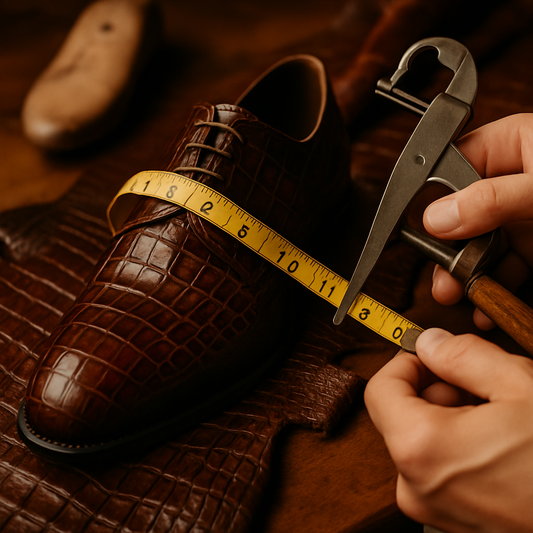
Fit affects care because excessive tension bends the leather more often and can place pressure on the raised structure. For a belt, measure the distance from the buckle’s usable pin position to the hole used most often, then compare that measurement with the maker’s stated size. Length and width matter: a long belt stored in a tight loop can develop a sharper bend, while a wide hornback panel may need more storage space.
For footwear or wearable pieces, provide foot length, foot width and instep measurement when ordering remotely. State whether you need a wide fit and give your usual EU, US or UK size, but do not rely on that size alone because conversion charts and last shapes differ. A remote measurement should include both feet where possible, since small differences can affect pressure across a crocodile panel.
Ask how the product’s dimensions are measured, particularly whether length includes hardware, buckle or attachment points. This prevents a care problem caused by buying a piece that must be overstretched or repeatedly forced into position.
Price and condition: what affects the cost?
The price of a hornback crocodile item reflects more than the word “grade.” Suppliers and tanneries use grading labels differently. A numbered grade may refer to fewer visible defects in a prime usable area, but the meaning is not universal.
Concrete factors that can affect cost include:
- the length and width of the usable hornback panel;
- the clarity and condition of the raised scutes;
- scars, cuts, holes, broken scales or other surface damage;
- tanning or dye irregularities;
- the amount of clean leather available after trimming;
- the item’s construction, lining, hardware and labour;
- the design’s tolerance for visible variation in ridge layout.
Raised texture itself should not be marked as damage. A sound hornback hide can have strong relief by design, while a flatter-looking section may still have cuts, scale damage or limited usable area. Visual grade also does not establish durability by itself. Ask the seller what its grade label measures and whether it refers to the whole hide or only the prime usable panel.
Styling hornback crocodile leather without stressing it
Hornback’s raised texture is visually active, so it often works best when the surrounding materials are simpler. A hornback belt can be paired with plain trousers and a smooth leather shoe; a hornback strap can sit alongside a simple watch case rather than several heavily textured accessories.
Match colour temperature and contrast rather than trying to duplicate the ridge pattern elsewhere. Dark hornback can support neutral tailoring, while lighter or more varied dye effects may suit casual cotton, denim or unstructured jackets. Styling does not change the care requirements: friction from rough fabric, crowded accessories or tight storage can still wear the finish.
For a wider explanation of belly-scale cues, dorsal sections and species differences, read Alligator Vs Crocodile Leather: Complete Guide for 2026–2027. If the intended use is office clothing or accessories, How to Choose Crocodile Leather Types for Business Wear covers how different leather sections behave visually in that setting.
Hornback, crocodile and alligator identification
Hornback alone does not identify crocodile rather than alligator. It names the dorsal hide section, and ridge prominence can vary by species and by the position of the cut.
Crocodile belly scales commonly retain small sensory pores, often called integumentary sensory organs or ISOs. Alligator belly scales generally lack the same regular pore pattern. Alligator belly skin also often shows an umbilical scar that crocodile commonly lacks. These are useful visual observations, but scale appearance or one sensory feature should not be treated as proof of species or authenticity.
Documentation matters for legally traded crocodilian leather. CITES applies to international trade in crocodilian skins and recognizable leather products, with requirements depending on species, source, destination and applicable exemptions. CITES skin tags can carry traceability information such as an origin-country code, unique serial number and species code. CITES paperwork supports regulated trade and traceability; it is not, by itself, proof that every visual claim about a product is correct.
When to request professional care
Contact the maker or a leather specialist if the finish becomes sticky, cloudy, cracked or uneven; if a ridge has split; if the leather has absorbed substantial water; or if mould-like spotting appears. Stop experimenting with household cleaners in these situations, because repeated treatment can make later assessment harder.
Professional advice is also useful when a hornback item needs reshaping, colour correction, hardware replacement or repair near a raised scute. The repair method should account for both the visible texture and the strength of the surrounding leather rather than treating the panel like a flat hide.
Frequently Asked Questions
Can I clean hornback crocodile leather with a wet cloth?
Use a dry, soft cloth for routine dust. If a small amount of water reaches the surface, blot rather than rub and let the item dry naturally. For larger marks or unknown stains, ask the maker or a crocodile-leather specialist before applying a cleaner.
Should the raised ridges on hornback crocodile leather feel even?
No. Ridge height and scale layout vary by species and hide section. Raised texture is the defining feature of the dorsal section, while damaged scales, cuts and structural breaks are separate condition concerns.
How should I store a hornback crocodile belt?
Store it in a breathable cover with enough room for the ridges, using a supported curve that follows the belt’s shape. Avoid sharp folding, tight rolls, heavy objects on top and damp or heated storage areas.
Does a high leather grade guarantee longer wear?
No. Grading labels vary by supplier or tannery and commonly describe usable area, visible defects and condition. Wear also depends on construction, fit, handling, moisture, friction and care. Ask what a seller’s grade specifically measures.
For CrocodileViet’s leather education and product information, visit our crocodile leather collection and articles. WhatsApp is available for questions about care, measurements and product-specific guidance.