
Crocodile Leather Shoes: Style Guide for 2026–2027

Condividi
Crocodile Leather Shoes: A Style Guide for 2026–2027
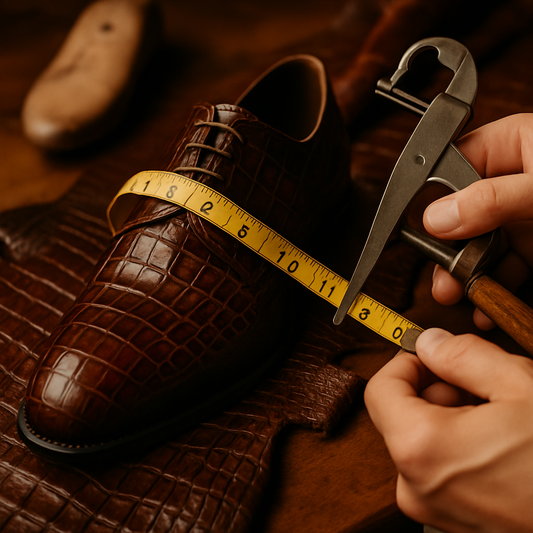
A crocodile leather shoe takes most of its visible character from the belly panel, which is the main cutting area for footwear because its scales create the clearest pattern across the vamp and quarters.
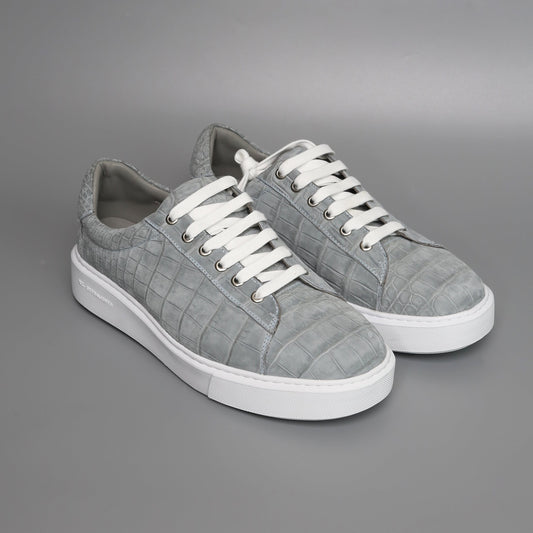
For 2026–2027, the strongest way to wear crocodile leather shoes is to match the shoe’s scale layout, color, silhouette, and shine level to the setting. A dark wholecut or plain-toe Oxford suits formal clothing, while a less formal derby, loafer, or monk strap can work with tailored separates and refined weekend clothing.
What defines a crocodile leather shoe
Crocodile leather should refer to leather from crocodiles specifically, not to all crocodilian leather. Crocodile belly scales can vary by species, but they often show a more geometric and regular-looking arrangement than alligator. Visible sensory pores, commonly called ISOs, may also appear on crocodile scales and can be part of the hide’s natural surface character.
Alligator is a separate material. Its belly pattern is generally regular and balanced, and it often has an umbilical scar that crocodile usually lacks. These observations can help with material identification, but one visual feature by itself does not prove origin or authenticity. CITES documentation concerns regulated trade compliance, not a standalone authenticity certificate.
At our workshop, the belly area receives close attention for shoe panels because the scales lie flatter and provide better pattern control across a structured upper. This does not mean every attractive shoe must use one uninterrupted central belly panel; the suitable cutting plan depends on the last, shoe style, usable hide area, and the desired scale size.
How to choose the right crocodile shoe style
Formal business and evening wear
- Wholecut Oxford: A single dominant panel keeps the silhouette quiet and lets the crocodile pattern carry the visual interest.
- Plain-toe Oxford: The closed lacing and restrained toe shape suit dark suits, tuxedo-adjacent evening clothing, and formal ceremonies.
- Black or deep brown: These colors usually sit more comfortably with charcoal, navy, and black tailoring than bright or highly contrasting shades.
For formal use, scale matching across the vamp matters more than adding many decorative seams. A large-scale hide can look heavy on a narrow last, while smaller scales may suit a sleeker dress-shoe shape. The toe should also retain its intended structure; excessive creasing across a large central scale can distract from the pattern.
Tailored but less formal clothing
- Derby: The open lacing gives the shoe a more relaxed proportion for wool trousers, an unstructured jacket, or a business-casual wardrobe.
- Monk strap: A single or double buckle introduces hardware without requiring the shoe to become visually loud.
- Dark brown, burgundy, or muted tan: These shades can work with navy, cream, olive, grey, and brown clothing when the belt and other leather accessories are coordinated thoughtfully.
Here, the construction should still look intentional. A high-shine crocodile upper paired with very casual denim and sportswear can create a sharper contrast than intended. A softer finish, simpler sole, or less pointed last can make the same material easier to wear outside formal settings.
Loafers and warm-weather dressing
- Penny loafer: Works with tailored trousers, linen-blend separates, and a knit polo.
- Tassel loafer: Adds movement to a relaxed suit or dress trousers without needing a bright color.
- Unlined or lightly structured designs: May feel less formal, although comfort still depends on the last, lining, foot shape, and construction.
For loafers, check whether the vamp has enough room for natural flexing. Crocodile leather is selected for its scale pattern, but the shoe still needs a last that accommodates the wearer’s instep and forefoot rather than forcing the foot into a narrow shape.
How crocodile leather shoe quality is assessed
Visual grade and durability are different questions. A higher visual grade generally means fewer visible blemishes in the central belly area, but it does not automatically determine how long a shoe will serve. Fit, leather thickness, construction, sole quality, flex points, moisture exposure, and maintenance all affect use.
Grading labels also vary by supplier and tannery. A label such as “grade one” or “top grade” should be read alongside the actual hide description, photographs, panel layout, and the area used on the shoe rather than treated as a universal industry scale.
| Decision factor | What to inspect | Why it matters on shoes |
|---|---|---|
| Species and hide source | Confirm that the material is crocodile and ask for appropriate regulated-trade documentation where relevant. | Crocodile and alligator have different grain characteristics, and documentation supports lawful sourcing rather than serving as sole proof of authenticity. |
| Central belly grade | Look for the placement and visibility of blemishes on the main vamp and quarter panels. | The belly is the key cutting zone for footwear, so defects there are more noticeable than those outside the main shoe panels. |
| Usable area | Check whether the hide provides enough clean surface for both shoes and matching components. | A large, attractive section may still be unsuitable if it cannot supply balanced left and right panels. |
| Scale matching | Compare scale direction, size, spacing, and visual balance between the two shoes. | Matching controls the finished pair’s appearance, especially across the vamps, toes, and quarters. |
| Construction | Inspect the last shape, sole attachment, heel stability, lining, and flex area. | These features influence comfort and serviceability independently of the hide’s visual grade. |
| Handwork | Look at edge finishing, seam alignment, panel transitions, and the consistency of small details. | Handwork is most useful when it improves panel control and finishing rather than simply being used as a label. |
In our production discussions, we separate the question “Does the hide look clean?” from “Is this panel suitable for this last?” A visually attractive section may have scale proportions that do not sit well on a pointed toe, a broad derby, or a loafer with a deep vamp. Pattern control must be judged on the finished shape, not only on a flat skin.
Price factors for crocodile leather shoes
A responsible price comparison needs more than the word “quality.” The species, hide grade, usable area, scale size, panel matching, shoe construction, lining, sole, finishing, and amount of handwork all affect the final cost.
- Species: Crocodile material is priced according to the source and the characteristics of the hide.
- Hide grade: Fewer visible blemishes in the central cutting area can reduce the amount of selection and usable matching material available.
- Usable area: A hide must supply suitable panels for both shoes, not merely contain one attractive section.
- Scale matching: More controlled matching can require additional material and more selective cutting.
- Construction: The last, sole unit, lining, heel, and attachment method change labor and material requirements.
- Handwork: Cutting, edge treatment, stitching, finishing, and corrective work require time that varies by design.
For that reason, two pairs described as crocodile leather shoes may sit at different prices without one automatically being more durable. Ask which parts of the shoe use crocodile, how the panels were matched, what construction is used, and which elements are included in the quoted price.
Fit and sizing: measure the foot, not only the label
EU, US, and UK sizes are useful starting points, but they do not fully describe fit. Last shape differs between makers, and the same nominal size can feel different in length, width, toe height, and instep volume.
- Length: Measure from the back of the heel to the longest toe while standing, with the weight distributed across the foot.
- Width: Record the broadest part of the forefoot. Wide feet may need a wider last rather than simply a larger length.
- Instep: Measure around the highest part of the foot. A high instep can make a loafer or closed Oxford feel tight even when the toe length is correct.
- Both feet: Measure each foot and use the larger measurements when selecting a pair.
- Socks: Measure with the socks intended for the shoes, particularly for dress shoes worn with thicker formal socks.
An in-person fitting allows the wearer to assess heel movement, pressure over the vamp, toe clearance, and width while standing and walking. Remote measurement deserves equal importance when trying on is not possible: send foot length, forefoot width, instep measurement, foot tracing, usual size in EU/US/UK terms, and notes about wide fit or asymmetry. A paper tracing should be taken upright rather than seated because body weight changes the foot’s spread.
Do not expect crocodile leather to compensate for an unsuitable last. Minor initial firmness can change with wear, but significant pressure at the toes, instep, or sides is a sizing problem rather than a conditioning issue.
Care for crocodile leather shoes
After wear, begin with a clean, dry, soft cloth. This removes surface dust without introducing moisture into the scales, seams, or lining.
- Allow the shoes to air away from direct heat, radiators, hairdryers, and strong sunlight.
- Use shoe trees that support the shape without stretching the vamp or forcing the toe upward.
- Keep the pair away from rain and standing water where possible.
- If a small amount of moisture reaches the surface, blot gently and let it dry naturally.
- Use a barely damp cloth only as a last resort for a specific mark, testing an inconspicuous area first.
- Use a crocodile-appropriate conditioner only when the leather shows a genuine need for it, and apply a very small amount according to the product instructions.
There is no useful fixed conditioning schedule for every pair. Climate, wear frequency, finish, storage, and exposure determine whether conditioning is appropriate. Excess product can darken the leather, soften structured panels, or settle around scale edges. If the finish changes unevenly, professional assessment is safer than repeated home applications.
How to style crocodile leather shoes in 2026–2027
For office tailoring
- Pair dark brown crocodile derbies with navy or medium-grey trousers.
- Use black crocodile Oxfords with charcoal, black, or deep navy tailoring.
- Keep the belt close to the shoe’s color family, while allowing a small difference in texture.
- Choose a restrained watch strap and avoid stacking several highly textured accessories.
For ceremonies and evening events
- Select a clean Oxford or wholecut with controlled shine.
- Match the shoe formality to the cloth: a dark suit generally supports a quieter shoe than a patterned dinner jacket.
- Keep trousers clean at the hem so the vamp and toe remain visible without excessive break.
For smart-casual settings
- Wear brown loafers with cream trousers, dark denim, or an olive overshirt.
- Use burgundy or muted tan with navy, grey, and warm neutral clothing.
- Choose a derby or loafer with a less pointed last when the rest of the outfit is relaxed.
For genuine crocodile shoes for men, the same principles apply: proportion, color depth, scale size, and the formality of the last should support the clothing rather than compete with it. Handmade crocodile shoes can show small natural variations in scale and surface, which should be assessed as part of the material rather than edited out through excessive finishing.
Buying regulated crocodile footwear responsibly
Crocodile leather shoes belong to a regulated luxury product category. Availability and transport can depend on species, source, destination, and applicable CITES requirements. Ask the seller what documentation accompanies the product and whether the proposed sale and shipment comply with the relevant rules. That paperwork addresses lawful trade; it should not be presented as the only test of material identity.
For buyers comparing luxury crocodile dress shoes, request clear photographs of the vamp, quarters, toe, sole, and interior, along with the size system, measurements, construction information, and return conditions. Those details provide a more useful basis for comparison than a grade label alone.
See CrocodileViet’s crocodile leather shoes collection for current designs and product information. You can also contact us through WhatsApp to discuss measurements, scale layout, construction, and the documentation relevant to your order.