
7 Things to Check Before You Buy Crocodile Leather Wallet Online

Condividi
7 Things to Check Before Buying a Crocodile Leather Wallet Online
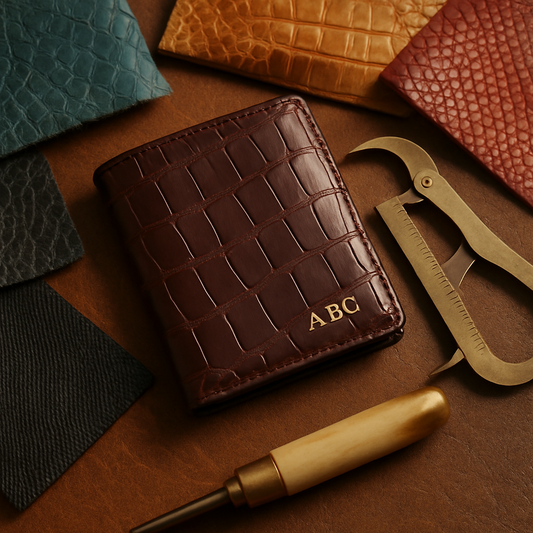
Crocodile wallets are typically cut from the belly or flank because these areas contain the most useful pattern zone for a small leather product.
Buying online removes the chance to hold the wallet, inspect its scale surface, or compare its dimensions with your current wallet. Product photos also vary in lighting, distance, and editing. A reliable purchase therefore depends on checking the crocodile skin, construction, measurements, documentation, and seller information together rather than judging the wallet by one close-up image.
1. Confirm that the material is actually crocodile skin
“Crocodile leather” is commonly called crocodile skin within the leather trade. A listing should identify the species or at least describe the material clearly instead of using broad terms such as “exotic leather” without further information.
Crocodile and alligator can look similar, but their scale structures provide useful clues. Crocodile skin often shows more variation from one scale to the next, and many crocodile species display visible sensory pores, commonly called ISOs, along the scales. Alligator belly skin is generally associated with a more regular and balanced pattern. An alligator wallet for men can therefore have a different visual rhythm from a crocodile wallet, even when both are made from belly skin.
These features support an inspection, but one sensory trait does not prove authenticity. Ask the seller for close photographs of the outer surface, an edge, and, where possible, a cut or folded section. Genuine crocodilian leather should show a solid leather cross-section and natural variation rather than shallow, repeated impressions with the same shape and spacing. A perfectly repeated plate pattern can indicate embossing or another imitation material.
At CrocodileViet, we examine the scale layout before a wallet is cut because the pattern must work with the panel shape, fold lines, and card slots. A crocodile texture that looks convincing in a full hide may look poorly controlled once reduced to a small front panel.
2. Inspect the belly or flank pattern area, not only the best photograph
The center of a crocodile belly commonly has a more regular, rectangular scale arrangement than the side areas. Flank skin can show more movement in scale size and direction. Both areas can be used, but they produce different visual results on a wallet.
Ask for photographs of the actual wallet rather than stock images. Check whether the front panel has:
- scales that sit flat against the leather;
- a pattern direction that suits the wallet’s length and fold;
- large marks, healed scars, holes, or stains in the main visible area;
- scale sizes that remain reasonably consistent across adjoining panels;
- creases or cuts placed where they could weaken a fold or pocket.
Grading usually relates to the number and position of blemishes within the important cutting area. Higher grades generally have fewer visible defects in that zone, while lower grades may show staining, cuts, holes, or pronounced marks. Grade labels vary between suppliers and tanneries, so “first grade,” “top grade,” or similar wording should not be treated as a universal standard.
Visual grade also differs from durability. A wallet with a visible scar can still be structurally sound, while a clean-looking panel can develop problems if the leather is poorly supported or the wallet is overfilled. Ask what the stated grade means in that seller’s system and request images of the finished piece.
3. Check how the panels are matched and constructed
A crocodile wallet may use one main belly panel, several smaller pieces, or crocodile skin combined with cow leather for the interior. Each construction has a different effect on appearance, flexibility, and price.
For a wallet with a front and back crocodile panel, inspect whether the scale direction changes abruptly at the center or between adjoining pieces. Pattern matching does not require every scale to continue exactly across a seam, but the change should look intentional. Scale matching takes more usable skin and more cutting time, which can affect the quoted price.
Look closely at the following construction points in the product photographs:
- edge paint or folded edges around the wallet perimeter;
- stitch spacing and whether the line stays consistent around corners;
- corners that lie flat rather than bulging from excess material;
- card-slot openings with clean, even edges;
- zipper tape and pull placement on a crocodile zipper wallet;
- the fold area, where thick leather layers can restrict closing.
In our workshop, panel placement is decided around scale flatness and pattern control, not only the amount of skin available. A visually strong section may be unsuitable for a fold if its scales are too raised, while a quieter flank section may work better on a curved edge or interior panel.
4. Compare the measurements with your daily contents
Wallet dimensions are easy to overlook online because photographs often show the product beside a hand or a phone without a scale reference. Check the stated length, height, and thickness in centimeters or millimeters, then compare them with a wallet you already use.
For a bifold, note whether the listed dimensions describe the wallet when closed. For a long wallet, check whether it fits the pockets or compartments of the bags you use. A zipper model may need extra width for the zipper track and enough depth for coins, folded notes, or receipts.
Also check capacity rather than counting card slots alone:
- How many cards do you carry every day?
- Will the bill compartment accept your currency without folding?
- Does a coin pocket reduce the usable space for cards?
- Will a full load force the fold or zipper out of alignment?
- Is the wallet comfortable in a trouser pocket, jacket pocket, or handbag?
Product dimensions cannot show how stiff a particular crocodile panel feels. Ask for a photograph of the wallet closed and open, plus the thickness when empty if the seller provides it. A slim wallet with fewer layers may suit cards and folded notes, while a deeper wallet may be more practical for travel documents and receipts but less comfortable in a front pocket.
5. Check the price against specific production factors
There is no single reliable price for a crocodile leather wallet. The amount reflects several separate inputs, and the listing should make at least some of them understandable.
- Species: Different crocodile species and sourcing systems can carry different material costs.
- Usable area: A larger wallet or a design with several exterior panels consumes more suitable skin.
- Skin grade: Fewer marks in the visible cutting zone can increase the usable value of the skin.
- Scale matching: Matching adjoining panels creates more cutting restrictions and more material waste.
- Interior construction: The number of card slots, compartments, lining layers, and reinforcements changes labor and material use.
- Handwork: Edge finishing, hand-applied details, and close control around folds and corners can add production time.
- Hardware: Zippers, snaps, lining materials, and metal finishes affect the final specification.
A low price may reflect a smaller usable area, more visible skin marks, a simpler interior, or a different species and sourcing route. A higher price does not automatically prove better durability. Ask for a breakdown of the construction and skin specification instead of using price alone as evidence of quality.
6. Request sourcing and CITES information before international delivery
CITES regulates international trade in crocodilians and crocodilian products, and finished small leather goods such as wallets fall within its small-product definitions. Depending on the species, population, origin, and whether the skin is farmed, ranched, or sourced through another approved system, an international shipment may require documentation or an export permit.
CITES paperwork concerns trade compliance. It does not, by itself, prove that every material description or workmanship claim in a listing is accurate. Ask the seller:
- Which crocodile species is used?
- What country or approved source does the skin come from?
- Which documents accompany the shipment, if required?
- Does the destination country impose additional import requirements?
- Who is responsible for checking customs requirements before dispatch?
Species-specific rules matter because CITES treatment can differ by species, population, and source. A seller who gives a clear answer is easier to evaluate than one who uses “CITES certified” as a general authenticity claim without identifying the relevant paperwork.
7. Review the seller’s return terms and product photographs
Online photographs should show the actual wallet from several angles: front, back, open interior, folded edge, base, zipper or snap, and a close view of the scale surface. Ask for an additional image if the listing only shows a front-facing promotional photograph.
Before ordering, read the return conditions for made-to-order or personalized goods. Check whether a return is allowed if the scale pattern differs from the display image, whether return shipping is the buyer’s responsibility, and how customs charges are handled. These details matter because each crocodile skin has its own scale arrangement and marks.
Save the product description and the seller’s written answers before payment. The record should identify the material, dimensions, color, interior layout, and any stated grade. Also confirm whether the photographed wallet is the exact item or an example of a similar design; color and pattern can vary between skins.
Care after the wallet arrives
Keep a crocodile wallet away from prolonged water, high heat, and direct sunlight. For ordinary dust, use a clean, dry cloth with light pressure. If a small amount of moisture reaches the surface, blot it promptly and allow the wallet to dry naturally away from heaters or hairdryers.
Use a leather product only when it is specifically suitable for crocodilian skin and approved by the seller or maker. Do not apply household oils, alcohol-based cleaners, or a large amount of conditioner to the scale surface. Crocodile skin can react differently from smooth cow leather, especially around raised scales and finished edges.
Store the wallet in a dry, ventilated place without compressing it under heavy objects. Avoid filling every slot beyond its intended capacity, because constant pressure can stretch card openings and stress the fold. Inspect the surface occasionally and ask the maker for care advice if the finish changes, the edges lift, or the leather becomes unusually dry.
How to use a crocodile wallet with different outfits
For business clothing, a slim bifold in a restrained dark color works with a suit, blazer, or tailored trousers without competing with the jacket texture. For casual clothing, a smaller bifold or zip wallet can sit naturally with denim, knitwear, overshirts, or a leather belt.
For travel, prioritize a layout that separates frequently used cards from notes and receipts. A zipper model can be useful when loose coins or small items need containment, while a slim card wallet may be easier to carry through airports and daily commuting.
Color coordination can stay practical rather than exact. A dark brown wallet can sit alongside brown shoes or a belt, while black, navy, burgundy, or muted green can work with neutral clothing and accessories. Match the wallet to the setting and the rest of the materials you carry, including your bag, watch strap, or belt.
For current crocodile wallet designs and available specifications, visit CrocodileViet’s wallet collection. You can also contact CrocodileViet through WhatsApp to ask about measurements, skin details, construction, and documentation before ordering.