
What Makes Nubuck Vs Matte Alligator Worth Buying? Quality, Craft and Longevity

공유
Nubuck vs. Matte Alligator: Quality, Craft, and Longevity Compared
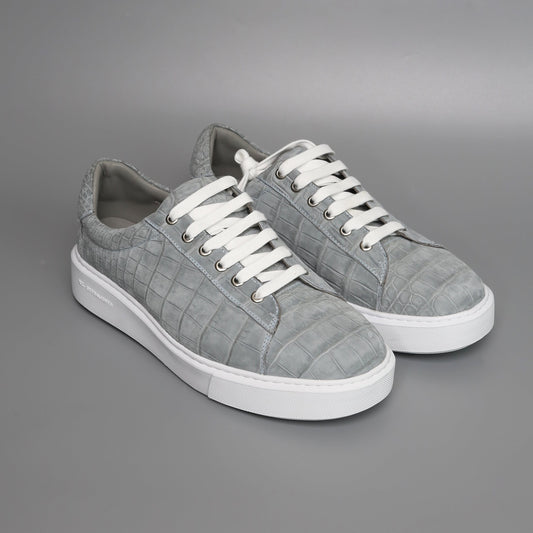
Nubuck is grain-side leather lightly sanded to create a fine nap, while matte alligator is an alligator skin finish refined to produce a smooth, low-sheen surface. Both can be well-made, but they offer different textures, visual depth, maintenance demands, and ways of aging.
What the Two Materials Actually Are
Nubuck is not a separate animal, a split leather, or automatically a lower-grade material. It comes from the outer grain or top-grain side of a hide, then receives light buffing that raises a short, velvety nap. Because the grain side remains present, the leather keeps visible natural grain structure while feeling softer and more muted than a smooth finish.
Matte alligator is still alligator leather. “Matte” describes the surface treatment rather than the species or a separate leather category. Manual brushing or similar refinement reduces shine and gives the skin a softer visual effect without turning it into nubuck.
The distinction matters at the cutting bench. Nubuck is judged partly by the evenness and feel of its nap, while matte alligator is judged by the quality of the skin, the scale layout, the surface finish, and how well the panels are placed on the product. A matte finish does not make an alligator hide a different grade.
Nubuck vs. Matte Alligator: Side-by-Side Differences
| Factor | Nubuck | Matte alligator |
|---|---|---|
| Source and construction | Grain-side leather lightly buffed to create a fine nap | Alligator skin refined with a low-sheen surface finish |
| Visual character | Soft, muted, and finely textured; the grain remains visible | Distinctive alligator scale pattern with restrained surface reflection |
| Hand feel | Velvety and dry to the touch | Smooth, firmer, and defined by scale relief |
| Moisture response | Water-sensitive because moisture can mark or flatten the nap | Still sensitive to water and heat, with care needs affected by the finish and construction |
| Visible variation | Usually read through nap, grain, shade, and panel consistency | Read through scale size, scale arrangement, belly pattern, and natural skin variation |
| Typical buying priority | Soft texture and a quiet, matte appearance | Alligator character, scale control, and a hand-finished surface |
How Grain Pattern and Hide Grade Affect the Result
For alligator, the belly section is often selected when a regular, balanced scale pattern is wanted. That arrangement gives a shoe or other panel clearer visual rhythm and makes left-to-right matching more manageable. The umbilical scar can also appear on an alligator hide, so its placement may affect which areas are suitable for visible panels.
Hide grading should be kept separate from appearance. A high visual grade generally means fewer or less noticeable scars, holes, wrinkles, and areas of grain damage across the usable hide. It does not automatically prove that the leather will resist every form of wear better than a lower visual grade. Longevity also depends on the cut area, thickness, construction, flex points, lining, outsole, and daily use.
At the cutting bench, a small hide can create a different challenge from a large one even when both receive a similar grade. The usable area, scale size, panel dimensions, and need for matching determine how much of the skin can become clean, well-positioned upper material. A wider vamp or larger shoe may require more planning than a narrow panel because the scale rows need to sit naturally across the foot.
These points also explain why the price of matte alligator varies. Species and legal documentation matter, but so do hide grade, usable area, belly versus side placement, scale matching, panel yield, construction method, hardware, lining, and handwork. A price cannot be judged from the finish name alone. Nubuck pricing likewise changes with the leather source, thickness, nap consistency, pattern, construction, and amount of handwork.
Which Material Offers Better Longevity?
Neither material has a useful longevity answer in isolation. Nubuck can wear well when its nap is protected from heavy moisture, oil, abrasive contact, and unsuitable polishes. Matte alligator can also serve well over time when the skin is kept away from drying heat and the product is not forced through repeated high-stress flexing or poor storage.
The main difference is how wear appears. On nubuck, brushing, compression, water marks, and darkened contact areas may change the direction or texture of the nap. On matte alligator, rubbing can alter the surface sheen, while creasing and pressure can become more visible across the scale structure. These changes are not the same as structural failure, but they influence whether the owner likes the material as it ages.
Some buyers specifically want patina alligator leather. Patina refers to changes in tone, surface character, or sheen that develop through handling, light exposure, and use. Matte alligator may develop a more noticeable variation at frequently touched areas, but the result depends on the original finish, color, contact with oils, and care. It should be viewed as a possible aging pattern rather than a promised outcome.
For a long service life, construction is as important as the leather selection. Examine the shape of the upper, stitching at flex points, edge finishing, sole attachment, lining, and whether the product fits without excessive pressure. A beautiful hide placed on a poorly fitting shoe can deteriorate faster because the leather is repeatedly stretched in the wrong areas.
Fit and Sizing for Nubuck or Matte Alligator Shoes
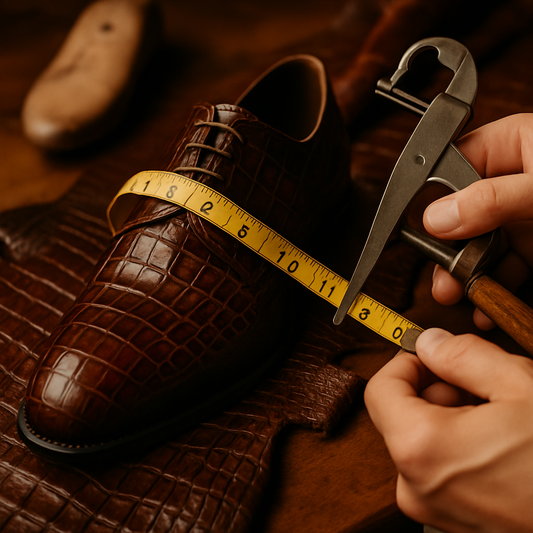
Material choice cannot correct an unsuitable last. Start with the maker’s size chart and compare your measurements with the stated length and width. EU, US, and UK numbers are not interchangeable without checking the brand’s conversion system, so use the actual foot dimensions where available.
- Length: Measure both feet while standing and use the larger measurement. Check the internal length rather than relying only on your usual number.
- Width: Record the widest part of the forefoot. A wide fit may need a different last, not simply a larger size, because extra length can leave the heel loose.
- Instep: Measure around the highest part of the foot. A high instep can create pressure across the vamp, particularly in a structured alligator upper.
- Toe shape: Compare the foot shape with the last. A pointed toe may reduce usable room even when the nominal length appears correct.
- Remote orders: Send length, forefoot width, instep circumference, and a tracing or clear measurement method if requested. This gives the maker useful information before cutting or finishing.
- In-person fitting: Try both shoes with the socks you expect to wear. Walk, flex the forefoot, and check heel movement, toe contact, and pressure across the instep.
Nubuck can feel forgiving because of its soft surface, but softness does not mean a loose fit is suitable. Matte alligator may feel firmer at first, so the last and measurements deserve particular attention before purchase.
Care: Keeping the Surface Consistent
For routine care, begin with a clean, dry cloth. Remove loose dust gently rather than rubbing aggressively across the nap or scale edges. For nubuck, a suitable dry brush can help lift compressed fibers, but test any tool on a concealed area first.
Use moisture only as a last resort and keep it controlled. Water can leave marks on nubuck and may affect the appearance of a matte alligator finish. If a damp cloth is necessary, use minimal moisture, avoid saturation, and let the item dry naturally away from radiators, strong sunlight, hair dryers, and other direct heat.
Do not apply ordinary smooth-leather polish to nubuck, since it can flatten or coat the nap. For matte alligator, use only a care product confirmed as suitable for the specific finish, and apply it sparingly. There is no fixed conditioning schedule that suits every item; inspect the surface, consider the climate and frequency of use, and follow the maker’s product guidance.
Store shoes with enough support to preserve their shape, but avoid compressing the scale areas. Keep them away from damp storage spaces, rough surfaces, and materials that can transfer color. If the item experiences a significant spill, professional assessment is safer than repeated home treatment.
How to Style Each Material
Nubuck
- Pair brown or taupe nubuck with dark denim, brushed cotton trousers, or textured wool for office-casual settings.
- Use black nubuck with charcoal tailoring when a low-reflection shoe is preferable to polished leather.
- Wear lighter nubuck with chinos, an Oxford shirt, or an unstructured jacket for daytime settings.
- Keep the rest of the outfit moderately textured so the velvety surface has visual room without competing with loud patterns.
Matte alligator
- Use dark matte alligator with navy, charcoal, or brown tailoring for formal business occasions.
- Choose restrained trousers and a simple belt when the scale pattern is the main visual feature.
- For evening wear, pair a low-sheen alligator shoe with a clean wool suit rather than highly reflective accessories.
- Coordinate the color family of the shoes with the belt or bag, while allowing controlled variation in shade and texture.
Names such as matte crocodile leather or shiny crocodile leather describe different material or finish choices and should not be treated as interchangeable with matte alligator. The species, scale layout, surface treatment, and documentation need to match the product description.
Documentation and Responsible Buying
Alligator skins and products made from them fall under CITES controls, so international movement depends on the species listing and the required permits or documents. CITES supports legal trade compliance; it does not by itself prove that a product is authentic. Species identification should come from the seller’s documentation and product information, while visual features such as scale pattern or an umbilical scar are useful observations rather than standalone proof.
Ask what part of the hide is used, how the grade is defined by that supplier or tannery, whether the listed size is the finished product size, and what care guidance applies to the surface. Grading labels vary between suppliers, so a label should be read alongside the actual hide condition and construction details.
FAQ
Is nubuck lower quality than matte alligator?
Not by definition. They are different materials with different surface treatments and uses. Nubuck is grain-side leather with a fine nap, while matte alligator is alligator skin with a low-sheen finish. Quality depends on the hide, usable area, finish consistency, construction, and workmanship.
Does matte alligator show wear less than nubuck?
It can show wear differently rather than simply showing less. Nubuck may reveal flattened nap or water marks, while matte alligator may develop changes in sheen, pressure marks, or visible wear across scale areas. Daily use and care have a major effect.
Can nubuck be treated like smooth leather?
It should not receive ordinary smooth-leather polish as a default treatment. Its raised nap needs dry cleaning methods and products specifically intended for nubuck. Test any product in a concealed area before treating a visible panel.
Is an umbilical scar proof that a hide is alligator?
No single sensory or visual feature proves authenticity. Alligator often has an umbilical scar that crocodile lacks, but species identification should be supported by reliable seller information and applicable trade documentation.
Which material is better for a first pair of exotic shoes?
That depends on whether you prioritize a soft, muted texture or visible alligator scale character. Nubuck may suit someone who prefers a quieter surface, while matte alligator may suit someone who wants the scale structure to remain central to the design. Fit, care tolerance, and construction should decide the purchase alongside appearance.
View CrocodileViet’s shoe collection at CrocodileViet shoes. For measurements, material questions, or remote fitting details, contact CrocodileViet through WhatsApp.