
Patina Alligator Leather: Complete Guide for 2026–2027

공유
Patina Alligator Leather: A Complete Guide for 2026–2027
Patina alligator leather is alligator hide whose color and surface character develop through handling, light exposure, finishing, and wear rather than remaining visually identical from the day it is made.
What “patina” means on alligator leather
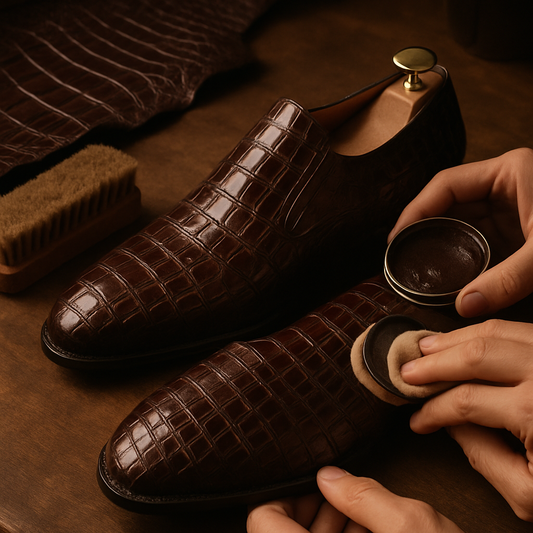
Patina describes a gradual change in appearance. On alligator leather, that change may appear as deeper color in frequently handled areas, a softer visual sheen, gentle variation across the scales, or a richer contrast between raised scale edges and recessed areas. The result depends on the original dye, top finish, contact with skin and clothing, exposure to light, moisture, and how the item is stored.
Patina is not a separate alligator species or a fixed color category. Two hides sold under the same color description can develop differently because their scale structure, surface finish, dye absorption, and daily use are not identical. A dark brown item may become visually warmer, while a lighter shade may show handling marks sooner. That change is part of the material’s history, but it should not be confused with damage. Scratches, coating failure, drying, and stains are separate conditions that require different treatment.
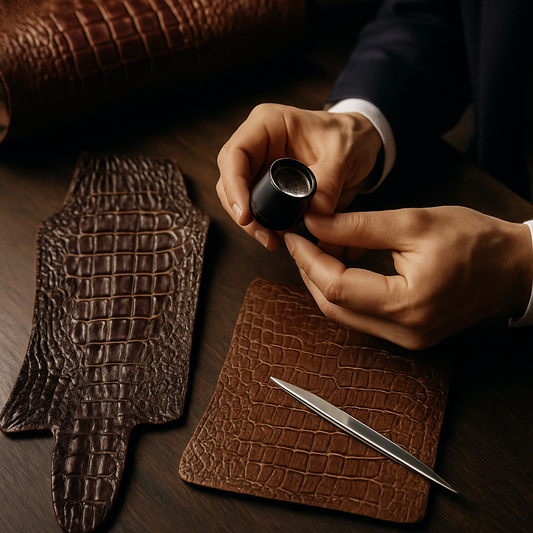
Our workshop evaluates the belly and surrounding usable area before deciding how a hide is suited to a product. The belly is selected for items where a balanced scale layout matters because its central scales are comparatively regular and its surface is usually flatter than the flanks. This gives a finished panel more predictable visual rhythm; it does not mean every belly is identical or that a regular pattern proves a higher durability level.
How the alligator belly affects patina
Alligator belly leather commonly has larger central scales and relatively smaller flank scales. The central belly area is comparatively regular and balanced, while the sides introduce more variation in scale size and direction. On a finished product, this affects how color appears across the surface: broad central scales may show a clearer overall color field, while flank areas can create stronger visual movement.
The belly cut is widely preferred for dress items and small leather goods because its scale layout is more even and rectangular. We use a belly-oriented layout when the product requires pattern control and flatter scale placement. The reason is visual and structural: scale direction can be aligned across panels more consistently, and the surface is easier to plan around than a mixed section of back, flank, or tail.
A natural umbilical scar may also appear on alligator belly leather. It is a feature alligator commonly has and crocodile generally lacks. Its presence or absence should not be treated as the sole proof of species or origin. A reliable assessment considers the whole hide, documentation, visible scale characteristics, and the supplier’s records.
Patina, finish, and visual grade are different things
A hide’s visual grade describes the condition and appearance of the usable belly and midsection; it does not predict exactly how the color will age. Alligator grading commonly considers scars, scratches, shading, scale deformities, holes, and grain problems. The conventional scale runs from Grade 1 to Grade 5, with Grade 1 indicating no belly defects and lower grades reflecting more widespread defect clusters across the belly quadrants.
These labels are not universal across every supplier or tannery. We therefore treat a grade number as one piece of information rather than a complete description. A buyer should also ask which area was graded, how much usable surface remains, whether color variation is intentional, and how the finish was applied.
Visual grade is not the same as durability. A hide with a cleaner belly may be easier to position on a visible panel, but construction, thickness, edge treatment, stitching, lining, hardware, and daily care also affect how the completed item performs. Patina develops on the finished product, not on a grading chart.
Patina alligator leather compared with other finishes
Patina is an aging effect or evolving appearance, while matte, semi-gloss, and glossy descriptions refer mainly to surface reflection at a particular point in time. A matte finish scatters more light and usually shows less reflection. A shiny finish reflects more light and can make scale contours appear sharper. Neither finish automatically has better durability.
The phrase matte crocodile leather refers to a crocodile product rather than alligator leather, so the species distinction matters. Crocodile patterning varies more by species and often shows visible sensory pores, commonly called ISOs. Crocodile also generally lacks the alligator’s characteristic umbilical scar. These traits help with examination, but one sensory feature alone does not establish authenticity.
Shiny crocodile leather is likewise a crocodile product with a reflective surface finish. Its shine does not make it equivalent to shiny alligator leather because species, scale arrangement, hide preparation, and finishing can all differ. For a genuine comparison, examine the actual product rather than comparing finish names alone.
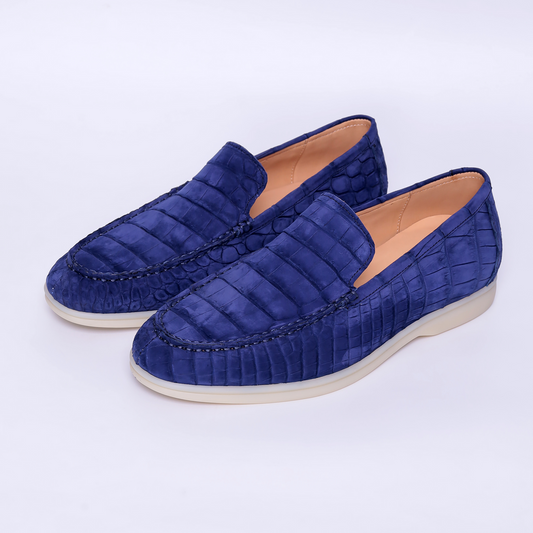
Searches for nubuck vs matte alligator also involve different materials and should not be treated as a simple finish comparison. Nubuck has a brushed, velvety surface, while matte alligator retains the scale structure of alligator leather with reduced reflection. Their care requirements and response to moisture are different.
How we assess an alligator hide for a patina-focused product
Our assessment begins with the area that will be visible after cutting, not with the hide’s total length. Alligator hide size is typically measured by belly width in centimeters at the widest point across the smooth belly between the flank scutes. This measurement is more useful for planning than the animal’s total length because it relates directly to usable panel width.
We then look at several connected factors:
- Species and hide origin: the scale layout and available documentation need to match the product description.
- Belly grade: scars, scratches, shading, scale deformities, holes, and grain issues affect where visible panels can be placed.
- Usable area: a large hide may still offer limited clear space if defects or irregular sections occupy the intended cutting zone.
- Scale matching: adjoining panels need compatible scale size, direction, and color so the finished item does not look assembled from unrelated sections.
- Surface finish: a matte, satin, or reflective surface changes how color variation and future handling marks are seen.
- Construction: panel shape, reinforcement, lining, edge work, and hardware influence the item’s practical performance.
- Handwork: cutting and stitching decisions affect whether the belly pattern stays visually balanced around corners, seams, and closures.
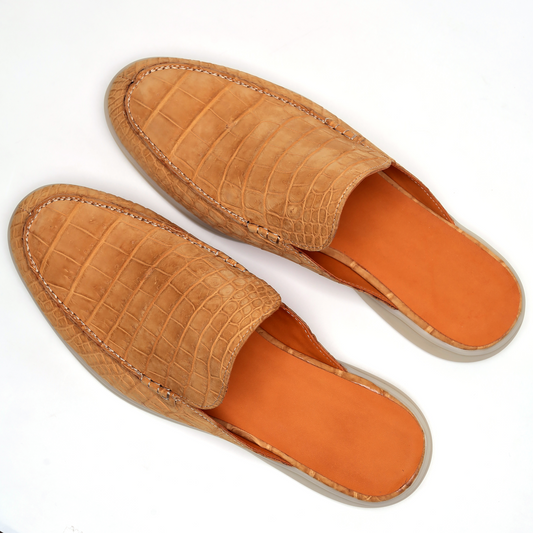
For a patina-focused design, we also consider where handling will occur. A wallet fold, bag handle, belt section, or shoe vamp experiences different contact and flexing patterns. Planning the scale direction around those areas helps the developing color change read as part of the design rather than as random interruption.
Price factors for patina alligator leather
Price cannot be assigned accurately from the word “patina” alone. The main cost factors include species, hide grade, belly width, usable area, scale matching, color work, surface finish, construction complexity, lining, hardware, and the amount of handwork required.
A smaller item can use a highly controlled section of hide, while a larger item may require more material and stricter matching between panels. A design with uninterrupted belly scales can involve more cutting loss than one that accepts flank sections. Curved shapes, narrow straps, folded edges, and matched pairs also increase planning and handwork.
For that reason, two alligator products with similar dimensions can have different prices. A clear quotation should identify the species, approximate usable section, finish, construction, and any matching requirements rather than relying only on a grade label.
Fit and sizing for alligator leather footwear
If patina alligator leather is used for shoes, measure both feet while standing and record heel-to-toe length, forefoot width, instep height, and the circumference around the widest part of the foot. Compare those measurements with the maker’s last rather than relying on a familiar number alone. EU, US, and UK sizes are not interchangeable without a conversion reference, and the same marked size can fit differently across lasts.
Wide-fit needs and a high instep should be stated before production. A close-fitting shoe may need extra room across the forefoot, while a high instep can require more volume over the tongue and vamp. The scale layout also matters: a wider design may allow the central belly pattern to sit across the visible vamp without forcing scales around a tight curve.
In-person try-on is useful, but remote measurement is equally important for a made-to-order discussion. Send length, width, instep, and clear foot photographs with a ruler placed beside the foot if requested by the workshop. Mention asymmetry, orthotics, bunions, or previous fitting problems. These details help the maker evaluate fit before cutting leather; a size number alone provides less information.
Care for a patina alligator surface
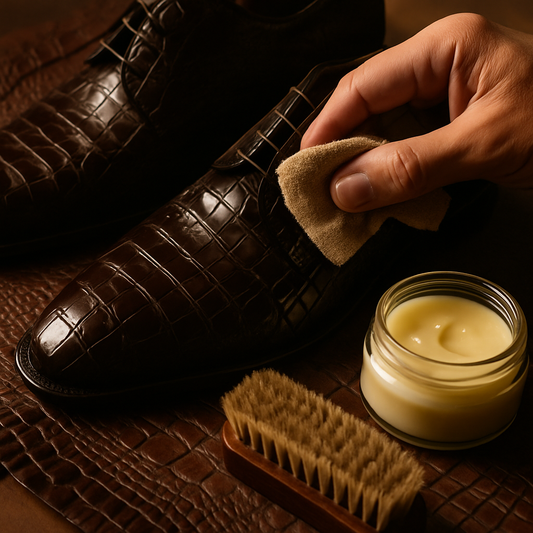
Begin with a dry, soft cloth to remove surface dust. Use light passes that follow the product’s surface rather than pressing into the spaces between scales. Keep the item away from prolonged direct heat, radiators, hot vehicle interiors, and enclosed damp storage.
If a mark requires more than dry wiping, a barely damp cloth may be used as a last resort on a small, discreet area first. Excess moisture can affect color, surface finish, adhesives, and shape. Do not use household cleaners, alcohol, abrasive cream, or an untested conditioner. Conditioning should follow the finish and the maker’s instructions rather than a fixed calendar schedule.
Store the item with enough support to prevent sharp creases. For footwear, use a suitable shoe tree that does not stretch the leather aggressively. Allowing the item to cool and dry naturally after use gives the surface a better chance to change gradually rather than accumulating concentrated moisture in one area.
Styling patina alligator leather
- Business settings: pair a dark brown or black alligator accessory with navy, charcoal, cream, or mid-grey tailoring; keep the rest of the outfit’s textures restrained.
- Smart-casual settings: use a warmer patina with denim, olive, tan, stone, or textured knitwear, while repeating one color from the leather in a small accessory.
- Evening settings: a darker, more reflective surface can work with a plain suit or dress, letting the scale pattern provide the visual texture.
- Travel and daily use: choose a finish and color that suit the amount of handling expected, and avoid combining several large patterned leather pieces in one outfit.
There is no single required color combination. The scale pattern already provides structure, so clothing with simple lines often makes the changing surface color easier to see.
Documentation and international trade
American alligator is a CITES Appendix II species. International movement is allowed under regulated conditions and commonly requires the relevant tagging and export or re-export documentation. For tagged crocodilian species, the non-reusable locking tag must remain attached to the skin or product where the applicable rules require it.
CITES paperwork demonstrates trade compliance; it does not by itself prove that a product is authentic. Buyers should also request clear species information, supplier records, product photographs, and consistent descriptions. Requirements can depend on the species, source country, destination, and whether the item is a raw skin or finished product.
Is patina alligator leather suitable for you?
It can suit buyers who want the surface to show gradual use rather than remain visually unchanged. The right decision depends on your preferred finish, tolerance for color variation, intended use, fit requirements, care habits, and the amount of visible belly pattern you want. Ask for the actual hide section, finish description, measurements, and construction details before confirming an order.
See our alligator leather footwear collection at CrocodileViet, and contact us on WhatsApp to discuss measurements, finish, scale layout, and the suitable hide section for your project.