
7 Things to Check Before You Buy Alligator Loafers Online

공유
7 Checks to Make Before Buying Alligator Loafers Online
The first thing to check on an alligator loafer listing is whether the upper uses the smooth belly panel, which typically shows comparatively regular, rounded scales. Online photos can show an attractive shape without revealing the material source, cut location, fit, or construction details that affect how the shoes look and wear.
For alligator loafers, the belly is the central area to inspect because it is the part of the hide commonly assessed for grade and used for a cleaner dress-loafer appearance. Use the seven checks below to read a product listing with more precision before ordering remotely.
1. Confirm That the Listing Identifies Alligator Clearly
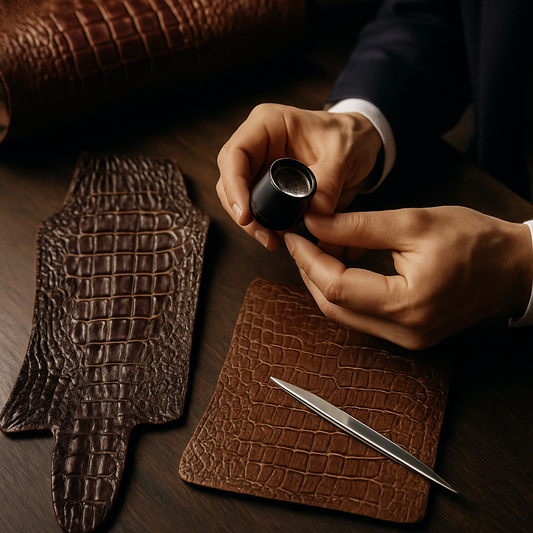
A listing should identify the leather as alligator rather than relying only on broad terms such as “exotic leather” or “reptile leather.” Alligator belly leather generally has smoother, more rounded scales arranged in a regular, balanced pattern. It may also show an umbilical scar, a natural feature associated with alligator belly leather.
Crocodile leather often varies more by species and can show more visible sensory pores, sometimes called ISOs, within the scales. That difference can help with identification, but one visual feature alone is not conclusive proof of species. If you are also comparing crocodile loafers for men, ask for clear species information rather than judging only from a close-up image.
For legally traded crocodilian leather, ask whether the seller can provide CITES tag or reference information connected to the material’s legal origin. A serial-numbered CITES tag is issued at harvest and is an important traceability marker; it supports trade compliance rather than serving as a stand-alone authenticity test.
2. Look Closely at the Belly Scale Layout
Photos of the vamp, tongue, and side panels should show how the maker positioned the belly scales. The most appealing pair is not necessarily the one with the smallest scales or the most dramatic pattern. What matters is whether the scales sit flat across the toe and whether the left and right shoes have a visually balanced layout.
At CrocodileViet, belly-cut leather is chosen for loafers when the aim is a smoother surface and more controlled pattern placement across the vamp. This cut gives the maker more opportunity to place scales where the shoe is most visible, instead of letting a ridged back section dominate the profile.
Ask for views of both shoes, including the toe boxes and outer sides. A single angled product photo may conceal an abrupt change in scale size, a central scar, or a pattern that looks substantially different from one shoe to the other.
3. Understand Grade Without Treating It as a Durability Score
Alligator hides are commonly measured by belly width in centimeters, taken at the widest point across the smooth belly scales. Hide grading also focuses chiefly on this belly area, because it is the most useful section for visible footwear panels.
A common grading system runs from Grade 1 to Grade 5. Grade 1 generally indicates a belly without defects, while higher grade numbers reflect more defects or defects in more central areas, such as scars, scratches, shading, or deformed scales. Grade labels and their commercial meaning can vary by tannery or supplier, so ask how a seller uses the term rather than assuming every Grade 1 or Grade 3 listing follows the same standard.
Visual grade is not a durability rating. A lower visual grade can still be suitable for a well-made loafer if marks are placed away from the most visible panels. Likewise, the back and tail may contain imperfections without lowering a hide’s belly grade.
What the Price Usually Reflects
Price differences in alligator loafers commonly reflect the species, hide grade, usable belly area, scale matching between the shoes, construction, and the amount of handwork involved in cutting, lasting, stitching, and finishing. Larger defect-free belly areas give a maker more freedom to match the pair and position scales cleanly, which can raise material cost. Generic claims about “high quality” provide less useful information than photos and details about these specific factors.
4. Inspect Construction Beyond the Leather Surface
Alligator leather is the visible feature, but the shoe’s structure determines much of its day-to-day comfort. Look for images of the sole, heel, sidewall, interior, and edge finishing. If these views are absent, ask about the lining, sole material, heel construction, and whether the upper has enough internal support for the intended use.
Pay particular attention to the transition where the vamp meets the sole. This area bends with every step, so clean attachment and an appropriately shaped toe box matter more than a close-up of scales alone. For slip-on loafers, the throat opening should also appear proportionate: an overly loose opening can allow heel movement, while a tight one can press across the instep.
If a listing describes alligator driving shoes, check whether the sole is designed for driving use, such as with rubber grip elements extending toward the heel. That construction suits pedal contact and casual movement, while a leather-soled loafer may better suit office or dress wear.
5. Verify Length, Width, and Instep Before Ordering
Do not rely on your usual shoe size alone. Request the maker’s internal length or recommended foot-length range, then compare it with a measurement taken while standing. Measure both feet, because one can be slightly longer, and use the larger measurement as the reference.
Check which sizing system the listing uses—EU, US, or UK—before converting. A stated size can differ across brands even within the same system. Width matters just as much: buyers with a wide forefoot should ask for the widest internal point or an indication of whether the last suits a standard or wide fit.
Your instep is equally important with loafers because there are no laces to adjust tension. Measure around the fullest part of the instep if possible, especially if you often find slip-ons difficult to put on. An in-person try-on and remote measurements are both valid ways to assess fit; for an online purchase, clear foot measurements and a stated return or exchange process reduce guesswork.
6. Match the Finish to the Care You Will Actually Give It
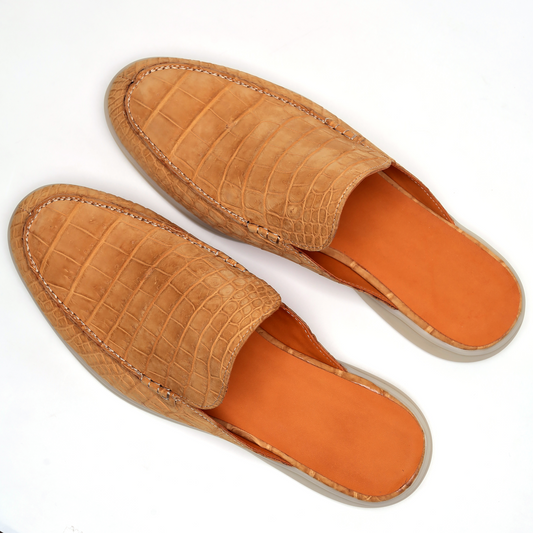
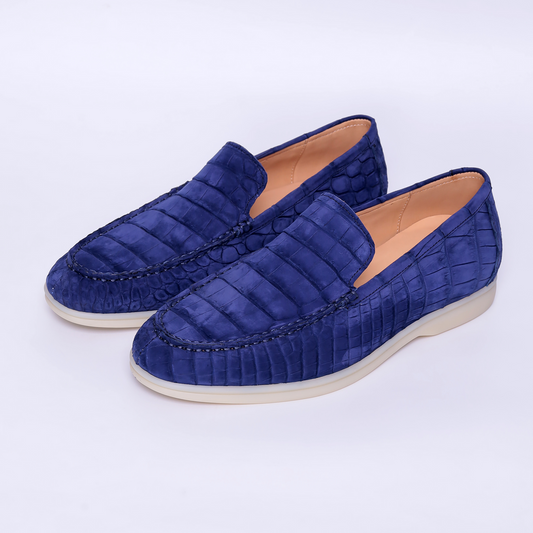
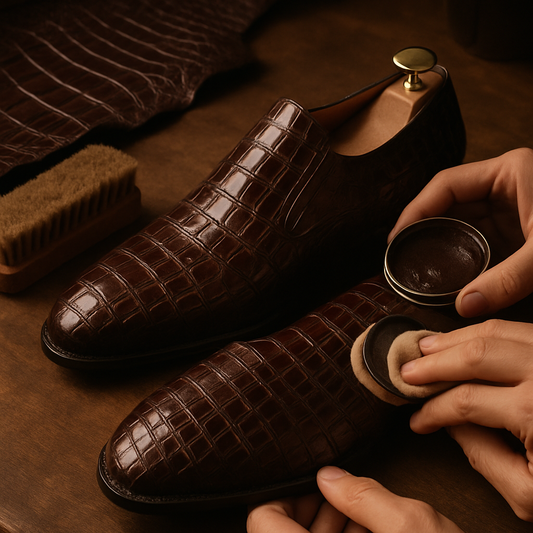
Ask whether the alligator leather has a glossy, semi-gloss, matte, or nubuck finish. Each finish changes how the scale pattern reads and how readily surface marks show. A polished finish can emphasize the scale edges, while nubuck alligator loafers have a softer, lower-shine surface that calls for gentler handling.
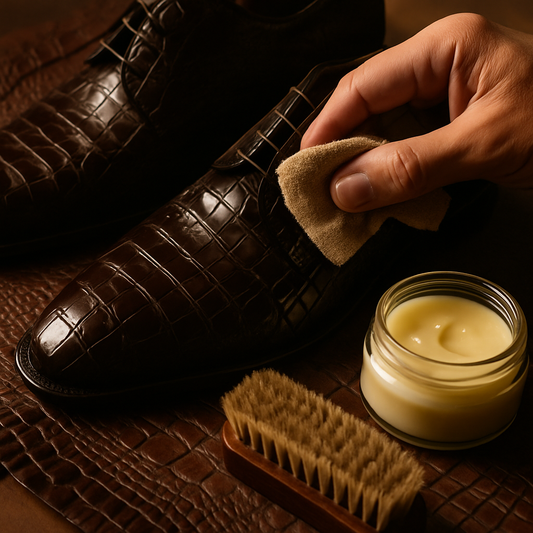
For routine care, start with a soft dry cloth to remove dust after wear. Use a lightly damp cloth only if dry wiping is insufficient, and keep moisture away from the lining and sole edges. Let the shoes dry naturally away from direct heat, which can stress leather and affect the shape of the upper.
Nubuck should be handled with a dry nubuck brush or suitable soft brush rather than aggressively rubbed with a damp cloth. Conditioning should respond to the leather’s condition and the finish recommended by the maker, rather than following a fixed calendar schedule. Before applying any product, test it in a less visible area because it may change the color or sheen.
7. Choose the Loafer for Its Actual Wearing Context
Alligator loafers work differently depending on the shape, finish, and sole. Before ordering, decide where the pair will spend most of its time.
- Business settings: A low-profile loafer in black, dark brown, or another restrained color can work with tailored trousers, a collared shirt, and a blazer. A regular belly-scale layout usually reads cleaner at close range.
- Smart-casual wear: A softer finish can pair well with chinos, dark denim, knit polos, or an unstructured jacket. Choose a toe shape that is neither excessively pointed nor overly bulky for these outfits.
- Warm-weather and driving use: Driving-style alligator loafers can suit linen trousers, cotton shorts, or casual trousers when the sole provides the grip and flexibility you need. Keep this use separate from heavy rain, rough terrain, and long walking days.
- Formal events: A cleaner belly cut, restrained shine, and slim sole generally sit more naturally with dress trousers than a heavily textured or thick-soled design.
The right pair is the one whose leather finish, construction, and fit align with the way you plan to wear it, not simply the pair with the most dramatic scale pattern in the product photos.
Final Check Before Payment
Before placing an online order, keep a record of the listed size, requested measurements, material description, available photos, and any response about traceability or construction. This gives you a practical reference if the delivered pair differs from the information used to make your decision.
To view a current example of a slip-on design, see CrocodileViet’s nubuck alligator leather slip-on loafers for men. For size, instep, or leather-finish questions before ordering, contact CrocodileViet through WhatsApp.