
Luxury Alligator Dress Shoes Care: How to Protect Texture, Shape and Finish — Part 2

공유
How to Care for Luxury Alligator Dress Shoes: Protecting Texture, Shape and Finish — Part 2
A dry cloth, natural air-drying and supportive shoe trees are the safest starting points for protecting luxury alligator dress shoes after wear.
Alligator leather has a firm surface, but its finish can still react to prolonged moisture, concentrated heat, friction and unsuitable products. Good care is less about applying many treatments and more about controlling the conditions around the shoes. The aim is to preserve the scale texture, keep the upper supported and prevent the finish from becoming dull or uneven.
Protecting the Texture of Alligator Leather
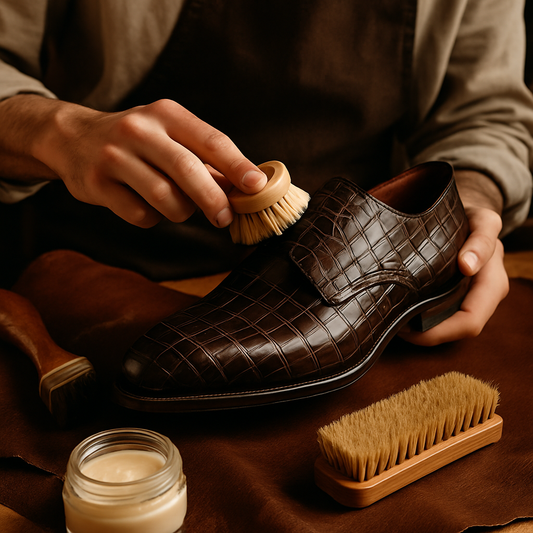
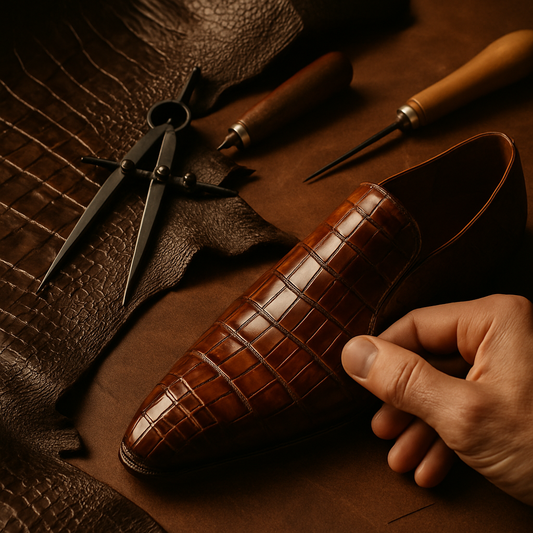
Wipe alligator leather shoes with a clean, dry, soft cloth after wearing them. This removes surface dust and body oils before they settle around the scale edges. Use light strokes that follow the direction of the scale pattern rather than rubbing aggressively across the tiles.
Avoid soaking the leather or applying household cleaners, alcohol-based products or untested creams. Alligator finishes can differ according to the tannery and final treatment, so a product that suits smooth calfskin may alter the sheen or color of alligator leather. If a conditioner is being considered, test it first on a concealed area or ask the seller whether it is suitable for that particular finish.
The belly area usually has a comparatively regular, balanced scale arrangement, but it is not a completely unchanging pattern. Belly scales transition into smaller flank scales, and natural variation is part of the hide. “Belly” describes the flatter, smoother area; “hornback” refers to the ridged dorsal area. Cleaning should respect these differences rather than forcing the entire shoe to look mechanically identical.
What to Do if the Shoes Become Wet
Prolonged moisture can affect the leather surface, adhesives and internal materials. If your alligator leather shoes become wet, blot them with a dry cloth and let them dry naturally at room temperature. Keep them away from radiators, hair dryers, direct heaters and strong sunlight, because rapid heat can stress the upper and change its shape or finish.
Do not seal damp shoes in a box or plastic bag. Give them space for air to circulate, and avoid wearing them again until the interior and upper feel dry. If water has left a visible mark, repeated rubbing may spread the problem. A leather specialist or the workshop that made the shoes can advise whether the finish needs professional treatment.
| Concern | Practical response | Reason |
|---|---|---|
| Dust after wear | Use a clean, dry cloth with light strokes | Removes surface particles without adding moisture |
| Wet upper | Blot and dry naturally at room temperature | Reduces stress caused by rapid heating |
| Loss of shape | Insert suitable shoe trees once the shoes are dry | Supports the vamp and helps control creasing |
| Unknown cream or cleaner | Test on a concealed area before wider use | Finishes and colors can respond differently |
Using Shoe Trees to Support Shape
Shoe trees help the upper hold its intended form between wears. They support the vamp, reduce deep folding and help the lining release some moisture from normal use. Choose a pair that fills the shoe without forcing the sides outward or pressing heavily against the toe.
Wooden shoe trees are commonly selected because they provide firm support and can help absorb some internal moisture. They do not replace drying after heavy exposure to water. Insert them gently, keeping the shoe aligned with its last rather than pushing them in at an angle.
Alligator uppers can show natural creasing where the foot bends. That is different from a collapsed toe box, overstretched opening or distortion caused by a shoe tree that is too large. Rotating between pairs also gives each pair more time to dry and recover its shape.
How Often Should You Clean Alligator Dress Shoes?
There is no useful fixed schedule for every wearer. Clean the shoes when visible dust, fingerprints or light surface residue appears, and respond promptly after exposure to rain or a dirty surface. Cleaning too frequently, especially with product, can be less helpful than removing dust with a dry cloth and storing the shoes properly.
Inspect the soles, welt or edge, heel and interior as well as the upper. A polished surface can hide developing wear around the toe and heel. Early repair may prevent a small construction or sole issue from affecting the leather upper.
Buying Factors That Affect Price
The price of luxury alligator dress shoes reflects several concrete factors rather than a single label. Hide area and usable belly placement matter because a maker may need a sufficiently broad, consistent section for the vamp and other visible panels. Scale arrangement, visible marks, color treatment and the amount of cutting required can also affect material cost.
Construction adds another layer. Compare the complexity of the shoe pattern, upper assembly, lining, insole, sole, heel and finishing work. Labor, workshop location and whether the shoes are made to a standard size or adjusted for an individual foot also influence the final price.
Ask how the supplier defines its hide grades. Grading labels are not standardized across every supplier or tannery. In one quadrant-based system, the number and position of defects across the belly affect the grade, with a defect nearer the center carrying more significance than one near an outer area. Another supplier may use different names or thresholds.
A visual grade describes the inspected surface; it does not by itself prove durability. Construction, leather thickness, finishing, storage and use all affect how the shoes perform over time. This is useful context when comparing genuine alligator shoes for men or handmade alligator shoes at different prices.
Checking Fit: Length, Width and Instep
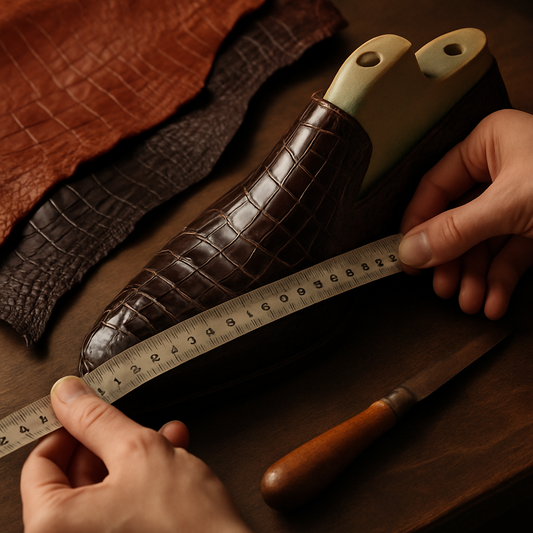
Alligator leather shoes should fit securely without relying on the material to stretch significantly. Check foot length and width, then assess the instep and the shape of the toe box. A shoe can have the correct length but still feel tight across the forefoot or too low over a high instep.
- Length: Measure both feet while standing and use the larger measurement when comparing with the maker’s chart.
- Width: Record the broadest part of the foot, especially if you need a wide fit.
- Instep: State whether pressure occurs across the top of the foot, since last shape affects this area.
- EU, US and UK sizing: Treat conversions as a starting point, not a guarantee, because sizing standards and lasts differ.
- Remote measurements: Send a length tracing, width measurement and photographs if the workshop requests them, and describe pressure points from existing shoes.
For online orders, ask about the last, available width and exchange conditions before buying. A slightly different toe shape can change how the same numerical size feels. This matters particularly with structured alligator uppers, where an incorrect fit can create concentrated pressure at the vamp.
Styling Luxury Alligator Dress Shoes
Use the shoe color and scale layout as the main styling reference. Dark brown or black pairs can sit naturally with charcoal, navy and medium-gray tailoring. Brown footwear can work with navy, beige, olive and warmer gray clothing when the belt and other leather accessories are coordinated by color family rather than forced into an exact match.
For a quieter outfit, choose trousers with a clean break and keep the rest of the accessories restrained. If the shoes have a pronounced scale contrast or brighter finish, let them carry visual interest while using a simple shirt, knitwear or suit fabric. Socks should cover the ankle when seated, particularly with formal trousers.
For more ideas about color-specific wear and maintenance, read Navy Alligator Skin Shoes: Styling, Care and Buying Tips.
Material Identification and Trade Documentation
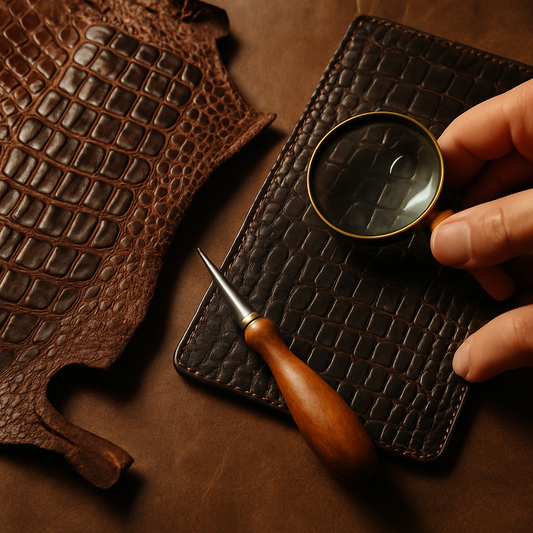
An elongated umbilical scar can appear on alligator belly leather, while individual scales may retain small sensory pores. These features can support a material assessment, but one visual trait alone does not establish authenticity. Scale shape and regularity also vary naturally across a hide.
Trade documentation matters for regulated crocodilian materials. American alligator is listed in CITES Appendix II, so international trade is regulated rather than categorically prohibited. U.S. Fish and Wildlife Service guidance also requires crocodilian skins to carry a tamper-resistant tag for export from the United States; untagged skins cannot be exported from there. Requirements can depend on species, origin and destination, so buyers should ask the seller what documentation applies to the specific product.
Frequently Asked Questions
Can I use ordinary shoe polish on luxury alligator dress shoes?
It is safer not to apply an untested polish. Alligator finishes vary, and ordinary polish may alter sheen, collect around scale edges or create uneven color. Use a dry cloth for routine cleaning and test any approved product on a concealed area first.
What should I do if my alligator dress shoes get caught in rain?
Blot away surface water, remove any wet inserts and let the shoes dry naturally at room temperature. Keep them away from direct heat and avoid wearing them again until they are dry. Seek professional advice if water marks or finish changes remain.
How do I choose the right size when ordering alligator shoes online?
Measure both feet for length and width, report your instep height and say whether you need a wide fit. Compare those measurements with the maker’s EU, US or UK chart, and send remote measurements or tracings if requested because lasts differ between models.
Does a higher alligator hide grade guarantee longer-lasting shoes?
No single grade label guarantees durability. Suppliers use different grading conventions, and visual grading mainly concerns defects and their position on the hide. Construction, finishing, fit, storage and use also affect service life.
Browse CrocodileViet’s alligator and crocodile leather shoe collection to compare available designs and construction details. For measurements or care questions, contact CrocodileViet through WhatsApp.