
Custom Alligator Skin Shoes: Size, Color, Finish and Personalization Guide — Part 2

공유
Custom Alligator Skin Shoes: A Guide to Size, Color, Finish and Personalization
For custom alligator skin shoes, size, color, surface finish, and personalization are separate specifications that should be confirmed before production begins.
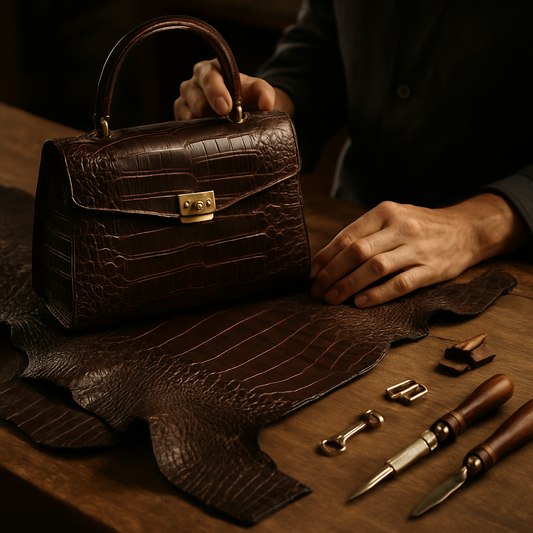
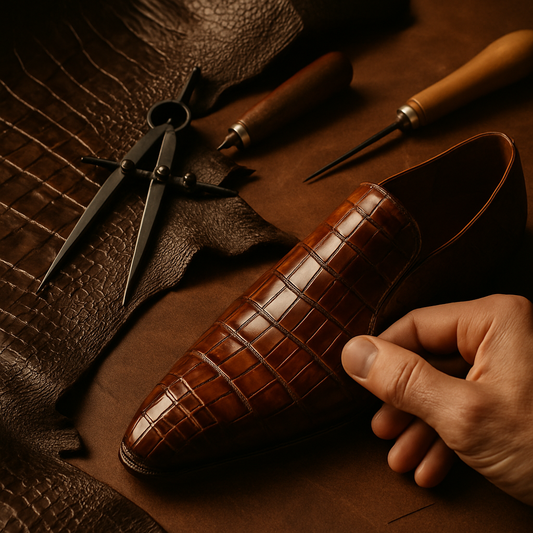
Custom footwear requires more than choosing a shade from a photograph. The hide section, scale layout, shoe last, pattern, construction details, and finishing method all influence the finished pair. At CrocodileViet, we manufacture our alligator leather goods in-house, so these choices can be discussed together rather than treated as unrelated add-ons.
What can be customized on alligator skin shoes?
A custom order may involve several levels of specification:
- Size and last: the length, width, instep height, and overall shape of the shoe.
- Hide placement: how the belly section is positioned across the vamp, quarters, or other visible panels.
- Color: a standard tone or a requested custom color, subject to leather and finishing considerations.
- Finish: matte, satin-like, or glossy surface treatment.
- Design: loafer, Oxford, monk strap, derby, boot, or another agreed silhouette.
- Personalization: details such as initials, selected hardware, stitching color, or sole preferences where the design allows them.
Not every option suits every pattern or shoe design. A large, visible scale arrangement may need a different panel layout from a smaller-scale section, while a highly reflective finish can make color variation more noticeable. Confirming the complete specification together helps prevent one decision from working against another.
Choosing the right alligator hide section
For visible shoe panels, the belly section is commonly selected for its comparatively regular, balanced scale pattern and its smooth, pliable handle. Flank leather has smaller, denser scales and can produce a different visual rhythm. “Belly cut” and “flank” describe hide areas or cuts; they do not describe separate species.
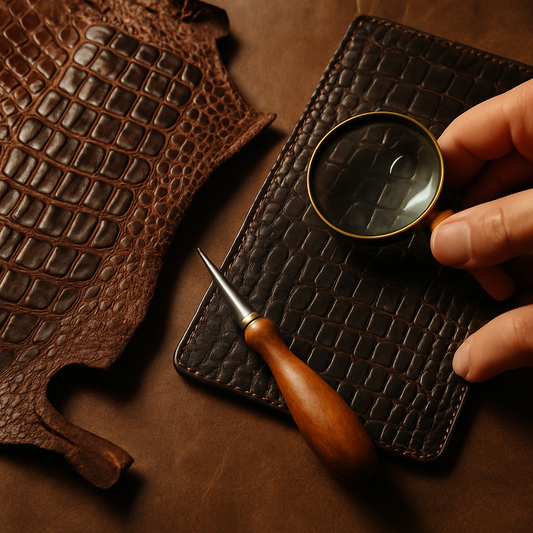
An alligator belly may also show an umbilical scar. This is a useful identification clue, but it should not be treated as the sole definitive species test. Scale size and symmetry alone are also unreliable because alligator and crocodile patterns can overlap.
At the leather level, true crocodile belly scales commonly show sensory pores, while alligator belly scales lack those pores. This distinction is more useful than judging a hide only by whether its scales look large, small, or evenly arranged. If species identification matters for an order, ask for clear leather photographs, the seller’s documentation, and the applicable trade paperwork rather than relying on one visible characteristic.
Alligator skin shoe color: what to decide before ordering
Alligator leather can be dyed in colors such as black, brown, tan, navy, burgundy, or other requested tones. Color is a processing choice rather than a species identifier. Both alligator and crocodile belly leather can accept dye evenly, so color alone does not establish that a shoe is made from alligator.
For a custom color request, provide more than a name such as “dark brown” or “blue.” Useful references include:
- a physical leather or fabric swatch;
- a recognized color reference;
- a photograph taken in daylight;
- whether the desired result is warm, cool, reddish, greyed, or highly saturated.
Screen and phone colors vary, and the scale relief can reflect light differently from a flat swatch. A photograph may therefore communicate the general direction without guaranteeing an identical result. The final appearance can also shift according to the finish applied over the dyed leather.
For wardrobe planning, black and deep brown generally work with formal tailoring and darker trousers. Navy can sit between black and brown, especially with grey, blue, cream, or tan clothing. A lighter custom shade may work well with casual tailoring but can show surface marks more readily. These are styling considerations, not fixed rules.
For more ideas on combining a blue-toned pair with clothing, read Navy Alligator Skin Shoes: Styling, Care and Buying Tips.
Matte, satin, or glossy finish?
Finish changes how the scales catch light and how visible color variation appears. A matte surface usually gives a quieter appearance and reduces reflected glare. A glossier surface emphasizes the scale relief and can make a dark shade appear deeper. A middle finish can provide some reflection without the mirror-like effect of a high gloss.
The finish should match both the shoe design and the intended use. A formal Oxford may suit a controlled shine, while a casual loafer can work with a lower-reflection surface. High-shine shoes may require more frequent wiping because fingerprints, dust, and water marks are easier to see.
Finish is not a reliable way to identify alligator leather. Matte and glossy treatments can be applied to different crocodilian leathers, and custom color is also a processing decision. Ask which finish is being proposed, how it changes the color, and whether the appearance is expected to vary across the scale pattern.
Personalization options for handmade alligator shoes
Personalization should support the shoe’s proportions instead of competing with the scale pattern. Common possibilities include initials, a selected monogram position, contrasting or matching thread, buckle or metal-tone preferences, and sole or welt color where compatible with the design.
Initials are usually most readable on a discreet area with enough visual space. Placing them across prominent belly scales can interrupt the pattern, while a restrained position near the lining or heel may keep the upper visually cleaner. Hardware also affects the result: silver-tone fittings can sharpen a cool color, while brass or gold-tone fittings can reinforce warm brown or burgundy leather.
Ask for a written specification before confirming the order. It should identify the shoe model, leather type, color direction, finish, size system, personalization, and any agreed construction details. This record gives both the client and workshop a single reference when several custom choices are involved.
How much do custom alligator skin shoes cost?
A reliable price cannot be assigned from the word “alligator” alone. The total depends on the amount and placement of leather, the hide section, the selected shoe design, construction, lining, sole, hardware, personalization, and the amount of fitting work required.
Important price factors include:
- Leather coverage: a design with large alligator panels uses more visible material than a shoe with smaller inserts.
- Scale layout: centered or closely matched panels can require more planning and usable leather than an unrestricted layout.
- Hide grading: sellers use different grading systems, so a label such as “Grade 1” has no universal meaning.
- Construction: sole type, lining, welt or edge treatment, and other structural choices affect labor and materials.
- Color and finish: a custom dye direction or special surface treatment may require additional preparation and approval.
- Personalization: monograms, special hardware, and non-standard components add material or workshop time.
- Fit requirements: unusual width, high instep, or remote measurement review may affect the fitting process.
One supplier may grade the belly-and-flank midsection from 1 for fewer belly defects to 5 for more defects, excluding the head and tail. That is only one supplier’s rubric. Defects may include scars, scratches, shading, and scale deformities, but another tannery or seller may use different labels and criteria. Ask for the actual grading explanation before comparing quotations.
Visual grade also concerns appearance; it does not by itself prove greater durability. A higher visual grade may offer a cleaner surface or more consistent panel, while construction and care still influence how the finished shoes perform over time.
Getting the correct size and fit remotely
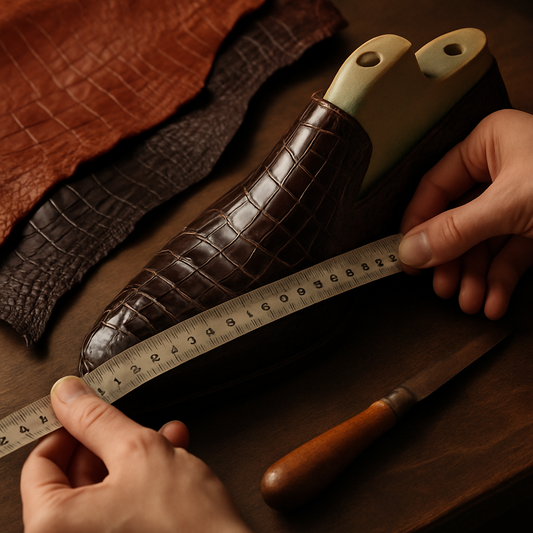
Size should be discussed using the length and width of each foot, not only a familiar number. EU, US, and UK sizes are not interchangeable without conversion, and men’s sizing can vary between brands and lasts.
For a remote fitting review, provide:
- heel-to-toe length for both feet;
- the widest forefoot measurement for both feet;
- instep or girth measurement when the foot is high-volume;
- your usual EU, US, and UK size where known;
- the measurements of a well-fitting pair, including its internal length if available;
- clear tracing or foot photographs made according to the workshop’s instructions.
Measure both feet because small differences are common. A wide fit may need extra forefoot room rather than simply increasing the length. A high instep can create pressure over the vamp even when the toe length seems correct. Conversely, a shoe that is too long may crease in the wrong place and allow the heel to lift.
Tell the workshop whether you plan to wear thin dress socks, thicker socks, or no-show socks. Also mention if you use orthotics or have bunions, a prominent fifth toe, or other fitting concerns. Remote measurements improve the starting information, but they cannot replicate an in-person fitting in every case.
Care for custom alligator leather shoes
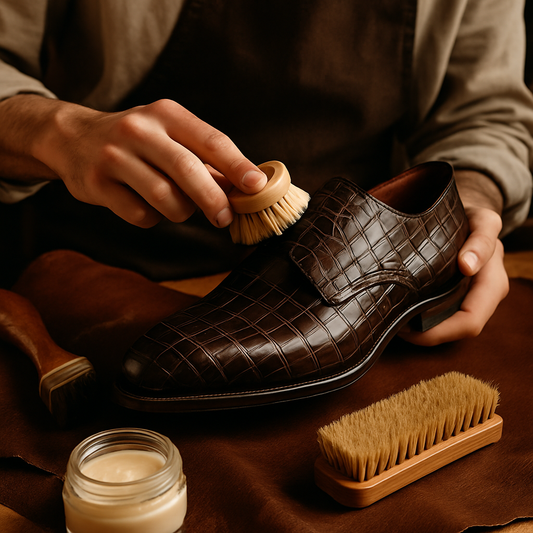
Use a dry, soft cloth as the default cleaning method. Wipe away dust after wear, paying attention to the spaces around the scales and the welt. If the shoes become wet, let them dry naturally away from direct heat before wiping them. Heat can affect leather moisture and finish.
Do not apply an unfamiliar cream, oil, wax, or household cleaner without checking its suitability for the specific finish. A product intended for smooth calf leather may change the sheen or darken alligator leather. Abrasive brushing can also mark the raised scale edges.
There is no useful fixed care schedule for every wearer. Frequency depends on climate, perspiration, rotation, exposure to rain, and how often the shoes are worn. Rotating pairs gives the leather time to dry between uses. Store the shoes in a breathable dust bag and keep them away from prolonged sunlight or damp storage.
International purchase and CITES considerations
American alligator is listed in CITES Appendix II, and international trade generally requires an export permit or re-export certificate, with national rules potentially adding requirements. CITES paperwork regulates trade; it does not by itself prove species authenticity or leather quality.
Crocodilian-leather shoes may be classified as small manufactured products in CITES materials, but that classification does not mean every purchase or border crossing is automatically permit-free. Requirements can depend on the transaction, destination, origin, and national regulations. Ask the seller what documents apply to your specific shipment and check the rules of the countries involved before ordering.
Frequently Asked Questions
Can I request a custom color for alligator skin shoes?
Yes, a custom color can be discussed, but a photo or color name is not a guaranteed exact match. A physical swatch or recognized color reference gives the workshop better information, and the chosen finish can change how the color appears.
Does “Grade 1” mean the same thing for every alligator leather seller?
No. Grading labels vary by supplier and tannery. One supplier may grade the belly-and-flank midsection from 1 to 5 according to visible defects, while another uses a different scale or definition. Request the seller’s rubric before comparing grades.
How should I provide measurements for custom alligator shoes?
Provide the length and widest width of both feet, your instep or girth measurement, known EU, US, and UK sizes, and information about socks or orthotics. Tracings and photos made to the workshop’s instructions can support a remote fit review.
Does a glossy finish prove that shoes are made from genuine alligator leather?
No. Glossy and matte finishes are processing choices and can be applied to different crocodilian leathers. Species assessment should consider the leather pattern, sensory pores, umbilical-scar clues, seller documentation, and applicable trade paperwork together.
Request a custom pair
Browse the CrocodileViet alligator shoe collection to compare available designs and discuss a custom specification. WhatsApp can be used to share measurements, color references, and personalization requests before an order is confirmed.