
Custom Alligator Skin Shoes: Size, Color, Finish and Personalization Guide

공유
A Guide to Custom Alligator Skin Shoes: Sizing, Color, Finish, and Personalization
For American alligator hides, the working size is conventionally measured as belly width in centimetres at the widest point, so a custom alligator skin shoe order starts by matching the usable belly area to the shoe size and planned panel layout.
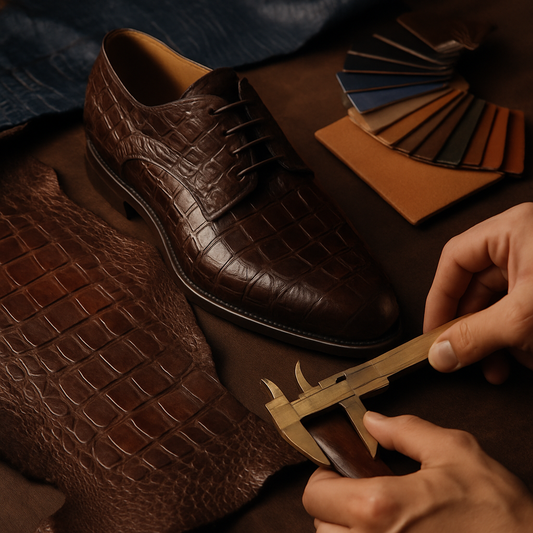
Custom alligator skin shoes involve more than selecting a shoe silhouette and a colour. The maker must allocate hide sections across the vamp, quarters, heel counter, tongue, and other visible panels so the scale pattern reads as intentional on both shoes. Your foot measurements, requested finish, preferred colour depth, and any initials or monogram placement all affect that plan.
Start With the Alligator Belly
The smooth belly is the key section of an American alligator hide for footwear. Its scales tend to have a comparatively regular, balanced pattern, which helps a maker place paired shoe panels with a more controlled visual rhythm. The belly also lies flatter than bony or heavily textured portions of the hide, making it particularly useful for vamps and quarters.
Hide width matters because shoe size changes the amount of usable belly required. A larger shoe can require broader, cleaner areas for the vamp and quarter panels, while a smaller size may allow more flexibility in scale placement. This is one reason two made-to-order pairs in the same colour can require different hides or different cutting plans.
Alligator belly skin may include an umbilical scar: a star- or web-like mark around the centre of the belly. It is a species-level feature associated with alligators. On a custom pair, the maker can either position around it for a cleaner visual field or use it deliberately in a less prominent panel, depending on the requested appearance and the available hide area.
How Hide Grade Affects a Custom Pair
Visual grading for alligator leather focuses chiefly on blemishes in the belly or midsection, rather than the head, back, tail, or bony areas. Some suppliers use a 1-to-5 grade scale, with Grade 1 commonly describing a belly without visible defects and lower grades reflecting more blemishes or clusters in the usable midsection.
Those labels are not universal. A tannery or supplier may apply different definitions, so it is more useful to ask what the stated grade means for the exact hide: the location of marks, the size of clean cutting areas, and whether matched panels are possible for your shoe size.
Grade describes visual selection rather than a guarantee of durability. A pair with a more visibly marked belly may be suitable for a darker colour, a less formal shoe design, or a customer who prefers more character in the scale field. A cleaner belly is often chosen where large uninterrupted vamp panels and close left-to-right matching are the priority.
| Custom decision | What to specify | Why it matters for alligator skin shoes |
|---|---|---|
| Foot fit | Length, width, ball girth, instep, heel, and usual shoe size | These measurements shape the last and determine how much belly area is needed for each upper. |
| Hide appearance | Clean, regular belly pattern or visible natural variation | The cutting plan changes according to the available defect-free midsection and the desired symmetry across both shoes. |
| Colour | Colour family, depth, undertone, and reference images | Dark and light colours reveal scale edges, small marks, and finishing variation differently. |
| Finish | Gloss level and desired surface character | A reflective finish emphasizes individual scales, while a lower-lustre finish gives a quieter reading from a distance. |
| Personalization | Initials, monogram, date, lining text, and preferred placement | Placement must account for scale boundaries, visible panels, and the amount of available surface. |
Sizing Custom Alligator Leather Shoes
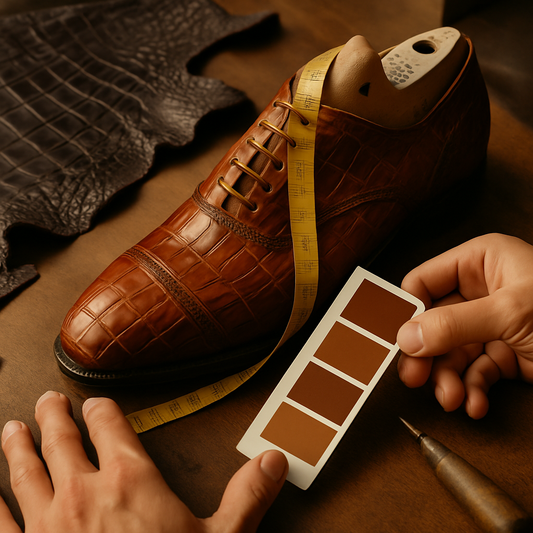
A labelled EU, US, or UK size is useful reference information, but it should not be the sole basis for a custom last. Brand sizing varies, and the same stated size can fit differently across loafer, derby, oxford, boot, and slip-on constructions. Give the maker your usual sizes in each system, then support them with actual measurements.
Length and width are the starting points, but ball girth and instep height can be equally consequential. A customer with a wide forefoot may need more room at the ball of the foot without adding excess heel volume. A high instep can affect the throat opening, vamp height, lacing position, or the ease of entering a loafer. Heel width also matters because a shoe that is roomy at the front can still slip if the heel cup is too broad.
In-person fitting and remote measurement are both valid primary routes. An in-person appointment allows direct assessment of stance, pressure points, and current footwear. For a remote order, clear measurements taken while standing can provide comparable planning information: heel-to-toe length, forefoot width, ball girth, instep girth, heel girth, and photographs of the foot from above and from both sides. Include notes about orthotics, one foot being larger than the other, or recurring pressure areas.
For genuine alligator shoes for men, toe shape should also be discussed early. A narrow chisel toe, rounded toe, soft square toe, and almond toe each distribute space differently at the forefoot. The visual scale layout is important, but it should follow a last that gives the wearer adequate room rather than forcing the foot into a preferred silhouette.
Choosing Colour for Alligator Skin Shoes
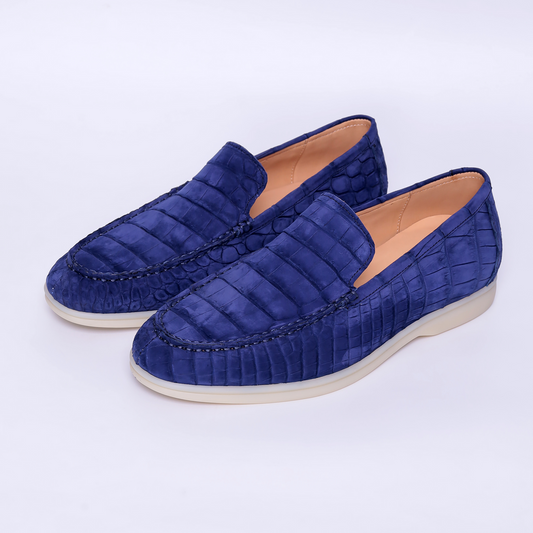
Colour selection changes how strongly the belly scale pattern appears. Black generally creates the most restrained appearance from a distance, though reflected light can still define each scale. Deep brown can show more depth between scale edges, especially in a finish with moderate lustre. Burgundy, oxblood, navy, grey, and lighter brown families can reveal the pattern more readily and may show natural variation between panels more clearly.
For a custom request, specify more than a colour name. State whether you prefer a warm or cool brown, a nearly black burgundy or a brighter wine tone, a solid appearance or controlled tonal variation, and whether the shoes will be worn mainly in daylight, evening settings, or office interiors. Reference images help establish direction, but a natural hide can take colour with slight differences across scale boundaries.
Light shades can call for a cleaner-looking belly because small marks and edge variation are more visible. Darker shades can visually soften minor variation, although a dark dye does not erase the underlying scale structure. The available hide and the requested finish should be reviewed together before a final colour expectation is set.
Gloss, Matte, and Other Finish Directions
A finish determines how light travels across the scales and how the shoe reads at close range. A high-gloss direction produces stronger reflections and sharper contrast between individual scales. It can suit formal evening wear, tailored business clothing, or occasions where the footwear is intended to be visually prominent.
A semi-gloss finish retains visible scale definition with less mirror-like reflection. It is often easier to combine with wool trousers, dark denim, and business-casual tailoring because it does not dominate the outfit in the same way. A lower-lustre or matte direction gives the upper a quieter surface, although it still retains the distinctive geometry of alligator belly skin.
Finish preference is separate from hide grade. A glossy surface can make dust, handling marks, and fine surface variation more apparent; a lower-lustre surface changes the reflection, not the identity of the leather. Ask for the proposed finish direction in writing, particularly if you are matching an existing belt, watch strap, briefcase, or jacket.
Personalization That Works With the Scale Pattern
Personalization can be subtle or visible, but it should be placed where it does not compete with the alligator belly layout. Initials inside the shoe, a date on the lining, or a small mark near the heel are generally less disruptive than large lettering across the vamp. A monogram placed over several scales may read unevenly because the surface is naturally segmented.
For handmade alligator shoes, discuss the personalization before cutting begins. The requested location may affect which panel receives the cleanest portion of the hide, how a pair is mirrored from left to right, and whether the mark is best placed on leather, lining, or another component. If the marking method is important to you, ask how it will appear on the selected finish rather than judging only from an image of a different leather.
What Determines the Price of a Custom Pair
Custom alligator skin shoes are priced according to specific material and construction variables rather than a broad claim of quality. Key factors include the alligator species, belly width and usable area, visible grade of the belly or midsection, the amount of scale matching required, shoe size, pattern complexity, construction method, sole specification, and the level of handwork involved.
A larger size can increase material demand because broader matched belly sections may be needed. A design with large uninterrupted vamp panels may also require more selective cutting than a design divided into smaller pieces. Personalization, special colour development, and requests for closely mirrored left-right scale placement can add labour and reduce flexibility in hide allocation.
Ask for a quotation tied to the actual requested design: shoe type, size, width, colour direction, finish, sole, and personalization. This gives a clearer basis for comparison than a general price for alligator leather shoes.
Styling Custom Alligator Shoes by Occasion
Business and formal settings
- Black or deep brown alligator shoes with charcoal, navy, or dark grey tailoring.
- Oxblood or dark burgundy shoes with mid-grey suits, brown tailoring, or subdued patterned trousers.
- Lower-profile finishes where the rest of the outfit includes textured cloth or a patterned tie.
Business-casual wear
- Dark brown or navy alligator loafers with tailored chinos, wool trousers, and open-collar shirts.
- Semi-gloss derby styles with dark denim and an unstructured blazer.
- Muted grey or brown finishes with knitwear, overshirts, and trousers with a clean taper.
Evening and special events
- Black high-gloss shoes with a dinner jacket or sharply tailored dark suit.
- Deep burgundy styles with black, charcoal, or midnight-blue clothing where the shoe can provide controlled colour contrast.
- A quieter upper finish if accessories already use high-shine metal, patent surfaces, or strong patterning.
Care for the Finish and Scale Surface
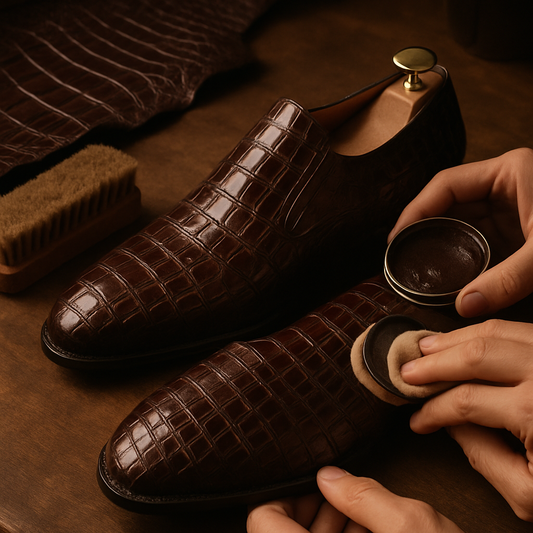
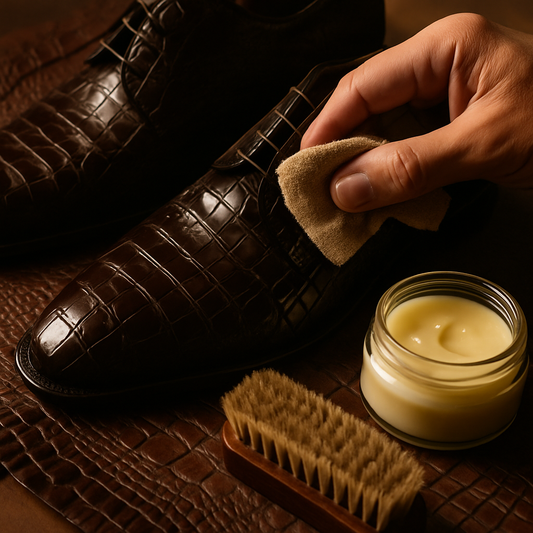
Use a clean, dry, soft cloth as the default after wear. It removes dust from scale edges without introducing unnecessary moisture. If a mark needs more than dry wiping, use a barely damp cloth as a last resort, keep water away from the shoe interior and sole edges, and allow the pair to dry gradually away from direct heat.
Conditioning should be based on the leather’s actual condition, climate, wear frequency, and finish rather than a fixed calendar schedule. Use a product suitable for exotic leather only after checking its effect on a discreet area or seeking professional advice. Heavy oils, aggressive cleaners, and excessive polishing can alter sheen or leave residue between scales.
Store the shoes with properly sized shoe trees, away from prolonged sun, heat, and high humidity. Alternate pairs where possible so the upper, lining, and interior can air out between wears.
Documentation and Material Disclosure
Ask for clear species disclosure and legally compliant sourcing documentation where relevant to your country and order route. Crocodilian hides and products are internationally regulated under CITES-related trade rules, so export and import documentation concerns legal trade compliance. It should not be treated as a standalone test of material authenticity.
Authenticity assessment is strongest when several details align: supplier documentation, species disclosure, the balanced belly-scale pattern, and recognised alligator features such as the central umbilical scar where present. No single visual trait should be treated as conclusive on its own.
Commission Your Pair
View CrocodileViet’s shoe collection to establish a starting direction for your custom alligator skin shoes. For sizing, colour, finish, and personalization questions, contact CrocodileViet via WhatsApp with your measurements and reference images.