
Crocodile Leather Belt: Style Guide for 2026–2027

공유
Crocodile Leather Belt: A Style Guide for 2026–2027
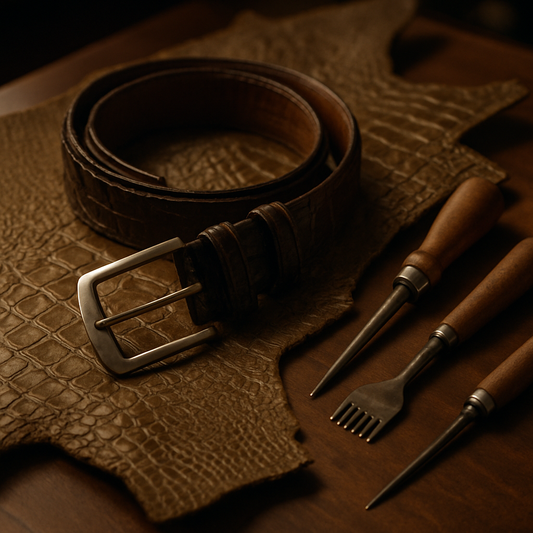
A crocodile leather belt made from belly hide usually shows balanced central scales, while flank and back sections create a more irregular pattern.
For 2026–2027, a crocodile leather belt works best when its hide area, scale layout, width, buckle, color, and fit support the clothes and setting where you plan to wear it. The most useful style decision is not simply choosing the most visible scales. It is matching the belt’s construction and proportions to your wardrobe while checking that the material is actually crocodile hide.
What “crocodile leather belt” should mean
A genuine crocodile belt should identify actual crocodile hide. American alligator, Alligator mississippiensis, belongs to a different genus and should be described separately rather than marketed as crocodile.
That distinction matters because belly structure, pore patterns, scar features, and grading practices differ. A belt made from alligator can still be a well-made exotic leather belt, but it should be labeled as an alligator leather belt rather than a crocodile leather belt.
At CrocodileViet, we manufacture crocodile and alligator leather goods in-house. Keeping the material identity clear helps us match the hide section to the product instead of treating every reptile skin as interchangeable.
Choose the hide section before choosing a style
Belly hide for a regular dress-belt appearance
The belly is often selected for dress belts because its central scales form a relatively regular, balanced layout. The transition toward the flank is gradual in many crocodile hides, so a belt can have visual rhythm without looking mechanically repeated.
Look at the centerline and the scale progression from end to end. Slight variation is expected in a natural hide. A belt with balanced scales can suit tailored trousers, a dark suit, or business-casual clothing where the belt should coordinate with the outfit rather than dominate it.
Flank hide for a more varied texture
Flank scales are generally less regular than central belly tiles. They can create a stronger texture and may suit casual trousers, denim, boots, or a wardrobe built around visible leather accessories.
Flank placement is not automatically a lower-quality material. Hide grades usually describe defects and usable cutting yield, not a universal luxury ranking. The grading label also depends on the supplier, tannery, species, and grading system being used.
Back or hornback sections
Back and hornback areas have a different structure from belly and flank hide. They may include more pronounced ridges or distinctive scale formations, producing a belt with a less conventional surface. This look needs more room in the outfit, so pair it with simple clothing and restrained accessories.
Do not assume that a hornback belt, a flank belt, or a belly belt is automatically more durable because of its appearance. Durability depends on the hide, tanning, thickness, reinforcement, edge work, buckle attachment, and how the belt is worn. Visual grade is not a durability test.
How to read crocodile scale details
Scale pattern can help you assess whether a belt is consistent with crocodile hide, but pattern alone is not definitive. Crocodile belly scales are often more regular, with a gradual change toward the flank. Alligator patterns tend to change more abruptly between areas, although natural variation means that neither observation proves species by itself.
Visible integumentary sensory organ pores, often called ISO pores, are another useful clue. They commonly remain visible on tanned crocodile scales. Alligator belly scales are generally described as lacking the same regular pore pattern. A pore feature should support the seller’s material documentation, not serve as the only proof of authenticity.
Crocodile belly hide may also show an umbilical scar, while alligator commonly lacks the same feature. This is a helpful identifying detail, but it is still one observation rather than a complete authentication process.
Ask for the species name, source documentation, hide section, and product photographs before relying on a visual label. CITES requirements depend on the exact species, country, transaction, and destination. For an international purchase, check the current permits and documentation required for that specific item.
Matching a crocodile leather belt to your wardrobe
Business and formal clothing
For a suit or office tailoring, a balanced belly pattern and a moderate belt width usually create the easiest combination. A dark brown crocodile belt works with navy, charcoal, mid-grey, and many brown shoes. Black is more direct with black or charcoal tailoring and formal footwear.
Match the buckle metal to the other visible metal in your outfit where practical. A polished buckle can suit formal clothing, while brushed or muted metal tends to sit more quietly with business-casual trousers.
Keep the belt surface and footwear in the same general level of formality. A heavily textured flank or hornback belt may compete with a sharply tailored suit, while a restrained belly belt can look out of place with rugged denim and work boots.
Smart-casual outfits
Medium-brown, tan, or deeper reddish-brown crocodile can work with chinos, Oxford shirts, knitwear, loafers, and suede shoes. Here, flank texture can add interest without requiring a matching crocodile wallet or watch strap.
For jeans, use the belt to connect the footwear and upper layers. A darker belt with dark boots creates a continuous line; a lighter belt can echo tan footwear or a casual jacket. Avoid matching every leather item exactly, because similar tone and finish are usually enough.
Using an alligator leather belt men’s wardrobe may call for
If you are comparing an alligator leather belt for men with a crocodile belt, compare the actual hide and construction rather than assuming that one species is inherently better. Alligator belly scales often have their own regular layout, while the pattern transition and pore details differ from crocodile.
For more business-focused alligator styling, see How to Choose Alligator Leather Belt Men for Business Wear. Keep the product description precise: an alligator belt is not a crocodile belt simply because both are reptile leathers.
Price: what you are actually paying for
The price of a crocodile leather belt can reflect several concrete factors:
- Species and hide source: different crocodile species and sourcing regions can carry different material costs and documentation requirements.
- Hide section: a central belly cut, flank cut, and hornback cut require different selection and cutting decisions.
- Usable yield: a grade may indicate the amount of hide suitable for cutting and the number or severity of visible defects. It does not automatically describe tanning quality or finished-belt durability.
- Belt dimensions: greater width, length, and leather coverage use more material.
- Construction: lining, reinforcement, edge finishing, stitching, buckle hardware, and replaceable buckle systems affect labor and material use.
- Customization: unusual sizing, color requests, engraved hardware, or a specific hide layout may require additional selection and production work.
Grading labels need context. Some American crocodile systems assess belly hide with Grades 1–4, while American alligator systems may assess belly and flank using Grades 1–5. These labels are not interchangeable across suppliers. A high grade also does not guarantee a particular belt finish, because the final appearance depends on blemishes, usable cutting area, and how the hide is selected for the product.
Fit and sizing: measure the belt, not only your trousers
Belt sizing should be based on the distance from the buckle’s pin or attachment point to the hole you normally use, not only the tagged trouser size. Measure a belt that fits well, from the buckle connection to the hole you use most often. Then compare that length with the seller’s stated size method.
- Length: confirm whether the listed measurement means total end-to-end length, buckle-to-center-hole length, or the size of the wearer’s waist.
- Width: check that the belt passes through your trouser loops. Dress trousers may suit a narrower profile, while jeans and casual trousers can accommodate a wider belt.
- Hole spacing: a standard set of holes offers adjustment, but the center hole should ideally be close to your usual position.
- EU, US, and UK references: trouser sizing conventions differ, and belt labels are not converted consistently. Use the seller’s actual centimeter or inch measurement when available rather than relying on a country label alone.
- Wide fit: measure around the place where the belt will sit, especially if your waist and hips differ substantially or you wear the belt below the natural waist.
- Instep and rise: for trousers with a higher rise or a thick waistband, allow for the belt’s position and loop height rather than measuring at the narrowest part of your body.
If you are ordering remotely, send the requested measurements in the seller’s format and include a photograph of a well-fitting belt only if the workshop asks for one. A useful remote measurement normally includes the preferred hole position, total belt width, buckle preference, and whether the belt will be worn through narrow dress loops or wider casual loops.
Care for a crocodile leather belt
After wearing the belt, wipe away dust or light surface residue with a dry, soft cloth. This is the safest default for routine care. Hang or lay the belt flat with the leather supported rather than folding it sharply around a drawer handle.
Keep the belt away from prolonged rain, standing water, high heat, and direct sunlight. If it becomes wet, blot it gently and allow it to dry at room temperature. Do not use a hair dryer, radiator, alcohol cleaner, household oil, or an untested conditioner.
There is no useful fixed care schedule for every wearer. A belt used several times a week in a dry office needs different care from one exposed to humidity, perspiration, travel, or rain. Clean it when surface dust appears, and ask the workshop about a conditioner before applying any product because crocodile finishes vary.
Store the belt in a breathable dust bag if available. Keep the buckle from pressing into the scale surface, and avoid stacking heavy objects on top of the leather. If the edge, lining, stitching, or buckle attachment loosens, repair it early so the problem does not spread through the belt.
Checks before buying online
Before ordering a genuine crocodile belt, check five details:
- Does the product description name crocodile rather than using a vague phrase such as exotic leather?
- Does it identify the hide section, or show clear photographs of the scale layout?
- Is the belt measurement explained from buckle to hole, end to end, or by waist size?
- Does the seller explain its grade or selection terms instead of presenting a grade as a universal ranking?
- For cross-border delivery, are the species documentation and destination requirements addressed?
Close-up photos should show the scales, edges, buckle attachment, lining, and any visible scars or marks. Natural hide can contain variation, so the photograph should help you understand the actual surface rather than only showing a distant product image.
For a more detailed buying checklist, read 7 Things to Check Before You Buy Crocodile Leather Belt Online.
Frequently Asked Questions
How can I tell whether a belt is crocodile or alligator?
Scale layout, visible ISO pores, and an umbilical scar can provide clues, but none should be treated as a complete authentication test. Ask for the species name and supporting documentation. Crocodile belly scales are often more regular, while alligator patterns may change more abruptly between belly and flank areas.
Is belly crocodile leather better than flank leather for a belt?
Belly hide is often chosen for its balanced central scales and dress-belt appearance. Flank hide can provide a more varied texture and may suit casual clothing. Neither area automatically guarantees greater durability; construction, tanning, thickness, and use also matter.
What measurement should I send for a crocodile leather belt ordered online?
Send the measurement from the buckle’s attachment point to the hole you normally use, along with the desired belt width. Also state whether you wear it with dress trousers or wider casual loops, and confirm whether the seller’s listed size refers to waist, center hole, or total length.
Does a high crocodile leather grade prove that the belt will look or wear better?
No single grade provides that guarantee. Grades generally relate to defects and usable cutting yield, and grading labels vary by supplier, species, and system. The finished belt also depends on hide selection, tanning, reinforcement, edge work, buckle attachment, and care.
Choose a crocodile leather belt for your wardrobe
View the CrocodileViet crocodile leather belt collection to compare available designs and construction details. For sizing, hide selection, or documentation questions, contact CrocodileViet through WhatsApp.