
Alligator Driving Shoes Care: How to Protect Texture, Shape and Finish

공유
How to Care for Alligator Driving Shoes and Protect Their Texture, Shape and Finish
Alligator driving shoes retain their texture best when grit is removed before wiping, moisture is dried gently, and the finish receives only products approved for that specific leather.
Alligator leather has a recognizable scale structure, but the surface can react differently depending on whether it has a smooth, matte, or nubuck finish. Care should therefore protect three separate things: the raised texture and scale edges, the shoe’s shape, and the finish applied during production. The same routine should not be used for polished alligator and nubuck alligator loafers without checking the maker’s instructions.
What makes alligator driving shoes sensitive to care?
Alligator belly leather is valued for its comparatively regular, balanced scale pattern. On a finished shoe, those scales form a repeating surface that can show dust, rubbing, water marks, and uneven product application more clearly than ordinary smooth leather.
Alligator can also be distinguished from crocodile by several hide features. Crocodile often varies more by species and may show visible sensory pores, called integumentary sensory organs or ISOs, on the scales. Alligator scales generally lack those small visible pores and often show an umbilical scar, while crocodile typically lacks that scar. These details help identify the hide, but one visual trait by itself does not prove authenticity.
Visual grade and durability are separate issues. Grading commonly assesses defects such as scars, scratches, shading, and scale deformities, while the finish, construction, thickness, use, and care also affect how shoes perform. Grading labels vary between suppliers and tanneries, so a seller’s “Grade 1” should be compared only after confirming that seller’s grading system. Some suppliers use a scale from 1 to 5, with Grade 1 describing a belly without defects, but that convention is not universal.
A practical care routine for alligator driving shoes
Routine care should be light rather than frequent or aggressive. The goal is to remove abrasive particles before they are rubbed across the scales and to avoid saturating the leather with products that can change its surface.
| Care situation | Recommended action | Reason |
|---|---|---|
| Dust or road grit | Brush away loose grit first, then wipe gently with a soft cloth. | Loose particles can rub against scale edges and the finish during wiping. |
| Dry surface or light dullness | Use a clean, dry, soft cloth as the default first step. | Dry cleaning removes surface dust without adding unnecessary moisture or oils. |
| Need for conditioning | Apply only a small amount of cream made for exotic leather, and follow the shoe maker’s instructions. | Too much product can collect around scale edges or alter the intended finish. |
| Wet shoes | Blot gently, insert suitable shoe trees, and let the shoes dry away from direct heat and sunlight. | Aggressive drying can cause leather damage and may distort the shoe shape. |
1. Remove grit before touching the surface
Small stones and dust from pavements are more damaging when dragged across the leather. Start by brushing away loose grit. A soft brush can be useful around the sole edge and the gaps near the vamp, but pressure should be low. After that, wipe the upper with a soft cloth using gentle passes rather than repeated scrubbing.
For alligator loafers with a smooth finish, a dry cloth is usually the sensible first choice after brushing. It removes ordinary surface dust without introducing a cleaner that may affect shine or color.
2. Treat nubuck differently from smooth alligator
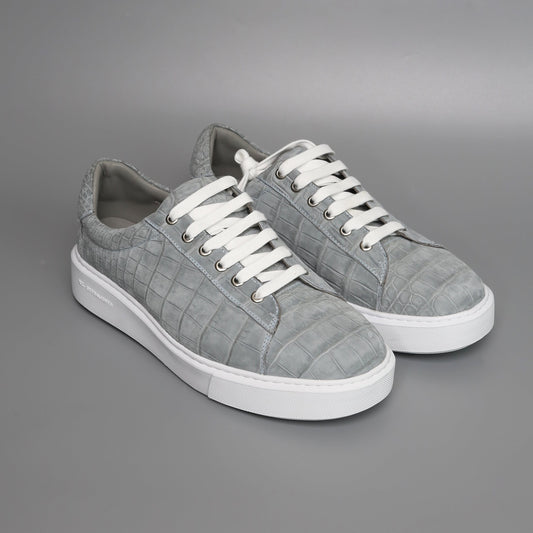
Nubuck alligator has a fine, brushed surface rather than a glossy coating. That texture can be flattened or darkened by unsuitable creams, waxes, or excess moisture. Do not apply a general leather polish simply because it works on another pair of shoes.
If the maker permits conditioning, use only a small amount of cream formulated for exotic leather and test it in an inconspicuous area first. For a nubuck finish, the product instructions from the shoe maker take priority because the wrong product can change the nap and make the surface look patchy.
Our workshop perspective is simple: the finish selected for the shoe should determine the care product. This avoids trying to restore texture with a treatment that was designed for smooth calfskin or coated leather.
3. Handle moisture without forcing the drying process
If the shoes become wet, blot surface moisture with a soft cloth and allow them to dry gradually. Keep them away from radiators, hair dryers, hot air vents, and strong direct sunlight. Heat can remove moisture too quickly, stressing the leather and affecting its shape or finish.
Do not apply cream while the leather is wet. Wait until the shoes have dried naturally, then inspect the surface. If the finish looks different after drying, use the maker’s care guidance instead of layering on several products.
Protecting the shape of alligator driving shoes
Driving shoes often have flexible uppers and soles, which makes their shape easy to influence during storage. Use shoe trees after wearing to support the vamp and reduce deep creasing while the leather settles. A shoe tree should support the shoe without forcing the upper outward or stretching the width.
Letting the shoes rest between wears also gives moisture from normal use time to dissipate. Store them in a place away from direct sun and heat. A breathable shoe bag can help reduce dust, while a crowded storage area can press scale patterns and side panels against other footwear.
Do not stack heavy items on top of the shoes. Pay particular attention to the heel and toe area if the driving sole is flexible; pressure in storage can leave the shoe looking uneven even when the leather itself has not been scratched.
Fit, sizing, and shape before buying
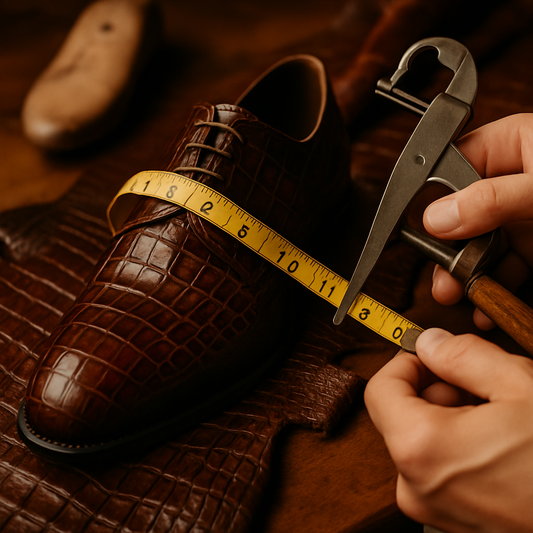
Care cannot correct a poor fit. Measure both feet for length and width, preferably at the end of the day when feet are slightly larger. Compare those measurements with the seller’s chart rather than relying on a general assumption about EU, US, or UK sizing.
- Length: Check the internal length or the seller’s foot-length recommendation. A loafer that is too short can force the toes against the front and create concentrated creasing.
- Width: Measure the widest part of the foot and confirm whether the last is regular or suitable for a wide fit.
- Instep: Slip-on shoes need enough room over the instep to sit securely without excessive pressure. A high instep may require a different last or a larger size.
- Heel hold: A small amount of movement can occur in a flexible loafer, but significant slipping may cause rubbing and repeated collapse of the heel area.
- Remote measurements: Send length, widest width, instep circumference, and a tracing if the workshop offers remote sizing support. Include photographs of both feet from above and the side when requested.
Size conversions are not identical between every brand. An EU 42, US size, and UK size may correspond differently depending on the last and measuring method, so use the brand’s own conversion chart. For a wide foot, increasing length alone may leave the instep loose while failing to provide the right width.
Price factors for alligator driving shoes
The price of alligator driving shoes reflects more than the animal species. The main factors include the usable belly width, the amount of leather required for the pattern, visible scars or scale deformities, color consistency, and the finish selected for the upper.
Construction also affects the price. A shoe made from a larger, cleaner section may require a more selective hide layout, while a design with additional panels, lining, hardware, or a specialized driving sole involves different material and labor requirements. Nubuck finishing can also differ from smooth finishing because the surface treatment and final appearance are not the same.
Ask what “grade” means before comparing prices. One supplier may use a numbered belly grading system, while another may describe the hide by visible defects, scale regularity, or usable area. Belly width is a common measurement taken across the belly scales, but it does not by itself describe the shoe’s durability or complete construction.
Styling alligator loafers and driving shoes
Alligator driving shoes can work with casual tailoring, cotton trousers, dark denim, linen trousers, or a relaxed blazer. Match the shoe’s visual weight to the clothing: a matte or nubuck upper generally suits softer fabrics, while a smoother finish can sit comfortably with sharper trousers and a structured jacket.
For business settings, keep the rest of the outfit restrained and coordinate the belt or watch strap without trying to match every texture exactly. How to Choose Crocodile Loafers For Men for Business Wear covers workplace considerations, but alligator and crocodile should still be treated as different materials when assessing scale pattern and surface details.
With casual clothing, allow the shoes to provide texture while keeping the trousers clean and properly hemmed. Crocodile loafers for men may have a more visibly varied scale character depending on species and cut, whereas an alligator belly commonly presents a more balanced scale layout. Neither pattern automatically indicates stronger or weaker leather.
Authenticity and legal sourcing considerations
Care begins with knowing what material and finish you own. Product descriptions should identify the species and explain the finish, especially for nubuck. A scale pattern, pore detail, or scar can support identification, but no single sensory or visual feature proves authenticity.
American alligators are listed in CITES Appendix II. Export of U.S. alligator skins requires legal-acquisition documentation, and U.S. Fish and Wildlife Service information identifies tags as important to traceability and export eligibility. For international trade in CITES-listed specimens, an export permit or re-export certificate is generally required; an import permit is not generally required under CITES unless the destination country’s law requires one.
CITES paperwork concerns legal trade and traceability. It should not be described as proof of a particular leather grade, finish, construction method, or overall durability.
Frequently Asked Questions
How often should I condition alligator driving shoes?
There is no useful fixed schedule for every pair. Start with a dry cloth and inspect the leather. If the surface appears dry and the maker permits conditioning, use a small amount of exotic-leather cream and follow the instructions for that finish. Nubuck may require a different product from smooth alligator.
Can I use ordinary shoe polish on alligator loafers?
Do not assume that ordinary shoe polish is suitable. It may change the color, shine, or texture, particularly on nubuck. Use only a product approved for the specific exotic-leather finish, and test it in an inconspicuous area if the maker’s instructions allow treatment.
What should I do if my alligator driving shoes get wet?
Blot them gently, use shoe trees to support the shape, and let them dry away from direct sunlight and heat. Avoid hair dryers, radiators, and aggressive drying because rapid heat can damage the leather or distort the finish.
How can I choose the right size when ordering remotely?
Measure both feet for length, widest width, and instep circumference, then compare those figures with the seller’s chart. Confirm the EU, US, or UK conversion, ask about the last and wide-fit options, and provide remote measurements or foot photographs if the workshop offers that service.
Choose a pair and confirm the finish before care
For a pair of nubuck alligator loafers, see the nubuck alligator leather slip-on loafers for men collection page and check the finish-specific care guidance before applying any product.
For sizing or care questions, contact CrocodileViet through WhatsApp with your foot length, width, instep measurement, and the finish you are considering.