
7 Things to Check Before You Buy Crocodile Leather Shoes Online — Part 2

공유
7 More Things to Check Before Buying Crocodile Leather Shoes Online — Part 2
Crocodile belly leather may show small sensory pores, while alligator belly leather generally does not, so an online listing should identify the species instead of relying on the word “crocodile” alone.
Buying crocodile leather shoes online requires more than judging a product photo. The listing should give enough information for you to assess the species, hide section, usable leather, construction, price, fit, and required paperwork. These seven checks help you ask precise questions before placing an order.
1. Check the Species and the Exact Hide Section
“Crocodile” and “alligator” are not interchangeable labels. They are different animals, and their hides can show different visual features. A seller should identify the species as specifically as possible rather than using “exotic leather” or “crocodile-style” as a substitute.
Also check which part of the hide appears on the shoe:
- Belly: the ventral section, usually associated with flatter scales and a more balanced pattern.
- Flank: the side section, where scales can be less regular and more varied in size.
- Hornback: leather showing raised dorsal scutes along the back.
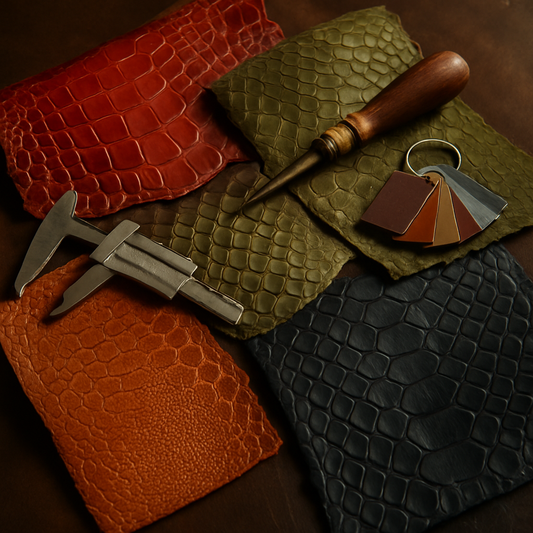
These sections affect the appearance and usable area of a shoe. A listing that says only “crocodile leather upper” leaves an important question unanswered. Ask whether the vamp, quarter, and other visible panels use belly, flank, hornback, or a combination.
If you are comparing genuine crocodile shoes for men for business wear, the cut matters because a balanced belly pattern creates a different appearance from a flank or hornback design. You can also compare how footwear categories are described in How to Choose Genuine Crocodile Shoes For Men for Business Wear.
2. Inspect the Scale Pattern Without Treating It as Proof
Alligator belly scales are often comparatively regular and balanced. Crocodile patterns generally vary more by species and by hide section, although some crocodile belly scales can also look quite even. This makes scale regularity a useful observation, but not a reliable species test by itself.
Ask the seller for clear, straight-on photographs of the vamp, quarters, and heel area. Reflections, heavy dye, and angled photography can hide the difference between the scale surface and the spaces between scales. A close photograph should let you see whether the pattern changes naturally across the panel or has been digitally altered.
Look at the scale transitions rather than searching for one “correct” pattern. On a shoe, the pattern may be interrupted by seams, curves, or panel placement. A regular-looking belly does not automatically prove alligator, and an irregular-looking panel does not automatically prove crocodile.
3. Look for Sensory Pores and Understand Their Limits
True crocodile body scales may show tiny sensory pores, often called integumentary sensory organs or ISOs. These can appear as small dots or pits near the edge of individual scales. Alligator belly scales generally do not show the same feature.
Use high-resolution images and ask for a close-up taken in soft, even light. A pore-like mark can be obscured by dye, finishing treatment, dust, glare, or image compression. Enlarging a low-resolution photograph may create artifacts that look like pores.
Visible pores are a useful clue, not a guarantee of species or authenticity. One sensory feature should not be used as the sole proof that a shoe is made from genuine crocodile leather. The seller’s species declaration, hide-section description, invoice, and applicable shipment documents should support the material claim as well.
4. Check for an Umbilical Scar, but Do Not Demand One
A visible umbilical scar can support an alligator identification. Crocodile leather generally lacks this feature. However, the scar may not appear on every cut, especially when the leather is divided into smaller panels for footwear.
Its absence is therefore not proof that the leather is crocodile. A shoe may use a section where the scar was not present, was removed during cutting, or does not fall on the visible part of the upper.
When a seller presents a scar as species proof, ask for a broader explanation: What species is declared? Which hide section is shown? Is the photograph of the whole panel or only a close-up? A reliable assessment uses several pieces of information instead of one visual detail.
5. Ask What the Grade Actually Measures
Hide grades generally describe usable, relatively blemish-free cutting yield. They do not provide a universal measurement of species, authenticity, or finished-shoe durability. Grading labels also vary by supplier, tannery, and market.
Ask the seller to define the label in practical terms:
- Does the grade refer to the raw hide, the tanned skin, or the cut panels?
- How much of the upper uses the stated grade?
- Are visible scars, healed marks, holes, or scale damage allowed within that grade?
- Does the grade describe appearance only, or does the seller provide separate construction information?
A higher hide grade may provide more usable, blemish-free area for cutting, but it does not by itself tell you how the shoe is assembled. Ask for photographs of the sole, heel, lining, stitching, edges, and interior. For buyers comparing handmade crocodile shoes with other exotic footwear, the construction description is as relevant as the hide label. The material differences are also discussed in Handmade Crocodile Shoes vs Lizard Leather: Which Is Better?
6. Break Down the Price Before Comparing Listings
Two pairs of crocodile leather shoes can have very different prices for reasons that are not visible in a thumbnail. Compare the actual factors included in each listing:
- Species and hide section: belly, flank, and hornback can involve different usable areas and visual results.
- Leather coverage: a crocodile vamp with other leather quarters is different from a shoe using crocodile on most of the upper.
- Cutting yield: a larger blemish-free area can reduce waste when matching panels.
- Construction: ask what materials are used for the sole, heel, lining, insole, and reinforcement.
- Labor: hand-cutting, panel matching, finishing, and made-to-measure work can affect the total.
- Shipping and import costs: international delivery may involve separate taxes, duties, or document requirements.
Do not treat a grading word as a complete price explanation. A seller should be able to state what the quoted price includes and which elements may cost extra. This is particularly important for luxury crocodile dress shoes, where the amount of crocodile leather and the construction specification can differ widely between listings.
7. Confirm Fit, Returns, Care, and Trade Documents
Fit and sizing
Do not rely on an EU, US, or UK size alone. Size labels can vary between lasts and makers. Ask for the internal or recommended foot length, the widest point of the shoe, the width designation, and the instep measurement when available.
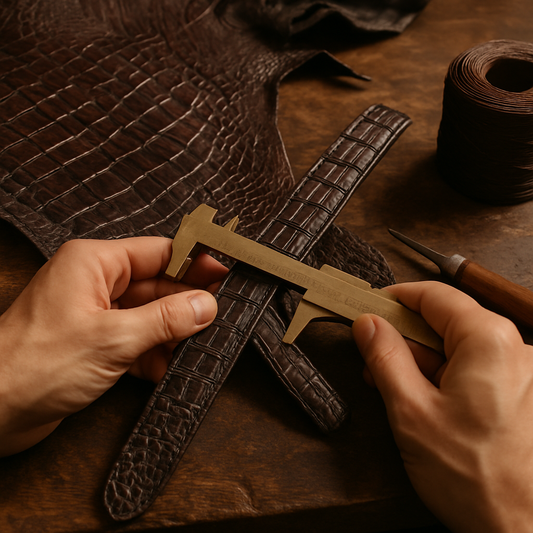
For a remote measurement, place your foot on paper while wearing the socks you expect to use. Mark the heel and longest toe, then measure both feet. Record the widest forefoot point and the circumference across the instep. Send both sets of measurements to the seller and ask which foot the recommended size is based on.
If you have a wide fit, high instep, bunion, or uneven foot length, mention it before production or dispatch. A last with enough length can still feel tight across the forefoot or instep. Confirm whether the seller accepts exchanges, what happens with made-to-measure orders, and who pays return shipping.
Care and storage
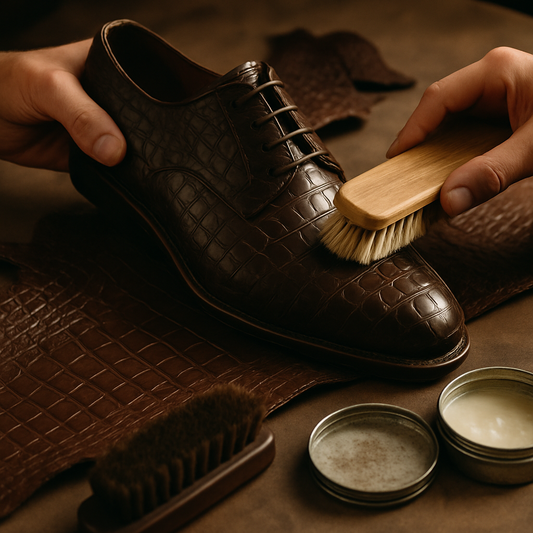
For routine cleaning, begin with a dry, soft cloth to remove dust. Keep the shoes away from soaking water, direct heat, and strong sunlight. Crocodile leather should not be treated with an unverified household cleaner because products made for smooth cow leather may affect the finish or color.
There is no useful fixed care schedule for every pair. Cleaning frequency depends on wear, climate, exposure to moisture, and the finish applied by the tannery. Ask the seller which conditioner, cream, or professional service is suitable for that specific leather.
Trade documentation
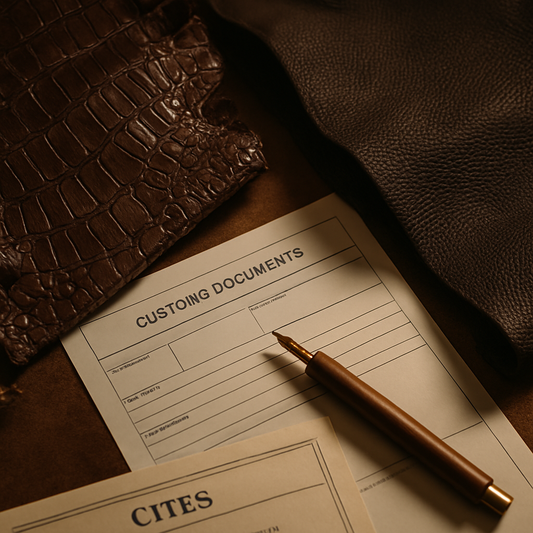
CITES lists shoes among manufactured crocodilian-leather products, and international trade controls depend on the species and the applicable listing. Before buying across borders, ask which species is declared, where the product is shipping from, where it is going, and what documentation is supplied for that route.
CITES paperwork does not by itself prove authenticity. It relates to regulated trade requirements, while species identification and material verification require consistent information from the seller and supporting product records. Check the rules for both the origin and destination before payment, since requirements can differ.
How to Read the Product Photos More Carefully
Request photographs of the actual pair rather than relying only on catalog images. Useful views include the full vamp, both quarters, side profile, heel counter, outsole, interior, and a close-up of the scale surface. Ask whether the displayed pair is the exact pair you will receive.
Compare the two shoes in the pair. Natural hide markings can differ from one panel to another, and panel placement may not be perfectly mirrored. That is not automatically a defect, but you should know what variation to expect before ordering.
Styling also depends on the visible cut. A dark belly vamp with a restrained pattern can work with a navy or charcoal business suit, while a lighter or more visibly varied flank design may suit less formal tailoring. Wear the shoes with trousers that leave enough space for the vamp and do not cover the scale pattern with a long break.
Frequently Asked Questions
Can scale regularity prove that crocodile leather shoes are actually alligator?
No. Alligator belly scales are often comparatively regular and balanced, but some crocodile belly scales can also look quite even. Species should be assessed using the seller’s declaration, hide information, sensory-pore clues, and supporting records rather than scale pattern alone.
Do visible sensory pores prove that shoes are made from crocodile leather?
No. Sensory pores are a useful clue because true crocodile scales may show them, while alligator belly scales generally do not. They should be checked alongside species information and documentation, not treated as the sole proof of authenticity.
What measurements should I send when ordering crocodile leather shoes online?
Send the length of both feet, the widest forefoot measurement, and the instep circumference. Also state your usual EU, US, and UK sizes, preferred socks, width concerns, and any bunion or high-instep issue. Ask for the maker’s recommended internal length and width.
What should I ask about CITES before importing crocodile shoes?
Ask for the declared species, shipment origin, destination, and documents required for that route. CITES controls depend on the species and applicable listing, and CITES paperwork should not be treated as standalone proof of authenticity.
Browse the CrocodileViet crocodile leather shoes collection to compare available designs and product details. For measurements or material questions, mention WhatsApp when contacting the workshop before ordering.