
Navy Crocodile Skin Shoes: Styling, Care and Buying Tips — Part 2

シェア
Navy Crocodile Skin Shoes: Styling, Care and Buying Tips — Part 2
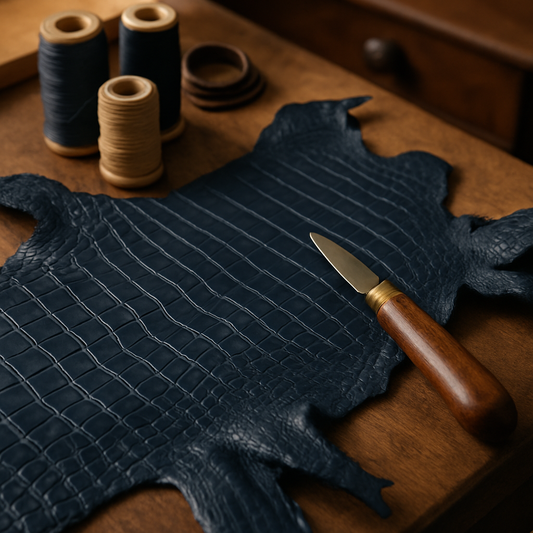
Navy crocodile skin shoes pair the visual texture of genuine crocodile leather with a darker blue tone that can work with navy, grey, brown, and selected casual clothing.
For this discussion, “crocodile skin shoes” means shoes made with leather from a crocodile, not cowhide embossed with a crocodile-scale pattern. Embossed leather can imitate the surface appearance, but it is a different material with different scale structure, sourcing, and care requirements.
Why navy works well for crocodile shoes
Navy sits between formal black and more noticeable blue footwear. That makes it useful for buyers who want color without moving into a very bright or highly contrasting shade. The final appearance depends on the dye, finish, lighting, and the scale area used on the shoe, so two navy pairs can look different even when their color descriptions are similar.
On crocodile belly leather, the scale pattern commonly appears flatter and more regular than on the raised back area. Crocodile belly scales can still vary in size and shape, and crocodile leather often shows small sensory pores, known as integumentary sensory organs or ISOs, on individual scales. Those features are part of the material’s structure rather than a guarantee of authenticity on their own.
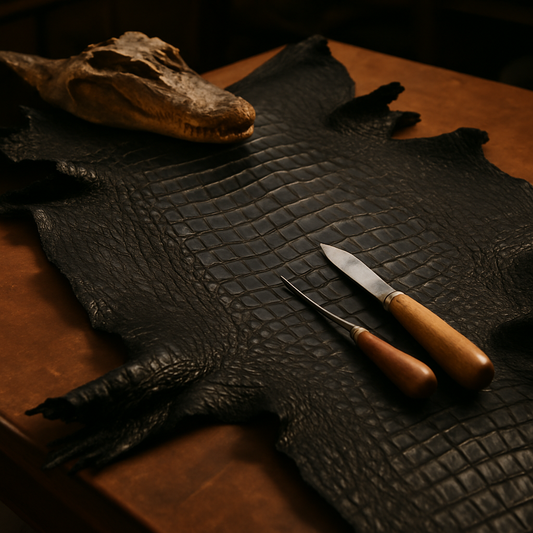
Hornback refers to the raised, bony back area of a crocodile hide. It is a different cut from belly leather, not a higher or lower universal grade. Navy hornback shoes have a more pronounced surface, while navy belly shoes usually present a flatter scale layout. The better option depends on the level of texture you want and the shoe design being used.
How to style navy crocodile leather shoes
Business and tailored clothing
Navy crocodile leather shoes can sit comfortably with a charcoal suit, medium-grey trousers, or a navy suit in a noticeably different shade. A white, pale blue, or soft grey shirt keeps the outfit controlled while allowing the shoes to be visible. With a navy suit, match the depth of color rather than trying to create an exact color match; a slight difference between the trousers and shoes usually gives the outfit more definition.
Brown accessories can work with navy footwear, especially when the shoes have warm undertones in their finish. For a more restrained business combination, use a navy or dark brown belt. The belt does not need to duplicate the crocodile scale pattern, but its color should relate to the shoes rather than compete with them.
For client meetings or formal offices, a lower-profile crocodile belly design generally reads more quietly than a pronounced hornback construction. Buyers looking specifically for work footwear may also find How to Choose Genuine Crocodile Shoes For Men for Business Wear useful for assessing shape, formality, and material presentation.
Smart-casual combinations
Use navy crocodile shoes with beige chinos, stone trousers, dark denim, or olive tailoring. The contrast between the blue leather and lighter trousers makes the scale layout easier to see without requiring a loud shirt. A knit polo, Oxford shirt, or unstructured jacket can keep the outfit relaxed while the shoes retain their structured appearance.
Dark denim needs a little separation from the shoe color. Medium or washed denim normally shows the navy more clearly, while very dark denim can make the lower half of the outfit appear almost monochromatic. If the shoes have a strong shine, less glossy clothing often creates a more balanced combination.
Choosing the shoe shape
Color is only one part of how the pair will look. A plain-toe derby exposes more of the crocodile surface, while a cap-toe Oxford divides the upper with a distinct seam. Loafers show more of the vamp and can make the scale arrangement a central visual feature. Boots provide more coverage and may suit casual wardrobes, but the larger upper means the scale layout should be inspected across a wider area.
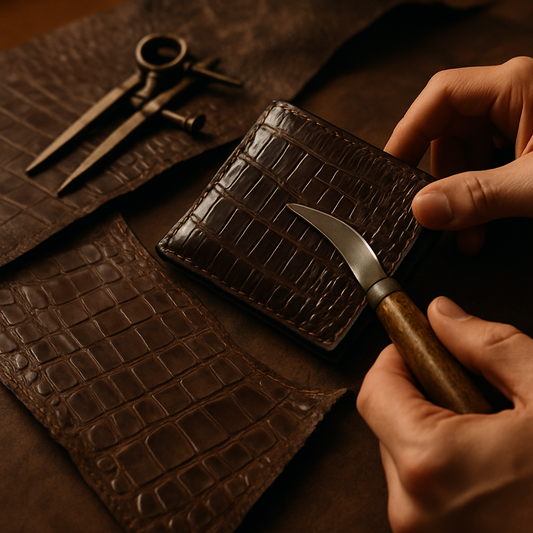
As a workshop making its own crocodile goods in-house, CrocodileViet can discuss the relationship between the hide section, scale layout, and finished shoe design rather than treating every crocodile upper as visually identical. That matters because belly width, scale direction, visible pores, and natural marks affect how navy dye appears across the pair.
Buying tips for navy crocodile skin shoes
Confirm the material and hide section
Ask whether the upper is genuine crocodile leather and which area of the hide is used. “Crocodile pattern” or “crocodile embossed” can describe an imitation surface rather than crocodile leather. If a listing only presents a scale print or does not identify the material, request clarification before comparing it with genuine crocodile shoes for men.
Ask whether the shoe uses belly, flank, or hornback leather. Belly leather is commonly selected for its flatter, more regular scale arrangement. Hornback has raised bony structures and gives a different surface effect. Neither description, by itself, establishes overall durability or a universal grade.
Read grading labels carefully
Hide grades generally refer to defects in the relevant cutting area, but labels such as Grade 1, Grade 2, or Grade 3 do not form one universal system across every supplier, tannery, species, or market. A grade number should therefore be accompanied by an explanation of the assessed area and the criteria used.
Visual grade is not the same as durability. A cleaner belly section may have fewer visible marks, while durability also depends on the leather’s thickness, tanning, construction, shoe pattern, and how the shoes are worn and maintained. Look at the actual pair or request clear photographs of both uppers, the toe area, the vamp, and the heel quarters.
Check species and documentation
Crocodile leather covers more than one species, and scale patterns vary among them. Crocodile scales cannot be identified reliably through a simple rule that they are always less symmetrical than alligator scales. Alligator belly leather tends to show a more regular, balanced scale pattern, while crocodile leather often varies more and may display visible sensory pores. Crocodile can also have an umbilical scar pattern that alligator generally lacks, but a single visual trait should not be treated as proof of species or authenticity.
CITES requirements depend on the species, country, and purpose of trade. Crocodilians are regulated, and international commercial trade in listed specimens generally requires applicable permits or certificates. Documentation should be checked with the seller and relevant authorities for the transaction in question; CITES paperwork concerns regulated trade and does not, by itself, prove that every visible feature or product description is accurate.
Compare price by concrete factors
A quoted price for navy crocodile leather shoes can reflect several separate factors:
- Hide area: A broad, usable belly section can cost more than a narrow section because it offers more room for a continuous shoe upper.
- Scale layout: Regularity, size progression, visible pores, scars, and other natural marks influence how much of the hide can be placed on a matching pair.
- Species and sourcing: Different crocodile species and legally documented supply chains can have different material costs.
- Construction: The last, sole, lining, welt or other joining method, hardware, and finishing work affect the finished price.
- Color development: A navy finish may involve a particular dye and surface treatment, but the seller should explain the finish rather than implying that color alone determines material grade.
- Customization: Remote fitting, special widths, alternative soles, monograms, or changes to the pattern may add work beyond a standard pair.
| Buying factor | What to ask | Why it matters |
|---|---|---|
| Material | Is the upper genuine crocodile leather or embossed leather? | The two materials have different structure, sourcing, and care needs. |
| Hide section | Is it belly, flank, or hornback? | The section changes the scale relief and visual character. |
| Grade label | Which area was graded, and what criteria were used? | Grade numbers vary between suppliers and do not automatically predict durability. |
| Documentation | What species and trade documents apply to this purchase? | Requirements depend on species, country, and trade purpose. |
Fit and sizing for crocodile shoes
Start with foot length and width, then assess instep height and the shape of the toe box. A person who wears EU 42 may not have the same fit in every last, and US and UK size conversions can differ by brand. Treat EU, US, and UK numbers as starting references rather than a complete fitting specification.
Measure both feet while standing, record the longer foot, and note the widest point across the forefoot. Buyers with a wide fit should ask for the actual internal width or the available width option instead of relying only on the size number. A high instep can create pressure across the vamp, particularly in loafers and close-lacing Oxford styles.
For remote measurements, provide foot length, forefoot width, instep circumference, heel circumference, and photographs or measurements of a well-fitting shoe. Also state whether you plan to wear thin dress socks, thicker socks, or no-show socks. These details help the maker compare your measurements with the last, but remote fitting has limits and does not offer the same feedback as trying on the finished pair.
Crocodile leather is not a substitute for correct sizing. A shoe that is too short or too narrow can place unnecessary pressure on the upper and may become uncomfortable regardless of the hide’s appearance.
Care for navy crocodile skin shoes
After wearing the shoes, wipe them with a soft, dry cloth to remove dust and surface residue. This is the safest routine starting point because it does not add moisture or a product that may react with the navy finish.
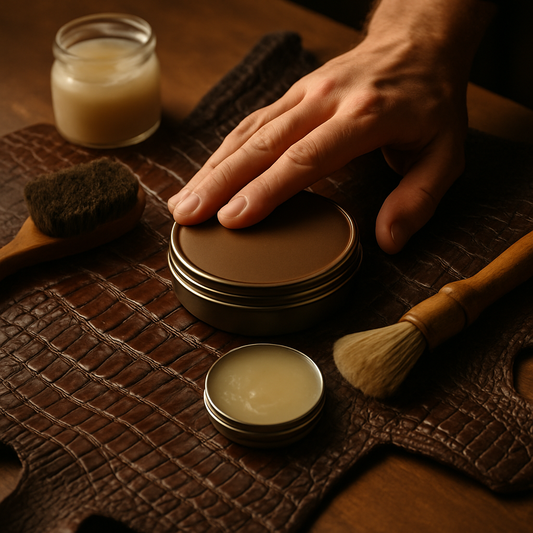
For conditioning, use a product made for exotic leather and apply a small amount to an inconspicuous area first. Different finishes absorb conditioner differently. Heavy application can darken the leather or leave an uneven surface, so use a light layer and follow the product instructions.
Keep the shoes away from heavy water exposure, direct heat, hair dryers, radiators, and harsh cleaners. If they become wet, remove excess moisture with a dry cloth and let them dry naturally in a ventilated place. Avoid polishing over dirt, since rubbing particles across the surface can mark the finish.
Use shoe trees that fit without forcing the upper outward. Rotate wear when possible so the leather has time to dry naturally between uses. There is no useful fixed care schedule for every owner: climate, frequency of wear, perspiration, finish, and exposure determine when cleaning or conditioning is appropriate.
Store navy shoes away from direct sunlight and strong dye-transfer materials. A breathable dust bag can reduce surface dust while allowing the leather to avoid being sealed against trapped moisture.
Frequently Asked Questions
Are navy crocodile skin shoes made from belly leather?
Not necessarily. Navy crocodile shoes may use belly, flank, or hornback leather. Belly is commonly chosen for its flatter and more regular scale layout, while hornback has raised structures from the back of the hide.
How can I tell whether navy crocodile shoes are genuine?
Check the material description, hide section, species information, clear photographs, and applicable trade documentation. Scale shape, sensory pores, or an umbilical scar can provide context, but no single visible feature proves authenticity.
Do crocodile shoe grade numbers predict durability?
Not by themselves. Grading usually relates to defects in an assessed cutting area, and grading labels vary by supplier and tannery. Durability also depends on tanning, leather thickness, construction, fit, and care.
What should I send for remote sizing?
Send the length of both feet, forefoot width, instep circumference, heel circumference, usual EU/US/UK size, preferred sock thickness, and measurements of a shoe that fits well. Mention any wide-fit or high-instep requirement.
View the current CrocodileViet crocodile shoe collection to compare available designs. For measurements or material questions, contact CrocodileViet through WhatsApp.