
CITES Rules for Crocodile and Alligator Leather: Documents to Check Before Shipping

シェア
CITES Rules for Crocodile and Alligator Leather: Documents to Check Before Shipping
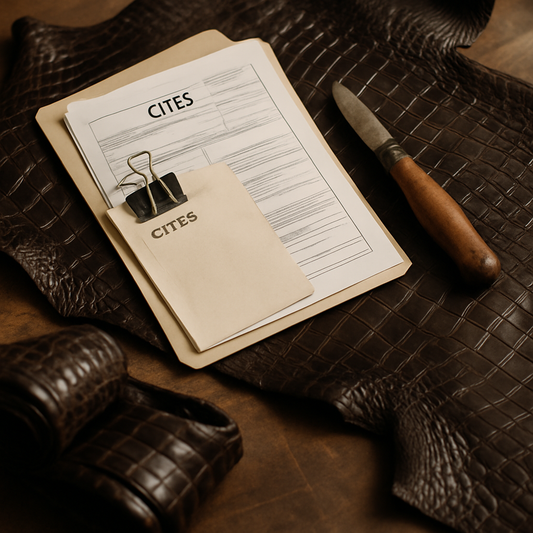
For alligator leather shipping, the documents may need to identify the species, specimen tags, shipment, and CITES authorization required by the countries involved.
Why CITES paperwork matters for crocodilian leather
CITES is the international framework used to regulate trade in listed wildlife species and products made from them. Crocodiles, alligators, caimans, and related animals are commonly grouped as “crocodilians.” In leather trade language, the material is usually called a crocodilian skin; “hide” is more often associated with larger mammals.
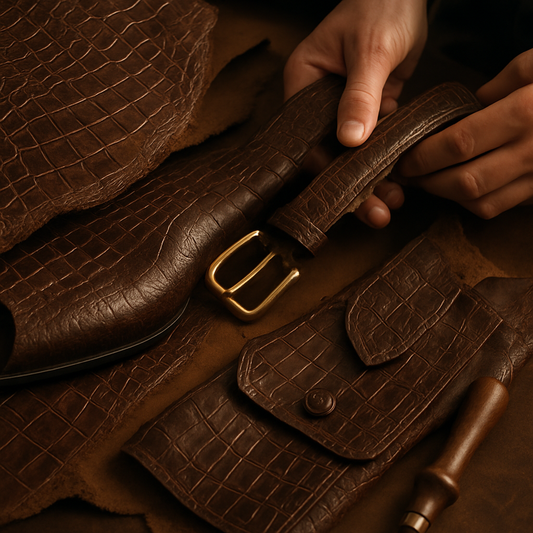
CITES controls can apply to recognizable products made wholly or partly from crocodilian skin. That means a finished wallet, belt, bag, watch strap, or other leather item may still require documentation, depending on the species, the country of export, the destination country, and the nature of the transaction. Some personal effects or small leather goods may qualify for exemptions or simplified procedures, but those exceptions should be confirmed rather than assumed.
Documents to check before shipping
The correct document set depends on the transaction, but these are the main records to review before dispatch:
- CITES export permit: This may be required when the goods leave the country where they were manufactured or legally obtained.
- CITES re-export certificate: This is relevant when material or a finished product is being shipped onward from a country other than its original export country.
- Import permit: The destination country may require one, particularly for certain species or shipments.
- Original import records: For re-exports, authorities may need to match the shipment with the original import documentation.
- Identification tag information: Internationally traded crocodilian skins generally carry non-reusable identification tags with details such as a country-of-origin code, unique serial number, and species code.
- Commercial documents: The invoice, packing list, shipping description, and permit details should describe the goods consistently.
A CITES document is not a standalone statement that a product is genuine. It is part of the regulatory chain. The species, specimen details, tags, quantities, and shipment information need to correspond across the relevant records.
How to verify a CITES document
Before arranging alligator leather shipping, compare the paperwork against the actual order using a fixed checklist:
- Confirm the species. Check that the document identifies the correct crocodile, alligator, caiman, or other listed species. A general description such as “exotic leather” may be insufficient for customs review.
- Check the origin country. The country-of-origin code on the identification tag should correspond with the supporting paperwork.
- Match tag numbers. Compare every relevant serial number with the tag information and the CITES document or annex.
- Review the quantity and product description. The number of skins, parts, or finished products should agree with the permit and commercial invoice.
- Check the shipment route. A permit suitable for an export may not cover a later re-export from another country.
- Confirm validity and issuing authority. Check the dates, signatures, stamps, and conditions stated by the responsible CITES management authority.
- Ask about destination requirements. The importing country may request an import permit or additional customs information before the shipment leaves.
Document requirements can change with the species listing, the countries involved, the form of the product, and whether the shipment is an export or re-export. A freight carrier’s acceptance of a parcel does not necessarily mean that the shipment has met wildlife-trade requirements.
Why re-exports require extra checking
A re-export involves a chain of records rather than only the final seller’s paperwork. Authorities may need to connect the re-exported skins or products to their original import documentation. This is particularly important where the material entered one country and is later shipped to another.
If an original tag has been lost or removed where tagging is required, the authorities may require re-export tagging and corresponding document details. Do not alter, replace, or discard a crocodilian identification tag without confirming the procedure with the relevant authority. Tag information can be central to linking the physical material with its legal import history.
Do scale patterns prove the species?
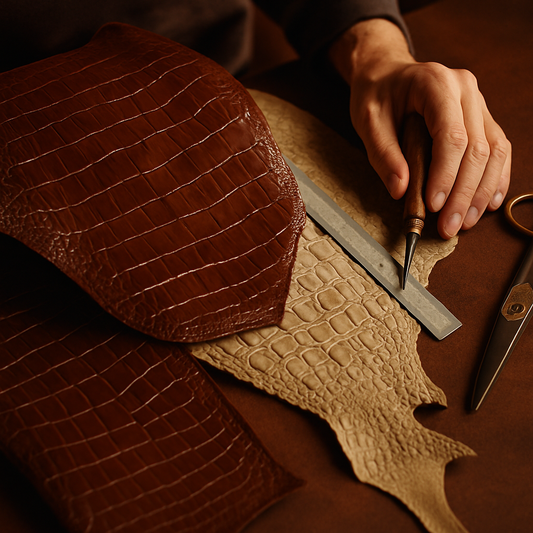
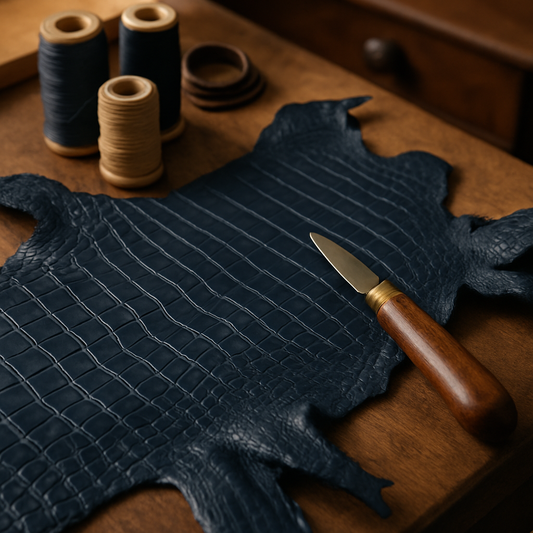
No single visual feature should be treated as proof of species or legal origin. Alligator belly leather commonly has a comparatively regular, balanced scale pattern, while crocodile belly patterns can vary more by species and may show visible sensory pores, often called integumentary sensory organs or ISOs.
American alligator leather may also show a distinctive elongated, webbed umbilical scar. Crocodile leather generally lacks that same feature. These details can help with visual assessment, but scale layout, pores, or a scar do not replace species records, tags, permits, or a documented supply chain.
Leather grading creates a separate issue. There is no single universal grading scale for alligator or crocodile skins. Suppliers and tanneries may use different labels based on defects, usable belly area, pattern quality, and other criteria. A grade number should therefore be checked against the seller’s own grading standard. Visual grade describes appearance and usable surface; it does not establish durability, species, or CITES compliance.
Costs and shipment risks to clarify
Shipping cost is only one part of the landed cost for a CITES-regulated order. Confirm these factors in writing:
- Permit or certificate fees charged by the relevant authorities.
- Destination-country customs or broker charges.
- Document handling and inspection fees.
- Courier or freight charges based on parcel weight, dimensions, insurance, and destination.
- Possible storage or return costs if customs holds the shipment for missing or inconsistent paperwork.
Do not rely on a generic courier description such as “leather goods” when the shipment contains recognizable crocodilian material. The commercial description should be accurate and consistent with the permit and invoice, while the importer or broker should verify the destination’s crocodile leather import rules before dispatch.
What buyers should request from a workshop or seller
Ask for the information needed to assess the shipment before payment or collection:
- The exact species stated on the relevant documents.
- The country of origin and, for re-exports, the previous import country.
- Applicable CITES permit or certificate details.
- Tag or serial information where the goods are linked to tagged skins.
- The product description and quantity shown on the invoice.
- Confirmation of who is responsible for import clearance at the destination.
For a finished item, ask whether the product is covered by a permit, a re-export certificate, or a specific exemption. The answer depends on the transaction and destination; it should not be inferred from the item’s small size or from the fact that it is a finished accessory.
For a broader shipment overview, see Cites Crocodile Leather Shipping: Complete Guide for 2026–2027.
Frequently Asked Questions
Does every crocodile or alligator leather product need a CITES permit?
Not necessarily. Requirements depend on the species, its CITES listing, the countries involved, and whether the item is an export, import, re-export, personal effect, or finished product. Some exemptions or simplified procedures may apply, but the applicable authority should confirm them before shipping.
What is the difference between a CITES export permit and a CITES re-export certificate?
An export permit generally covers goods leaving the country connected with their legal origin or export. A CITES re-export certificate is used when goods previously imported into one country are shipped onward from that country. Re-export cases may also require records linking the goods to their original import documentation.
Can scale patterns confirm that leather is crocodile or alligator?
No. Alligator bellies often show a more regular, balanced pattern, while crocodile patterns can vary by species and may show visible sensory pores. An umbilical scar may also appear on American alligator leather. These visual points are useful for comparison but do not replace species documentation, tags, and CITES records.
What should I do if the tag number and CITES document do not match?
Pause the shipment and ask the responsible seller, broker, or CITES management authority to resolve the discrepancy. Tag numbers, species details, origin information, and shipment records should correspond before dispatch. Do not assume customs will correct the mismatch after the parcel leaves.
Before you ship
For current order-specific requirements, review the CrocodileViet shipping policy and confirm the destination rules with the importer or customs broker. WhatsApp can be used to discuss the product description and available shipping documentation before dispatch.