
Nubuck Alligator Sneakers vs Lizard Leather: Which Is Better?

シェア
Nubuck Alligator Sneakers vs. Lizard Leather: Which Is Better?
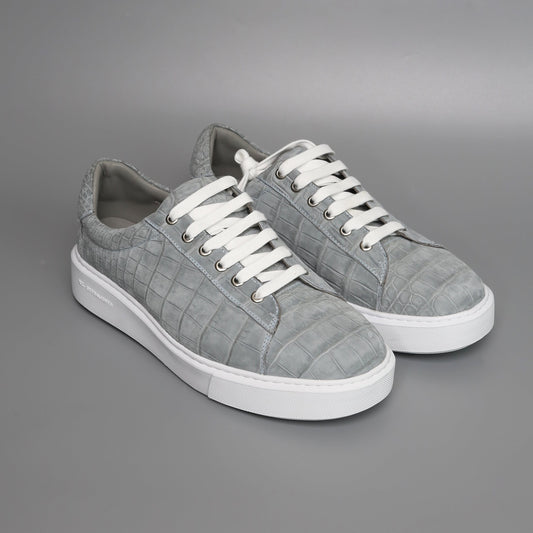
Nubuck alligator sneakers combine larger alligator belly scales with a lightly buffed, velvety grain surface, while lizard leather usually has a finer, smaller-scale appearance.
Neither material is automatically better for every wearer. The right option depends on the visual scale you prefer, how the surface feels, your sizing needs, maintenance habits, price factors, and whether the shoes will be worn for business, travel, or casual use.
What “nubuck alligator” actually means
Nubuck describes the surface treatment, not a separate animal. The grain surface of the alligator leather is lightly buffed to create a short, soft nap. This gives the shoes a muted, tactile appearance rather than the sharper surface definition associated with smooth alligator leather.
Alligator and lizard are different reptile leathers. Alligator belly leather has larger tiles and often a regular, balanced scale arrangement. Lizard leather typically shows much smaller scales, producing a denser pattern across the upper. The exact appearance can change with the species and hide section, so a visual impression alone does not establish the leather’s identity.
Nubuck alligator sneakers vs. lizard leather
| Factor | Nubuck alligator sneakers | Lizard leather sneakers |
|---|---|---|
| Scale appearance | Larger belly tiles with a regular, balanced pattern | Usually finer, smaller scales with a denser visual texture |
| Surface feel | Velvety nap created by lightly buffing the grain surface | Depends on the finish, but generally displays the scale surface more directly |
| Visual presence | Broad scale structure softened by the nubuck finish | Fine-scale detail that can read as more intricate across a smaller area |
| Cleaning concerns | Dry-cloth cleaning is the safer default because moisture and unsuitable products can affect the nap | Care depends on the finish; rubbing and unapproved conditioners can alter the surface |
| Best reason to select it | You want larger alligator scales with a softer, less reflective surface | You prefer a compact, fine-scale pattern across the sneaker |
This comparison concerns the material and finish, not a guarantee of overall durability. Visual grade is not a durability rating, and grading labels differ between suppliers and tanneries.
Scale pattern and hide section
For alligator sneakers, the belly-cut is the section most associated with flatter, more regular scales. That structure suits footwear because it gives the upper a composed pattern while allowing the design to show the material across a larger area. Hornback leather comes from the back and has more pronounced raised ridges, creating a substantially different surface.
Lizard leather generally presents smaller scales, but the pattern still varies by species and hide section. A fine pattern may appeal to someone who wants less visual width across the shoe, while larger alligator tiles create a clearer scale rhythm from the toe toward the quarter.
At CrocodileViet, we manufacture our own leather goods in-house. That matters for this comparison because the material, hide section, surface finish, and completed sneaker need to be assessed together rather than treated as interchangeable labels. It also lets us explain the actual leather used instead of relying on appearance alone.
How nubuck changes the alligator appearance
Lightly buffing the grain surface creates the nap that defines nubuck. On alligator, this softens reflections and reduces the sharp contrast between individual scale surfaces. The larger tiles remain part of the design, but the overall upper can look more subdued than polished or heavily finished exotic leather.
Nubuck is not the same as suede. Nubuck comes from the grain surface, while suede is made from the flesh side of a hide. That difference affects how the material is described and how it should be handled. A seller using “suede alligator” and “nubuck alligator” interchangeably may be describing two different surfaces.
Durability, grade, and what the labels mean
Alligator and lizard leather can produce durable footwear when the leather, construction, and use are appropriate, but the word “grade” needs context. One supplier’s system may grade the belly or midsection from Grade 1, with fewer defects, to Grade 5, with more defects. Another supplier may use different numbers, names, or criteria.
In the cited grading convention, the grade relates to visible issues such as scars, scratches, shading, and scale deformities in the midsection. It does not simply mean softness, resistance to wear, or total product quality. Ask which supplier’s grading system is being used before comparing two pairs described with different labels.
Alligator should also be distinguished from crocodile. Crocodile leather varies more by species and often shows visible sensory pores, also called ISOs, on the scales. Alligator may show an umbilical scar that crocodile lacks. These details can help with identification, but no single sensory feature should be treated as proof of authenticity.
Price factors for nubuck alligator sneakers and lizard sneakers
A meaningful price comparison should include more than the animal name. Relevant factors include:
- Hide section: Belly-cut leather with a regular scale pattern is different from hornback material and may be priced differently.
- Usable area: The size and condition of the selected panels affect how efficiently the upper can be cut.
- Visible defects: Scars, scratches, shading, and scale deformities can affect the grade assigned by a particular supplier.
- Surface finish: Nubuck requires a specific grain-surface finish, while lizard may use another finish or treatment.
- Sneaker construction: The sole, lining, closure, insole, and assembly work all contribute to the finished cost.
- Size and pattern placement: Larger sizes can require more usable leather, and matching the pattern across the upper can affect cutting efficiency.
For that reason, a lizard sneaker is not automatically less costly, and a higher quoted price does not by itself prove better durability. Ask for the species, hide section, finish, grading basis, and construction details.
Fit and sizing considerations
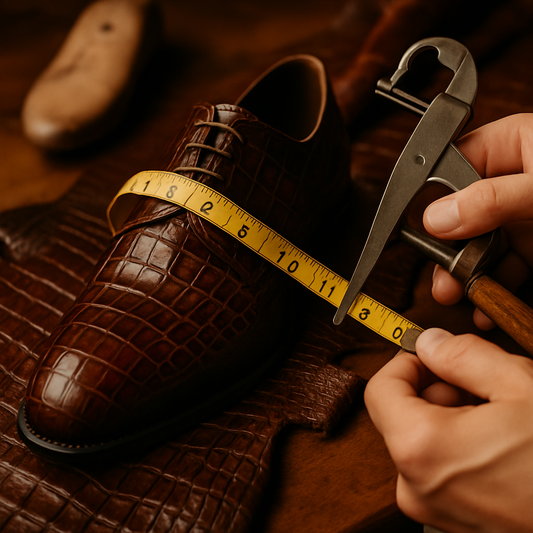
Exotic leather does not remove the need for accurate sneaker measurements. Compare your foot length and width with the maker’s chart, then check the available EU, US, and UK size conversion. These systems are not interchangeable without checking the specific chart.
- Length: Measure from the back of the heel to the longest toe while standing.
- Width: Measure across the broadest part of the forefoot, especially if you usually buy wide-fit shoes.
- Instep: A high instep can create pressure under the tongue or across the upper even when the length is correct.
- Socks: Measure with the type of socks you expect to wear with the sneakers.
- Remote orders: Send foot length, width, usual EU/US/UK size, and notes about wide feet or instep height before ordering. A traced outline or additional measurements may help the workshop assess the fit.
Do not assume that a softer nubuck surface will compensate for an incorrect size. The shoe still needs enough room at the toes and suitable volume across the instep.
Care for nubuck alligator sneakers
Start with a clean, dry cloth to remove loose dust after wear. Use light strokes rather than aggressive rubbing, since friction can change the direction and appearance of the nap. Keep the sneakers away from avoidable moisture, oils, solvents, and unapproved creams.
There is no useful fixed cleaning schedule for every wearer. The frequency depends on climate, walking conditions, storage, and how often the shoes are worn. If the nubuck becomes wet or develops a visible mark, allow it to dry naturally away from direct heat and ask the maker before applying a product. A standard smooth-leather polish is not automatically suitable for nubuck.
Styling each material
Nubuck alligator sneakers work well with dark denim, cotton trousers, knit polos, and relaxed tailoring because the nap reduces shine while the larger scales remain visible. Brown, black, and other subdued colors can be coordinated with the belt, watch strap, or outer layer without matching every shade exactly.
Lizard leather suits outfits where a finer pattern is useful: tapered trousers, lightweight tailoring, plain knitwear, or a simple shirt. Keep the rest of the outfit relatively clean if you want the small-scale texture to be noticed. For business settings, color restraint and a low-profile sneaker shape generally matter as much as the leather; see How to Choose Crocodile Leather Sneakers for Business Wear.
Travel and CITES documentation
CITES controls international trade in listed species and their parts or derivatives. The required permits or certificates depend on the species, its listing, and the circumstances of the trade. Shoes are classified in CITES materials as manufactured crocodilian-leather products, but that classification does not mean every pair is permit-free.
Before carrying exotic-leather sneakers across a border, check the rules for the country of departure, destination, and any transit country. Keep the seller’s species and purchase documentation available, but do not treat CITES paperwork as proof of authenticity by itself.
Which should you choose?
Choose nubuck alligator sneakers if you prefer larger, regular belly scales combined with a low-reflection, velvety surface. Choose lizard leather if you prefer a finer, smaller-scale pattern and a more compact visual texture. Compare the actual hide section, finish, grading source, fit measurements, and care requirements before deciding.
To review the CrocodileViet model, see nubuck alligator sneakers. For questions about measurements or leather details, contact CrocodileViet through WhatsApp.
Frequently Asked Questions
Are nubuck alligator sneakers made from the same leather as lizard sneakers?
No. Alligator and lizard are different reptile leathers. Nubuck describes a lightly buffed grain surface on the alligator leather, while lizard usually has a finer, smaller-scale pattern.
Does a higher alligator grade mean the sneakers will last longer?
Not necessarily. Grading labels vary by supplier, and a cited grading system refers mainly to defects such as scars, scratches, shading, and scale deformities. It is not simply a durability scale.
How can I tell alligator from crocodile leather on sneakers?
Alligator belly leather may show an umbilical scar, while crocodile often shows visible sensory pores, or ISOs, on the scales. These are useful clues, but one visual or sensory feature alone does not prove authenticity.
Can I take exotic leather sneakers across an international border?
Possibly, but requirements depend on the species, CITES listing, destination, transit route, and trade circumstances. Check the applicable permits or certificates before traveling, even though manufactured shoes are included in CITES crocodilian-leather product classifications.