
Handmade Crocodile Shoes vs Lizard Leather: Which Is Better? — Part 2

シェア
Handmade Crocodile Shoes vs. Lizard Leather: Which Is Better for You? — Part 2
Handmade crocodile shoes generally show broader rectangular belly scales, while lizard leather usually has smaller, more granular scales, so the better choice depends on the visual character, budget, fit, and care routine you want.
What the Two Leathers Actually Look Like
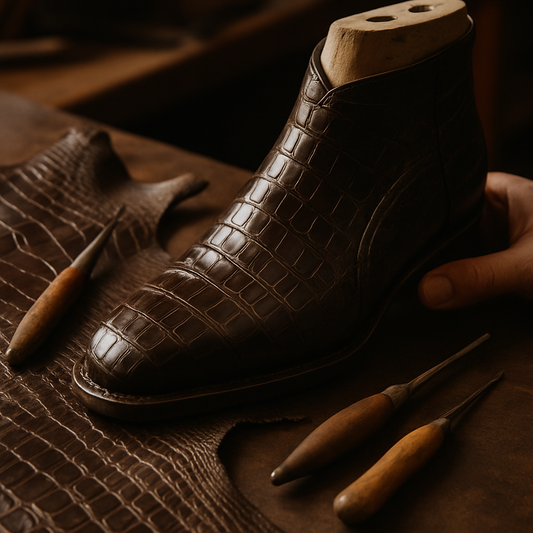
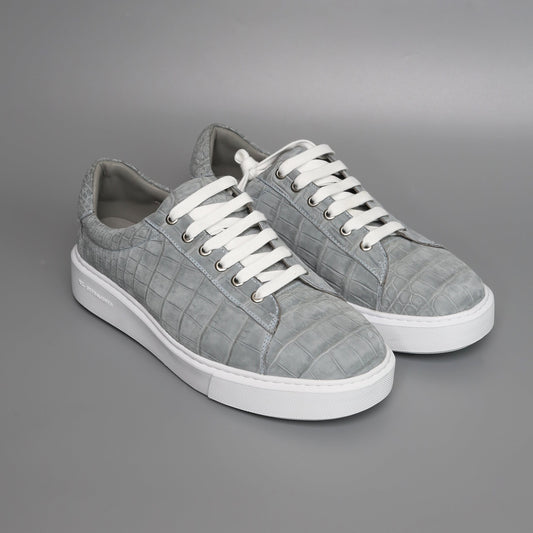
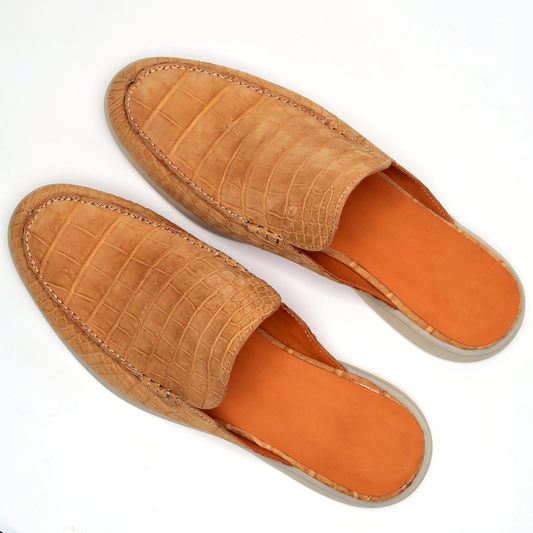
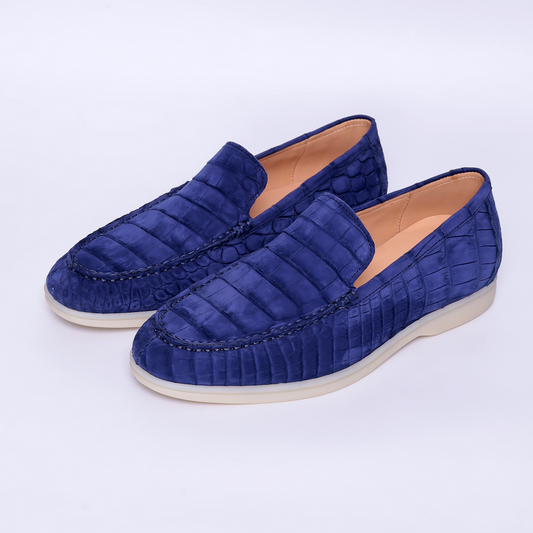
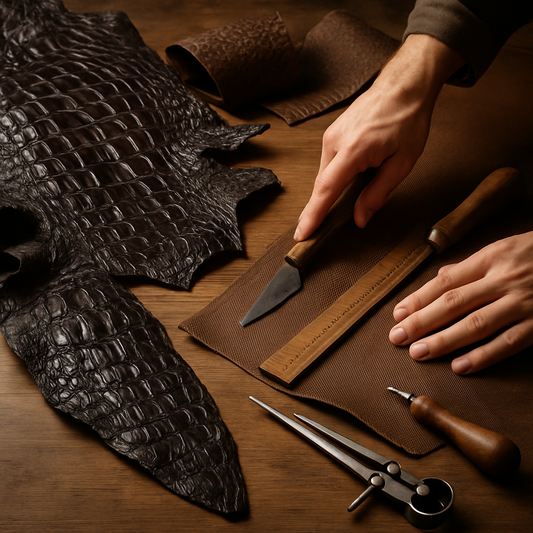
Crocodile belly leather is recognized for a broad scale pattern with relatively regular spacing across the usable center area. Many crocodile skins also show visible sensory pores, often called integumentary sensory organs or ISOs, within the scales. These pores are a natural feature of crocodilian skin, but one visual trait alone does not prove species or authenticity.
Lizard leather has a different surface character. Its scales are generally smaller and more granular than the broad rectangular belly scales associated with crocodilian leather. “Lizard” also covers more than one species, so scale size, layout, texture, and dye response can vary between hides.
The section of hide matters as much as the animal name. Belly skin refers to the smoother underside, while hornback refers to a back cut with raised bony scutes. A pair of crocodile belly shoes and a pair made from crocodile hornback will have very different textures and visual weight.
It is also useful to separate crocodile from alligator and caiman. They are all crocodilians, but the names are not interchangeable. Alligator belly leather commonly has a regular, balanced scale pattern and often an umbilical scar, while crocodile belly leather often shows sensory pores and generally lacks that alligator-type umbilical scar. Caiman can have more uneven scales and may take dye in a blotchier way. Those differences affect how a finished pair looks and how a seller should describe it.
Crocodile Shoes vs. Lizard Shoes: Main Differences
| Factor | Handmade crocodile shoes | Lizard leather shoes |
|---|---|---|
| Scale appearance | Broad, rectangular belly scales with a regular but naturally varied layout | Smaller, more granular scales with a finer surface pattern |
| Visual presence | Usually stronger and more immediately recognizable on larger shoe panels | More detailed and fine-textured, with less visual mass per scale |
| Hide selection | Large usable areas and scale alignment affect how well the pattern suits each shoe | Small-scale layout and species variation affect the final texture and pattern |
| Price factors | Species, origin, belly area, defect level, usable pattern, construction, and labor all matter | Species, hide size, scale quality, dye response, construction, and labor affect the price |
| Best visual setting | Dress shoes where the leather pattern is intended to be noticed | Refined footwear where a tighter, more granular texture suits the design |
Is Handmade Crocodile Better Than Lizard Leather?
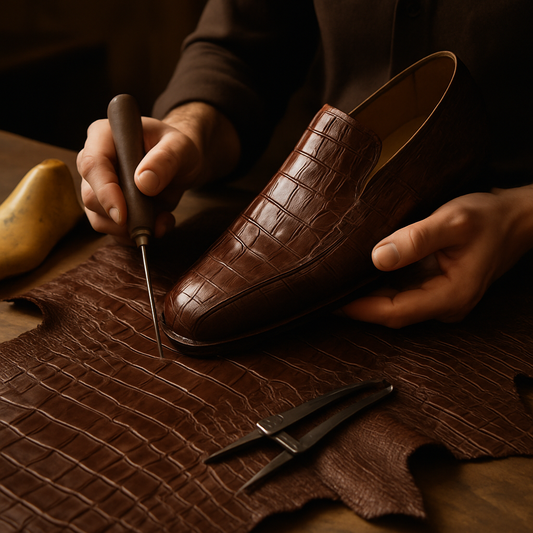
Handmade crocodile shoes can be the better option if you want the larger scale structure associated with crocodile belly leather and a shoe that makes the hide itself part of the design. Crocodile leather shoes often have a more pronounced pattern across the vamp, quarters, or wholecut upper, depending on the cut.
Lizard can be the better option if you prefer a smaller-scale surface or want a less visually dominant exotic leather. Its granular pattern can suit narrow dress-shoe designs, understated loafers, and footwear where the texture is visible at close range rather than from across a room.
Handmade does not automatically mean that one leather is stronger, better made, or longer-lasting than another. Durability depends on the hide, thickness, pattern placement, stitching, sole construction, lining, finishing, frequency of wear, and care. Visual grade is also separate from durability: grading commonly evaluates scars, cuts, holes, scale slip, and other blemishes in the usable pattern or cutting area. A grade label does not function as a universal durability rating.
How Grading Affects the Choice
There is no single grading system shared by every supplier or tannery. One seller may use a four-grade system, while another may describe three broad grades or judge the hide by defects in the main pattern area. The same grade number can therefore mean different things between suppliers, species, and markets.
For crocodile shoes, ask which part of the hide is used and where visible marks appear. A minor mark near an edge may matter less than a defect running through the center of the vamp. For lizard shoes, inspect whether the small scales lie consistently across the visible upper and whether the dye has settled evenly.
Product photographs should show the actual pair or provide a clear description of the hide section. A stock image can show the general design without showing the exact scale layout, pores, scars, or color variation on the pair you receive.
Price: What You Are Paying For
The price difference between handmade crocodile shoes and lizard shoes cannot be explained by the animal name alone. Compare these concrete factors:
- Species and legal origin: Different species and supply chains can carry different material costs and documentation requirements.
- Hide section: Belly leather with a usable, balanced center pattern is different from flank or hornback material.
- Cutting yield: A shoe requiring matching panels may use more carefully selected hide than a design with smaller or separated pieces.
- Visible defects: Scars, holes, cuts, scale slip, and blemishes in the cutting area affect the usable portion of a hide.
- Construction: The upper material is only one part of the product. Last shape, lining, sole, hardware, finishing, and assembly labor also influence the final price.
- Handwork: Handmade production can involve additional fitting, cutting, finishing, and assembly labor, but the seller should explain what “handmade” means in that particular product.
A higher price should come with a clear explanation of the leather, the shoe construction, the visible pattern, and any relevant trade documents. CITES controls international trade in crocodilian leather, and identification or tagging requirements may apply. Documents for exports or re-exports can depend on species, origin, destination, product type, and applicable exemptions. CITES paperwork supports regulated trade compliance; it does not by itself prove every claim about authenticity or quality.
Fit and Sizing for Crocodile and Lizard Shoes
The leather does not determine the correct size. Start with foot length and width, then assess instep height and the shape of the toe box. A person with a high instep may need a different last or a more adjustable closure than someone with a low instep, even when both feet have the same length.
Check the brand’s conversion between EU, US, and UK sizes instead of converting from memory. A listed size should be accompanied by useful length and width information where possible. For a wide fit, ask about the actual forefoot width and whether the upper design allows expansion. A narrow-looking loafer and a rounded derby in the same nominal size can feel very different.
For remote measurements, measure both feet while standing, wearing the socks intended for the shoes. Record heel-to-longest-toe length, the widest forefoot measurement, and the circumference around the instep. Send both sets of measurements, since feet commonly differ slightly. A workshop can use those figures to recommend a size, but remote advice remains less precise than an in-person fitting.
With exotic leather, avoid buying a tight size on the assumption that the upper will stretch into a comfortable fit. A poor fit can place unnecessary pressure on the scale panels and seams. If you are between sizes, ask about the last shape, removable insoles, and exchange conditions before ordering.
Care for Handmade Crocodile and Lizard Shoes
Use a clean, dry cloth as the default first step after wear. Wipe away dust gently, especially around the scale edges, then allow the shoes to air in a dry place away from direct heat. Avoid soaking the leather or using household cleaners, alcohol, or an untested cream.
Care frequency should respond to use and the shoe’s condition rather than a fixed calendar. Shoes worn in wet weather, heavy traffic, or humid conditions may need more frequent inspection. Shoes kept in rotation may need less intervention. If conditioning is recommended, use a product confirmed as suitable for the specific crocodile or lizard finish and test it on a concealed area first.
Use shoe trees that support the shape without forcing the vamp or pressing sharply into the scales. Store each pair separately so hardware, dust, or another shoe does not rub the leather. If the upper becomes wet, let it dry naturally and ask a leather professional about any staining or finish damage.
Styling the Two Materials
Choose crocodile for outfits where the scale pattern can be seen clearly. A dark crocodile wholecut, derby, or loafer can work with tailored trousers and a plain belt in a closely related tone. A lighter or higher-contrast pair can suit less formal tailoring, but keep the rest of the outfit relatively controlled so the shoes remain part of the overall composition.
Lizard leather suits outfits that benefit from fine texture rather than broad scale contrast. It can pair with clean-cut trousers, a simple jacket, or a restrained evening wardrobe. Because the scales are smaller, lizard may coordinate well with other textured materials when the colors remain measured.
Match the formality of the shoe shape with the setting. A sleek balmoral or wholecut generally reads more formally than a chunky loafer or rubber-soled casual design, regardless of whether the upper is crocodile or lizard. The color, shine, toe shape, sole, and outfit should be judged together.
How to Make a Responsible Purchase
Ask for the exact leather description, hide section, country or species information where available, and an explanation of the grade terminology. If the seller uses “crocodile” broadly, ask whether the material is crocodile, alligator, caiman, or another crocodilian. If it is lizard, ask which lizard species is being used rather than treating “lizard” as one uniform material.
For internationally traded crocodilian products, ask whether documentation or tagging applies to your order and destination. Requirements can change according to species, origin, destination, and the form of the finished product. A responsible description should separate legal-trade documentation from claims about visual grade, construction, and authenticity.
At CrocodileViet, our own workshop production keeps the material and finished footwear within one manufacturing operation. That makes it possible to discuss the leather section, visible pattern, measurements, and construction details from the product itself rather than relying only on a generic material description.
For a closer look at the men’s buying process, read How to Choose Genuine Crocodile Shoes For Men for Business Wear. For the first part of this comparison, see Handmade Crocodile Shoes vs. Lizard Leather: Which Is Better?.
Frequently Asked Questions
Are handmade crocodile shoes more durable than lizard leather shoes?
Not based on the leather name alone. Durability also depends on hide condition, thickness, shoe construction, stitching, sole, fit, frequency of wear, and care. Visual grade evaluates defects in the usable pattern and should not be treated as a durability rating.
How can I tell crocodile belly leather from lizard leather?
Crocodile belly leather generally has broader rectangular scales and may show visible sensory pores. Lizard leather usually has smaller, more granular scales. These features help with visual comparison, but one sensory or scale trait alone does not prove authenticity or species.
Does a higher crocodile leather grade guarantee better shoes?
No single grade number has the same meaning across all suppliers and tanneries. Ask what defects the supplier evaluates, which hide section is used, and whether the grade refers to the visible cutting area. Shoe construction and fit still affect the finished result.
What measurements should I send when ordering crocodile or lizard shoes remotely?
Send standing measurements for both feet: heel-to-longest-toe length, widest forefoot width, and instep circumference. Also state your usual EU, US, and UK sizes, whether you need a wide fit, and which socks you plan to wear.
Choose the Leather That Fits Your Priorities
Choose handmade crocodile shoes when broad, structured belly scales and a visibly distinctive upper suit your wardrobe. Choose lizard when you prefer a finer, more granular texture and a quieter exotic-leather effect. In both cases, compare the actual hide section, grade explanation, measurements, construction, care requirements, and applicable trade documentation before ordering.
Browse the CrocodileViet crocodile shoe collection to compare available designs and materials. For measurements or product questions, contact CrocodileViet through WhatsApp.