
Best Genuine Crocodile Wallet for Men: What to Look For

シェア
How to Choose the Best Genuine Crocodile Wallet for Men
The best genuine crocodile wallet for men starts with verified crocodile leather, because “crocodile” and “alligator” describe different animal groups.
A crocodile-patterned surface, a “genuine leather” label, or a high price does not by itself establish that a wallet is made from crocodile hide. The useful approach is to check the species description, the leather section used, the wallet’s dimensions, construction, seller documentation, and the factors behind its price.
Confirm That the Wallet Is Actually Crocodile
Ask the seller to identify the animal group clearly. A product sold as genuine crocodile should not be assumed to be alligator, caiman, or another crocodilian leather. If the listing only says “exotic leather” or “genuine leather,” the species remains unclear.
Surface features can support a description, but they are not conclusive on their own. Crocodile scale patterns vary by species and by individual hide. Crocodile bellies often show more variation in scale arrangement, and visible sensory pores, sometimes called integumentary sensory organs or ISOs, may appear as small dots in the scales. Their presence can be useful when inspecting a hide, but one sensory feature is not proof of authenticity.
Alligator is a separate material. Alligator bellies often have a comparatively regular or balanced scale pattern, with a quicker change from larger central scales to smaller flank scales. Alligator may also show an umbilical scar that crocodile generally lacks. These observations help explain differences between an alligator wallet men may be offered and a crocodile wallet, but visual inspection alone cannot replace reliable product information.
For cross-border purchases, ask about the species, origin, and applicable CITES permits or certificates. CITES regulates international trade in crocodilian skins and manufactured products; it does not, by itself, prove that a wallet is authentic. Documentation should be read together with the seller’s material description and purchase records.
Look for Belly Leather Rather Than Confusing Hide Sections
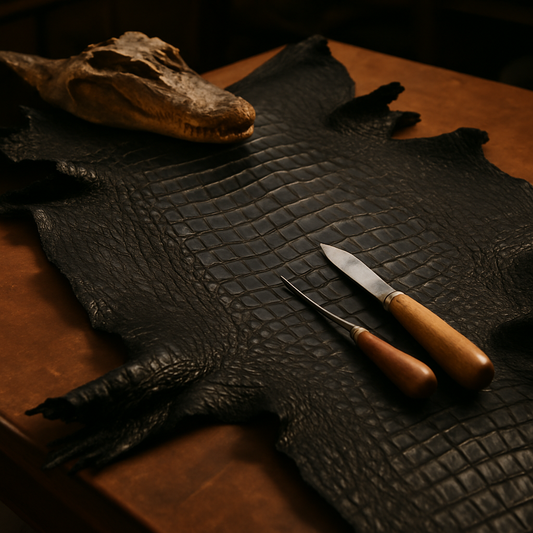
“Belly” or “belly-cut” refers to the ventral portion of the hide, which is commonly used for wallets because its scales form a flatter working surface. A crocodile back has raised bony scutes, often called hornback leather. Bony or buttoned belly skins are also distinct from a smooth, classic-finished belly.
For a men’s wallet, inspect whether the visible exterior is made from crocodile belly leather, another hide section, or a smaller panel. Wallets can be produced from smaller areas of a skin or from secondary sections, so a crocodile wallet does not necessarily display one large uninterrupted belly panel.
Ask these practical questions before ordering:
- Is the visible outer panel genuine crocodile leather?
- Which hide section supplied the panel?
- Is the surface smooth, bony, buttoned, or embossed?
- Does the product use one main panel, several panels, or crocodile leather combined with another material?
At CrocodileViet, we manufacture our crocodile leather goods in-house, which lets us assess the actual panels used in a finished wallet rather than relying only on a generic material label. That distinction matters because the visible leather affects the wallet’s pattern, handle, and price.
Use the Scale Pattern as a Check, Not a Guarantee
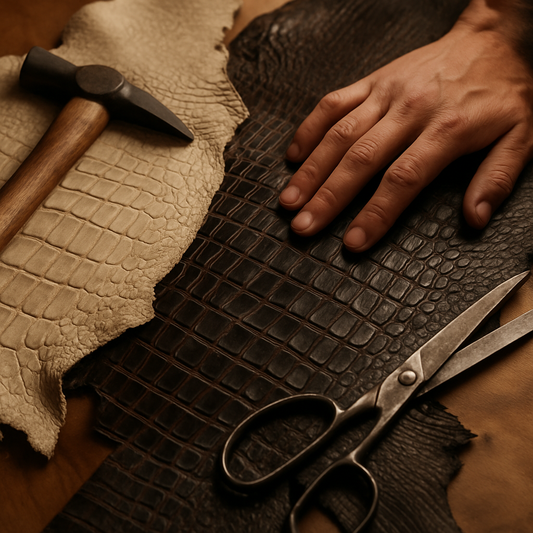
A balanced scale layout is often desirable on a crocodile belly wallet, but “regular” should not be confused with “uniform.” Natural hides contain variation. The central scales may differ from the flank scales, and small changes in shape, spacing, or alignment can occur across the panel.
Look at the scale arrangement across the complete visible panel. A good product photograph should show whether the scales are centered, whether the panel narrows toward the edges, and whether stitching cuts through important parts of the pattern. Close-up images are useful for spotting pores, natural variation, scars, or finishing changes.
Do not treat scale geometry as a standalone species test. Crocodile species differ, individual hides differ, and wallets may use cut panels that do not display the hide’s full pattern. Seller records and clear material descriptions remain more useful than one visual clue.
Separate Leather Grade from Durability
Leather grading and durability describe different things. A visual grade may account for scars, marks, scale regularity, or defects in defined areas, while durability also depends on thickness, tanning, finishing, lining, edge treatment, stitching, and everyday use.
Grade labels are not universal across suppliers or tanneries. One business may use numerical grades in which Grade 1 represents the highest visual category; another may use different terminology or judge different areas of the hide. A grade should therefore be read with the seller’s written criteria, not compared directly across brands.
For a genuine crocodile wallet, ask whether the quoted grade refers to:
- the complete hide or only the visible belly section;
- scale regularity and size;
- natural marks and scars;
- the amount of usable leather after cutting;
- the finished wallet or the raw hide before manufacture.
Natural marks do not automatically indicate weak leather, and a highly regular visual grade does not guarantee better wear performance. The construction specification still needs separate attention.
Check Construction Around the Leather
Examine the wallet’s dimensions, card slots, cash compartment, lining, edges, and closure. Crocodile leather is only one part of the finished product. A wallet that looks attractive externally may still be inconvenient if the interior is too tight or the edge treatment does not suit frequent handling.
For a bifold wallet, check whether several cards create excessive thickness when the wallet is closed. For a long wallet, confirm the cash compartment length and whether banknotes can lie flat without folding. A crocodile zipper wallet needs an additional check: the zipper should open far enough for access while keeping the wallet’s contents contained.
Look closely at areas that receive repeated movement:
- the fold or hinge of a bifold;
- the corners and edge paint;
- the base of card slots;
- the zipper ends and pull attachment;
- the join between crocodile panels and interior leather.
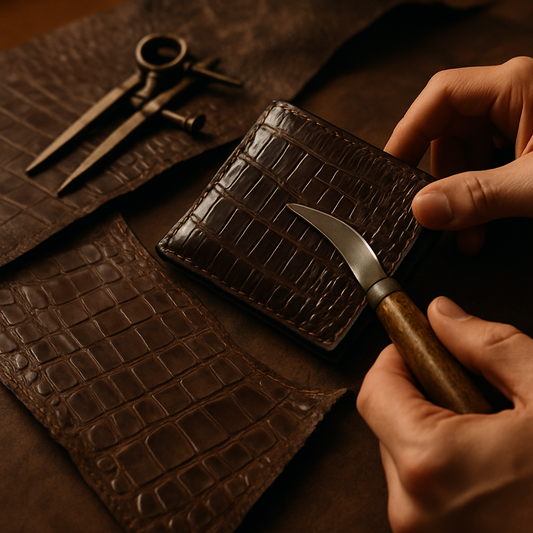
Our in-house manufacturing perspective makes these areas especially relevant because a wallet is used through repeated opening, closing, loading, and pocket removal. The exterior hide should be judged together with the parts that control daily function, not as an isolated skin sample.
Understand What Determines the Price
A seller should be able to explain the price of a genuine crocodile wallet through specific factors rather than a vague claim about quality. The main factors commonly include:
- Usable belly width: crocodile skins are commonly priced by belly width, so a wider usable central area can affect material cost.
- Panel yield: a wallet may require a larger clean panel or several smaller panels, depending on its design.
- Hide section: smooth belly, hornback, and bony or buttoned skins are different materials and visual categories.
- Visual grade: scale arrangement, marks, scars, and the seller’s grading system can affect selection.
- Interior construction: lining leather, card-slot structure, gussets, edge work, and compartments add labor and material.
- Hardware: zippers, snaps, logo fittings, and other metal components influence the finished specification.
- Traceability and documentation: species, origin, and cross-border paperwork may affect the purchasing process.
Comparisons with alligator prices can be misleading. American alligator skins have traditionally been auctioned by length in feet, regardless of belly width, while crocodile skins are commonly priced by belly width. The different measurement systems mean that a price comparison requires more than comparing the animal name.
If a listing gives no species, hide section, dimensions, or construction details, its price is difficult to assess responsibly.
Choose the Right Wallet Size
Measure a wallet you already use successfully. Record its closed length, width, and thickness, then compare those measurements with the new product. Also measure your longest banknote and count the cards you normally carry. This is more reliable than choosing by a product photograph.
For remote orders, request the wallet’s exact closed dimensions and photographs beside a ruler or another known-size object. Ask for internal measurements if the wallet includes a phone compartment, coin section, or zipper gusset. A remote fitting check is particularly useful when the product is made in a long, compact, bifold, or travel format.
EU, US, and UK sizing systems, wide fit, and instep measurements apply to footwear rather than wallets. They should not be used to judge wallet size. For a wallet, pocket depth, banknote length, card capacity, and closed thickness are the relevant measurements.
Care for a Crocodile Leather Wallet
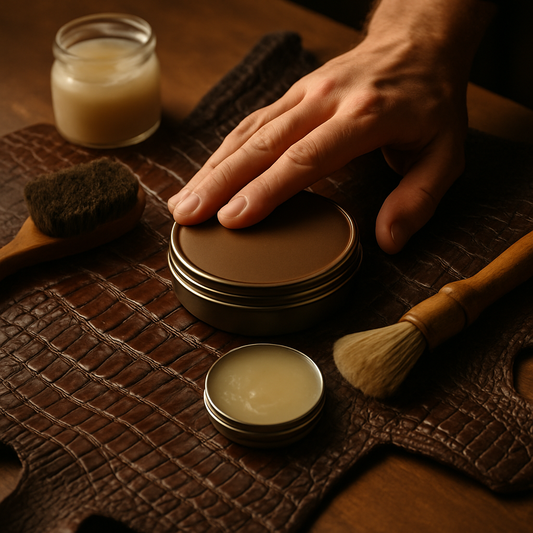
Wipe the wallet with a clean, dry cloth when dust or fingerprints appear. This is a safe default because frequent exposure to water, household cleaners, alcohol-based products, or unsuitable conditioners can change the finish and may mark the scales.
Keep the wallet away from prolonged moisture and direct heat. If it becomes damp, remove the contents, blot it gently with a dry cloth, and allow it to dry at room temperature. Do not use a hairdryer or place it on a radiator.
There is no useful fixed care schedule for every wallet. Frequency depends on handling, climate, finish, and storage. Avoid overfilling card slots, since constant strain can affect the fold, edges, and stitching. Store the wallet in a breathable dust bag or a dry drawer rather than sealing it in plastic for long periods.
Style a Crocodile Wallet for Men
A dark crocodile wallet works naturally with business clothing, especially when the belt, shoes, or briefcase has a compatible depth of color. A lighter brown wallet can sit well with tan footwear, denim, navy tailoring, or casual leather accessories.
Match the wallet’s format to the setting. A slim bifold suits a front or back pocket and carries fewer items. A long wallet provides more room for notes and documents but may work better in a briefcase or jacket pocket. A crocodile zipper wallet can suit travel or users who prefer enclosed storage for coins and small items.
Keep the rest of the leather accessories coordinated without forcing an exact color match. Similar leather tones and restrained hardware usually create a more connected outfit than several competing finishes.
For a broader business-wear comparison, read How to Choose Alligator Wallet Men for Business Wear. For online purchasing checks, see 7 Things to Check Before You Buy Crocodile Leather Wallet Online.
Frequently Asked Questions
How can I tell whether a wallet is genuine crocodile?
Start with a clear species description, hide-section information, seller records, and, where relevant, cross-border documentation. Scale patterns and sensory pores can support an inspection, but no single visual trait proves authenticity. A crocodile-patterned or “genuine leather” label alone is insufficient.
Is crocodile belly leather better for a men’s wallet?
Crocodile belly leather is commonly selected for its flatter ventral surface and usable scale layout. It is different from hornback leather with raised bony scutes and from bony or buttoned belly skins. Whether it suits you depends on the desired appearance, texture, and wallet construction.
Why do crocodile wallets have different prices?
Price can reflect usable belly width, panel yield, hide section, visual grade, interior materials, stitching, edge work, hardware, and documentation. Crocodile skins are commonly priced by belly width, so the measurement basis differs from the traditional foot-length pricing used for American alligator skins.
What size should I choose for a crocodile wallet?
Compare the wallet’s closed length, width, and thickness with one you already carry. Check banknote length, card count, pocket depth, and any zipper or coin compartment. EU, US, UK, wide-fit, and instep sizing do not apply to wallets.
Shop Genuine Crocodile Wallets
View the CrocodileViet wallet collection at CrocodileViet wallets and check the species, dimensions, hide section, and construction details for the model you prefer. For questions about measurements or a remote order, contact CrocodileViet on WhatsApp.