
Patina Alligator Leather: Complete Guide for 2026–2027

Condividi
Patina in Alligator Leather: A Complete Guide for 2026–2027
Patina in alligator leather is the gradual change in tone, depth, and surface sheen that can develop through handling, light exposure, and use, particularly on finishes that leave the scale surface visible rather than heavily coated.
Alligator does not develop patina in one fixed way because the result depends first on the finish. A lightly finished, dyed alligator belly may gain more tonal variation around scale edges and flex points, while a strongly pigmented or high-gloss coated surface may show wear as scuffing, loss of coating, or color change rather than the richer aging people usually mean by patina.
For buyers, the useful question is not simply whether alligator leather will patina. It is whether the particular finish, color, construction, and intended use will age in a way they want to see.
What Patina Means on Alligator Leather
Patina is not a factory-applied effect. It refers to changes that occur after the item enters use: oils from hands, friction at frequently handled points, exposure to indirect light, and the gradual settling of the leather’s surface all influence it. On alligator, these changes appear across an existing scale pattern, so they can emphasize the geometry of the hide rather than create a smooth, broad fade like that seen on some bovine leathers.
Alligator belly is especially relevant to the discussion because it has a comparatively regular, balanced scale layout. American alligator belly scales are generally medium to large and relatively smooth, which gives a finished panel a measured visual rhythm. As the finish changes over time, the joints between scales, raised edges, and flex zones may catch light differently from flatter sections.
That does not mean every alligator belly item will become darker or glossier. A matte surface may develop burnishing in contact areas. A semi-gloss finish may gain localized luster. A coated shiny finish may retain its initial reflectivity for a long period but show abrasions more clearly if it is rubbed against hard surfaces.
The Finish Determines How Patina Will Appear
Before buying patina alligator leather, identify whether the surface is matte, satin, glazed, or strongly pigmented. These descriptions affect appearance, but they also affect how use marks are read by the eye.
| Finish type | How the scale pattern reads | Likely aging character | Best use consideration |
|---|---|---|---|
| Matte or low-sheen | Scale edges and texture remain visually clear | May develop soft burnishing and deeper tonal variation at contact points | Works well for buyers who prefer a quieter surface and visible scale structure |
| Satin or semi-gloss | Balances color depth with readable scales | Can develop selective luster around bends, edges, and frequently handled areas | Useful where some polish is wanted without a mirror-like surface |
| Glazed or high-gloss | Reflects light strongly and can make the scale layout appear more graphic | May show fine scratches, rubbing, or coating wear before it develops a conventional patina | Suited to occasions where a pronounced polished finish matters more than a muted aging effect |
| Heavily pigmented finish | Color can dominate the underlying scale relief | Color wear may become more noticeable than tonal enrichment | Ask how repairs and color touch-ups are handled before choosing it for frequent use |
Matte alligator versus glossy alligator
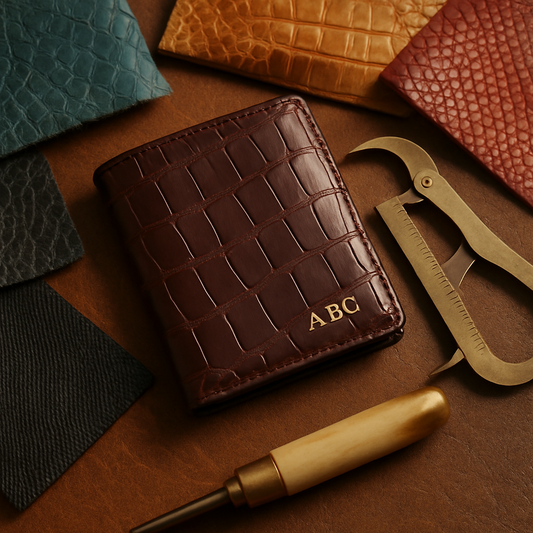
Matte alligator leather tends to show its scale relief without strong reflections. It can be a practical choice for people who want the patina to appear as subtle darkening, soft rubbing, or a changing contrast between scale centers and edges. Because matte finishes do not hide everything with reflected light, dry handling marks and surface dust can also be easier to notice.
Glossy alligator leather places more emphasis on shine. Its visual character is driven by reflected light across each scale, which can look striking in formal settings. Over time, the main concern is less about seeking patina and more about preventing scratches, pressure marks, and uneven loss of sheen. A high-gloss alligator item can age attractively, but it should not be expected to age like an uncoated leather.
Terms such as matte crocodile leather and shiny crocodile leather may appear in broad finish searches, but crocodile and alligator should not be treated as interchangeable materials. Crocodile species often show more varied scale layouts and may display visible sensory pores in the scales. Alligator typically has smoother scale centers without that pore pattern. These are useful visual clues, not stand-alone proof of species or authenticity.
Nubuck versus matte alligator
Nubuck vs matte alligator is not a direct finish comparison. Nubuck is generally made by buffing the grain side of a hide to create a soft nap, while matte alligator retains its recognizable scale surface and uses a low-sheen finish. A matte alligator item may feel less reflective, but it does not have the velvety nap associated with nubuck.
This difference matters for care. Nubuck can absorb marks readily and needs its own brushing and cleaning approach. Matte alligator should be treated as scaled leather: avoid aggressive rubbing, avoid soaking the surface, and keep products away from seams and scale edges unless they are specifically appropriate for exotic leather.
Why Belly Selection Matters to Patina
The belly or midsection is commonly the most valued portion of an alligator hide because it provides the most balanced scale field. Grade is often assigned with defects in this central usable area in mind, rather than by the condition of the entire hide. Head and tail areas are commonly excluded from belly grading for American alligator.
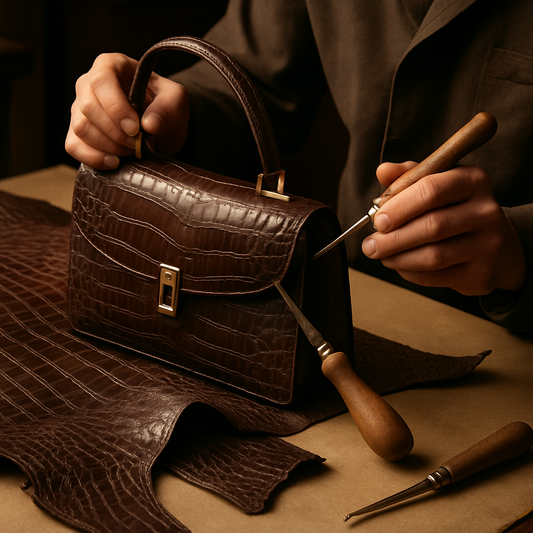
For a patina-focused item, a well-matched belly panel gives aging a more coherent appearance. Similar scale size across paired shoe vamps, wallet faces, or bag panels helps the finish change read as part of one design rather than as a patchwork of unrelated sections. This is why scale matching affects both initial appearance and the way wear becomes visible later.
A common grading convention runs from Grade 1 to Grade 5. Grade 1 often indicates a belly area without visible defects, while lower grades may have increasing clusters of scars, scratches, shading variation, or scale deformities. These labels are not universal standards: suppliers and tanneries can apply different thresholds and terminology. Grade also describes visual condition, not a simple measure of durability.
Size should be considered separately from grade. Alligator skins are often described by a centimeter measurement taken across the widest part of the belly. A larger skin offers more usable area and may allow broader, more consistently matched panels, but its size alone does not establish its grade or predict how it will patina.
What Determines the Price of Patina Alligator Leather
There is no responsible single price for patina alligator leather because the cost begins with the hide and continues through pattern cutting and construction. A finish intended to show the scales clearly can also place more visual pressure on hide selection: scars, mismatched scale rows, and uneven coloration may be more apparent than under an opaque coating.
- Species: Alligator should be priced and described as alligator rather than grouped under a generic exotic-leather label.
- Hide grade: The condition of the belly area, including scars, scratches, shading, and scale deformities, affects visual yield.
- Usable area: A hide’s width and the clean area available for the required pattern pieces influence material efficiency.
- Scale matching: Pairing comparable scales across visible panels can require more selective cutting and leave less usable material.
- Construction: The number of panels, lining method, edge finishing, reinforcement needs, and hardware all change the work involved.
- Handwork: Operations that require manual alignment, skiving, edge work, or assembly add labor, especially where the scale layout must remain visually controlled.
A lower visual grade may still be suitable for parts of a product where scars are intentionally accepted or less visible. It should not automatically be described as weak leather. The relevant question is whether the visible placement, finish, and price correspond to the actual material used.
Care That Supports Attractive Aging
The safest default for alligator leather is a clean, dry, soft cloth used with light pressure. Wipe in the direction of the scales rather than rubbing repeatedly across their edges. This removes ordinary dust without introducing unnecessary moisture or friction.
Use a barely damp cloth only as a last resort for a localized mark, and test any approach in a discreet area where possible. Do not saturate alligator leather, scrub it with household cleaners, or use alcohol-based wipes. Water can leave tide marks, while strong cleaners may disturb dyes, coatings, and the finish between scales.
Conditioning should be based on the leather’s observed condition rather than a fixed calendar schedule. If the surface appears dry, stiff, or unusually dull, seek a product and method appropriate for finished exotic leather and apply sparingly. Too much conditioner can sit in scale seams, alter the sheen, attract dust, or create uneven darkening.
For storage, keep the item away from sustained heat, strong direct light, and very humid conditions. Shape-sensitive items benefit from support that prevents sharp folds. A fold that repeatedly presses across the same scales can create a wear line that looks different from gradual patina.
Styling Alligator Patina by Setting
Business and formal wear
Black, deep brown, charcoal, and dark burgundy alligator with a satin or restrained gloss can work with tailored trousers, dark suits, fine-gauge knitwear, and smooth wool outerwear. A controlled sheen usually reads more quietly under indoor lighting than a highly glazed finish. If the leather has already developed tonal variation, keep the surrounding materials clean and matte enough that the scale pattern remains the focal texture.
Smart casual wear
Matte brown, tobacco, olive-toned, or muted blue alligator can sit well with dark denim, brushed cotton trousers, suede jackets, merino knits, and unstructured tailoring. This setting gives a softer patina room to show without requiring other accessories to match exactly. A belt, watch strap, or shoe need not be the same color, but their undertones should not visibly clash.
Evening use
A shiny alligator finish suits evening clothing that already uses clean surfaces: black tailoring, dark dinner jackets, silk-blend shirts, or minimally textured formalwear. Because reflected light highlights every scale, avoid pairing high-gloss alligator with many other glossy accessories unless a deliberately high-shine look is intended.
Fit and Sizing for Alligator Leather Shoes
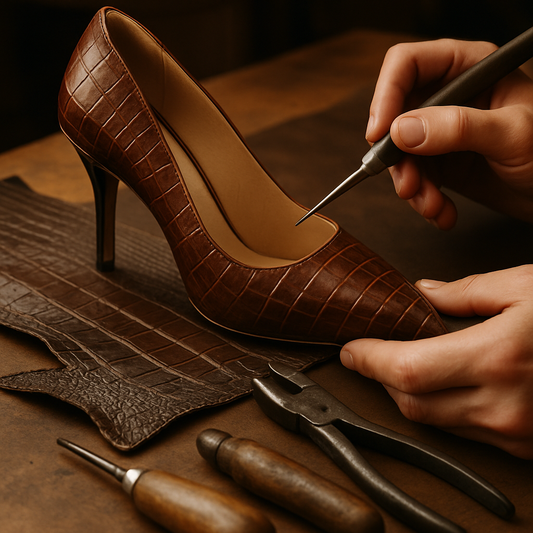
If patina alligator leather is being considered for shoes, fit affects aging as much as care does. A shoe that is too tight across the instep can force repeated stress into the same rows of scales. A shoe that is too loose can crease and rub at the heel or vamp. Neither issue necessarily damages the material immediately, but both can make wear develop in concentrated areas.
Check the stated length and width, then compare the brand’s sizing information with your usual EU, US, or UK size. Wide-fit needs and instep height deserve equal attention: two people with the same foot length can need different lasts because one has a higher instep or broader forefoot.
In-person try-on is valuable because it reveals heel hold, toe room, and pressure across the vamp. Remote measurements are equally useful when trying on is unavailable. Measure both feet while standing, use the larger foot as the reference, record length and forefoot width, and compare those measurements with the seller’s stated size information. Ask about the last shape rather than relying only on size conversion.
Authenticity, Species Description, and Documentation
A regular belly scale pattern, smooth scale centers, and the absence of a repeated central pore pattern are consistent with alligator, but no single visual trait should be treated as conclusive authentication. Construction, documentation, seller transparency, and species-specific product information together provide a more reliable basis for assessment.
Alligator often has an umbilical scar in the belly area, while crocodile lacks that feature. This can be another useful species cue, particularly on larger uninterrupted panels, but it is not a substitute for proper sourcing records.
Trade in American alligator and several crocodile species can be regulated under CITES. CITES documentation relates to lawful trade compliance and sourcing controls; it does not by itself establish the quality, visual grade, or authenticity of a finished item. For an alligator product, ask what species is being sold and whether the seller can provide appropriate sourcing information for the market in question.
FAQ
Does every alligator finish develop a visible patina?
Visible change varies substantially by finish. Low-sheen and lightly finished surfaces may show tonal development and burnishing more readily, while heavily coated or glossy surfaces may show scratches or coating wear first. Handling patterns, color, and exposure also affect the result.
Does a higher alligator grade mean better patina?
A higher grade generally refers to fewer visible defects in the graded belly area, which can create a cleaner starting surface. It does not guarantee a particular aging result. Finish type, scale placement, use, and care have major influence on how patina appears.
Can patina be removed from alligator leather?
Some surface dirt or transferred residue can be reduced with appropriate professional care, but genuine color and sheen changes from use may be part of the finish’s aging. Aggressive cleaning can cause more harm than the patina itself, especially on matte or glazed surfaces.
Choose an Alligator Finish for the Way You Will Use It
Patina alligator leather rewards a specific buying approach: assess the finish before judging the color, look at the balance of the belly scales, and expect use to leave a record on the surface. Matte finishes tend to favor quiet tonal development, while glossy finishes place greater emphasis on preserving controlled reflection.
For alligator footwear with scale pattern and finish options, view the CrocodileViet shoe collection. For sizing, finish, or care questions before ordering, contact CrocodileViet via WhatsApp.