
Nike’s Croc-Embossed Goadome Low: What the October 2026 Drop Says About Exotic-Look Sneakers

Condividi
Nike’s Croc-Embossed Goadome Low: What the October 2026 Drop Says About Exotic-Look Sneakers
One sneaker report lists the Nike Air Max Goadome Low in Navy and Black for October 6, 2026, at a reported $175, while other coverage gives different release details.
What the Nike Goadome Low actually represents
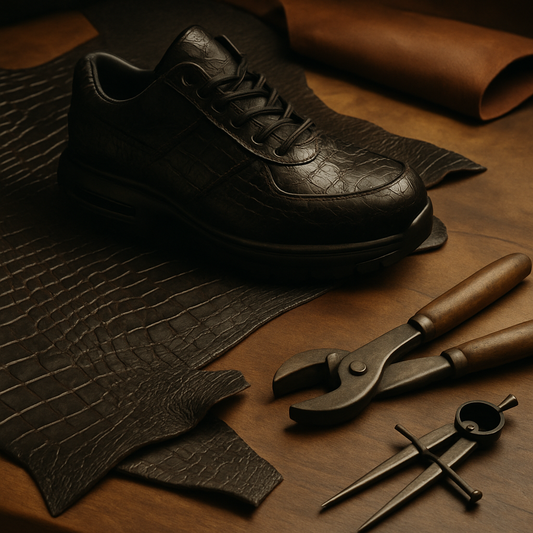
The Nike design is best described as a croc-embossed leather or crocodile-textured leather sneaker. Those terms describe a raised surface pattern applied to the upper; they do not identify the material as genuine crocodile skin.
That distinction matters because “Nike croc skin sneakers” can sound as though the shoe uses an actual crocodilian hide. A crocodile-like print may be created on ordinary leather or another manufactured upper. The presence of scale-shaped panels, a glossy finish, or a repeating texture does not establish the animal species of the material.
For buyers, the Goadome Low therefore sits in the exotic-look category rather than the confirmed exotic-leather category. It offers the visual language of crocodile scales in a sneaker format without, based on the available descriptions, proving that the upper is made from crocodile or alligator leather.
Why the October 2026 information needs checking
Release reporting for this model is not consistent. One report gives October 6 and a $175 price for both Navy and Black, but other sneaker reports publish different dates. The safest approach is to check Nike’s own product listing before treating the date, color options, or price as final.
This is also important for searchers comparing the Nike Air Max Goadome Low Croc with other crocodile-embossed sneakers. A media report can describe an expected launch, while Nike’s regional listing may control the actual availability, sizing, and price in a particular market.
The reported price is useful as a reference point, not as a confirmed universal retail figure. Regional pricing, tax, distribution, and final product specifications can affect what a buyer pays.
Embossed pattern versus genuine crocodilian leather
Scale appearance alone cannot authenticate a hide. On genuine crocodilian leather, the visible pattern is influenced by the animal, the hide section, cutting direction, tanning, and finishing. Embossing imitates the surface pattern, but it does not reproduce the biological origin of the material.
Real crocodile and alligator leather can also look very different from one piece to another. Belly leather generally has a smoother underside with a regular, balanced scale arrangement. Hornback refers to the ridged dorsal or back section, where raised bony structures create a more pronounced texture. These are hide-region terms, not automatic quality grades.
Crocodile often shows visible sensory pores, sometimes called ISOs, on the scales. Alligator commonly has an umbilical scar on the belly, while crocodile lacks that same feature. These clues can support a material assessment, but one sensory trait, a printed pattern, or a photograph does not prove authenticity on its own.
Genuine products may also involve species-specific documentation or permits depending on the species, origin, and trade route. CITES rules concern trade in actual listed crocodilian specimens and products; they do not turn a printed or embossed imitation into genuine exotic leather.
What this means for sneaker buyers
The Goadome Low’s appeal is primarily visual and functional: a familiar sneaker silhouette combined with a raised crocodile-like texture. Buyers who want that appearance may prefer an embossed upper because the pattern is designed rather than taken from an animal hide, and because the purchase does not carry the same material question as a genuine exotic-leather shoe.
Buyers seeking genuine crocodile leather should look for a clear material description from the seller rather than relying on words such as croc, croc skin, exotic, or reptile print. They should also ask which species and hide section are used, because belly and hornback create different surfaces and construction considerations.
Grading deserves similar caution. There is no single universal A/B/C or “Grade 1” crocodilian-leather system that applies across every supplier and tannery. A label has meaning only when the supplier explains the grading scheme behind it. Visual grade also concerns appearance and selection; it should not be treated as a direct measure of durability.
Price factors beyond the reported $175
If the reported $175 figure is confirmed by Nike, it would describe the retail positioning of this particular sneaker, not the price of genuine crocodile leather footwear generally. Several factors can change the price of an exotic-look or exotic-leather sneaker:
- Upper material: printed or embossed leather, coated material, synthetic leather, and genuine crocodilian leather have different material costs.
- Hide section: belly leather and hornback leather require different cutting approaches and produce different visual effects.
- Pattern placement: aligning a scale pattern across panels can increase cutting and assembly work.
- Construction: sole attachment, lining, hardware, padding, and reinforcement influence manufacturing cost.
- Documentation and trade route: genuine exotic materials may involve species, origin, permit, and import requirements that do not apply to embossed imitation.
At CrocodileViet, we manufacture our own alligator and crocodile leather goods in-house. That matters because material selection and product construction can be assessed within the workshop rather than treated as an unidentified printed upper; it also lets us explain whether a product uses belly or hornback leather instead of using “croc” as a vague marketing term.
Fit and sizing considerations
Check the Nike listing for the available size system and conversion chart before ordering. EU, US, and UK numbers do not correspond one-to-one, and a buyer should not assume that the same numerical size will feel identical across different lasts or sneaker models.
Measure foot length from the back of the heel to the longest toe, then measure width across the broadest part of the forefoot. A wide foot may need additional room even if the length measurement matches the chart. Instep height also matters because a raised or structured upper can feel restrictive across the top of the foot.
For remote measurements, send both foot-length and width measurements, note whether the feet differ in size, and mention thick socks, orthotics, or a high instep. Those details provide more useful information than requesting a size based only on a familiar brand.
Care for croc-print and crocodile-embossed sneakers
Start with a dry cloth to remove loose dust. This is the safest default because the finish, coating, and backing material may react differently to water or cleaning products. Do not assume that a product intended for smooth calfskin is suitable for every embossed upper.
Keep the sneakers away from prolonged moisture, direct heat, and aggressive brushing. If a mark does not lift with a dry cloth, identify the upper material and follow the maker’s care instructions before applying cleaner or conditioner. Store the pair with enough space to prevent the raised pattern from being pressed against another shoe.
Genuine crocodile leather requires material-specific care as well. Its finish, scale structure, and tanning method affect which products are appropriate, so a fixed cleaning schedule is less useful than checking the leather’s condition and the supplier’s instructions.
How to style exotic-look sneakers
A black croc-print shoe can work with dark denim, tapered trousers, or a plain overshirt when the rest of the outfit stays relatively quiet. Navy offers a softer alternative with grey trousers, washed denim, cream knitwear, or muted blue layers.
For business-casual settings, keep the sneaker clean and pair the textured surface with solid fabrics rather than several competing prints. The raised pattern already supplies visual texture, so a simple trouser cut and restrained accessories can keep the outfit balanced.
If you are comparing the Goadome Low with genuine crocodile footwear, How to Choose Crocodile Leather Sneakers for Business Wear covers material and styling questions specific to real crocodile leather.
Frequently Asked Questions
Are Nike croc skin sneakers made from genuine crocodile leather?
The available descriptions identify the style as croc-embossed or crocodile-textured leather, not confirmed crocodile skin. A raised scale print does not prove that the upper uses a crocodilian hide.
When is the Nike Air Max Goadome Low Croc releasing?
One report lists October 6, 2026, for Navy and Black, with a reported $175 price, but other coverage gives different dates. Confirm the release information on Nike’s own listing before ordering.
Can a crocodile-like pattern authenticate a real hide?
No. Pattern resemblance alone cannot authenticate a hide. Crocodile may show sensory pores, while alligator often has an umbilical scar on the belly, but these clues require proper material assessment and do not prove species by themselves.
How should croc-print sneakers be cleaned?
Use a dry cloth as the default starting point, keep the shoes away from prolonged moisture and heat, and check the upper material before applying any cleaner or conditioner.
For crocodile-textured and genuine exotic leather sneaker options made by our workshop, visit CrocodileViet’s sneakers and athletic collection. For sizing or material questions, contact us through WhatsApp.