
How Genuine Crocodile Shoes For Men Are Made: From Hide Selection to Hand Finishing — Part 2

Condividi
How Genuine Crocodile Shoes for Men Are Made: From Hide Selection to Hand Finishing — Part 2
Genuine crocodile shoes for men are made by selecting a suitable hide section, planning each leather panel around the scale pattern, assembling the upper, shaping the shoe on a last, and completing the surface by hand.
Part 1 focused on the material and the early preparation stages. This second part follows the hide into footwear production, where leather selection becomes a question of proportion, visible scale placement, construction, fit, and finishing. The aim is not simply to use crocodile leather, but to use each part of the hide in a way that suits the shoe design.
1. Selecting the Hide for a Shoe Design
The first decision is not a grade label alone. A workshop must look at the species, hide section, animal size, scale arrangement, surface condition, and the intended shoe pattern together.
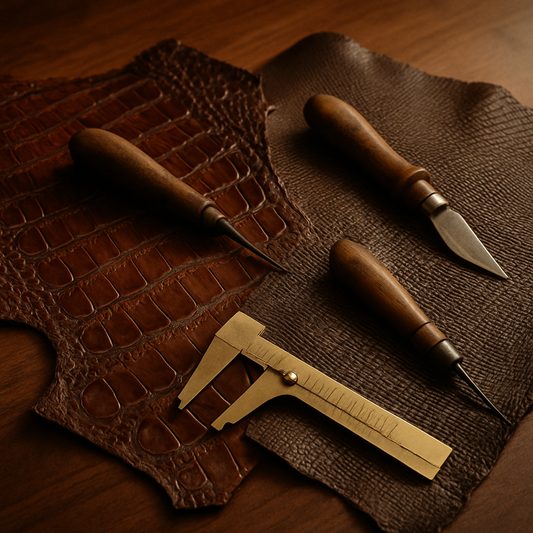
Belly leather has flatter scales and a smoother surface, so it is commonly considered for uppers where a regular, balanced appearance is wanted. Dorsal or hornback leather retains more raised, textured scales. It can create a stronger visual texture, but it also requires a pattern designed around the height and direction of those scales.
“Belly cut” and “hornback” describe sections of a hide, not species or grades. A belly cut may come from crocodile or another crocodilian, while a hornback description does not by itself prove the leather is crocodile.
Species identification also needs more than one visual clue. Repeated sensory pores, often called integumentary sensory organs or ISOs, can be a useful crocodile clue. Alligator belly leather may show a distinctive umbilical scar that crocodile generally lacks. Scale regularity can help with observation, but it does not establish authenticity by itself. Caiman is a separate crocodilian leather; it is not another name for crocodile. Caiman can be more rigid and may be harder to dye evenly because of calcium deposits.
2. Why Defect Location Matters More Than a Grade Number Alone
Hide grading generally reflects the number, size, and location of defects. However, grading labels vary among suppliers and tanneries, so a Grade 1–5 label does not function as a universal industry scale.
For footwear, the position of a mark can matter as much as the mark itself. A visible area across the vamp needs a different standard from a section hidden under a facing, near a seam, or inside an allowance. A hide with a lower supplier grade may still be workable if its defects fall in areas that do not appear on the finished shoe. Conversely, a higher label may not suit a particular design if the usable section does not provide the required width or scale layout.
At CrocodileViet, this evaluation is important because it prevents a workshop from treating the grade label as the complete decision. The reason is practical: the finished shoe is judged by the exposed panels, not by an abstract number on the hide.
3. Planning the Scale Pattern Before Cutting
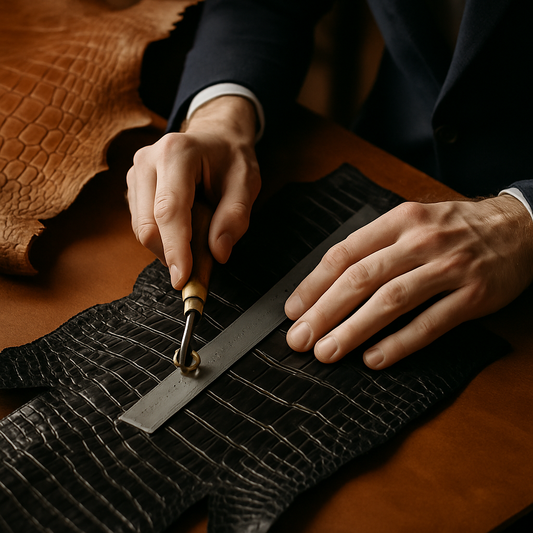
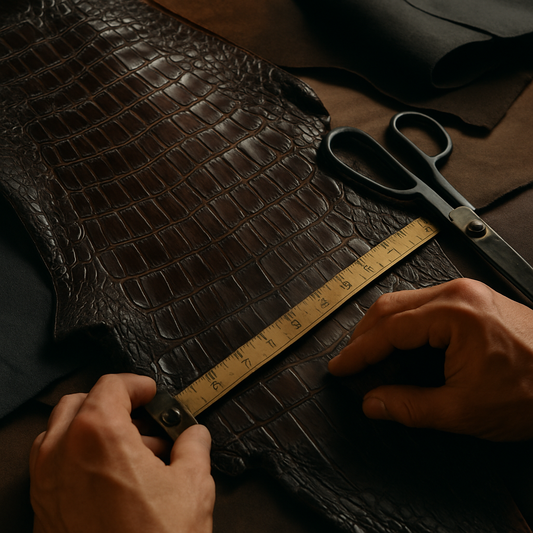
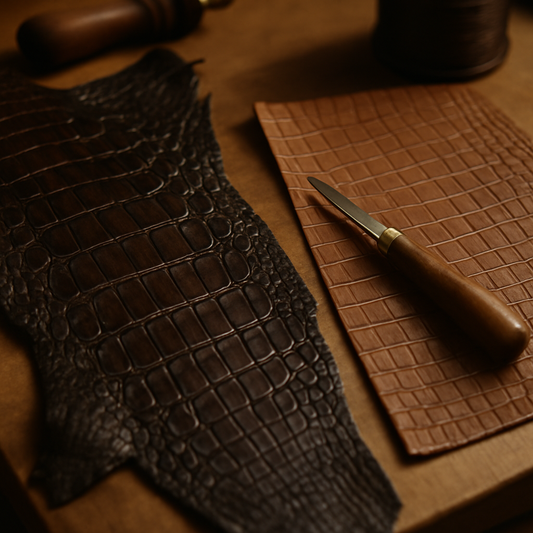
Crocodile leather is not cut like a plain cowhide. The scale pattern is part of the visible design, so the cutter must position the paper patterns before making the first cut.
For a pair of shoes, the left and right panels need a visually compatible arrangement. The largest belly scales may be placed across the vamp, while smaller or differently shaped scales can work better toward the quarters, tongue, or heel area. This is not a claim that every pair has identical scales; species, animal size, hide section, cutting, and finishing affect the result.
A loafer, wholecut, derby, and boot each place different demands on the hide. A wholecut needs a large, coherent panel because fewer seams interrupt the upper. A derby can divide the upper into more pieces, allowing the cutter to work around a scar or irregular area. A boot may use the hide’s vertical scale movement differently from a low-cut dress shoe.
Pattern placement also influences how the shoe bends. Large, raised scales across a heavy flex point may create a different visual and handling result from flatter belly scales in the same location. The design therefore has to account for both appearance and movement.
4. Cutting and Preparing the Leather Panels
After the layout is approved, the upper panels are cut with the grain direction and scale rows in mind. The cut must preserve the intended appearance while leaving enough material for joining and shaping.
Leather thickness is then adjusted where construction requires it. Edges may need thinning so that overlapping panels do not create excessive bulk. The amount of reduction depends on the pattern, leather section, and construction method. Removing too much can weaken an edge; leaving too much can produce a heavy seam or an uneven transition.
This stage also explains why a pair of crocodile leather shoes can show small differences between the two sides. Crocodile is an animal material rather than a repeating manufactured sheet. Even carefully matched panels can vary slightly in scale width, surface texture, or color absorption.
5. Forming the Upper Around the Last
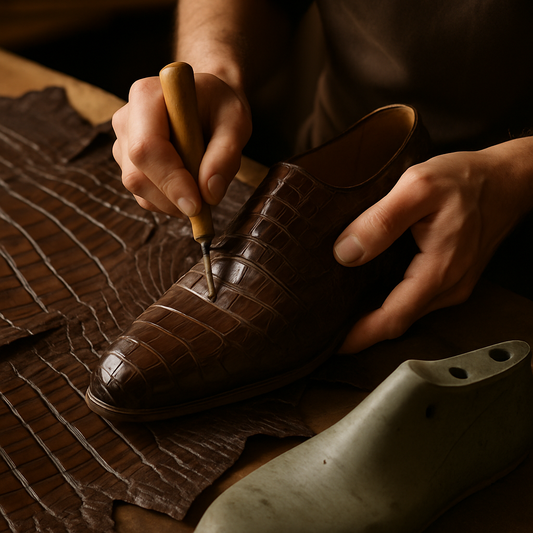
The cut panels are joined to form the upper, then shaped around a last that defines the shoe’s length, toe profile, instep height, and overall volume. The last is not only a mold for appearance; it directly influences how the finished shoe fits.
During lasting, the upper is drawn over the last and positioned so that the centerline, toe, quarters, and heel sit correctly. Crocodile leather needs controlled handling during this process because excessive force can distort the scale pattern or create tension in a visible area.
At this point, the relationship between the pattern and the foot becomes clear. A shoe can have an attractive upper but still feel unsuitable if its last is too narrow, too shallow over the instep, or too short in the toe box. This is why a size conversion alone does not fully describe fit.
6. Building the Sole and Checking the Shape
Once the upper has been shaped, it is joined to the sole structure according to the selected construction. The sole, heel, and upper must work together so the shoe holds its intended shape while allowing the foot to move naturally.
Inspection at this stage looks for more than surface marks. The workshop checks whether the pair is balanced, whether the heel sits correctly, whether the topline is even, and whether the crocodile panels remain aligned after shaping. A scale row that looked straight on a flat hide can change visually once it follows the curve of the last.
For handmade crocodile shoes, this is also where small construction differences between a sample and a finished pair may become visible. The final shape depends on the hide’s response to lasting, the pattern, and the shoe’s structure.
7. Hand Finishing the Crocodile Upper
Hand finishing brings the upper to its final visual condition. It may include edge refinement, controlled polishing, color adjustment, and surface inspection, depending on the leather’s existing finish and the design requested.
Crocodile should not be treated as if every surface needs the same amount of product. The scales, valleys, edges, and seams respond differently. Excess product can collect between scales, while aggressive rubbing can alter the surface appearance. The finishing approach must therefore match the leather’s coating, color, and texture.
Color can also appear differently across a hide. Scale structure affects how light reaches the surface, and the belly, flank, and dorsal areas may absorb or reflect finishing materials differently. This is one reason a workshop should evaluate the actual panels rather than promise that every pair will have identical color depth or softness.
Before packing, the pair is checked for symmetry, loose threads, edge transitions, sole attachment, heel stability, and visible damage. These checks do not change the leather’s natural variation, but they help identify construction problems before delivery.
Price: What Determines the Cost of Crocodile Shoes?
The price of crocodile leather shoes depends on several concrete factors:
- Hide size and usable area: a large design or wholecut pattern may require more usable belly leather than a multi-panel shoe.
- Scale selection: matching the left and right panels can reduce the amount of hide that is practical for one pair.
- Hide section: belly and hornback sections have different textures, thicknesses, and cutting requirements.
- Defect placement: a hide with marks in visible vamp areas may require more selective cutting or additional material.
- Construction: sole structure, heel design, lining, and hand-finishing time all influence the final cost.
- Fit work: adjustments for a broad foot, high instep, or remote measurement process can require extra pattern planning.
A grade label alone cannot explain the full price. Supplier grading conventions differ, and two hides with the same label may offer different usable areas for a particular shoe pattern.
Fit and Sizing for Men’s Crocodile Shoes
Start with foot length and width, then assess instep height and toe volume. EU, US, and UK sizes are useful references, but conversions can vary between lasts and brands.
Men with a wide fit should provide measurements for both feet, since one foot may be longer or broader. A high instep can affect how the vamp closes and whether the shoe feels tight even when the length appears correct. For remote measurements, record foot length from heel to the longest toe, the widest forefoot point, the ball girth, and the instep girth while standing.
Use a firm, flat surface and measure both feet at the end of the day, when foot volume may be greater. Send the measurements together with your usual EU, US, or UK size and information about shoes that currently fit well. This gives the workshop more useful information than a size conversion alone.
Care for Crocodile Leather Shoes
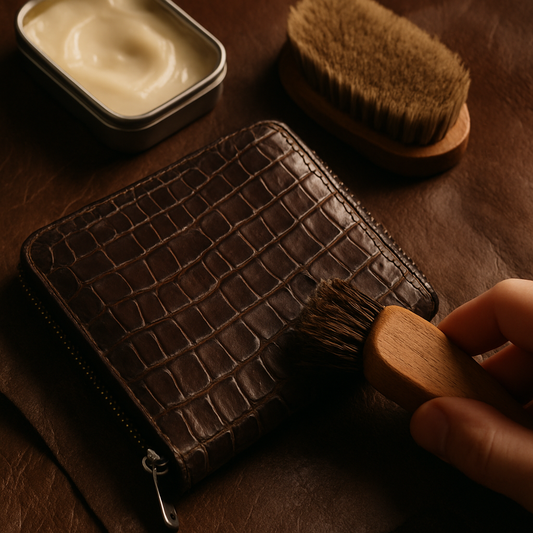
After wearing the shoes, remove surface dust with a dry, soft cloth. This should be the default first step because dust left around the scale edges can mix with moisture or finishing products.
Allow the shoes to air naturally away from direct heat. Do not apply household oils, alcohol-based cleaners, or an untested cream. A product that works on smooth calfskin can change the color or finish of crocodile leather.
There is no useful fixed care schedule for every pair. Frequency depends on wear, climate, color, surface finish, and exposure to rain or perspiration. If the leather looks dry, develops a dull film, or has a mark that a dry cloth cannot remove, ask the workshop or a specialist about a compatible product before applying it.
Styling Genuine Crocodile Shoes for Men
For business clothing, dark brown, black, or deep burgundy crocodile dress shoes can work with tailored trousers and restrained accessories. Match the formality of the shoe to the setting: a clean loafer or derby may suit business-casual clothing, while a structured lace-up can sit more naturally with a formal suit.
For less formal outfits, pair the shoes with plain trousers, an open-collar shirt, and a simple belt in a compatible color family. Let the scale pattern remain the main leather feature instead of combining it with several competing textures.
A hornback design can suit casual tailoring because its raised surface is visually stronger. A flatter belly-cut upper can work with a cleaner trouser line. These are styling directions rather than strict rules; the shoe’s color, last shape, and scale layout also affect the result.
Frequently Asked Questions
Does a regular belly scale pattern prove that shoes are genuine crocodile?
No. Alligator belly leather can show a regular, balanced scale pattern, while crocodile may also have orderly areas. Sensory pores, the umbilical area, species information, and supplier documentation should be assessed together. One visual trait does not prove authenticity.
Are belly-cut and hornback crocodile shoes made from different species?
Not necessarily. Belly cut and hornback identify hide sections. Belly leather has flatter scales, while hornback retains more raised scales. The species must be identified separately.
Is a higher hide grade always better for a pair of shoes?
Not automatically. Grading labels differ among suppliers, and footwear suitability depends on defect location, usable area, scale layout, and the shoe pattern. A mark outside the visible panels may matter less than a small defect across the vamp.
How should I request sizing for handmade crocodile shoes remotely?
Provide both foot lengths, forefoot widths, ball and instep girths, your usual EU, US, and UK sizes, and notes about wide-fit or high-instep needs. Measure while standing on a firm surface and send details for both feet.
View the current crocodile shoe collection to compare available designs and leather layouts. For sizing or material questions, contact CrocodileViet on WhatsApp before ordering.