
Handmade Crocodile Shoes vs Lizard Leather: Which Is Better?

Condividi
Handmade Crocodile Shoes vs. Lizard Leather Shoes: Which Is Better for You?
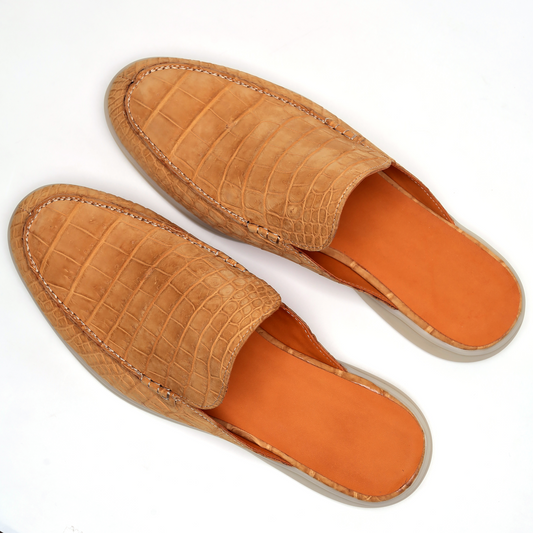
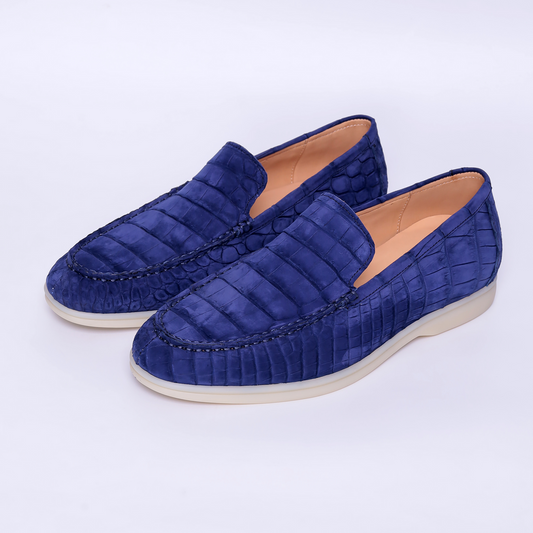
Handmade crocodile shoes generally suit buyers who want a firmer leather with larger, more structured scales, while lizard leather shoes suit those who prefer a finer-scaled, dressier surface.
Neither material is categorically better; the stronger choice depends on how you dress, how visible you want the scale pattern to be, and how much structure you prefer across the vamp and toe. Crocodile leather shoes and lizard leather shoes create distinctly different results, even when the shoe pattern, color, and construction are similar.
How Crocodile and Lizard Leather Differ on a Shoe
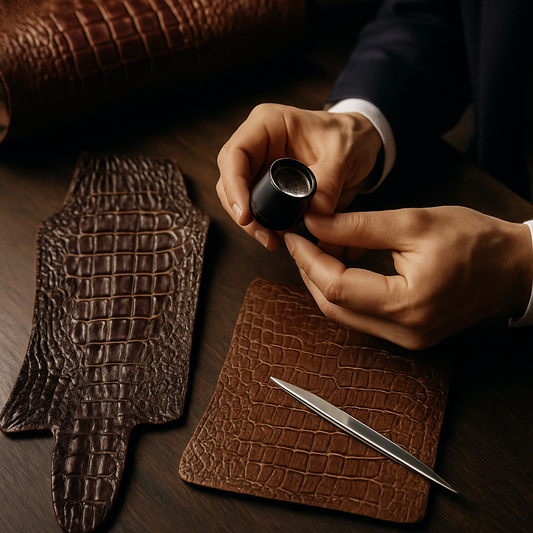
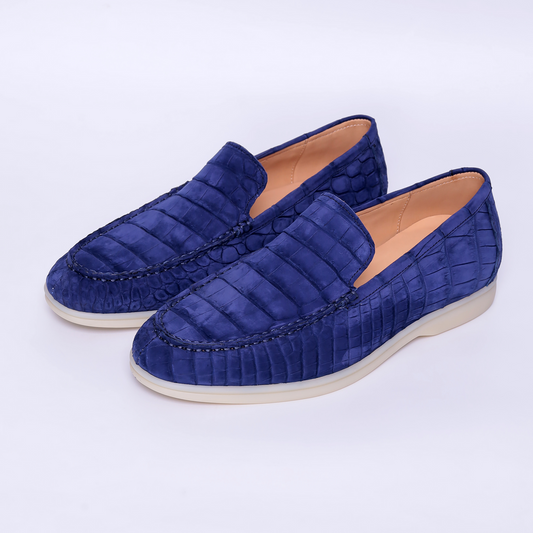
Crocodile leather has a comparatively bold surface. Its belly area commonly shows square-to-rectangular scales in a regular, balanced arrangement, although scale size and pattern vary by crocodile species and by the usable area of an individual hide. Some crocodile skins also show small sensory pores, often called ISOs, within certain scales. These pores are one visual characteristic to assess alongside species labeling, construction, and documentation; they are not standalone proof of authenticity.
Lizard leather has much smaller scales, creating a tighter, finer texture across the shoe. From a normal standing distance, a lizard shoe can read more like a textured dress leather than a strongly segmented reptile pattern. Crocodile, by comparison, remains visually distinct at a greater distance because each scale occupies more of the shoe’s surface.
| Decision factor | Handmade crocodile shoes | Lizard leather shoes |
|---|---|---|
| Scale size | Larger and more visible, particularly across the vamp | Smaller and closer-set across the upper |
| Visual effect | Structured, pronounced, and more graphic | Fine-textured, restrained, and dress-oriented |
| Feel of the upper | Often firmer with more surface definition | Typically finer in appearance and less visually heavy |
| Pattern placement | Scale matching can strongly affect the appearance of each shoe | Fine scales make transitions and panel joins less conspicuous |
| Best suited to | Wearers who want the leather itself to be a central part of the outfit | Wearers who want reptile texture in a quieter formal shoe |
Which Material Works Better for Your Wardrobe?
Choose handmade crocodile shoes if you want the scale pattern to be immediately legible. A crocodile loafer, derby, or monk-strap can carry substantial visual weight, especially in black, dark brown, burgundy, or a hand-finished tonal color. The leather works particularly well when the rest of the outfit has clean, low-texture fabrics that do not compete with the upper.
Lizard leather may work better if you wear tailored clothing frequently and prefer a more reserved shoe surface. Its smaller-scale texture can sit comfortably with fine wool suiting, narrow-weave silk ties, and formal trousers without pulling attention away from the overall silhouette.
For business and formal wear
- Crocodile dress shoes can work with dark suits, solid-color trousers, and minimal accessories when the scale pattern is balanced across both shoes.
- Lizard leather is often easier to pair with pinstripes, subtle checks, and textured suiting because its scale pattern reads more quietly.
- For black-tie events, footwear requirements may be more conservative than either exotic leather option, depending on the dress code and venue.
For smart-casual dressing
- Crocodile loafers can pair well with dark denim, tailored chinos, knit polos, and unstructured jackets.
- Crocodile boots or lace-up shoes suit outfits built around heavier fabrics such as denim, brushed cotton, or textured wool.
- Lizard shoes can complement lightweight trousers, open-collar shirts, and cleaner warm-weather tailoring.
For men searching for genuine crocodile shoes for men, “genuine” should not be treated as a leather-grade claim. Ask for the species used, the origin and type of leather, and clear product information. “Genuine leather” is a broad marketing term and does not mean the same thing as full-grain leather.
Leather Surface, Grade, and What They Actually Mean
In conventional leather terminology, full-grain means the natural grain surface remains intact. Top-grain leather has been sanded or buffed to reduce visible blemishes, producing a more even-looking surface but removing some of the original grain character. These terms should be used carefully for reptile footwear, since the species, scale arrangement, finishing, and hide selection all shape the final appearance.
For crocodile shoes, a clean-looking upper does not necessarily indicate a stronger hide, and a more visibly marked hide does not automatically indicate a weaker one. Visual grade and durability are separate assessments. A workshop may sort hides by scar visibility, scale arrangement, dye uptake, or usable cutting area, while another supplier may use different grading labels. There is no single universal grading vocabulary across tanneries and suppliers.
At CrocodileViet, the useful question is not simply whether a hide is labeled high grade. We look at whether the available leather can produce a balanced pair: the left and right shoe need compatible scale size, direction, and visual density because an attractive individual panel can look discordant once placed opposite another shoe.
Fit and Sizing: Leather Does Not Replace Correct Measurements
Both crocodile and lizard uppers require accurate sizing. The key measurements are foot length, forefoot width, instep circumference, heel shape, and the amount of toe room you prefer. A striking upper cannot compensate for a shoe that is too narrow at the ball of the foot or too tight across a high instep.
For in-person fittings, wear the sock thickness you expect to use with the shoe and assess both feet, as they may not measure identically. For remote orders, provide foot length in centimeters, the widest forefoot measurement, instep circumference, your usual EU, US, or UK size, and whether you need a wide fit. Your existing shoe size is useful context, but it should be checked against the specific last rather than treated as a complete measurement.
Crocodile leather’s more structured character can make width and instep assessment especially important. Lizard leather may look finer on the foot, but it still needs sufficient room at flex points. A shoe should feel secure at the heel and supportive across the midfoot without concentrated pressure at the toes or instep.
Why Handmade Crocodile Shoes Cost More Than Some Other Leather Shoes
The price of handmade crocodile shoes is shaped by more than the word “exotic.” Species affects the available scale pattern and trade requirements. Hide grade affects how much visibly usable leather can be cut from each skin. Usable area matters because the workshop may need larger, compatible sections for a pair rather than isolated attractive patches.
Scale matching also affects cost. On a pair of crocodile leather shoes, the workshop must account for how scales meet at the vamp, toe, quarters, and other visible panels. Construction adds another layer: the complexity of the pattern, lining work, sole construction, edge finishing, and the amount of handwork all influence labor. A smaller lizard scale pattern may reduce the visual difficulty of matching large panels, but lizard leather still requires careful cutting and thoughtful placement.
For this reason, two shoes made from the same species can have very different prices without one automatically being more durable. The amount of usable hide, the symmetry required for the pair, and the construction method may differ substantially.
Care for Crocodile and Lizard Leather Shoes
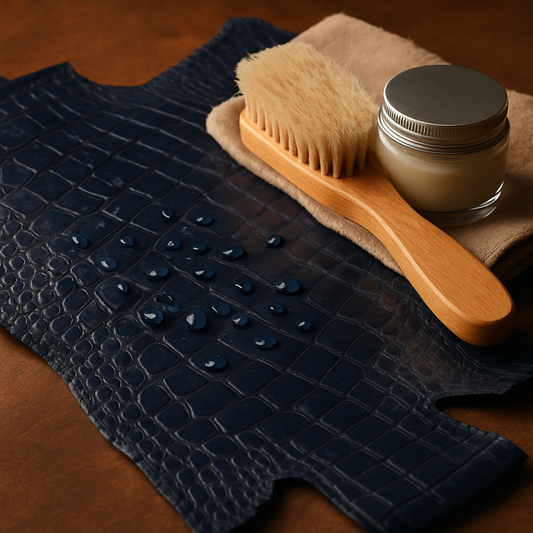
Use a soft, dry cloth as the default cleaning method for both materials. Wipe gently in the direction of the scales rather than scrubbing across their edges. After wear, let the shoes air away from direct sunlight, radiators, and enclosed high-heat storage.
Use a slightly damp cloth only if dry wiping does not remove a mark, and keep water exposure minimal. Do not soak the upper, use household cleaners, or apply heavy creams without confirming that they are suitable for reptile leather and the shoe’s finish. Excess product can build up around scales and alter the surface appearance.
Store shoes with support inside them to help retain their shape, and avoid placing one shoe directly against another where scales may rub. Conditioning needs depend on climate, wear frequency, finish, and how dry the leather feels, so a fixed calendar schedule is less useful than checking the shoes’ actual condition.
Species Identification and Trade Documentation
“Crocodile” is not interchangeable with every reptile leather description. Product information should identify the species where possible because trade rules and descriptions can distinguish among crocodile species rather than using a generic animal term. This also helps the buyer understand the expected scale layout and surface character.
Finished shoes may be treated as small leather products under CITES-related rules, but finished retail status does not automatically remove documentation requirements. Requirements can depend on the species, the export and import route, and the relevant jurisdiction. Whether footwear is handmade or machine-made is not the main legal question; species listing, trade status, and paperwork carry greater weight.
Final Choice: Crocodile for Presence, Lizard for Fine Texture
Handmade crocodile shoes are generally the stronger option for a wearer who wants a larger-scale, structured upper and is prepared to build outfits around it. Lizard leather is often better suited to someone who prefers finer texture and a less dominant reptile pattern with formal tailoring.
The most useful comparison is made with the actual shoe in mind: its last, scale placement, color, intended use, and fit. A well-proportioned crocodile shoe can look controlled rather than loud, while a lizard shoe can offer texture without making the upper the focal point.
View CrocodileViet Shoes
See our current handmade crocodile shoe collection to compare available styles and scale presentations. For sizing questions, material details, or remote measurement guidance, contact CrocodileViet through WhatsApp.