
Custom Handmade Exotic Leather Loafers: Size, Color, Finish and Personalization Guide

Condividi
Custom Handmade Exotic Leather Loafers: A Guide to Size, Color, Finish and Personalization
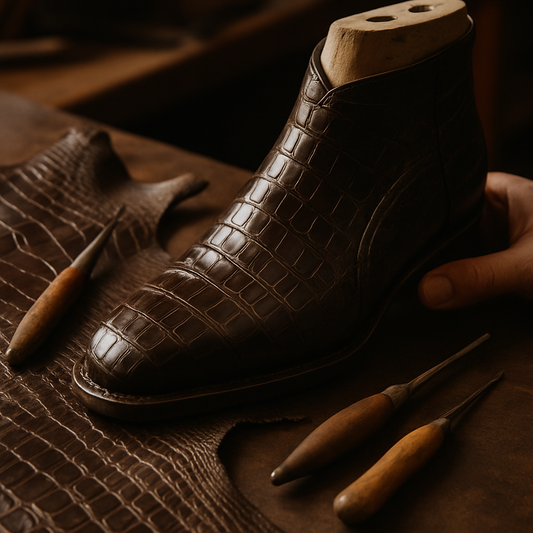
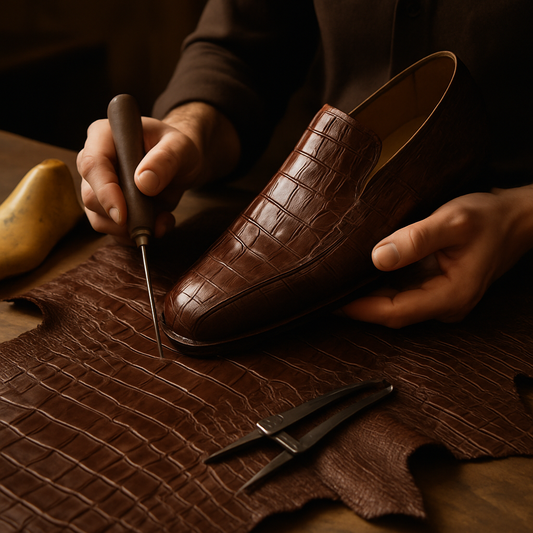
A custom loafer is shaped by four linked decisions: the last and measurements, the hide section used for each panel, the color treatment, and the finishing details added before delivery.
What “custom handmade exotic leather loafers” can mean
Custom does not describe one fixed production method. It can refer to a made-to-measure fit, a requested leather, a selected color, a particular finish, or small design changes such as a vamp shape, apron line, sole profile, or monogram. Before placing an order, define which of these you need so the workshop can confirm what is technically suitable.
The leather species also needs to be stated precisely. Alligator and crocodile are separate materials, not interchangeable names. Alligator belly leather generally has a regular, balanced scale pattern and may show an elongated, star-shaped umbilical scar. Crocodile commonly shows a small sensory pore, also called an integumentary sensory organ or ISO, in each scale. These details help identify the material, but one visual characteristic by itself does not prove authenticity.
Caiman is another crocodilian leather. Bony deposits can make its belly scales more crinkled and contribute to uneven dye uptake. That gives caiman a different surface and color response from the smoother, more pliable belly leather commonly selected for alligator and crocodile loafers.
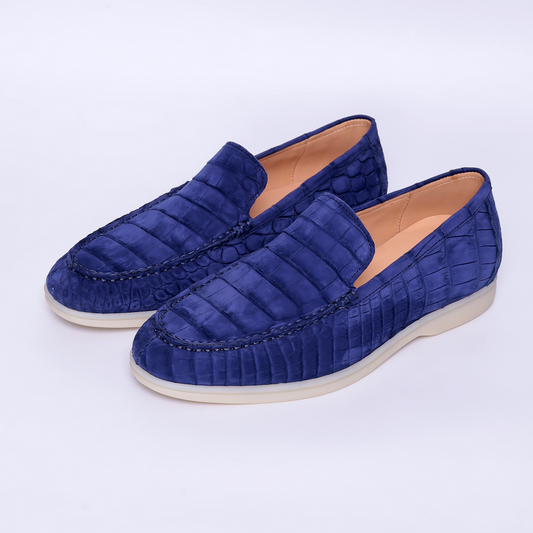
For a closer look at one specific material and construction direction, see nubuck alligator leather slip-on loafers for men. The product page is a reference for the style and material; custom color, sizing, and personalization should be confirmed separately.
Choosing the hide section for loafers
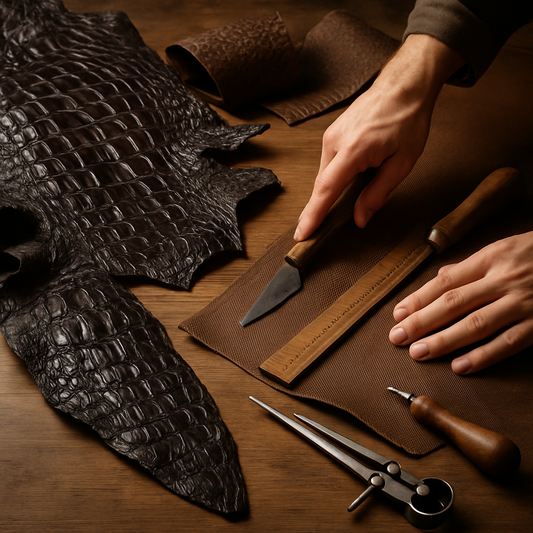
“Belly” and “flank” describe different parts of a crocodilian hide. The belly is the central area, where scales are generally rectangular and regular. Flank scales become rounder and can include more variation in shape, spacing, or surface condition.
For a loafer vamp—the panel across the front of the foot—the belly is often considered because its balanced scale layout suits a broad, visible shoe panel. The flank may be suitable for other panels or designs, depending on the hide and the intended visual effect. Panel planning matters because a full hide does not have one identical pattern from edge to edge.
At CrocodileViet, our goods are manufactured in-house, so leather choice and panel layout can be discussed as connected decisions rather than as separate catalog labels. This matters because the scale direction, usable cutting area, and location of visible marks affect how a finished upper reads.
Ask which part of the hide will be used for the vamp, quarters, tongue, and heel area. Also ask whether the design is intended to show the umbilical scar or place it outside the most visible panel. Neither approach is automatically better; it depends on the desired appearance and the hide available for the order.
Color: dyed leather, patina and contrast
A uniform dyed finish and a hand-applied patina are different treatments. A dyed finish aims for an even base color across the leather. An artisanal patina may build color depth through successive dyes or pigments, followed by waxes or other surface finishing materials. It can create lighter centers, darker edges, or visual variation across the scales.
For loafers, describe the result rather than naming only a color. Useful specifications include:
- Base color, such as black, brown, burgundy, navy, or another selected shade.
- Whether the color should be regular across the upper or visibly shaded.
- Edge depth around the vamp, apron, heel, and seams.
- Desired sheen, from low-luster nubuck to a waxed or more reflective finish.
- Whether the lining, welt or sole edge should match, contrast, or stay neutral.
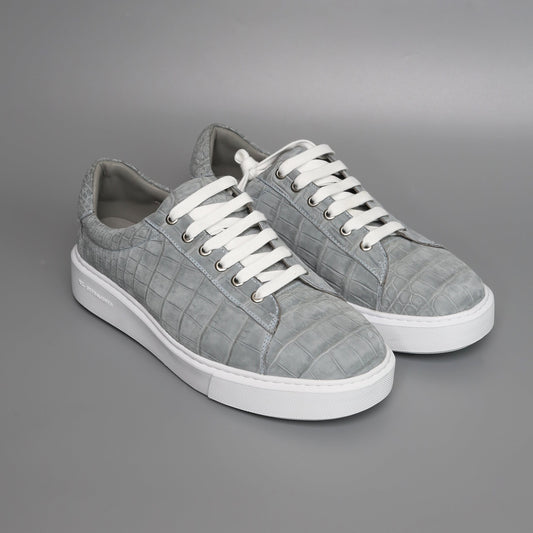
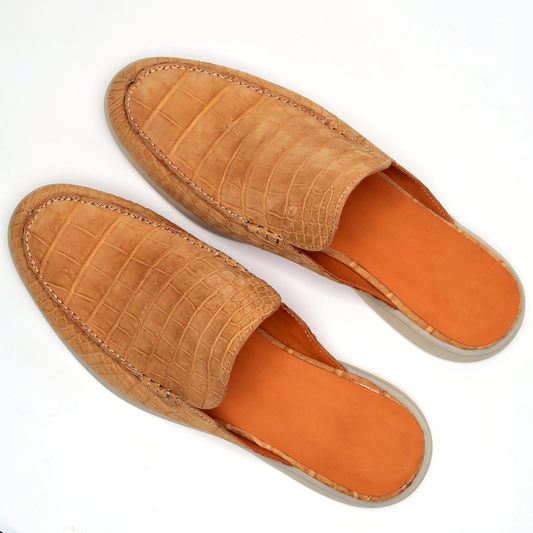
Nubuck alligator loafers require a different discussion from smooth alligator loafers. Nubuck has a lightly abraded, velvety surface, so the color appears softer and the scales may read with less surface reflection. A high-shine wax treatment designed for smooth leather is not automatically suitable for nubuck. Confirm the intended finish before requesting color work.
Color references on a screen can shift because of lighting, display settings, and the texture of the leather. A workshop should confirm the finish using a suitable sample, reference image, or agreed color description rather than relying on a short color name alone.
Personalization options to discuss
Personalization can concern the shape of the loafer as well as its decoration. Possible discussion points include:
- Vamp length and apron shape.
- Plain, split-toe, moccasin-inspired, or apron-stitched appearance.
- Leather selection for the upper, lining, insole, and trim.
- Sole material, sole color, and heel proportion.
- Low, medium, or fuller instep volume.
- Monogram placement, if the workshop confirms that option.
- Subtle contrast between the upper, stitching, sole edge, and lining.
Keep personalization compatible with the leather’s scale pattern. A large logo or heavy decoration can interrupt the regular layout of the belly scales, while a restrained detail may leave the material more visible. On flank leather, a design can either work with the scale variation or make that variation more prominent.
For business wear, color restraint and a clean vamp often make the shoe easier to combine with tailored trousers. A darker crocodile loafer can work with charcoal, navy, or brown clothing, while a lighter or more visibly patinated pair may suit less formal combinations. More examples are covered in How to Choose Crocodile Loafers For Men for Business Wear.
Getting the size and fit right
Loafer fit depends on length, width, instep height, heel hold, and the shape of the last. A person who wears the same nominal size in different brands may still need a different size or width because lasts are not standardized.
Provide your usual size in EU, US, and UK notation when possible, and state whether those sizes are men’s or women’s sizing. Also report:
- Foot length from heel to the longest toe.
- Forefoot width at the widest point.
- Instep circumference or whether your instep is low, regular, or high.
- Any difference between the left and right foot.
- Whether you need a wide fit or extra room near the toes.
- Whether you intend to wear thin dress socks, regular socks, or the loafers without socks.
Measure both feet while standing, with your weight distributed normally. Record the larger foot as the starting reference, but do not convert a measurement directly into a size without the workshop’s last information. A loafer that is too loose at the heel may slip, while one that is too short or narrow can create pressure across the toes and forefoot.
If you are ordering remotely, send measurements in millimeters or centimeters and include a tracing or photographs only if the workshop requests them. A remote assessment is more useful when paired with the shoe size and brand that currently fits you well. State where that existing shoe is tight or loose; the issue may come from width or instep rather than length.
| Decision factor | What to provide | Why it affects the loafer |
|---|---|---|
| Length | Both foot lengths and usual EU/US/UK sizes | Determines toe clearance and helps compare the requested last with your current footwear. |
| Width | Forefoot measurement and wide-fit requirement | Controls pressure across the toes and how the vamp sits over the foot. |
| Instep | Instep circumference or low, regular, or high description | Influences entry, top-line pressure, and heel security in a slip-on design. |
| Leather and panel | Species, belly or flank preference, and visible scar preference | Affects scale layout, surface character, and how the upper panels are planned. |
| Finish | Uniform dye, nubuck surface, or layered patina description | Sets the surface reflection, color variation, and appropriate care method. |
Price factors for a custom exotic loafer
A workshop quotation should reflect specific inputs rather than a vague “quality” label. Ask what the quoted price includes and whether the amount changes with:
- Alligator, crocodile, caiman, or another leather species.
- Belly, flank, or mixed hide panel placement.
- Hide size and the amount of usable cutting area.
- Scale size and the amount of matching required across the pair.
- Uniform dye compared with a layered hand-applied patina.
- Nubuck preparation or another surface treatment.
- Special measurements, a wider fit, or a modified last.
- Different sole, heel, lining, stitching, or monogram requirements.
- Shipping, taxes, and any documentation connected with international trade.
Grading should also be explained by the supplier or tannery. Grade usually describes hide condition and usable cutting area, not a universal ranking of species or durability. One supplier may use grades 1–4 for American crocodile according to belly defects, while another system may use grades 1–5 for American alligator by assessing the midsection, including belly and flank. Those labels cannot be compared without knowing whose grading system applies.
A higher visual grade does not automatically mean a loafer will last longer. Durability also depends on construction, fit, wear conditions, moisture exposure, sole design, and maintenance.
Care for handmade exotic leather loafers
Start with a dry, soft cloth after wear to remove dust and surface marks. For smooth alligator or crocodile, use only a care product confirmed as suitable for that finish. Apply a small amount to an inconspicuous area first, because dyes, waxes, and patinas can react differently.
Nubuck requires separate treatment. Brushing with an appropriate nubuck brush can help lift surface dust, while oily creams and glossy waxes may change the nap and appearance. Do not transfer a smooth exotic-leather routine to nubuck without checking the product instructions.
Keep the loafers away from concentrated heat and allow damp footwear to dry gradually. Use shoe trees if they fit the shoe without forcing the vamp or stretching the upper. Rotate wear when possible so the leather and sole have time to dry naturally. There is no useful fixed care schedule for every wearer; inspect the surface and respond to actual dust, moisture, creasing, and loss of finish.
For international orders, ask about the documentation supplied with the leather and the finished product. CITES controls can involve permits or certificates, and CITES materials describe secure, non-reusable identification tags for crocodilian skins. CITES compliance supports regulated trade documentation; it does not by itself prove that a finished shoe is genuine.
Frequently Asked Questions
How are alligator loafers different from crocodile loafers?
Alligator belly leather generally has a regular, balanced scale pattern and may show an umbilical scar, while crocodile commonly has visible sensory pores in its scales. Species identification should rely on the overall material and documentation, not one visual trait alone.
Can I request a nubuck alligator loafer in a custom color?
You can ask the workshop about the available color and finish options, but nubuck and smooth leather require different treatments. Confirm whether the requested color process preserves the low-luster, velvety surface before ordering.
What measurements should I send for remote loafer sizing?
Send both foot lengths, forefoot widths, usual EU/US/UK sizes, instep information, and any left-right difference. Also state your normal sock thickness and whether you need a wide fit or extra instep room.
Does a higher exotic leather grade mean a more durable loafer?
Not by itself. Grade labels usually describe hide condition and usable cutting area, and each supplier may use different criteria. Durability also depends on fit, construction, care, wear conditions, and the selected sole.
Request your loafer specifications
Review the nubuck alligator leather loafers product page as a starting point, then confirm the leather species, panel area, measurements, color, finish, and personalization requirements with CrocodileViet. For questions about remote sizing or custom details, contact us through WhatsApp.