
Custom Crocodile Skin Shoes: Size, Color, Finish and Personalization Guide

Condividi
Custom Crocodile Skin Shoes: A Practical Guide to Size, Color, Finish and Personalization
Crocodile skin shoes are usually built from belly, flank, or back/tail sections, and the belly cut generally provides the smoothest surface and the most regular pattern for formal footwear.
What this custom-shoe guide covers
A custom crocodile shoe order involves more than choosing a leather color. The usable hide area, belly width, scale arrangement, shoe size, toe shape, construction, finish, lining, outsole, stitching, and monogramming can all affect the result. This guide focuses on those decisions for crocodile leather shoes, with particular attention to how they affect fit, appearance, and cost.
Choosing the right crocodile leather section
Crocodile skin is not visually identical across the whole hide. The belly has flatter scales and a more balanced arrangement, which is why it is commonly selected for uppers that need controlled pattern placement. Flank leather has more variation in scale shape and direction, while back and tail areas usually show a stronger texture and less even scale layout.
For a formal pair, we generally assess the central belly area first because its flatter scales make it easier to position the vamp, quarters, and toe without an abrupt change in pattern. This is a construction and visual-control decision, not a claim that another section cannot produce a durable shoe.
Crocodile belly scales often vary more in shape and proportion than people expect. Many hides also show sensory pore pits, known in the trade as ISOs, particularly on the belly and other skin surfaces. Their presence and visibility can differ by species, hide area, and finish. A pore pattern is one observation in material assessment rather than conclusive proof of authenticity by itself.
The umbilical area can also appear on crocodile belly leather. Its placement, size, and visibility depend on how the hide was cut and finished. A workshop should disclose noticeable natural marks instead of treating every clear central-belly panel as visually identical.
Size: measure the foot and the hide together
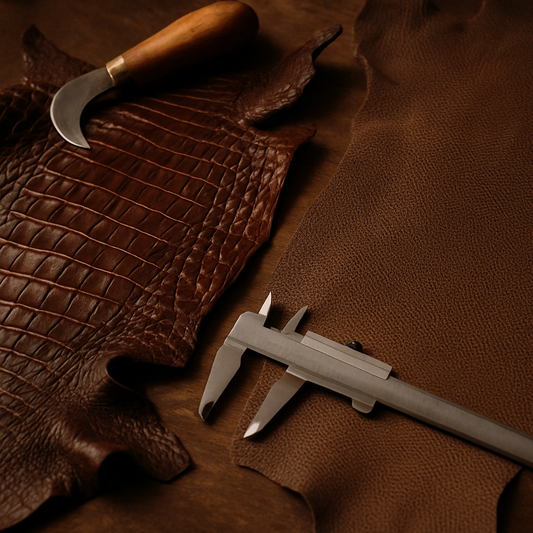
A shoe size by itself does not tell the workshop whether a crocodile hide can provide a well-matched pair. Hide pricing and selection commonly refer to belly width at the widest part of the hide, as well as length and usable area. The pattern must then be placed around the actual shoe components.
Measurements to provide
- EU, US, or UK shoe size used most reliably
- Foot length measured from the back of the heel to the longest toe
- Foot width at the broadest point
- Instep circumference, especially for loafers, boots, and closed lace shoes
- Heel circumference where the shoe has a close-fitting counter
- Any difference between the left and right foot
- The usual fit preference, such as close, regular, or wider through the forefoot
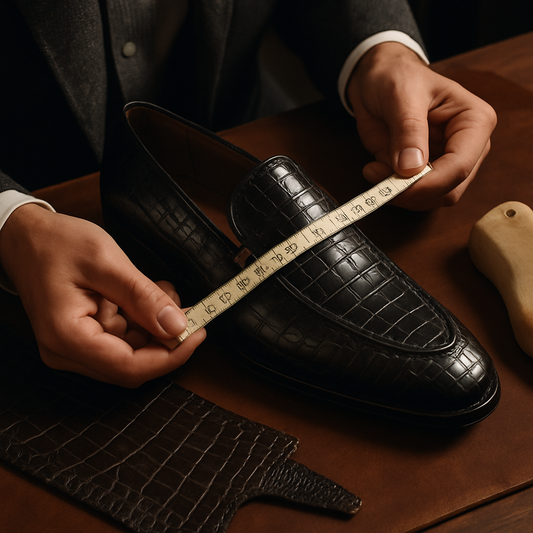
For an in-person fitting, bring the socks normally worn with the shoes and allow time to assess toe room, heel movement, forefoot pressure, and instep clearance. Remote measurement can be equally useful when it is taken carefully. A workshop may request a foot tracing, several circumference measurements, and photographs that show the measuring tape position. The purpose is to compare both feet rather than rely on a single size label.
Wide feet and high insteps
A wide foot may need a broader last rather than simply a larger shoe size. Increasing length can leave excess space at the toe while the ball of the foot remains compressed. A high instep can create pressure across the tongue, vamp, or loafer opening, so instep circumference is particularly useful for remote orders.
Custom crocodile shoes should be discussed in terms of the last, not just the hide. The last controls toe shape, ball width, instep height, heel hold, and the final silhouette. A wider fit may require a different last and a different pattern layout, which can also change how many belly scales are visible across the vamp.
Color choices for crocodile skin shoes
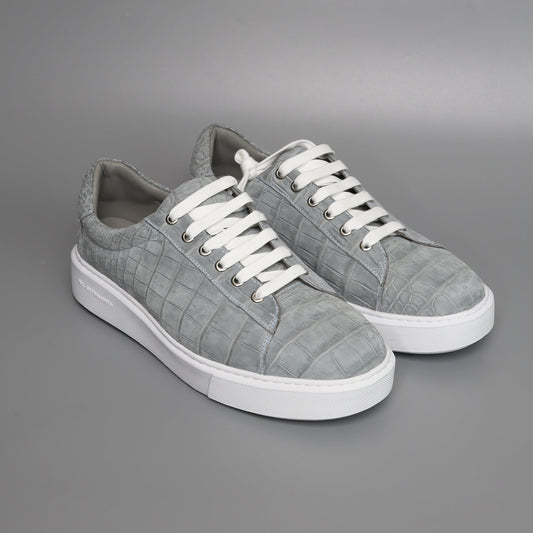
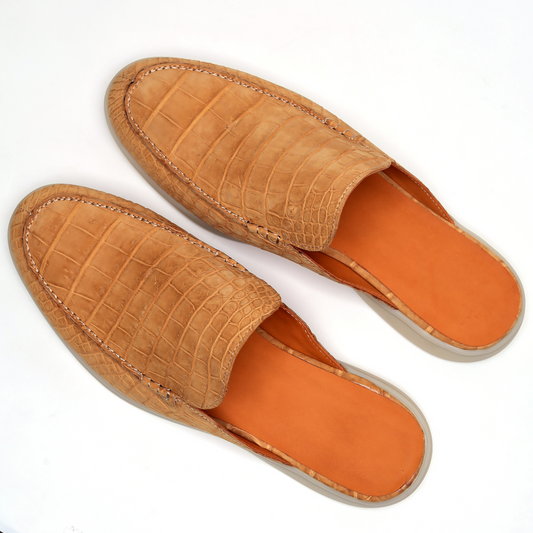
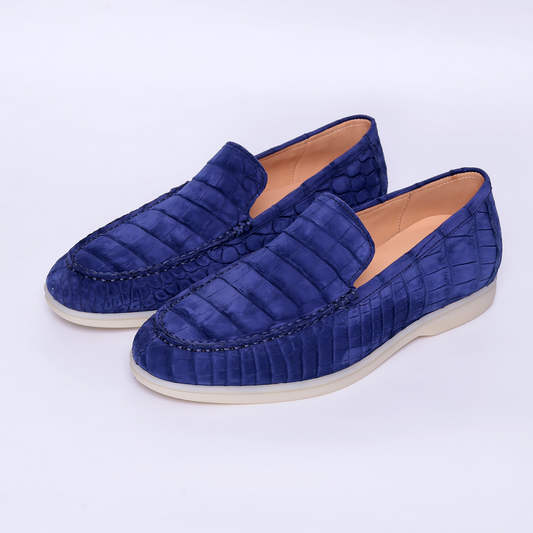
Color affects both the visible scale structure and the way natural marks are read. Black and deep brown can reduce the contrast of small surface variations, while lighter brown, tan, grey, blue, or other lighter shades usually show more of the scale edges and pore pattern. The final result also depends on whether the finish is matte, semi-gloss, or high-gloss.
For a custom order, confirm the color using a physical leather sample when possible. Screen images can shift dark brown toward black or make a blue finish appear more saturated than it is. Ask whether the sample represents the same crocodile section and finish intended for the shoes, since color can look different on flatter belly scales than on more textured flank or tail leather.
Color can also be divided by shoe component. A single-color upper gives the scale pattern the main visual role. Contrast options may include a different heel piece, tongue, welt, or outsole edge. Because each additional panel introduces another junction, the workshop should confirm whether the contrast is intended to be subtle or clearly visible.
Finish: matte, semi-gloss, or high-gloss
Finish describes the surface treatment and the amount of shine visible on the leather. It also influences how clearly the scale texture and small natural marks can be seen.
| Finish | Visual effect | Useful questions for a custom order |
|---|---|---|
| Matte | Low reflection with stronger emphasis on surface texture and scale relief | How much of the natural scale variation will remain visible after finishing? |
| Semi-gloss | Moderate reflection that shows the pattern without producing a mirror-like surface | Will the color appear lighter or deeper under indoor and outdoor light? |
| High-gloss | Strong reflection that can make the scales look sharper and the color appear deeper | How will the shine be maintained, and which surface marks may be more noticeable? |
A glossy surface does not automatically indicate stronger leather, and a matte surface does not indicate weaker leather. Visual grade and durability are separate considerations. A high-grade hide with a clean central belly may suit a light finish, while a lower visual grade can still be usable when the design places smaller or darker panels over less visible marks.
Personalization options for custom crocodile shoes
Useful personalization choices are specific rather than broad. Before production, confirm the following items:
- Toe shape, such as round, almond, or square
- Shoe type, including loafer, lace-up, monk strap, boot, or another agreed pattern
- Upper color and whether the pair uses one color or contrast panels
- Lining color and lining material
- Outsole material, color, thickness, and edge finish
- Stitching color and visible stitching style
- Monogramming or initials, including placement and letter format
- Heel height and heel edge treatment
- Scale direction and whether the toe uses a centered or deliberately offset layout
Scale matching deserves a separate discussion. On a pair made from one hide, the two shoes may be arranged to look related without being mirror-identical. The central scales can differ slightly in shape, and forcing a strict visual match may reduce usable area or require more cutting. The practical goal is a balanced pair with controlled transitions across the vamp and quarters.
How price is determined
Custom crocodile shoes do not have a reliable price based on shoe size alone. The main cost factors include:
- Crocodile species and the source documentation for the leather
- Hide grade, visible blemishes, and usable cutting area
- Belly width and whether the hide can supply both uppers with the requested layout
- Scale matching and the amount of leather lost during pattern placement
- Construction method, sole type, heel structure, and lining
- Pattern complexity, contrast panels, and additional leather components
- Handwork, stitching requirements, initials, and other personalization
- Finish type and any special color treatment
Higher visual grade generally means a cleaner central belly area and better yield for visible shoe panels. Lower grades may still produce serviceable footwear when marks are placed in less exposed areas or used on smaller components. Grade labels vary between suppliers and tanneries, so ask what the stated grade covers rather than treating a label as a universal standard.
Legitimate crocodilian leather trade is regulated under CITES. For a custom order, ask whether the material is legally sourced and whether the relevant CITES-compliant or CITES-certified documentation applies to the shipment and destination. CITES addresses trade compliance; it does not by itself prove that a particular shoe is genuine.
Construction choices that affect wear
The upper is only one part of a shoe. The last, lining, insole, outsole, heel, welt or edge treatment, and stitching all influence how the pair feels and wears. Crocodile leather can be visually striking, but a well-selected hide cannot compensate for a poor fit or unsuitable construction.
For frequent walking, discuss outsole grip, heel stability, and the amount of flex expected at the forefoot. For occasional formal use, the priority may shift toward a clean toe layout, a specific edge finish, and a thinner outsole profile. The intended use should be stated before the pattern is finalized because it affects both material placement and construction decisions.
Care for crocodile leather shoes
After wear, brush away loose dust with a soft brush or wipe the surface with a dry cloth. Let the shoes air in a shaded, ventilated place and use shoe trees that support the shape without forcing the vamp or instep. Keep the pair away from direct heat, radiators, and enclosed damp storage.
If a mark needs more than dry cleaning, use a barely damp cloth on a small area first, then wipe gently and allow the leather to dry naturally. Damp cleaning should be a last resort, not the default method. Avoid household cleaners, alcohol-based products, abrasive brushes, and heavy applications that can collect between scales or alter the finish.
There is no useful fixed conditioning schedule for every crocodile shoe. Condition only when the leather appears dry and after confirming that the product is suitable for the specific finish. A test on a hidden area is sensible because a conditioner can darken the color or reduce a polished surface.
Styling crocodile skin shoes by setting
Business and office clothing
- Dark brown crocodile loafers with navy, charcoal, or medium-grey trousers
- Black lace-ups with a charcoal suit and a restrained belt treatment
- Matte or semi-gloss finishes when the outfit already contains visible pattern or texture
Formal events
- Black or deep brown shoes with a dark suit or tuxedo-inspired evening clothing
- High-gloss finishes when a more reflective dress-shoe surface suits the setting
- Minimal monogramming and a closely related belt or accessory color
Smart-casual wear
- Brown, tan, grey, or muted colored crocodile shoes with chinos or tailored denim
- Loafers with an open-collar shirt, knit polo, or lightweight jacket
- Matte finishes with textured fabrics such as linen, wool, or brushed cotton
Color coordination works best when the shoes relate to at least one other element, such as a belt, watch strap, bag, or jacket detail. Exact color duplication is not required; the finish, depth of color, and formality of the clothing also matter.
Questions to settle before ordering
Can I order genuine crocodile shoes in any color?
Color availability depends on the hide, dyeing process, finish, and current material supply. Request a sample or confirmed color reference before approving the order rather than relying on a digital image.
Does a higher visual grade guarantee a stronger shoe?
No single grade label establishes durability. Visual grade usually concerns blemishes, usable area, and yield, while durability also depends on leather preparation, construction, fit, and care.
Can a custom pair fit a wide foot or high instep?
It can be developed around those measurements when the last and pattern are selected for them. Provide width and instep data in addition to EU, US, or UK size, and explain whether measurements were taken in person or remotely.
Should the two shoes have perfectly identical scale patterns?
A balanced pair is usually a more practical target than exact duplication. Natural hide variation, belly width, and cutting yield can make strict symmetry wasteful or visually forced.
What should I ask about the leather documents?
Ask about legal sourcing and the CITES documentation applicable to the material and destination. Documentation supports trade compliance; it should be considered alongside physical inspection and the supplier’s material description.
To discuss custom crocodile skin shoes, review the available shoe options at CrocodileViet shoes. For measurements, color, finish, and personalization questions, contact CrocodileViet through WhatsApp.