
Custom Alligator Skin Shoes: Size, Color, Finish and Personalization Guide

Condividi
Custom Alligator Skin Shoes: Sizing, Color, Finish, and Personalization
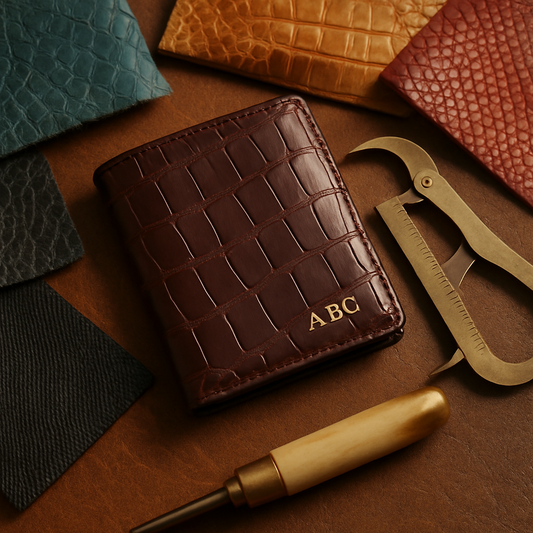
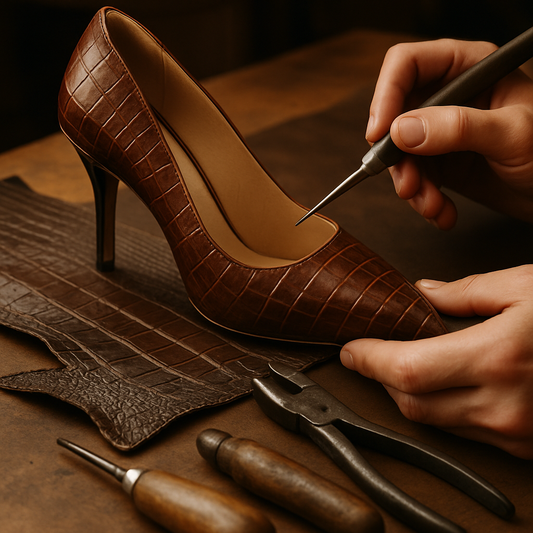
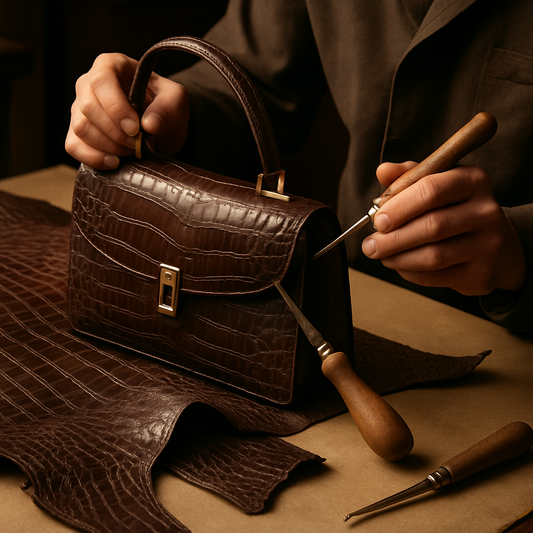
Alligator skin shoes are usually cut from the smooth belly or midsection of the hide, the area valued for its comparatively regular, flat scale pattern.
In footwear, “alligator skin” normally refers to finished alligator leather. A custom order is not simply a matter of choosing a shoe size and a color: the usable belly area must suit the shoe pattern, the left and right shoes need visually compatible scale layouts, and the final finish must support the intended use. These decisions are closely connected, particularly in a material where each hide has its own scale boundaries, markings, and usable cutting area.
Start with the Belly Cut and Visual Grade
The belly is the central reference area for alligator leather shoes because it offers the flattest scales and the most balanced presentation across a shoe upper. The head, tail, and raised back areas have very different textures and are not interchangeable with a smooth-belly shoe specification.
Alligator hides are commonly described by belly width, measured in centimetres at the widest point. That width is useful, but it does not state how much clean leather is available for a particular shoe design. A broad toe shape, a high vamp, larger shoe sizes, and matching requirements between the two shoes can all reduce the usable area of a hide.
A widely used grading scale runs from Grade 1 to Grade 5. Grade 1 generally indicates a belly with no visible defects in the key pattern area, while later grades may include more scars, scratches, shade variation, or clustered marks. Grade labels differ between tanneries and suppliers, so a grade number should be discussed alongside photographs or a written description of the actual hide area being used.
Visual grade and durability are separate questions. A mark located outside a visible shoe panel may have little effect on wear, while a clean, high-grade belly may command a higher price because it gives the maker more control over the visible scale layout.
Custom Sizing: Measurements That Matter Beyond a Label
A custom pair should be specified from foot measurements rather than from an EU, US, or UK label alone. Those labels provide a useful reference, but sizing conventions differ between brands and lasts. The more useful starting point is the length and width of each foot, recorded in millimetres, together with the shoe size normally worn in comparable footwear.
- Foot length: Measure from the back of the heel to the longest toe on both feet. One foot can be slightly longer than the other.
- Ball width: Measure around or across the widest part of the forefoot. This helps distinguish a wide fit from a standard-width fit.
- Instep: A high or low instep changes the volume required over the top of the foot, even where length and width appear standard.
- Heel and ankle fit: Useful for loafers, slip-ons, boots, and designs where heel hold affects comfort.
- Wear conditions: State whether the shoes will be worn with thin dress socks, thicker socks, orthotics, or no-show socks.
In-person fitting and remote measurement are equally valid routes for a custom brief when the information is complete. An in-person appointment allows direct observation of stance and volume, while a remote customer can provide measurements, clear foot photographs, and details of shoes that fit well or poorly. For either route, measuring both feet matters more than assuming they match.
Wide fit should not be addressed by simply adding length. Extra length can move the flex point away from the foot’s natural bend, while a wider last or a revised instep allowance addresses the actual source of pressure. For genuine alligator shoes for men, this is particularly relevant in larger sizes, where the shoe pattern also requires more well-matched belly leather.
Choosing Color for an Alligator Scale Pattern
Color should be selected with the scale layout in mind. On a belly-cut upper, the boundaries between scales remain visible beneath many finishes, so the result is not the same as a smooth leather shoe in the same named shade. A color sample, reference photograph, or garment swatch gives a workshop a clearer target than a broad instruction such as “dark brown.”
For a practical custom specification, define the color by three points: the base shade, the desired depth from light to dark, and the level of variation acceptable across the scales. This gives room to discuss whether the customer wants a quieter surface or wants the scale pattern to read clearly from normal viewing distance.
Color Directions by Use
- Business wear: Black, deep brown, espresso, and restrained burgundy work with charcoal, navy, black, and dark brown tailoring. A lower-contrast finish keeps attention on the overall outfit rather than the individual scales.
- Formal events: Black and very dark brown suit black-tie-adjacent dinners, evening receptions, and formal suits where a controlled surface is preferred.
- Smart casual clothing: Medium brown, tobacco, oxblood, and muted navy can work with dark denim, chinos, open-collar shirts, and textured jackets.
- Statement dressing: Brighter colors or strong contrast treatments work best when the rest of the outfit is restrained, such as a neutral jacket, plain trousers, and minimal accessories.
A shoe does not need to match a belt exactly. Coordinating the general color family and formality level is often more convincing than trying to reproduce an identical shade across different leather surfaces.
Finish Changes How the Color and Scales Read
Finish is the surface character of the leather after color, and it changes how strongly light reflects from the scales. It should be selected alongside the color rather than after it, because a high-reflection surface can make a shade appear deeper or more dramatic under indoor light.
| Finish direction | Visual effect on alligator belly | Best specification question |
|---|---|---|
| Gloss | Produces stronger light reflection and makes the borders between scales more noticeable. | How reflective should the shoe appear under evening or office lighting? |
| Semi-gloss | Retains some reflection while allowing the regular belly pattern to stay readable without a highly polished appearance. | Should the shoe move between business and evening use? |
| Matte or low-lustre | Reduces reflected light and places more visual emphasis on color, scale shape, and the shoe’s silhouette. | Is a lower-key surface more suitable for daytime or textured tailoring? |
Ask to review the intended color and finish in more than one lighting condition where possible. Daylight, warm indoor lighting, and flash photography can each change the apparent depth of a dark finish.
Personalization That Respects the Hide Layout
Personalization can include a requested toe profile, loafer or lace-up format, contrasting lining, initials, a dated inscription, or a preferred placement for a subtle mark. The useful question is not only what to add, but where it can be placed without interrupting the most attractive belly scales on the visible upper.
For initials or an inscription, specify the wording, character style, size, and location. A discreet position can preserve the scale presentation on the vamp, while a larger mark becomes a deliberate part of the design. The workshop should confirm the proposed placement against the shoe pattern before final approval, because scale size and boundaries differ from hide to hide.
Toe shape also acts as a form of personalization. A rounded toe gives more room for a broader forefoot; an almond toe creates a narrower visual line; and a more squared profile changes both the appearance and the leather area required at the front of the shoe. The most suitable option depends on foot width, instep volume, and the wearer’s intended clothing rather than fashion labels alone.
What Determines the Price of Custom Alligator Leather Shoes
Custom alligator leather shoes should be priced from the actual specification, not from a generic “quality” description. The main cost factors are the alligator species, hide grade, usable belly area, size of the shoe, scale matching between left and right shoes, construction method, and the amount of handwork involved in pattern preparation and finishing.
Large sizes can require more usable leather, especially where the design calls for an uninterrupted belly panel across the toe and vamp. A clean hide may also have limited sections that are suitable for mirrored or visually compatible placement. Color requests, special finishes, personalized details, and changes to the last or pattern can add further work.
Before agreeing to a quote, ask for the specification in writing: shoe style, requested size system and foot measurements, width and instep notes, color reference, finish direction, grade expectation, personalization, and any scale-placement preference. This makes it easier to compare proposals that may use similar product names but different materials or construction scopes.
Care for Finished Alligator Shoes
Use a soft dry cloth as the default cleaning method after wear, especially around scale edges and creases where dust can collect. A lightly damp cloth is best reserved for a mark that does not lift with dry wiping; moisture should be minimal, and the shoe should dry naturally away from direct heat.
Avoid soaking the leather, prolonged heat exposure, and extended direct sunlight, since these conditions can affect the surface appearance and flexibility of finished leather. Conditioning should respond to the leather’s condition, finish, storage environment, and wear pattern rather than a fixed calendar schedule. If a care product is being considered, test it first on a less visible area or seek advice based on the specific finish.
Use shoe trees that support the shape without forcing the upper outward, and rotate pairs when practical so moisture from wear can dissipate between uses. Storage should keep the shoes away from crushing pressure that may distort the upper.
Documentation and Material Claims
For a custom order, request clear species and material information from the seller. Trade documentation and CITES-related records can be relevant to lawful commercial movement of crocodilian leather products, depending on origin and species. Such paperwork addresses trade compliance; it should not be treated as a standalone test of authenticity.
Likewise, a scale pattern or surface feature alone is not enough to establish material identity. A reliable purchase conversation combines supplier documentation, accurate product description, and a clear account of the leather used for the order.
Build a Useful Custom Brief
A concise brief helps turn a preference into a shoe specification: state the shoe style, both-foot measurements, EU/US/UK reference size, width and instep notes, use context, color reference, finish preference, personalization details, and whether you prefer prominent or restrained belly scales. For handmade alligator shoes, this level of information gives the maker a practical basis for assessing hide area, pattern layout, and fit requirements before work begins.
View shoe options and send your requirements through CrocodileViet’s shoe collection. You can also share measurements, reference images, and personalization notes through WhatsApp.