
Buy Genuine Alligator Leather Products vs Lizard Leather: Which Is Better?

Condividi
Genuine Alligator vs. Lizard Leather: Which Should You Buy?
Genuine alligator belly leather has a regular, balanced rectangular scale pattern, while lizard leather belongs to a separate reptile material category with its own scale structure. Neither material is automatically better for every product: alligator is usually selected for its broad belly tiles and formal appearance, while lizard may suit buyers who prefer a different scale character and product feel.
What you are comparing
This comparison covers genuine alligator leather products and lizard leather products only. “Alligator,” “crocodile,” “caiman,” and “lizard” are not interchangeable buying terms; they refer to different material categories with different scale structures. If a seller uses these names loosely, ask for the exact species and supporting documents before paying.
Alligator and lizard leather compared
| Buying factor | Genuine alligator leather | Lizard leather |
|---|---|---|
| Scale layout | The belly and midsection commonly provide a regular, balanced pattern with broad rectangular tiles. | It has a different scale structure from alligator, so the visual rhythm and tile size should be judged on the actual hide or product. |
| Best-known working area | The belly is commonly used for wallets, handbags, belts, and other dress goods because the underside folds well and offers a controlled pattern. | The usable area depends on the particular hide and the product pattern; narrow panels and scale direction can affect cutting. |
| Visual matching | Large panels require scale alignment, centered placement, and consistent color across adjoining pieces. | Matching depends on the smaller material layout and the way the maker positions individual panels. |
| Grade terminology | Alligator suppliers may use Grade 1 through Grade 5, but grading labels and application can vary by supplier or tannery. | Do not assume an alligator grading scale applies directly to lizard leather. |
| Documentation | Legal crocodilian trade depends on species listing and CITES-related documentation, along with export and import paperwork where required. | Ask for species information and applicable legal sourcing documents rather than assuming an exotic-leather label is sufficient. |
| Typical visual direction | Broad, orderly belly tiles suit structured wallets, formal belts, handbags, and dress accessories. | Its separate scale pattern can suit buyers who want a different surface rhythm from alligator. |
Why the alligator belly matters
For genuine alligator products, the belly and midsection are usually the areas buyers should inspect first. The underside provides the widest, flattest tiles and a more regular pattern than many other parts of the hide. That makes it practical for a wallet face, belt panel, handbag flap, or other visible section where scale alignment is easy to see.
Industry grading commonly focuses on the belly and may exclude the head, back, and tail from the quality grade. A hide can therefore contain attractive belly leather while other sections show different texture or marks. This is one reason a product should be judged by the actual cut used, not only by a general statement such as “genuine alligator.”
At CrocodileViet, we use belly sections for products that need a balanced front panel because the broader tiles make centering and adjoining-piece alignment more controllable. The reason is visual and technical: a regular scale field reduces abrupt pattern changes across a wallet or belt and folds more predictably than a heavily ridged section.
How alligator grading should be read
A common alligator convention runs from Grade 1 to Grade 5. Grade 1 generally indicates a belly area without visible defects under that grading system, while lower grades reflect increasing clusters of scars, scratches, shading, or scale deformities. These labels are not universal certificates. Different suppliers and tanneries may apply their own definitions, so ask what the stated grade covers and whether it refers to the whole hide or only the usable belly area.
Visual grade is not the same as durability. A lower visual grade may contain marks that affect appearance without automatically determining how the finished article will perform. Construction, leather thickness, edge finishing, lining, hardware, stitching, and how much of the hide is exposed to abrasion also affect the finished product.
How to spot real alligator leather
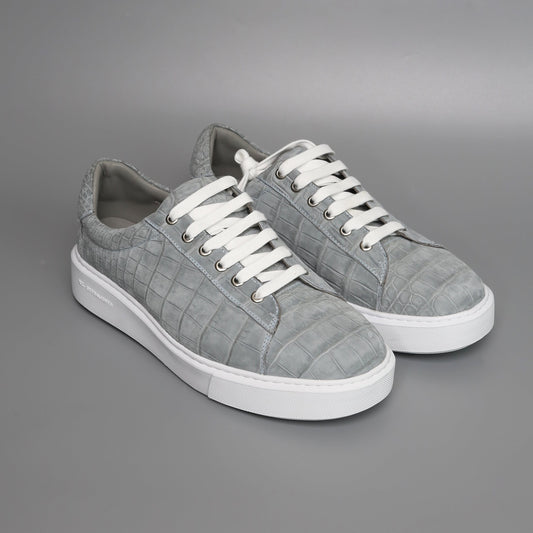
Start with the scale layout rather than relying on one visual clue. Genuine alligator belly leather generally shows balanced belly tiles, natural variation between scales, and a real transition in texture across the hide. The pattern should not look like a repeated printed template.
- Ask which species is being sold and which part of the hide was used.
- Inspect the belly panel closely for natural scale variation, scars, shading, and changes in tile shape.
- Check whether the seller can explain the product’s sourcing and provide relevant CITES or trade paperwork.
- Look for a CITES tag where one is supplied for the product; it can support lawful sourcing and species information, but it is not, by itself, proof of every claim about authenticity.
- Ask whether the stated grade applies to the visible panel or to another portion of the hide.
An alligator may also show an umbilical scar on the belly, a feature commonly associated with alligator and not with crocodile. That detail can contribute to an assessment, but no single sensory or visual trait should be treated as conclusive proof. For readers researching how to tell real crocodile leather, crocodile is a different material and should be checked by its own species information and documentation rather than used as a substitute term for alligator.
How to compare lizard leather honestly
Lizard leather should be assessed as lizard, not as a lower or higher grade of alligator. Examine the actual scale arrangement, the usable panel width, the consistency between pieces, and the construction of the finished item. A photograph can hide changes in scale direction, joins, or surface marks that become obvious in person.
Ask the seller these practical questions:
- What lizard species is identified on the product documentation?
- Which part of the hide forms the visible panel?
- Are adjoining pieces cut from the same hide?
- Are surface marks, joins, or color variation visible in the finished product?
- What legal sourcing documents accompany the material?
The same discipline applies to alligator: compare the actual article, not only the material name. A well-planned lizard product can be a better purchase for a buyer who prefers its scale structure, while an alligator product may be more suitable when broad, orderly belly tiles are the main priority.
Price: what should affect the amount?
There is no responsible single price for either material without seeing the product specifications. For an alligator item, ask how species, hide grade, usable area, scale matching, construction, and handwork affect the price. A small wallet may use less leather than a belt or handbag, but the visible panel can still require careful cutting and matching.
For lizard, price should also reflect species, usable hide area, panel layout, construction, hardware, lining, and handwork. Compare products with similar dimensions and construction rather than comparing only the material name. A larger item with extensive matching and more component work may cost more even if the leather grade description sounds similar.
Fit and sizing for belts, shoes, and wearable products
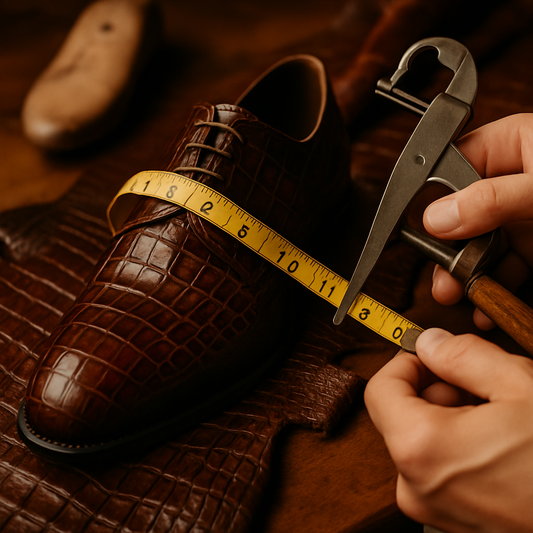
Material choice does not replace accurate sizing. For belts, measure the distance from the buckle’s pin to the hole used most often, rather than relying only on a trouser size. Check the belt length, width, buckle dimensions, and available hole positions; a wide belt may need different trouser loops than a narrow one.
For shoes or sandals, record foot length and width in millimetres and note whether the foot is broad, narrow, or high over the instep. EU, US, and UK sizes are not interchangeable without checking the maker’s chart. A remote measurement can be as useful as an in-person try-on when it includes both feet, standing measurements, forefoot width, and instep information. If trying the item in person, wear the socks normally used and check toe room, heel movement, and pressure across the widest point.
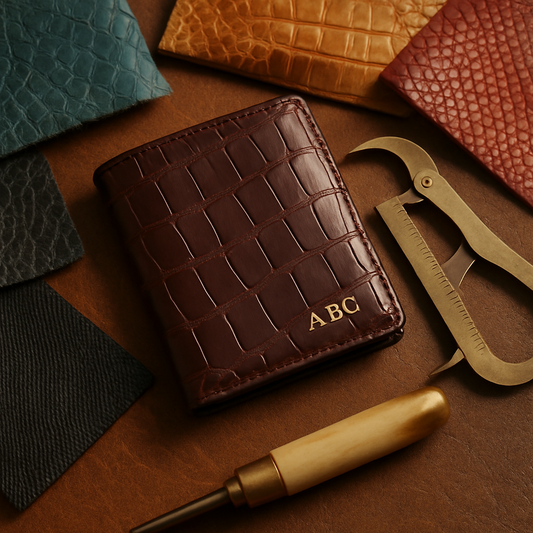
For wallets and bags, measure the objects the item must hold: card count, cash length, phone dimensions, passport size, or laptop width. Leather thickness and lining reduce internal space, so external measurements alone can be misleading.
Care for alligator and lizard leather
Keep either material away from prolonged water, high heat, direct sunlight, and sharply abrasive surfaces. Wipe dust with a dry, soft cloth as the default method. If a mark requires more than dry cleaning, use only a barely damp cloth on the affected area and do not soak the leather; damp cleaning should be a last resort.
- Store the item in a breathable dust bag rather than sealed plastic.
- Keep belts flat or loosely rolled without a tight bend across the scale pattern.
- Do not apply household oils, alcohol, solvent, or an untested leather product.
- Allow moisture to air-dry naturally away from heaters.
- Ask the maker before using any conditioner because products suitable for smooth cow leather may not suit alligator or lizard surfaces.
There is no fixed conditioning schedule that suits every item. The right response depends on the leather’s finish, storage, use, and visible dryness. If the surface becomes dull, stiff, or marked, obtain product-specific care advice before applying anything.
Which material suits different settings?
- Office wallets and formal belts: alligator belly leather suits buyers who want a broad, balanced scale pattern on the visible face.
- Structured handbags: alligator can work well where panel centering and scale matching are central to the design.
- Casual accessories: lizard may suit someone who prefers its distinct scale structure over broad alligator tiles.
- Gift purchases: confirm the recipient’s preferred size, color, closure, and carrying needs before choosing between the materials.
- Travel use: prioritize dimensions, closure security, and ease of care alongside the leather type.
Final buying decision
Choose genuine alligator if your priority is a broad, regular belly pattern, controlled scale matching, and a formal appearance in a wallet, belt, handbag, or similar product. Choose lizard if you prefer its separate scale structure and find a product whose species, panel quality, construction, and documentation are clearly explained.
The safest purchase is not based on the word “exotic” alone. Compare the actual visible panel, ask how the material was graded, check the usable dimensions, review legal sourcing information, and judge construction separately from visual grade.
See CrocodileViet’s workshop information at crocodileviet.com/blogs/news. For product measurements, material questions, or remote sizing, contact us through WhatsApp.