
Best Nubuck Alligator Sneakers for Men: What to Look For

Condividi
Best Nubuck Alligator Sneakers for Men: What to Look For
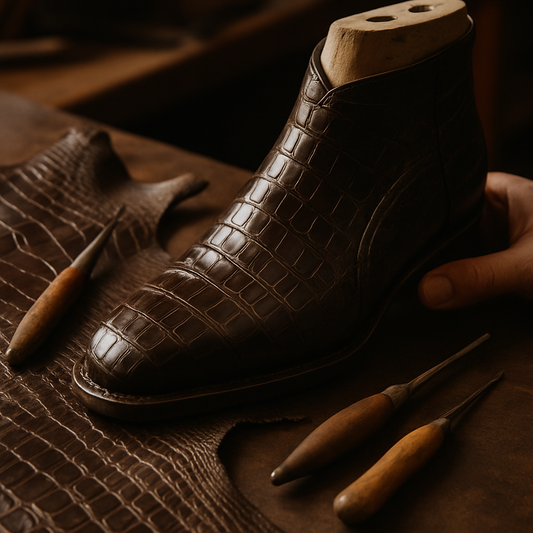
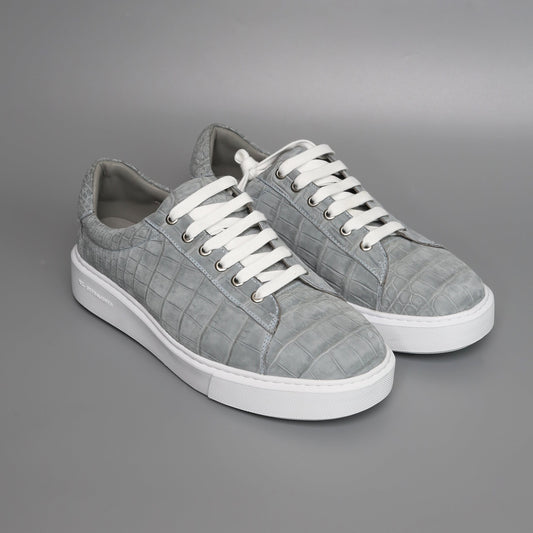
The most important check on nubuck alligator sneakers is whether the material is genuine alligator leather with a controlled nap on the grain side, rather than suede or a printed substitute.
Choosing this type of footwear requires more than looking at the scale pattern. You need to assess the leather surface, belly cut, nap, construction, sizing, price factors, and available traceability information. The result should also suit how you dress and how much maintenance you are prepared to provide.
What “nubuck alligator” means
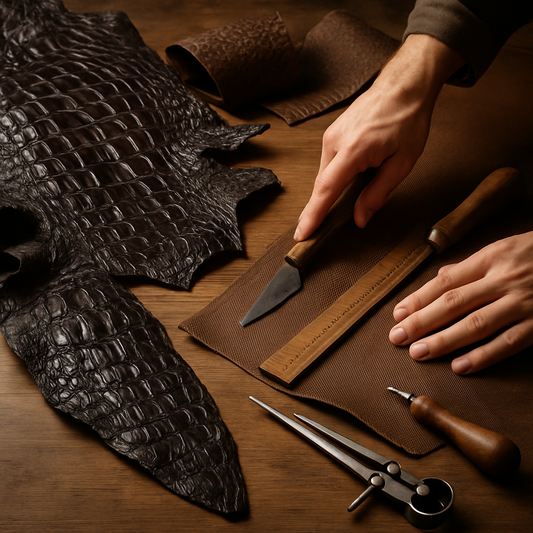
Nubuck is leather buffed on the outer, grain side to create a fine, short nap. Suede is generally made from the flesh side, so the two terms describe different surfaces. A nubuck alligator sneaker therefore combines a grain-side alligator leather surface with a softly brushed finish.
The finish can make the scales feel less glossy and less visually sharp than polished alligator. It does not turn the leather into suede, and it does not remove the importance of the original hide selection. The scale layout, flexibility, thickness, and visible surface defects still affect the finished shoe.
Start with the belly cut
“Belly” refers to the smoother, more pliable underside of the hide, which is commonly used for fine goods. For men’s sneakers, this cut can provide a regular, balanced scale pattern that works across a larger vamp and side panel without the raised central scales associated with a hornback cut.
Alligator belly commonly shows a more regular scale arrangement, but “uniform” would be misleading. Each hide has its own variation. Defects are often assessed across divided belly quadrants, and fewer visible defects generally correspond to a higher grade. However, grading labels are partly subjective and can vary by supplier or tannery.
Hornback is a different cut that retains raised back scales. It is not another name for belly leather. If a product description uses both terms loosely, ask which part of the hide appears on the shoe.
Check alligator identification carefully
Alligator and crocodile are distinct materials. Crocodile scales typically show visible sensory pores, while alligator lacks those pores. Alligator leather also often has an elongated, web-like umbilical scar, a feature crocodile generally lacks.
Scale shape alone can mislead because patterns vary by species and individual hide. A balanced belly layout is useful for judging appearance, but it is not proof of species. Pore details, the umbilical area, product documentation, and supplier information should be considered together. One visual trait by itself cannot authenticate the leather.
American alligator is listed in CITES Appendix II, which permits regulated international trade. Export can require legal-acquisition documentation, and skins need traceability tags. CITES paperwork supports regulated trade; it does not, on its own, prove that a particular pair is authentic or correctly described.
Inspect the nubuck surface
A good nubuck surface should have a fine, even nap rather than a rough, hairy, or visibly scraped appearance. Look at the toe, vamp, quarters, and heel counter under direct but soft light. The nap may shift shade as it changes direction, so compare the panels from several angles.
- Nap consistency: Look for a similar hand and surface direction across adjoining panels.
- Scale transitions: Scales should follow the panel shape without awkward cutting at the toe or side seam.
- Defects: Small natural marks may occur, but deep cuts, weak edges, and distracting scars deserve a clear explanation.
- Panel matching: The left and right shoes do not need to look mechanically identical, but their color and scale character should work as a pair.
- Edge finishing: Inspect the junction between the alligator upper, lining, sole, and welt or stitch line for clean transitions.
Because nubuck has a brushed surface, heavy creams or glossy conditioners can flatten or change its appearance. The finish should be judged as nubuck rather than compared with polished crocodile leather sneakers.
Construction matters as much as the hide
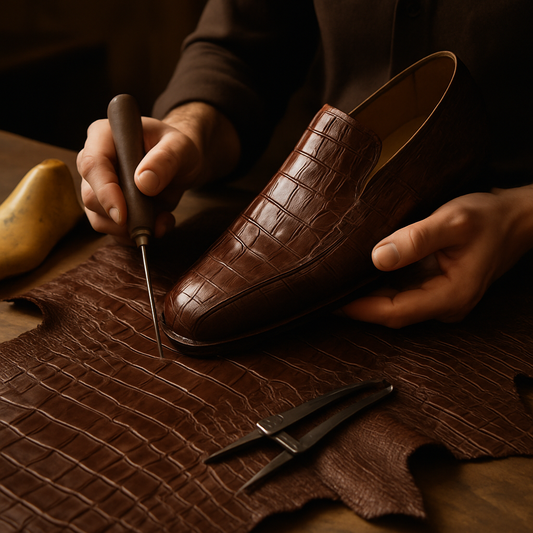
An attractive upper cannot compensate for poor footwear construction. Examine whether the toe holds its intended shape, whether the heel counter feels stable, and whether the sole bends at a natural point under the forefoot. Stitch spacing should look controlled, with no loose threads or visibly strained seams.
Ask what material is used for the lining, insole, and outsole. These parts influence comfort, moisture handling, flexibility, repair options, and the overall weight of the shoe. A leather upper alone does not describe the complete construction.
For workshop-level evaluation, inspect the areas that experience repeated movement: the vamp crease, lace stays, heel counter, and outsole bond. These locations reveal more about practical construction than a close-up photograph of the scales.
Price: identify what you are paying for
There is no responsible single price for all nubuck alligator sneakers because several cost factors can change from one pair to another:
| Decision factor | Why it affects price | What to ask |
|---|---|---|
| Hide width and usable area | Larger, cleaner sections can provide more usable material for a pair. | How is the alligator hide sized, and which panels use the belly? |
| Surface grade | Fewer visible defects can require more selective cutting and reduce waste. | What grading system is being used, and does it apply to divided belly quadrants? |
| Nubuck finishing | Brushing and color finishing affect the feel and visual consistency of the upper. | Is the surface grain-side nubuck rather than flesh-side suede? |
| Footwear construction | Lining, insole, outsole, stitching, and assembly add material and labor costs. | What are the upper, lining, insole, and sole materials? |
| Documentation and sourcing | Regulated exotic leather may require traceability and legal-acquisition records. | What documentation accompanies the material? |
Supplier grading labels are not fully standardized, so a label such as “high grade” should be supported by photographs, a description of the hide section, and an explanation of visible marks. Price should be compared through these concrete details rather than through a grade name alone.
Fit and sizing for men’s alligator sneakers
Alligator sneakers are commonly offered in EU sizes, while some sellers also provide US or UK equivalents. Conversion charts can differ, so begin with your foot length and width rather than relying only on your usual number.
- Measure both feet from heel to longest toe while standing.
- Record the widest part of each foot, especially if you need a wide fit.
- Measure around the instep if your foot is high-volume or high-arched.
- Compare these measurements with the seller’s internal shoe dimensions.
- Ask whether the last has a narrow, regular, or wider toe box.
For remote orders, send length, width, and instep measurements with the socks you expect to wear. Also ask about the return or exchange policy before ordering. Exotic leather panels can soften with use, but they should not be expected to compensate for a fundamentally short toe box or a restrictive instep.
Care for nubuck alligator sneakers
Start with a dry, clean cloth to remove loose dust after wear. For the nap, use a soft nubuck brush with light pressure and test any method on a concealed area first. Avoid treating the shoes like smooth leather with wax polish, as a glossy product can alter the brushed surface.
Keep the pair away from prolonged moisture, direct heat, and damp storage. If the shoes become wet, blot them gently, let them dry at room temperature, and avoid heaters or hairdryers. Do not apply a fixed conditioning schedule; the right interval depends on climate, wear frequency, and the product’s care instructions.
Store the sneakers with enough room to keep the upper from being crushed. A shoe tree can help support the shape, provided it does not stretch the vamp or force the instep upward.
How to style nubuck alligator sneakers
The muted surface of nubuck works well with clean casual and business-casual clothing. Pair a dark brown or black version with wool trousers, an unstructured jacket, and a plain knit for a restrained office combination. With dark denim, a casual shirt, and a lightweight overshirt, the scales become the main texture without requiring bright colors elsewhere.
Keep the rest of the outfit relatively simple when the sneaker has large, strongly contrasted scales. Softer trousers and neutral knitwear work well with a more visible alligator pattern. For business settings, check the dress code first; sneakers remain less formal than traditional leather lace-ups even when the upper uses exotic leather.
For more workplace combinations, see How to Choose Crocodile Leather Sneakers for Business Wear.
Frequently Asked Questions
Is nubuck alligator the same as suede alligator?
No. Nubuck is buffed on the outer, grain side, while suede is generally made from the flesh side. They have different surfaces and should be described separately.
How can I tell alligator from crocodile on sneakers?
Look for the overall evidence rather than one feature. Crocodile commonly shows sensory pores, while alligator lacks those pores and often has an elongated, web-like umbilical scar. Documentation and traceability information should support the visual assessment.
Are alligator belly scales supposed to look perfectly identical?
No. Alligator belly tends to show a regular, balanced pattern, but individual hides vary. Scale layout alone does not establish species or leather grade.
What measurements should I provide for a remote sneaker order?
Provide standing foot length, the widest foot measurement, and instep circumference for both feet. Include your usual EU, US, or UK size, but ask the seller to compare those measurements with the shoe’s last and internal dimensions.
View the nubuck alligator sneaker collection
See the luxury nubuck alligator leather sneakers for men and review the material and sizing information before ordering. For measurements or product questions, contact CrocodileViet through WhatsApp.