
Why Crocodile-Effect Bags Are Trending—and How to Choose the Real Thing

공유
Why Crocodile-Effect Bags Are Trending—and How to Choose the Real Thing
A croc-effect bag is often made from calfskin or another leather stamped with a crocodilian-style pattern, while a genuine crocodile leather bag uses a real crocodilian hide.
Why the Croc Bag Trend Is Growing
The croc bag trend gives shoppers the visual language of exotic leather without requiring every bag to use crocodile or alligator hide. Crocodile embossed leather can reproduce broad belly-like scales, smaller flank patterns, or a more pronounced hornback appearance on an ordinary leather base. This makes the look available across different price points, colors, shapes, and production methods.
Another reason for the trend is the pattern’s ability to add visual structure to familiar bag designs. A plain tote, shoulder bag, or briefcase can look more dimensional when the surface has repeated scale forms. Structured work bags benefit especially from this treatment because the pattern works with clean panels and firm edges.
However, “croc-effect,” “croc-embossed,” and similar terms describe an appearance rather than an animal species. The wording does not, by itself, confirm crocodile, alligator, or any other exotic hide. Buyers should read the material description rather than relying on the scale print.
What “Real” Means in a Crocodilian Bag
A real crocodilian bag should identify the material with reasonable specificity. “Crocodile” is not interchangeable with “alligator,” and species names such as Crocodylus porosus for saltwater crocodile and Crocodylus niloticus for Nile crocodile describe different animals. If a listing only says “croc print” or “exotic finish,” it may refer to embossed leather rather than crocodilian hide.
Look for a description that separates the animal material from the bag’s construction. It should indicate whether the panels use crocodile or alligator leather and whether the visible section is belly, flank, tail, or hornback. In leather trade language, “belly” or “belly-cut” usually refers to the flatter area with a more regular scale arrangement. “Hornback” refers to the ridged back section, not to a grade of belly leather.
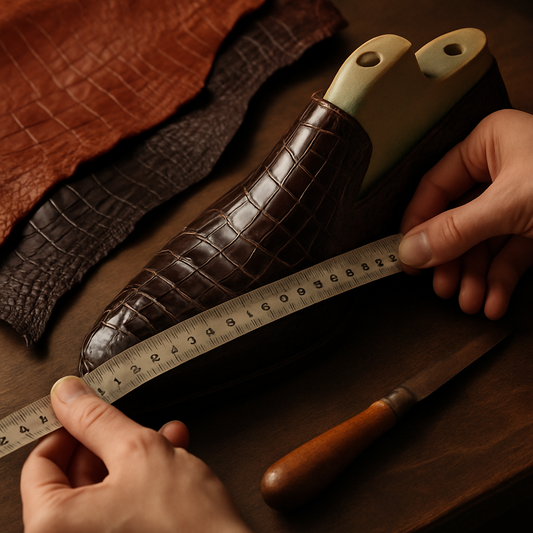
At CrocodileViet, our in-house manufacturing perspective starts with examining the actual hide section before assessing the finished bag. This matters because a belly panel, flank panel, and hornback panel produce different textures and visual rhythms; the word “crocodile” alone does not tell a buyer which part is present on the bag.
Visual Clues: Useful, but Not Stand-Alone Proof
American alligator belly leather commonly shows a comparatively regular, balanced scale pattern. Crocodile leather often varies more by species and may retain small sensory pores, known in the trade as ISOs, in the scales. Those pores can help distinguish crocodile from some alligator leather, but one visual trait should not be treated as conclusive proof of authenticity.
American alligator may also show an umbilical scar in the belly area, while crocodile generally lacks that feature. Patterns vary between hides, tanning processes, and cut locations, so a buyer should assess the full panel instead of judging one isolated scale.
An embossed imitation may show highly repeated shapes, a mechanically consistent print, or a surface pattern that continues across areas where a real hide would change naturally. These observations can raise useful questions, but they do not replace a clear material description and suitable documentation for the transaction.
Grade, Appearance, and Durability Are Different Questions
Hide grading generally describes visible defects, such as marks, scars, or irregularities. It does not provide a universal ranking of species, and grading labels vary by supplier or tannery. A Grade 1–4 system from one source may not match another source’s definitions.
For example, one supplier’s American-alligator convention describes Grade 1 as having no belly defects, with lower grades allowing progressively more or more centrally located defects. That convention should be attributed to that supplier rather than treated as an industry-wide standard.
Visual grade also does not equal durability. A lower visual grade may contain more visible marks without automatically indicating that the leather is weak, while a highly even-looking panel still requires sound construction and appropriate care. Ask separately about the hide section, surface condition, construction, hardware, lining, and intended use.
Price: What You Are Actually Paying For
Price differences between croc-effect bags and crocodile leather bags can reflect several concrete factors:
- Material: embossed calfskin or other leather generally has a different raw-material cost from crocodilian hide.
- Hide section: belly, flank, tail, and hornback sections produce different surfaces and usable panel sizes.
- Panel size: a large briefcase front may require broader usable pieces than a small crossbody.
- Visible defects: grading may affect the amount of sorting and the placement of panels.
- Construction: lining, edge finishing, stitching, closures, handles, and metal hardware all influence labor and material use.
- Species and sourcing: species identification and legally required documentation can affect the supply chain.
Do not use price alone to authenticate a bag. A high price does not prove that the material is crocodile, and a lower price does not by itself prove that it is imitation. Compare the written material description with the photographs, dimensions, construction details, and seller information.
Fit and Sizing for Different Uses
Choose the bag by external length, width, and height rather than by a label such as “medium.” For a work bag, measure the laptop and documents you carry, then allow room for a sleeve, charger, and daily items. A briefcase that fits a device diagonally may still feel cramped if its usable interior is narrower near the zip or opening.
For shoulder and crossbody bags, check strap length and adjustment range. A longer strap can sit differently over a coat than over a shirt. Handle drop also matters: measure the space from the top edge of the bag to the inside of the handle, especially if you plan to carry it over the forearm.
Buyers in Europe, the United States, and the United Kingdom should compare measurements in centimeters or inches rather than relying on EU, US, or UK labels, which are more relevant to footwear and clothing than to bag capacity. For a wide fit around the body, examine strap width, attachment position, and how the bag rests against the torso. A high instep is a shoe-fitting issue, so it does not translate directly to handbags; for bags, the comparable concern is the available opening and the space around the handle or strap.
If you are ordering remotely, send the dimensions of your laptop, tablet, wallet, or documents and compare them with the bag’s internal measurements. Ask whether the stated dimensions include handles, external pockets, or hardware.
Care for Crocodile and Croc-Effect Leather
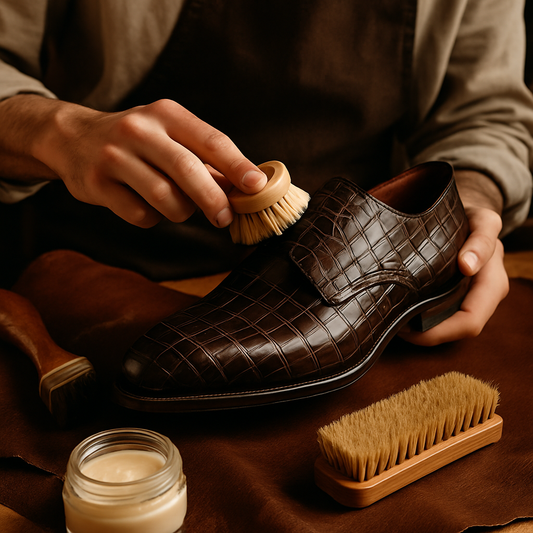
Start with a dry, soft cloth to remove loose dust after use. This is a safe default because it avoids adding moisture or an untested chemical to a textured surface. Keep the bag away from prolonged dampness, direct heat, and tightly packed storage that can distort panels or place pressure on scales and edges.
Do not apply household polish, alcohol-based cleaner, or a leather product unless it is suitable for that specific finish and has been tested discreetly. Crocodilian leather and embossed leather can react differently to conditioners. If the bag becomes wet or marked, blot rather than rub and ask the workshop or seller about the appropriate treatment. Care needs depend on use, climate, and finish rather than a fixed calendar schedule.
How to Style a Crocodilian or Croc-Effect Bag
Use the bag’s scale size and structure to guide the rest of the outfit. A small-scale embossed crossbody can work with denim, knitwear, and simple tailoring because its surface detail is relatively restrained. A larger-scale bag can pair with a plain shirt, solid trousers, or an unpatterned suit so the bag’s texture does not compete with another strong print.
For business wear, a structured black, brown, or deep neutral briefcase can coordinate with leather shoes and a belt without requiring an identical texture. With casual clothing, a lighter-toned shoulder bag can soften dark denim or a tailored jacket. These are styling options rather than fixed rules; the practical test is whether the bag’s size, strap position, and surface pattern suit the clothes and the occasion.
For more work-focused guidance, read How to Choose Alligator Handbag for Business Wear. If you are comparing materials for a men’s briefcase, Crocodile Briefcase Men vs Lizard Leather: Which Is Better? covers a related decision.
Questions to Ask Before Buying
- Does the description identify crocodile, alligator, or embossed leather?
- Which hide section appears on the main panels?
- Is the stated grade defined by the supplier or tannery?
- Are the dimensions internal or external?
- What documentation applies to the species and the destination jurisdiction?
Crocodilian species and products can be subject to CITES controls, but import, sale, labeling, and permit requirements depend on the species and the jurisdictions involved. CITES status alone does not prove authenticity, so check the documentation required for your specific transaction.
Frequently Asked Questions
Is a croc-effect bag made from real crocodile leather?
Not necessarily. “Croc-effect” and “croc-embossed” usually describe another leather, often calfskin, stamped with a crocodilian-style pattern. The material description must identify genuine crocodile or alligator leather separately.
How can I tell crocodile leather from alligator leather?
Crocodile scales often retain visible sensory pores, or ISOs, while American alligator belly scales generally lack them. Alligator may also show an umbilical scar that crocodile generally lacks. These clues support an assessment but do not prove species on their own.
Does a higher grade mean a stronger crocodile bag?
Not automatically. Grades usually describe visible defects, and grading systems vary by supplier or tannery. Durability also depends on the hide, tanning, panel placement, stitching, lining, hardware, and use.
What measurements should I check when buying a crocodile bag online?
Check external length, width, and height, then confirm usable internal dimensions, opening size, handle drop, and strap adjustment. Compare those measurements with the laptop, documents, or personal items you plan to carry.
View CrocodileViet Bags
See the CrocodileViet bag collection at CrocodileViet crocodile leather bags. For material, dimensions, or remote measurement questions, contact us through WhatsApp before ordering.