
What Makes Luxury Alligator Dress Shoes Worth Buying? Quality, Craft and Longevity — Part 2

공유
What Makes Luxury Alligator Dress Shoes Worth Buying? Quality, Craftsmanship, and Longevity — Part 2
A belly cut of alligator leather is favored for dress shoes because its surface is flatter, cleaner, and more balanced than flank material.
That surface is only one part of the value equation. Luxury alligator dress shoes are judged through the hide section, scale layout, leather grade, construction, fit, handwork, and the possibility of maintaining the shoes over time. A high price by itself does not confirm that each of these areas has been handled well.
1. The hide section determines the visual foundation
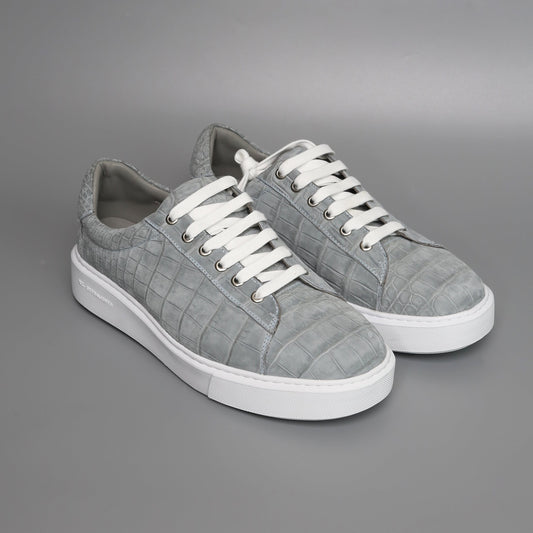
The belly is the central underside of the alligator hide. It generally has a regular, balanced scale pattern and a flatter surface than the flanks, which makes it suitable for the vamp, quarters, or other visible parts of a dress shoe.
At CrocodileViet, a belly cut is useful when the design calls for controlled scale placement because the rows are easier to align across the visible upper. Larger central belly scales can create a deliberate visual rhythm, while the smaller scales toward the sides can be positioned where the pattern naturally narrows. This is a visual and pattern-control decision, not a claim that every belly hide is identical.
Alligator belly scales also tend to transition more abruptly into the smaller flank scales. That change can help identify the material when looking at an unfinished hide or a finished shoe. Crocodile leather usually tapers more gradually and often shows visible sensory pores, known as integumentary sensory organs or ISOs, in the center of the scales. An alligator commonly has an umbilical scar, while crocodile leather generally lacks that feature.
These details can support material identification, but one visual trait alone does not prove authenticity. Documentation, the seller’s traceability, and the physical quality of the finished shoe matter as well.
2. Grade describes visible defects, not durability
Alligator grading usually focuses on the belly or midsection rather than the head, tail, or back. One commonly used system runs from Grade 1 to Grade 5: Grade 1 indicates very few or no visible belly defects, while higher numbers indicate more defect clusters across the belly quadrants.
Supplier terminology is not completely consistent. Some businesses use split descriptions such as 1/2 or 2/3 for hides that sit between two categories. For that reason, the grade label should be read together with photographs, the location of the leather on the shoe, and an explanation of the supplier’s system.
A higher visual grade can provide a cleaner field for a large, exposed vamp, but it does not automatically mean the finished shoe will be stronger or more comfortable. Durability depends on several other factors, including leather thickness, how the hide was cut, the upper construction, the sole, the heel, the stitching, and how the shoes are worn and stored.
3. Scale matching separates a considered upper from a random cut
Scale matching refers to how the pattern is arranged across both shoes and across separate sections of the upper. On a pair of luxury alligator dress shoes, the two vamp areas should be planned as a pair rather than cut independently without regard for one another.
Important decisions include:
- Whether the largest belly scales sit in a visually appropriate position on the vamp.
- Whether the left and right shoes have a comparable scale direction and visual weight.
- Whether the quarter, tongue, heel counter, and vamp transition without an awkward change in scale size.
- Whether scars, small marks, or natural irregularities are placed where the design can accommodate them.
- Whether the pattern remains balanced when the shoe is lasted and worn.
Alligator is a natural material, so two shoes should not be expected to look mechanically identical. The goal is a controlled pair with compatible pattern movement, not a printed surface with repeated graphics.
4. Craft quality is visible in construction, not just leather
The hide can be well selected and still produce an unsatisfactory shoe if the construction is poorly executed. Inspect the alignment of the upper, the meeting point between the vamp and quarters, the symmetry of the toe shape, and the treatment of the edge around the sole.
For handmade alligator shoes, handwork may appear in cutting, skiving, closing, lasting, finishing, or other stages, depending on the workshop and construction method. The term “handmade” does not describe one universal process, so ask which operations are performed by hand and which are completed with machines.
At a workshop that manufactures its own alligator goods in-house, production control can connect the leather layout with the finished design. The practical reason for this matters: a maker who handles the hide and the shoe together can assess scale direction, usable area, seam placement, and the effect of lasting on the pattern before the leather is committed to the final upper.
Look for clean seams, a stable topline, even edge finishing, and a sole attachment that suits the intended use. These details influence comfort and serviceability more directly than a grade number printed on a sales listing.
5. Longevity depends on use, construction, and maintenance
Alligator leather can remain wearable for a long period when it is protected from unsuitable conditions, but no material provides an unqualified lifespan guarantee. Longevity is better understood as the result of several choices working together.
| Decision factor | Why it matters to service life |
|---|---|
| Hide thickness and cutting | Appropriate thickness supports the upper without making it unnecessarily stiff or difficult to shape. |
| Scale placement | Well-positioned belly scales reduce visual distortion when the upper is shaped over the last. |
| Upper construction | The method of joining and supporting the upper affects stability, flexibility, and future repair options. |
| Outsole and heel | These parts receive direct wear and may need repair or replacement before the alligator upper does. |
| Wear rotation | Allowing shoes to rest between wears gives moisture inside the shoe more opportunity to dissipate. |
| Storage and care | Heat, damp storage, abrasion, and unsuitable products can change the leather’s surface and shape. |
Before buying, ask whether the sole and heel can be serviced, how the upper should be supported during storage, and which products are compatible with the finish. A shoe that can be maintained by a capable repairer has a more practical long-term profile than one treated as disposable after the first worn sole.
6. Fit matters more than the size printed inside the shoe
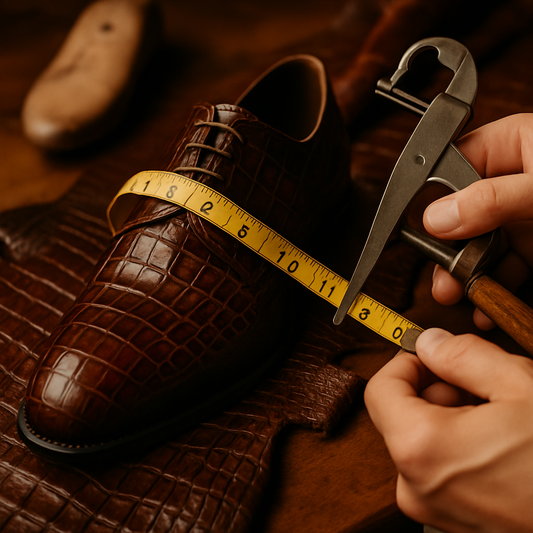
Alligator uppers can feel structured, and a poor fit may create pressure across the instep or stress the vamp. Compare the shoe’s length, width, toe shape, heel hold, and instep height rather than relying only on a familiar size.
- Length: Measure heel to longest toe and compare the result with the maker’s sizing information.
- Width: Record the broadest part of the foot, especially if a wide fit is needed.
- Instep: A high instep can require extra volume even when the length is correct.
- Conversion: Check the actual chart for EU, US, and UK sizing because the numbers do not convert identically across makers.
- Shape: A pointed dress-shoe last may provide less forefoot room than a rounder last in the same nominal size.
Trying shoes in person can reveal pressure points and heel movement, but remote measurements should be treated as an equally serious fitting method rather than a secondary option. Send foot length, ball girth, instep girth, and width measurements taken while standing, along with information about the socks you expect to wear. A tracing and photographs can add useful context, especially when a wide fit or high instep is involved.
For genuine alligator shoes for men ordered remotely, confirm whether the maker measures the foot or an existing well-fitting shoe, and ask which measurement controls the final recommendation. Returning or altering an exotic-leather shoe may be more complicated than adjusting an ordinary leather style.
7. Price reflects more than the word “alligator”
The price of alligator leather shoes can vary substantially because the material and the labor are not identical from pair to pair. Concrete price factors include:
- Species and the legal source of the leather.
- Hide grade and the number of visible defects in the usable belly area.
- Usable area after trimming around scars, edge zones, and irregular sections.
- Amount of belly leather used on the visible upper.
- Scale matching between the two shoes and across the pattern pieces.
- Upper construction, sole materials, and heel construction.
- Cutting waste created by the shoe shape.
- Handwork, finishing, fitting, and post-purchase service.
A lower price may reflect a smaller usable area, more visible natural marks, less scale matching, a simpler construction, or a different service arrangement. A higher price deserves the same scrutiny: it should be supported by clear information about the hide, the pattern layout, the construction, and the work included.
8. Care begins with keeping moisture and friction under control
After wearing, wipe the shoes with a soft dry cloth to remove dust and surface residue. Store them away from direct heat, strong sunlight, and damp conditions, using a form that supports the shape without forcing the upper.
If a small amount of moisture reaches the surface, let the shoes dry gradually at room temperature before wiping them again. A slightly damp cloth should be a last resort for localized residue, not the default cleaning method. Soaking, hairdryers, aggressive brushing, alcohol-based products, and untested creams can alter the finish or dry the leather unevenly.
Conditioning does not follow one fixed calendar. The need depends on the finish, climate, frequency of wear, and the leather’s surface response. Test any compatible product on a hidden area first, or ask the maker for a product recommendation. If the finish becomes cloudy, cracked, sticky, or unusually dry, professional assessment is safer than adding several products in succession.
9. Styling luxury alligator dress shoes by setting
The scale pattern already supplies texture, so clothing should support the shoes without competing with them.
Business tailoring
- Pair darker alligator shoes with navy, charcoal, or medium-grey trousers.
- Use a restrained shirt pattern when the shoes have pronounced scale contrast.
- Coordinate the belt and other leather accessories by tonal family rather than demanding an exact color match.
Formal occasions
- Choose a clean, dark pair with a controlled toe shape for black, midnight, or deep charcoal tailoring.
- Keep metal accessories and pocket-square patterns limited if the leather has strong visual movement.
- Check the event’s dress code before selecting an exotic-leather texture.
Smart-casual wear
- Brown or muted earth tones can work with cream, olive, denim, or grey trousers.
- Use a less formal trouser cut to prevent the shoes from looking disconnected from the rest of the outfit.
- Let the shoes provide the texture while keeping the jacket or knitwear in a simpler weave.
10. Documentation is part of a responsible purchase
American alligator is regulated under CITES Appendix II. International trade in its leather and manufactured products is controlled, so documentation and the relevant permits matter. CITES is a trade-compliance system; it does not by itself prove that a particular shoe is authentic or that its leather is a certain visual grade.
Ask the seller what documentation accompanies the product, where the material was sourced, and whether the paperwork is appropriate for the destination country. CITES treats crocodilian leather shoes and other small leather goods as regulated manufactured products, so buyers should not assume that an exotic-leather shoe is unrestricted or undocumented simply because it is finished.
Is buying luxury alligator dress shoes worthwhile?
Luxury alligator dress shoes can be worth buying when the belly placement, scale matching, construction, fit, documentation, and care requirements are clear. The strongest case is not a promise of indefinite wear; it is a shoe whose material and workmanship are suited to the owner’s wardrobe, foot shape, maintenance habits, and willingness to service the pair over time.
For CrocodileViet’s available shoe designs and material details, visit the alligator and crocodile shoes collection. You can also contact us through WhatsApp to discuss measurements, scale placement, construction details, and documentation before ordering.