
The Return of Exotic-Leather Bags: Crocodile Texture, Real Crocodile, and How to Tell the Difference

공유
Exotic Leather Bags in 2026: Crocodile Texture, Real Crocodile, and How to Tell the Difference
Crocodile and alligator belly leather can both have neat rectangular scales, so scale shape alone does not identify a real crocodilian hide.
The renewed interest in exotic leather bags 2026 makes visual literacy useful. A bag may have a crocodile-like texture created by embossing, or it may be cut from genuine crocodilian skin. Those options differ in material structure, surface variation, pricing factors, care needs, and documentation. This article focuses on how to assess the appearance of a bag without treating one visual clue as proof of species or legal origin.
What “crocodile texture” can mean
“Crocodile texture” describes an appearance rather than a confirmed material. Manufacturers can press a scale pattern into cow leather or another leather to produce a crocodile-style surface. The pattern may look regular across the panel, with repeated scales and limited variation between sections.
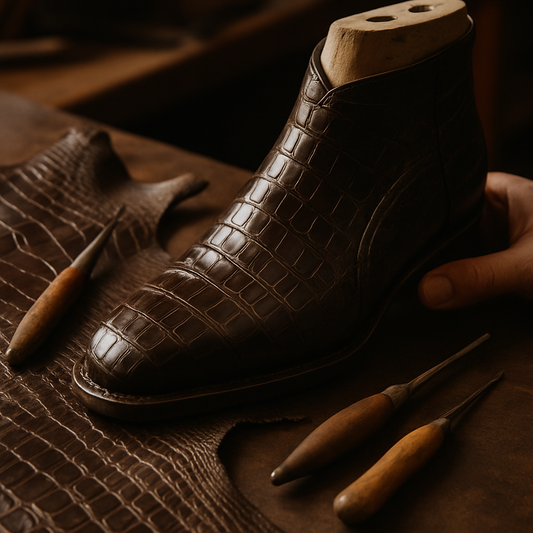
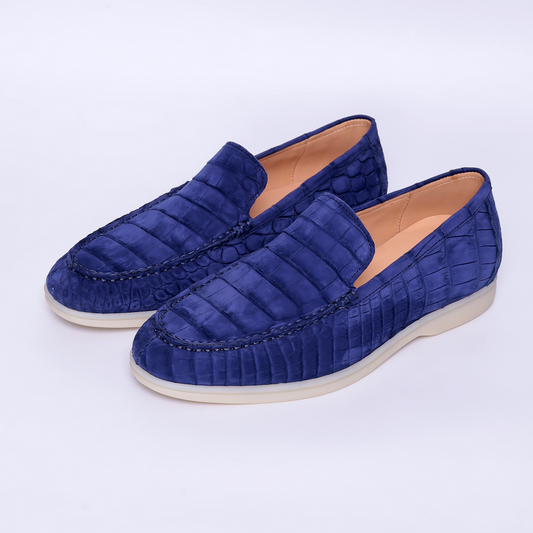
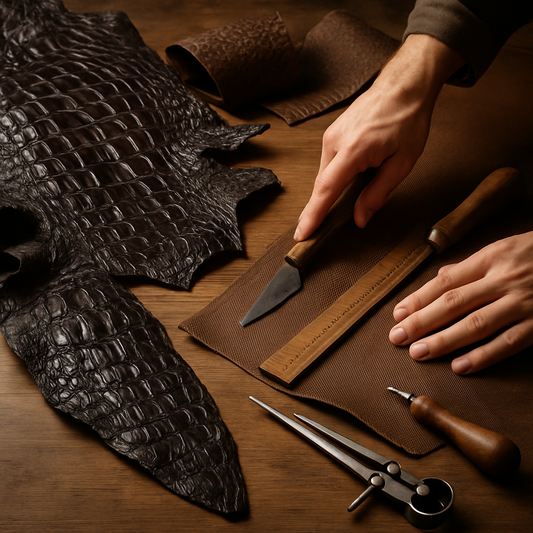
Genuine crocodile leather comes from an actual crocodilian hide. The visible pattern depends on the species, the part of the hide, the cut, and the way the skin was finished. The belly is the prized ventral section, while hornback refers to the back skin and flank refers to the larger, bony-edged scales along the sides. A handbag made from belly skin therefore has a different visual character from one made with hornback or flank material.
Real crocodile vs croc-embossed: useful visual differences
Alligator belly scales are commonly comparatively regular and balanced. Crocodile belly patterns can vary more by species and often show visible sensory pores, also called integumentary sensory organs or ISOs, on the belly scales. These pores are a useful point of comparison, but a pore observed in a photograph does not by itself prove that a bag is genuine crocodile.
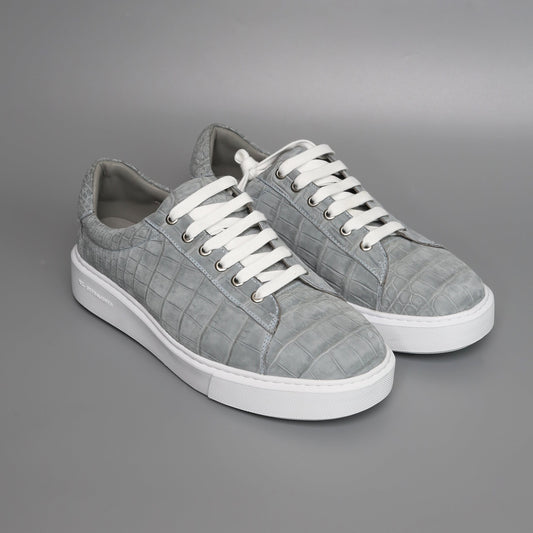
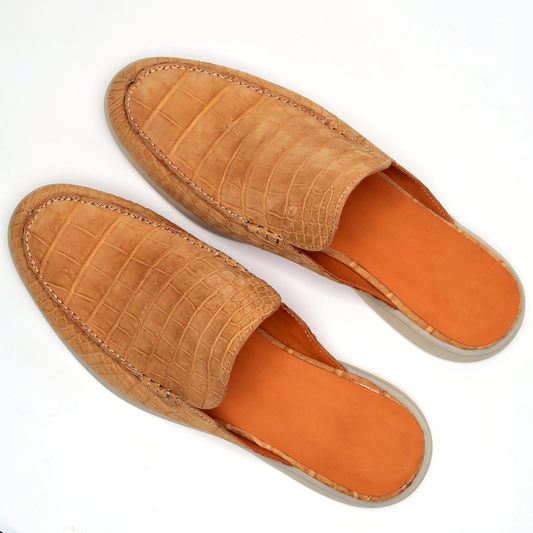
An American alligator belly may also show an umbilical scar, while crocodile belly skin lacks that feature. Even so, finishing, cutting, lighting, image resolution, and the exact section of hide can make visual assessment difficult. A neat rectangular pattern can occur in both crocodile and alligator leather, and embossed leather can imitate several reptile patterns.
| Decision factor | Genuine crocodilian leather | Croc-embossed leather |
|---|---|---|
| Surface pattern | Shows variation linked to the hide section, species, and individual skin | Often repeats more consistently across the panel |
| Scale edges | Can show natural changes in size, spacing, and contour | May have a pressed pattern with more similar scale shapes |
| Texture clues | May show species-related features such as sensory pores or an umbilical scar, depending on the material | Does not reproduce every biological feature consistently |
| Proof of material | Requires supplier, tannery, and trade documentation appropriate to the species and transaction | Material description should identify the base leather and embossing process |
How to identify crocodile leather with better evidence
Start by asking what the seller means by “crocodile.” The term may refer to true crocodile, alligator, caiman, a general crocodilian category, or an embossed pattern. The species matters because appearance, trade controls, and documentation requirements can differ.
Next, inspect several parts of the bag rather than one scale. Look at the front, sides, gussets, handle attachments, and any matching strap. Genuine skin usually has some change in scale size and spacing as the hide section changes. A repeated pattern that appears mechanically identical across separate panels can suggest embossing, although it does not settle the matter by itself.
Ask for the material specification, country of origin, and relevant documentation. CITES regulates international trade in many crocodilian species, and covered trade can involve documentation and tagging requirements. The applicable rules depend on the species, listing, and trade circumstances. A tag or certificate should be checked in context rather than treated as automatic proof of authenticity, legality, or traceability.
At CrocodileViet, our in-house manufacturing position lets us assess the actual leather section used for a product rather than describing every reptile pattern as the same material. That distinction matters because belly, hornback, and flank skins produce different layouts and different usable areas.
Why price varies between crocodile handbags
The price of a crocodile handbag reflects more than the word “crocodile” in a product description. Concrete factors include:
- Species and hide section: Belly skin generally presents a more balanced scale layout than hornback or flank sections, which affects the intended design.
- Usable area: A smaller hide may suit a compact bag, while a larger bag may require a larger continuous panel or carefully matched sections.
- Surface defects: Scars, marks, insect damage, and irregular areas reduce the clean cutting area available for visible panels.
- Pattern matching: Matching scales across a front panel, gusset, flap, or pair of handles can require more material and cutting control.
- Construction: Lining, hardware, edge finishing, handle structure, and internal compartments change the labor and material requirement.
- Documentation and trade route: Applicable species and international trade rules can affect sourcing and paperwork.
Hide grades are not a universal industry-wide scale. One supplier may use first, second, and third grades based on defects in a defined pattern area, while another may assess cutting yield and blemishes by zones or quadrants. A higher grade generally indicates fewer defects in the usable belly area, but the grading label needs to be read alongside the supplier’s criteria.
Fit and size for an exotic leather bag
For a daily crocodile handbag, compare the external length and width with the items you carry rather than relying on a small, medium, or large label. Measure a wallet, phone, glasses case, notebook, or tablet and allow room for the lining, gusset, closure, and interior divisions.
For a work bag, check whether the opening accepts your laptop or documents without forcing the corners against the leather. A structured bag can have generous external dimensions but less usable interior space. Handle drop also matters: measure the distance from the top of the bag to the handle arch, then compare it with how you carry the bag over the forearm or shoulder.
If you are ordering remotely, send the product team your intended contents, the device dimensions, and your preferred carrying method. A simple sketch or measurements in centimeters can prevent a mismatch more effectively than choosing by product photographs alone. Readers comparing business use can also refer to How to Choose Alligator Handbag for Business Wear.
Care for crocodile leather
Use a dry, soft cloth as the default cleaning method for dust and light surface marks. Wipe gently along the leather rather than scrubbing across raised scales. Keep the bag away from prolonged rain, strong heat, hair dryers, and direct sunlight, since moisture and heat can affect the finish and shape.
Do not apply household polish, alcohol-based cleaner, or an untested conditioner. Different finishes respond differently, so any product should first be checked against the maker’s care advice and tested on a concealed area. Store the bag upright or supported so the body does not collapse, and avoid placing heavy items on top of it. A fixed cleaning schedule is less useful than responding to actual dust, handling, and exposure.
Styling the crocodile leather bags trend
A crocodile handbag can work as the textured element in an otherwise restrained outfit. A black or deep brown bag pairs with a plain suit, knitwear, or a crisp shirt without competing with a strong print. A lighter or colored bag can sit beside neutral clothing, while a patterned outfit benefits from simpler hardware and fewer competing textures.
For business wear, match the bag’s structure and size to the setting: a firm top-handle or organized shoulder bag suits documents and meetings, while a compact crossbody is more practical for travel or informal days. The scale pattern itself is already visually active, so coordinating shoes or a belt through color rather than identical texture usually produces a more coherent result.
Frequently Asked Questions
Does a regular rectangular scale pattern prove a bag is crocodile?
No single scale shape establishes the material. Alligator and crocodile bellies can both show rectangular scales, and embossed leather can reproduce a similar layout. Species information, construction details, and appropriate documentation provide stronger evidence.
Are sensory pores proof that a handbag is real crocodile?
Visible sensory pores, or ISOs, can be a useful clue because true crocodile belly scales often show them and American alligator belly scales lack them. A visual pore inspection alone does not prove species, authenticity, or legal origin.
How does crocodile belly leather differ from hornback?
Belly is the ventral hide and generally has a flatter, more balanced scale arrangement. Hornback comes from the back and has a more pronounced ridge or armored appearance. Flank skin comes from the sides and has larger, bony-edged scales.
What should I request before buying an exotic leather bag?
Request the stated species, hide section, material description, country of origin, dimensions, and any documentation relevant to the trade route. Ask how the supplier defines its grade, because grading labels vary between suppliers and tanneries.
Browse CrocodileViet’s in-house range of exotic leather bags to compare available designs and construction details. For product questions or remote measurements, contact CrocodileViet through WhatsApp.