
How Alligator Wallet Men Are Made: From Hide Selection to Hand Finishing

공유
How Men’s Alligator Wallets Are Made: From Hide Selection to Hand Finishing
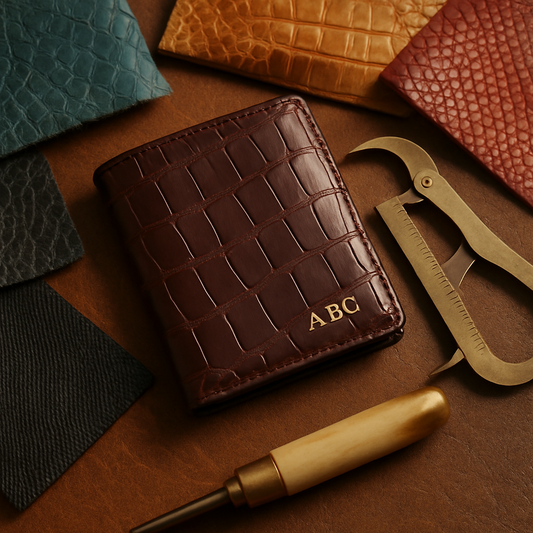
An alligator wallet for men is made by selecting a suitable belly section, cutting the leather around its scale pattern, assembling the wallet layers, stitching the parts, and hand-finishing the edges and surface.
The work begins with the hide rather than with a finished wallet template. The leather section determines the wallet’s visible pattern, the usable cutting area, and how consistently the scales can be arranged across the front, back, and interior panels. Every later step depends on those first decisions.
1. Selecting the alligator hide
The belly or belly/midsection is the important grading area for a wallet. It is often chosen for small leather goods because its scales are comparatively regular and balanced, giving the wallet a controlled visual layout. The back, flank, and less even areas may be suitable for other purposes, but they do not provide the same pattern control for a men’s wallet front.
Alligator skins are commonly graded from 1 to 5. Grade 1 generally indicates a belly area without visible defects, while higher numbers indicate increasing issues such as scars, scratches, shading, or scale deformities. These labels are not universal across every supplier or tannery, so the grade is only one part of the description of the finished wallet.
A visual grade does not prove that a wallet will be more durable. Durability depends on the leather’s structure, thickness, tanning result, reinforcement, stitching, edge construction, and how the wallet is used. A wallet with a clean-looking belly still requires careful construction, while a hide with a small visible mark may remain structurally sound.
2. Checking the species and lawful sourcing
Alligator should not be confused with crocodile leather simply because both have scale patterns. Alligator belly scales are typically more regular and symmetrical, while crocodile skin can vary more by species and may show small sensory pores, also called ISOs, on the scales. Features such as an umbilical scar can occur in the belly area of crocodilian hides, but their presence or absence should not be treated as a standalone identification test.
Visual characteristics can assist with identification, but one sensory trait alone is not proof of authenticity. A professional assessment also considers the hide, the supplier’s records, and the applicable trade documents. Alligator products may be subject to wildlife-trade controls, and CITES documentation can be relevant to lawful export or import. CITES supports trade compliance; it is not, by itself, a guarantee that a product is genuine.
3. Planning the wallet pattern
After the hide is selected, the pattern is positioned over the usable belly area. This is not simply a matter of cutting rectangles from the largest available section. The most visible wallet panels are placed where the scale rows are regular, while the direction and transition of the pattern are considered at folds, card slots, and any flap.
For an alligator wallet men commonly carry in a trouser pocket or jacket, the pattern must balance appearance with practical thickness. A large uninterrupted belly section may suit the exterior, while smaller sections can be allocated to interior details if their scale size and direction work with the design. Cutting around scars, shading, or deformed scales also reduces waste while keeping visible panels controlled.
The pattern includes allowances for folding, stitching, lining, edge treatment, and reinforcement. Removing too much material can weaken a fold or reduce usable pocket depth. Leaving too much can make the wallet bulky, especially once several card compartments and a lining are assembled.
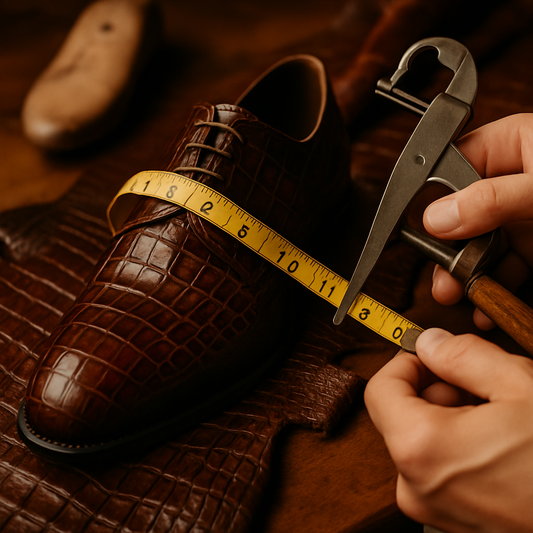
4. Cutting the alligator leather
The leather is cut according to the approved pattern, with the scale direction kept consistent from panel to panel. The front and back pieces receive particular attention because they occupy the largest visible areas. A wallet can have technically accurate dimensions yet look poorly assembled if one panel is turned against the scale direction or if the central pattern is noticeably unbalanced.
Cutting also considers the umbilical scar and other natural marks. A scar is not automatically a defect that makes the hide unusable, but its position matters. If it falls in a fold, stitch line, or hidden area, it may have a different practical effect than if it crosses the center of the front panel.
The same principle applies to color variation. Slight differences in shading can be part of the hide’s natural surface, but strong variation across adjoining panels may change the intended appearance. The cutting plan therefore combines the wallet dimensions with the particular characteristics of that hide.
5. Preparing the interior and lining
The alligator exterior is usually paired with an interior material selected for flexibility and controlled thickness. The interior must allow cards, notes, or other contents to enter and leave without forcing the alligator panels to bend sharply. Pocket construction is planned before assembly because every additional layer affects the final profile.
Card slots require accurate alignment so that the top edges sit evenly. Folded sections need enough allowance for movement, while the lining must not pull against the alligator leather. These dimensional decisions influence whether the finished wallet opens naturally or feels stiff and overfilled.
For a zipper design, the zipper tape and surrounding leather need additional clearance. A crocodile zipper wallet and an alligator zipper wallet may look similar in layout, but the species, scale pattern, and selected panels still need to be described accurately rather than treated as interchangeable materials.
6. Joining the wallet panels
Assembly brings together the exterior, lining, card sections, folded gussets, and any closure components. Before stitching, the panels are aligned so that the scale rows meet in a deliberate direction. This is especially important along the fold and around the opening, where small shifts can become obvious during use.
Stitch holes are prepared with the design and leather thickness in mind. The stitch line needs to secure the layers without sitting too close to an edge or cutting through a weak portion of the leather. On an alligator wallet, the stitch line also becomes part of the visual structure, so its spacing and position affect how the scale pattern is read.
The construction should remain proportionate to the wallet’s intended contents. A compact card wallet does not need the same internal layering as a note wallet, and adding compartments without accounting for their thickness can make a product uncomfortable in a pocket.
7. Stitching and shaping
Once the layers are aligned, the wallet is stitched and shaped. The fold is formed gradually rather than forced into a sharp angle, helping the leather and lining move together. The edges are checked for alignment as the wallet takes its final form.
Stitching quality involves more than an attractive row of thread. The thread must hold the layers securely, the holes must remain evenly positioned, and the end points need to be secured without creating a hard lump. The construction can then be checked by opening and closing the wallet and placing representative contents into its compartments.
8. What hand finishing means
Hand finishing refers to the work performed after cutting and stitching; it does not mean that the hide itself was made by hand. At this stage, the edges may be leveled, smoothed, coated, and polished according to the wallet’s construction. Loose fibers, uneven transitions, and excess surface treatment are checked before the final review.
The alligator surface is wiped and inspected for marks introduced during assembly. Any final treatment must suit the leather and the intended finish rather than cover the scale texture with an unnecessarily heavy coating. On wallets with exposed edges, the edge finish also protects the layered edge and gives the wallet a more controlled feel in the hand.
What affects the price of an alligator wallet?
Price is not determined by the animal skin alone. The main cost factors include:
- Species and lawful sourcing: Correct species identification and applicable trade documentation affect material handling and compliance.
- Hide grade: A cleaner belly area provides more usable, visually consistent cutting space.
- Usable area: Hide measurements are commonly taken across the widest belly point in centimeters, rather than priced like cowhide by square foot.
- Scale matching: More visible panels require more planning when the rows must align in direction and proportion.
- Construction: A card holder, billfold, and zipper design require different numbers of layers and components.
- Handwork: Cutting, stitching, edge finishing, inspection, and adjustments add workshop time.
- Interior materials: Lining, reinforcement, zipper components, and pocket structures change both labor and material use.
For that reason, two wallets described with the same species name can have substantially different prices. The visible leather is only one part of the finished product.
Care after purchase
Keep the alligator wallet away from prolonged moisture, direct heat, and strong sunlight. For routine cleaning, use a soft, dry cloth and wipe lightly along the surface. If a small mark requires more than dry cleaning, use only a slightly damp cloth and allow the wallet to dry naturally away from heaters and hairdryers.
Do not apply household cleaners, alcohol, or an untested leather product to the scales. Conditioning depends on the leather’s appearance, handling, climate, and exposure rather than on a fixed calendar. If the surface begins to look dry, contact the maker before applying a product, since an unsuitable conditioner can alter the finish or leave residue around the scale texture.
Final inspection before delivery
Before a wallet leaves the workshop, the exterior panels, interior alignment, folds, stitch lines, edges, closure components, and specified material are checked. The wallet is also opened with representative contents inside to confirm that the construction works as intended. This final review connects the original hide selection with the practical object that the customer will carry.
To view CrocodileViet’s wallet collection, visit the CrocodileViet wallets collection. For questions about dimensions, materials, or remote measurements, contact us through WhatsApp.