
Alligator Leather Shoes: Common Mistakes to Avoid for 2026–2027

공유
Alligator Leather Shoes: Common Mistakes to Avoid in 2026–2027
A common mistake with alligator leather shoes is treating a regular belly scale pattern as proof of species, grade, or durability.
Buying well requires more than spotting a familiar scale layout or choosing the highest price. The hide section, visible marks, cutting plan, construction, fit, care routine, and legal documentation all affect the purchase. This article focuses on alligator shoes and the practical errors that can lead to disappointment.
1. Confusing alligator belly with other crocodilian leather
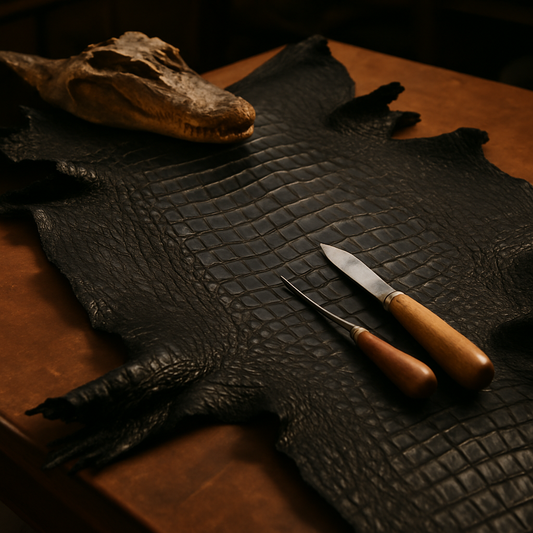
Alligator and crocodile belong to different animal groups, so “crocodile” should not be used as a general synonym for alligator. For alligator leather shoes, the belly is the flatter ventral section commonly selected for footwear because its scales are comparatively regular and balanced.
Alligator belly scales often shift more abruptly from larger central scales to smaller flank scales. Crocodile belly scales may change more gradually, and many crocodile species show visible pore-like sensory pits, also called integumentary sensory organs or ISOs, on the scales. These details can help with visual identification, but scale appearance alone does not establish the species.
Alligator belly can also show an umbilical scar, while crocodile generally lacks that feature. Natural variation between individual hides still matters, so buyers should ask what species and hide section were used rather than relying on a close-up photograph.
2. Assuming belly, hornback, and grade mean the same thing
“Belly” describes a hide section. “Hornback” describes the raised, bony back area. Hornback is a distinct cut, not a higher or lower grade of belly leather. Shoes made from hornback have a more pronounced surface, while belly leather is generally chosen where a flatter scale arrangement is wanted.
Grade is a separate matter. Suppliers commonly use numbered systems in which Grade 1 indicates a cleaner hide and higher numbers indicate more visible defects, but grading labels and defect rules vary between suppliers and tanneries. One company’s Grade 2 may not correspond exactly to another company’s Grade 2.
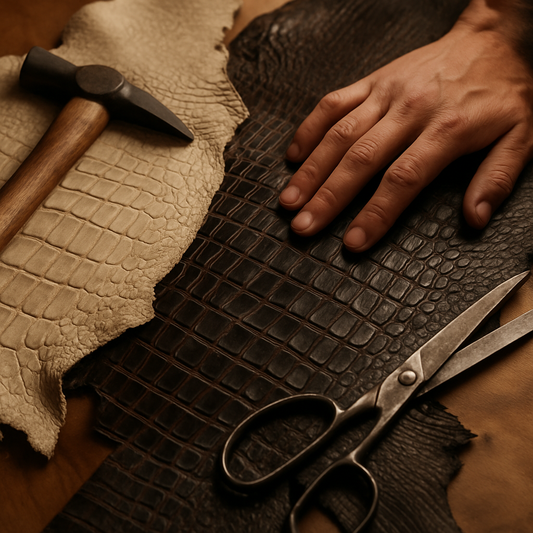
A lower grade does not automatically make an alligator hide unsuitable for shoes. The position of scars, holes, color variation, and other marks affects the usable cutting area. A skilled cutter may place vamp, quarters, facings, or smaller components around defects, while a clean-looking section in the wrong location may still limit the pattern.
3. Treating visual grade as a durability rating
Visual grade mainly describes appearance and usable surface, not a direct durability score. A hide with fewer visible marks may be easier to lay out attractively, but durability also depends on leather thickness, tanning, finishing, pattern design, construction, flex points, sole materials, and how the shoes are worn.
At CrocodileViet, we assess the usable hide area before cutting because the best-looking scale section is not automatically the most practical place for every shoe component. This helps us position the visible vamp and other high-impact panels consistently while working around natural marks instead of hiding the limitations after assembly.
Ask a seller which part of the hide is used, how the grade is defined, and whether the photograph shows the actual pair or a representative material. Those questions provide more useful information than a grade number by itself.
4. Choosing by price alone
Price for alligator leather shoes reflects several concrete factors:
| Price factor | Why it affects the shoes |
|---|---|
| Hide section and usable area | A flatter belly section with a clean cutting area can reduce waste and support a more consistent appearance across the pair. |
| Scale size and matching | Matching the scale flow across left and right shoes requires suitable hide placement and can increase material use. |
| Natural marks | Scars and other marks may require smaller pattern pieces, additional sorting, or more cutting time. |
| Pattern and shoe style | A wholecut or broad vamp exposes more hide, while panels, loafers, and smaller components distribute the material differently. |
| Construction and components | Sole choice, lining, insole, heel, finishing, and assembly labor contribute independently of the leather itself. |
| Customization and remote service | Unusual measurements, width adjustments, and additional fitting exchanges can add work beyond a standard size. |
For genuine alligator shoes for men, compare what the quoted price includes: the alligator section, lining, sole, construction method, sizing service, and finishing. A low price may reflect a smaller visible panel or a different construction rather than a simple difference in leather quality. A high price also does not remove the need to check fit and documentation.
5. Ignoring the actual fit
Alligator leather shoes should be assessed by length, width, instep height, heel hold, and toe shape—not just by a familiar number. EU, US, and UK sizes are not interchangeable without checking the maker’s conversion chart, and the same labeled size can fit differently depending on the last.
Wide feet need more than a longer size. Increasing length to gain width can place the ball of the foot in the wrong position and create heel movement. High insteps may need a different last, adjustable lacing, or a pattern with more room over the top of the foot. Loafers require particular care because their fit cannot be tightened as much as a lace-up shoe.
For remote measurements, measure both feet while standing, preferably later in the day, wearing the socks intended for the shoes. Record foot length, the widest forefoot measurement, ball girth, instep girth, and heel-to-ball length if requested. Send photographs or tracing information only when the workshop provides a clear format, since inconsistent measuring methods can lead to misleading numbers.
At CrocodileViet, we ask for specific measurements when a standard size may not explain the fit because the extra information helps us select a more suitable last and reduce avoidable exchanges. A measurement request is useful only when it has a clear purpose, so buyers should ask which adjustment each measurement supports.
6. Expecting the scales to look identical across the pair
Alligator is natural leather, and the left and right shoes can show small differences in scale size, spacing, tone, or surface marks. A balanced pair should have a considered visual relationship, but natural material does not behave like printed fabric.
The most visible area is often the vamp, so this area deserves close inspection. Check whether the scale direction follows the shoe shape, whether the two shoes have a similar visual rhythm, and whether marks are placed in locations that do not distract from the pattern. Slight variation can be acceptable; major imbalance should be discussed before purchase.
Our in-house production approach allows the cutting layout to be reviewed before the leather is committed to the shoe components. The reason is practical: once a hide has been cut into small panels, changing the placement becomes much more limited.
7. Skipping species and legal-origin questions
“Alligator leather” by itself does not establish legal origin or trade status. International commerce in crocodilian skins and products is controlled through CITES listings, and the applicable requirements can depend on the exact species, source, country of origin, destination, and product category.
Do not assume that one permit rule applies to every pair or every shipment in 2026–2027. Ask the seller to identify the species and explain what source or trade documentation accompanies the product where applicable. CITES documentation concerns regulated trade and does not, by itself, prove that a particular pair is genuine.
8. Using the wrong care routine
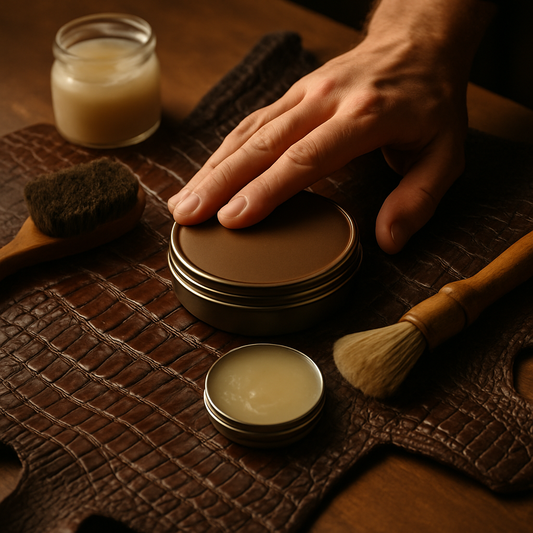
After wearing alligator leather shoes, remove surface dust with a soft, dry cloth. Let moisture dry naturally away from direct heat, then store the shoes with suitable shoe trees if available. A shoe tree helps support the shape and reduce deep creasing, but it does not replace correct sizing.
Do not apply household oils, alcohol-based products, heavy wax, or an untested conditioner. Alligator finishes can react differently depending on tanning and surface treatment. Use a product recommended for the specific leather finish, and test it on a concealed area first.
There is no useful fixed care schedule for every wearer. Climate, perspiration, rain exposure, rotation, and the finish of the leather all affect the need for cleaning or conditioning. A dry cloth is the default response to light surface dust; deeper marks or water exposure deserve specific advice rather than repeated product application.
9. Treating styling advice as a set of rigid rules
Alligator leather shoes work best when their color, scale visibility, and formality match the rest of the outfit. Dark brown or black pairs can support tailored business clothing, while lighter brown shades can work with navy, gray, cream, or textured casual tailoring. Loafers usually read more casually than closed-lace dress shoes, even when both use the same leather.
Keep the belt, watch strap, or other leather accessories coordinated in tone without demanding an exact material match. A textured alligator shoe can be paired with smooth leather accessories so the outfit does not become visually crowded. For color-specific ideas, Navy Alligator Skin Shoes: Styling, Care and Buying Tips covers navy footwear in greater detail.
10. Buying without checking the workshop’s process
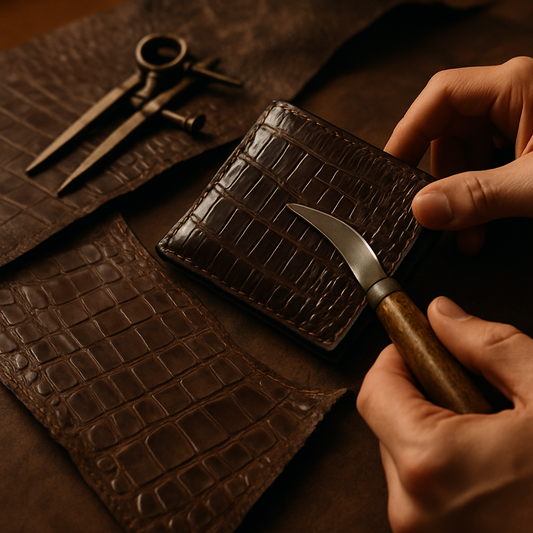
For handmade alligator shoes, ask where the leather is cut and where the shoes are assembled. In-house production can make communication about material placement, measurements, and requested changes more direct, but buyers should still ask what the workshop actually handles itself.
Useful questions include whether the pair is made from belly or hornback, how the grade is defined, which construction and sole are used, how remote sizing is reviewed, and what happens if the measurements need clarification. For a broader discussion of construction and purchasing factors, read What Makes Luxury Alligator Dress Shoes Worth Buying? Quality, Craft and Longevity.
Frequently Asked Questions
How can I tell whether alligator leather shoes use belly leather?
Ask the seller to identify the hide section and provide a clear photograph of the shoe surface. Belly leather is the flatter ventral material with a comparatively regular, balanced scale arrangement. Scale appearance alone does not prove the species or grade.
Does a lower alligator leather grade make a pair unsuitable for shoes?
Not necessarily. The location of defects and the cutter’s ability to place shoe components around them matter. Grading labels also vary by supplier, so ask what the stated grade measures before comparing pairs.
What measurements matter when ordering alligator shoes remotely?
Measure both feet for length, forefoot width, ball girth, instep girth, and heel-to-ball length when requested. Also state your usual EU, US, or UK size, whether you need a wide fit, and whether your instep is high.
What should I ask about CITES and alligator shoes?
Ask for the exact species, source information, and any documentation relevant to the countries involved in the transaction. Requirements can vary by listing, origin, destination, and product, so a general statement about CITES is not enough.
Choose alligator leather shoes with evidence, not assumptions
Review the hide section, grading explanation, cutting layout, measurements, construction, care advice, and trade documentation before ordering. Browse the CrocodileViet alligator and crocodile shoe collection, and contact us on WhatsApp for product or sizing questions.