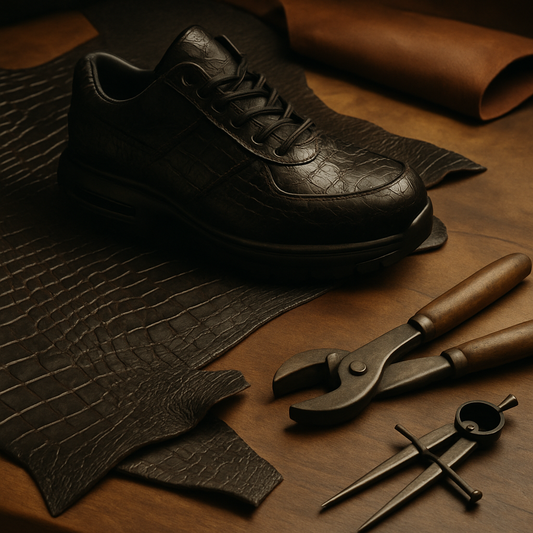

What Makes Alligator Leather Import Rules Worth Buying? Quality, Craft and Longevity

シェア
Are Alligator Leather Import Rules Worth Understanding Before You Buy? Quality, Craft, and Longevity
For a U.S.-harvested American alligator skin, a CITES tag must be attached at harvest before the skin can be exported, so import rules directly affect whether a purchase can legally reach you.
What alligator leather import rules actually tell you
Import rules do not make a piece of leather more durable by themselves. They establish whether the hide was legally sourced, correctly documented, and eligible to move across borders. That distinction matters because paperwork supports lawful trade, while material performance depends on the hide, tanning, construction, and care.
American alligator is listed in CITES Appendix II. Regulated international trade is therefore possible, but it depends on sustainability and legality controls. For U.S. exports, covered alligator skins require traceability through CITES tags. The U.S. Fish and Wildlife Service states that the tag must be attached at harvest, and an untagged skin cannot be exported from the United States.
A shipment may also need the applicable CITES document, while commercial exporters may require a U.S. Fish and Wildlife Service Office of Law Enforcement import/export license. Destination-country requirements can add further permits, declarations, or customs procedures. Louisiana, for example, applies state-level controls in addition to federal and CITES requirements, including shipping authorization for skins leaving the state.
This is why a CITES tag alone should not be treated as complete shipping compliance. The tag supports traceability for the skin; it does not automatically satisfy every state, export, import, or courier requirement.
Does documented leather mean better leather?
Legal documentation and leather quality answer different questions:
- Documentation: Can the material be traced and shipped lawfully?
- Hide quality: Is the skin suitable for the intended product, with an attractive scale layout and usable surface?
- Craft: Has the material been cut and assembled in a way that suits its scale structure and stress points?
- Longevity: Will the finished item retain its function with appropriate use and care?
Grading labels are not universal. Terms used by one supplier or tannery may not correspond precisely to labels used elsewhere, and “belly” or “flank” describe regions of the hide rather than a single worldwide quality grade. A seller should explain what its own grading terminology means instead of relying on a label alone.
Visual grade is also not the same as durability. A clean-looking scale pattern may be valuable for appearance, but resistance to wear depends on factors such as the leather’s finish, thickness, construction, edge treatment, hardware, and how the item is used.
How to assess an alligator skin before buying
American alligator and crocodile are distinct materials. Alligator belly skin commonly presents a regular, balanced scale arrangement, although the pattern has natural variation and should not be described as perfectly uniform. An umbilical scar is often visible on alligator belly skin, while crocodile commonly lacks that feature.
True crocodile belly scales often show visible sensory pores, also called integumentary sensory organs or ISOs. Alligator belly skin lacks those sensory pits. These details can help with identification, but no single visual trait should be treated as conclusive proof of authenticity. Scale pattern can vary, and reliable identification also depends on the seller’s sourcing records and documentation.
Ask for clear photographs of the actual item or hide section rather than relying only on a stock image. Useful views include the scale surface, corners, edges, lining, stitching, closures, and any natural marks. On a finished product, the placement of the umbilical scar or a change in scale arrangement may show that the material is genuine skin rather than a printed imitation, but photographs alone do not replace traceability documents.
Why in-house craft matters at CrocodileViet
At CrocodileViet, we manufacture our alligator and crocodile leather goods in-house. That matters because the workshop can evaluate the skin and the finished product as connected decisions: the scale layout affects where a panel is cut, while the product’s size and stress points affect how that panel should be used.
For a buyer, the practical benefit is clearer communication about the material used in a particular item. You can ask which species is used, whether the visible panel is belly or flank, how the surface has been finished, and which areas carry the greatest load during use. Those answers are more useful than a broad statement that an item is simply “high grade.”
Craft also affects how much of the skin remains visible. A wallet, belt, bag panel, or strap may use different sections because the required dimensions and bend points differ. A visually attractive panel can still be poorly suited to a product if its construction places repeated stress across vulnerable areas.
Price: what import rules add to the buying decision
Alligator leather pricing reflects more than the cost of the raw skin. Concrete factors include:
- Species and material source: American alligator and true crocodile are different materials with different sourcing and processing arrangements.
- Usable surface: A larger, clean panel can provide more workable area than a smaller section with marks, scars, or irregular edges.
- Scale layout: Regular, balanced belly scales may suit products where the pattern is prominent, while flank sections can create a different visual effect.
- Construction: Lining, reinforcement, hardware, edge work, closures, and the amount of hand assembly all affect the finished cost.
- Shipping and compliance: International freight, customs handling, permits, documents, duties, and taxes may be separate from the listed product price.
- Order location: The destination country’s import process can affect the final amount and the time required for clearance.
Import rules can therefore make a purchase more predictable, but they do not justify an unexplained price. Ask whether the quotation includes shipping, export documentation, taxes, and destination customs charges. If a seller cannot explain which costs are included, compare offers cautiously.
Fit and sizing for alligator leather goods
Dimensions should be checked in length and width rather than by a general size label. For a belt, measure the distance from the buckle’s fastening point to the hole used most often, then compare that measurement with the maker’s stated length. Total belt length and wearable length are different figures.
For footwear or structured accessories, confirm the relevant EU, US, or UK sizing system. Footwear buyers should also report whether they need a wide fit, have a high instep, or usually size up in firm materials. Leather can soften with use, but the buyer should not assume that a tight width or low instep will correct itself.
Remote measurements are easier to check when you send a flat measurement, a photograph beside a ruler, and the product type you are replacing. For a belt or strap, include the current length, width, hole spacing, and buckle dimensions. For a wallet or bag, provide the items that must fit inside, such as banknotes, a phone, or cards. This gives the workshop usable dimensions instead of a vague request for a “standard size.”
Care and expected service life
Alligator leather can provide long service when the item is matched to its use and maintained properly, but no responsible seller should promise a fixed lifespan. Frequent bending, moisture, heat, friction, heavy loading, and unsuitable chemicals can shorten the useful life of any exotic leather product.
Use a dry, soft cloth as the default cleaning method. Wipe away dust or surface marks without scrubbing across the scales. Keep the item away from prolonged direct heat and allow it to air-dry naturally if it becomes damp. Avoid applying household cleaners, alcohol-based products, or an untested conditioner, since a product that works on smooth cowhide may alter the finish or color of alligator skin.
There is no useful fixed maintenance schedule for every product. A lightly used wallet and a frequently worn belt face different levels of friction and bending. Inspect the surface when cleaning it, and seek product-specific care advice before applying any treatment.
Styling alligator leather with practical restraint
Alligator’s scale pattern is visually strong, so styling works best when the surrounding materials support rather than compete with it. An alligator belt can coordinate with plain leather shoes or a simple watch strap. A wallet can carry the texture while the rest of an outfit uses matte fabrics and uncomplicated colors.
Color coordination does not require an exact match. A dark brown alligator accessory can work with brown, tan, navy, charcoal, or olive clothing, depending on the finish and setting. A glossy surface reads differently from a matte one, so compare the sheen as well as the color.
For business settings, a smaller accessory with restrained hardware may be easier to wear regularly. For casual use, a wider strap, stronger contrast, or a more visible scale arrangement can suit denim, linen, or relaxed tailoring. The right choice depends on the product’s size, finish, and your normal wardrobe rather than on a fixed styling rule.
What to request before international shipping
Before placing an order, request the species, product dimensions, material section, photographs of the actual item, shipping origin, and a written list of included documents. Ask who is responsible for export paperwork and whether destination duties or import taxes are charged separately.
For cross-border purchases, also confirm the destination country’s requirements before payment. Customs may review the product description, species identification, CITES paperwork, commercial invoice, and permits. A courier’s acceptance of a parcel does not necessarily mean that the shipment has cleared the destination’s import rules.
For more detail on regulated shipments, see Cites Crocodile Leather Shipping: Complete Guide for 2026–2027. If you are comparing materials and documentation, Crocodile Leather Customs Documentation vs Lizard Leather: Which Is Better? covers that distinction separately.
Frequently Asked Questions
Do alligator leather import rules guarantee better quality?
No. Import rules support legal sourcing and traceability, while quality depends on the hide, tanning, surface, construction, and workmanship. Documentation should be checked alongside photographs and product specifications.
Is a CITES tag enough for international alligator leather shipping?
No. A CITES tag supports traceability, but the shipment may also need the applicable CITES document, export or import permits, state authorizations, licenses, customs paperwork, and destination-country requirements.
How can I distinguish alligator belly skin from crocodile belly skin?
Alligator belly skin often has a regular, balanced scale layout and may show an umbilical scar. True crocodile belly scales often show sensory pores, while alligator belly skin lacks those pits. These clues support an assessment but do not prove authenticity by themselves.
What measurements should I send for a custom alligator leather item?
Send length and width, the sizing system where relevant, and details such as wide-fit needs or a high instep for footwear. For belts and straps, include wearable length, width, hole spacing, and buckle dimensions. Photos beside a ruler can help with remote measurements.
Review CrocodileViet’s shipping requirements before ordering through the shipping policy. For product dimensions or document questions, contact CrocodileViet on WhatsApp.