
The Croc Effect in 2026: How to Style Genuine Crocodile Leather Alongside the Runway Trend

シェア
The Croc Effect in 2026: Styling Genuine Crocodile Leather with the Runway Trend
Fall/Winter 2026 runway coverage includes crocodile-effect and croc-embossed looks, but those appearances do not establish that the products use genuine crocodile leather.
That distinction matters for anyone following the crocodile leather trend 2026. A printed, embossed, or textured leather can reproduce the visual rhythm of crocodile scales, while genuine crocodile leather comes from an actual crocodile species and carries its own scale arrangement, texture, cutting considerations, and trade documentation requirements.
What the Croc Effect 2026 trend actually means
The current runway direction is primarily visual. Designers and brands are using crocodile-effect surfaces, croc embossing, glossy finishes, and scale-like panels on clothing, bags, shoes, and accessories. These materials may be made from several leather types or synthetic materials, so “croc effect” should not be treated as another name for crocodile leather.
Genuine crocodile leather is a species-specific material. Alligator and caiman are different crocodilians, so their names should not be used interchangeably with crocodile. A product described only as “crocodile style” or “croc texture” needs further information before its material can be understood.
For styling, this gives you two workable directions: use croc-embossed fashion for a broader trend reference, or choose one genuine crocodile item and let its actual scale pattern provide the texture.
How to style genuine crocodile leather with runway-inspired clothing
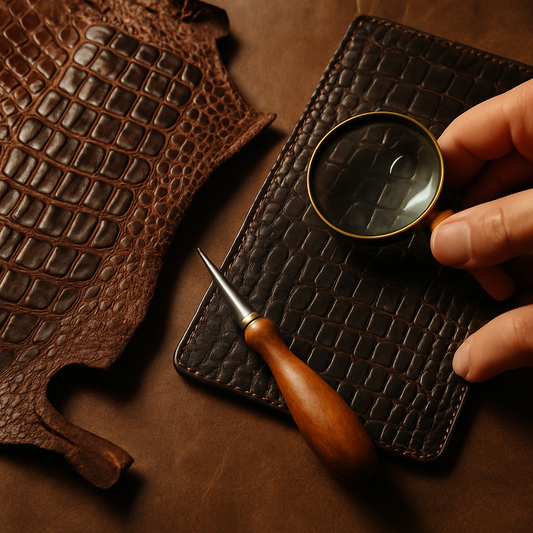
Start with one visible crocodile piece
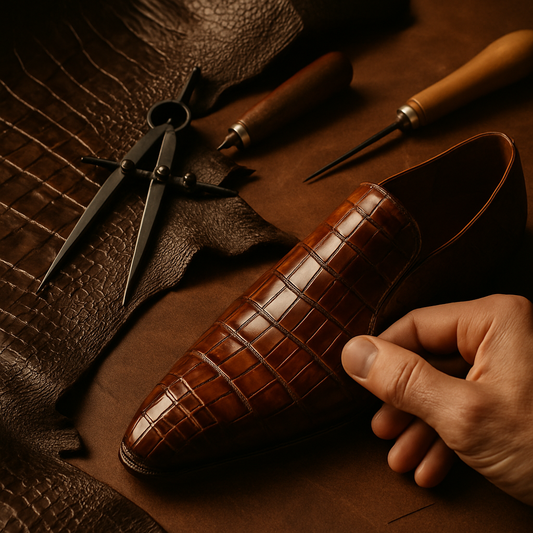
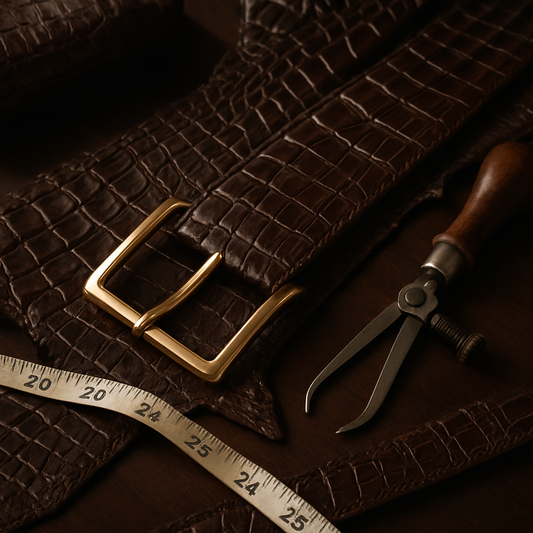
A genuine crocodile leather belt, shoe, card holder, or bag can bring the scale texture into an outfit without requiring several patterned pieces. For office clothing, a dark crocodile leather shoe works with a plain wool trouser, an unpatterned shirt, and a structured jacket. The shoe then relates to the runway trend through surface and shape rather than through a head-to-toe reproduction.
For less formal clothing, a crocodile leather bag can sit alongside denim, cotton overshirts, knitwear, or a simple monochrome outfit. A genuine crocodile leather bag does not need to match the shoes exactly; coordinating the depth of color or hardware is usually enough.
Use color to control the level of contrast
Black, deep brown, and burgundy crocodile leather generally blend more easily with business wardrobes because they relate to common trouser and jacket colors. Tan, olive, blue, or lighter shades make the scale pattern more noticeable and can work well with neutral clothing such as cream, grey, navy, or washed denim.
If the clothing already includes a strong print, a restrained crocodile accessory can keep the outfit readable. With plain clothing, a more visible crocodile shoe or bag can supply the main surface interest. These are styling choices rather than fixed rules; the useful test is whether the item has enough visual space around it.
Match scale and formality
The scale size and cut affect how an item reads. A compact wallet has a different visual impact from a full-length shoe vamp or a large bag panel. Formal shoes with a neat silhouette suit tailored trousers, while a larger casual bag can work with relaxed jackets and knit layers.
For men’s business footwear, the shape of the toe, sole thickness, and color often matter as much as the crocodile texture. For more specific office-wear considerations, see How to Choose Genuine Crocodile Shoes For Men for Business Wear.
How to identify genuine crocodile leather responsibly
Visual texture alone is not proof of authenticity. Crocodile leather commonly shows scale variation across the hide, and one sensory trait, such as a particular feel or shine, should not be treated as conclusive evidence.
Ask the seller which crocodile species was used, which hide section the product comes from, and what documentation applies to the sale or shipment. CITES covers crocodilian species listed in Appendix I or II. International trade in recognizable crocodilian leather goods, including shoes, can require permits or certificates, subject to the species listing and applicable exemptions. Authorized crocodilian skins entering international trade may also require individual, non-reusable identification tags.
At CrocodileViet, we manufacture our crocodile leather goods in-house because keeping production within our workshop gives us direct control over material selection, cutting decisions, and the final construction rather than relying only on a finished-item description. Documentation and product information still need to be checked for the particular item and destination.
Belly leather, grading, and what buyers should ask
Crocodile belly skin is the smooth, pliable area generally selected for its clean scale layout and comfortable handling. It is different from hornback, which refers to back skin, and from bony belly skins commonly associated with many caimans.
Crocodile belly scales vary by species and individual hide. A balanced pattern can be desirable for a visible shoe vamp or bag panel, but pattern regularity does not by itself establish a higher grade. Grading systems vary by supplier and tannery. They commonly consider blemishes, cuts, stains, holes, and usable cutting yield, with the belly pattern area carrying particular importance for many finished products.
Ask whether a quoted grade refers to the entire skin, the belly area, or the usable section selected for the product. A higher label is not automatically a guarantee of greater durability, because visual grading and structural performance address different concerns.
Price factors for genuine crocodile accessories
Price depends on more than the word “crocodile.” Concrete factors include:
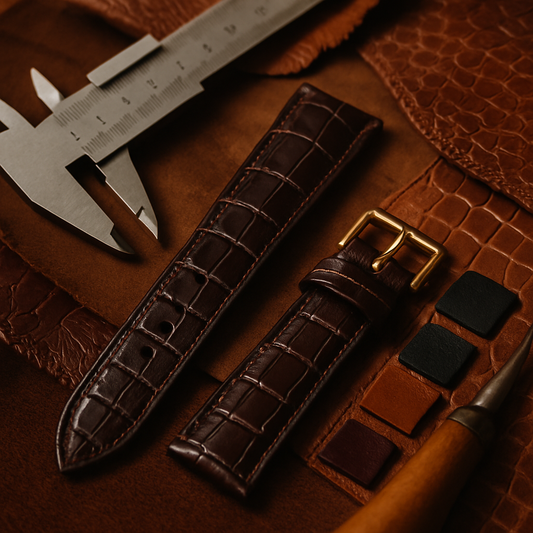
- Species and hide section: crocodile species and belly, flank, or back placement affect the material and appearance.
- Usable cutting area: a larger clean section can reduce the need to work around defects or joins.
- Scale placement: a shoe vamp or bag front may require a suitable pattern area rather than any available piece.
- Construction: lining, sole construction, closures, hardware, and the amount of leather used change the finished cost.
- Workshop and labor location: in-house manufacturing and the number of construction operations influence pricing.
- Documentation and shipping requirements: international movement may involve species-specific trade controls and paperwork.
These factors explain why two products described as genuine crocodile leather can have substantially different prices without one description alone proving the difference.
Fit and sizing for crocodile leather shoes
Choose crocodile shoes by foot length and width, not only by the number printed inside the shoe. Compare your measurements with the maker’s chart in the relevant EU, US, or UK scale, since conversions can differ between systems.
Measure both feet while standing, record the longer foot, and note the widest point across the forefoot. If you have a wide fit, high instep, bunions, or a pronounced difference between feet, ask about the last shape and available width before ordering. A shoe that fits in length can still feel tight across the instep.
For remote measurements, provide heel-to-longest-toe length, forefoot width, instep circumference, and any fit issue you have experienced with other shoes. These details give a workshop more useful information than a size number alone, although they cannot replace trying on the finished shoe.
Care for genuine crocodile leather
After wearing, wipe the surface with a clean, dry cloth to remove dust and light surface moisture. Keep crocodile leather away from prolonged soaking, strong heat, and direct hot-air drying, which can affect the leather and its finish.
Store shoes with their shape supported and keep bags away from compression that could mark the scale surface. Do not apply a random conditioner, wax, or household cleaner without confirming that it is suitable for crocodile leather and the specific finish. There is no useful fixed care schedule for every owner; frequency depends on wear, climate, handling, and whether the item has been exposed to moisture.
If the surface becomes wet or develops a mark, blot rather than rub and seek product-specific advice before applying anything. Finish type can change how the leather responds to cleaning products.
Genuine crocodile or croc-embossed fashion?
Croc-embossed fashion offers the scale appearance at a different material and price point. Genuine crocodile leather offers an actual crocodile hide surface, with natural variation that differs from an embossed repeat. Neither should be represented as the other.
If your priority is the runway appearance, an embossed piece may provide enough texture for the outfit. If you want a species-specific leather item, ask for clear material information, the relevant hide section, construction details, and applicable trade documentation. For a comparison with another exotic leather, read Handmade Crocodile Shoes vs Lizard Leather: Which Is Better?.
Frequently Asked Questions
Does the crocodile leather trend 2026 mean runway items use real crocodile?
No. Runway reporting on crocodile-effect and croc-embossed fashion describes an appearance. It does not confirm that a particular item uses genuine crocodile leather.
Is crocodile belly leather the same as hornback?
No. Belly leather comes from the smoother, more pliable belly area. Hornback refers to the back skin, which has a different surface and structure.
Can a regular scale pattern prove that leather is genuine crocodile?
No. Scale appearance alone cannot establish authenticity. Species information, seller records, product details, and applicable trade documentation should be considered together.
What measurements should I send when ordering crocodile shoes remotely?
Send the length of both feet, the longer-foot measurement, forefoot width, instep circumference, usual EU/US/UK size, and any issue involving width, pressure, or arch fit.
Shop genuine crocodile leather
View CrocodileViet’s genuine crocodile leather collection for shoes and accessories made in our workshop. For sizing or material questions, contact us through WhatsApp before ordering.