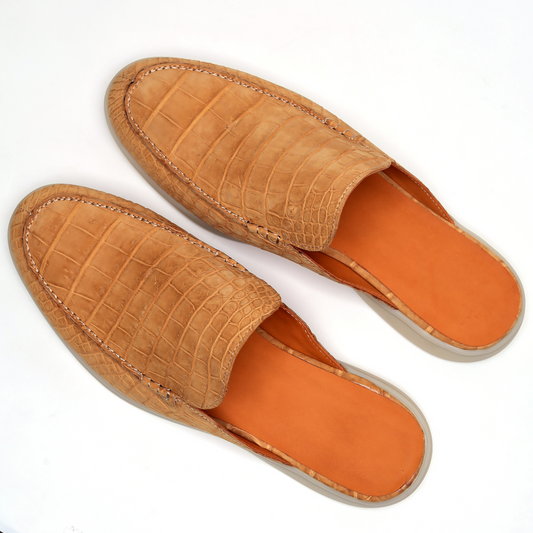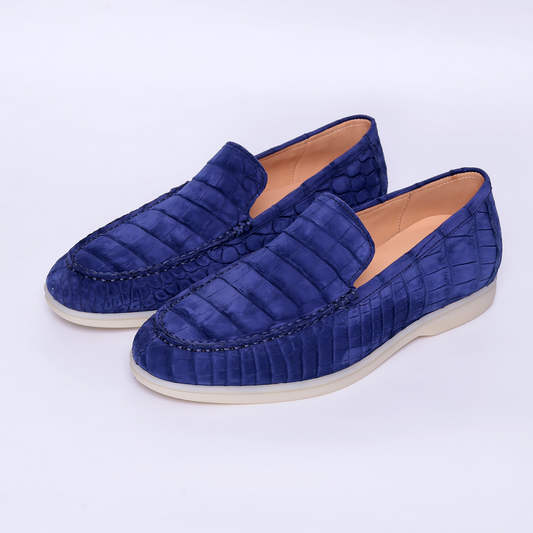

How Crocodile Loafers For Men Are Made: From Hide Selection to Hand Finishing

シェア
How Crocodile Loafers for Men Are Made: From Hide Selection to Hand Finishing
Crocodile loafers for men are made by selecting a suitable hide section, positioning the scale pattern across the upper, cutting each component, assembling the shoe, and finishing the leather by hand.
1. Selecting a Crocodile Hide for Loafers
The first decision is not simply whether the leather is called “crocodile.” Pattern, species, hide section, surface finish, and usable area all affect how the finished loafer will look and how much leather can be used for the pair.
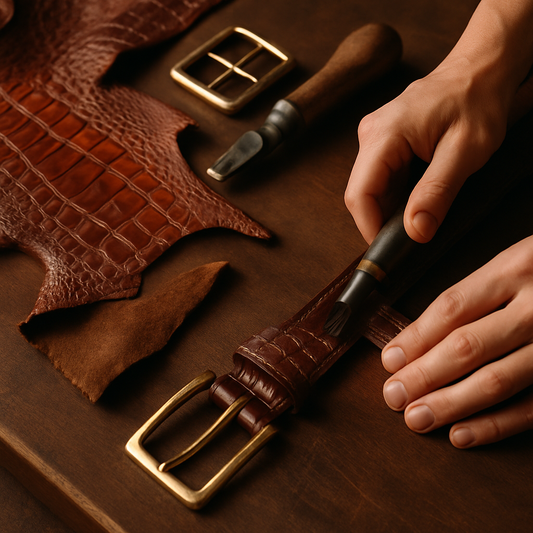
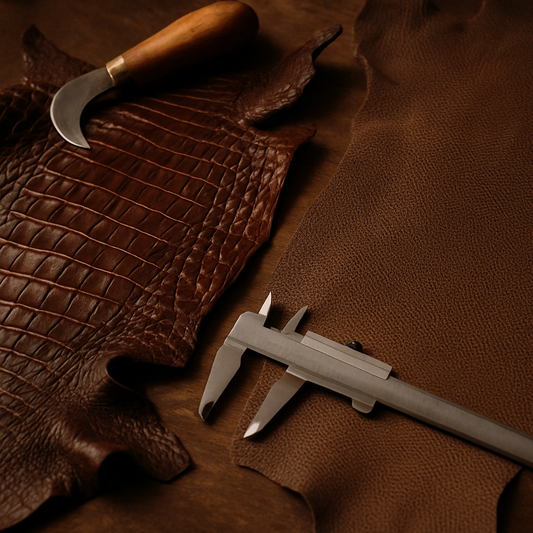
For a loafer upper, the belly is usually the most useful section because its scales are relatively flat, the surface is smoother and more pliable, and the pattern can be arranged across the vamp with better visual control. At CrocodileViet, choosing belly sections for this purpose helps us create a regular scale flow over the front of the shoe rather than placing sharply changing scale shapes in a prominent area.
Crocodile hides vary more by species and by location on the hide than many buyers expect. Some show visible central sensory pores, often called ISOs, within the scales. These pores can be part of the leather’s natural appearance, but one sensory feature by itself does not prove that a hide is genuine crocodile.
The belly also commonly includes a central umbilical scar or related natural marking. This is a feature often associated with alligator hides and is generally absent from crocodile, so the area and species must be assessed together rather than judged from one mark.
2. Sorting the Hide by Usable Area and Visual Grade
After selection, the hide is assessed for the amount of leather that can produce the required pattern pieces. A loafer needs more than two attractive central panels: the maker must account for the vamp, side sections, tongue, heel areas, and any leather used for matching details.
Visual grade describes surface appearance, scale regularity, pore visibility, scars, and other natural marks. It does not directly measure durability. A hide with a more regular visible pattern may be selected for the front of a loafer, while another section can still be structurally suitable even if its pattern is less regular.
Grading terms also vary between suppliers and tanneries. Labels such as “top grade” or “full grain” should be read in context; they are not universal crocodile classifications, and “full grain” or “top grain” does not mean the same thing as the species name.
3. Planning the Scale Layout
Scale placement is one of the most important decisions in making crocodile loafers. The maker plans where the center line of the belly will sit, how the scales will travel across the vamp, and how the left and right shoes will relate to each other.
A pair does not need every scale to be identical. Crocodile is a natural material, so small differences in size, pore visibility, or alignment may remain. The goal is controlled visual balance: the most prominent scales should sit in a deliberate position, and the two shoes should look like a related pair rather than unrelated pieces of hide.
Patterns are then transferred to the selected area. Cutting too close to a damaged section can weaken the usable piece, while cutting without regard to the scale rows can leave the finished loafer with an awkward break across the vamp.
4. Cutting the Upper Components
Once the layout is established, the crocodile leather is cut for the upper components. The vamp receives particular attention because it covers the front of the foot and carries the strongest visual impression. Smaller components must also be cut with the leather’s thickness, scale direction, and flexibility in mind.
Crocodile leather does not behave like a flat, predictable sheet of ordinary leather. Scale edges, natural contour, and the transition between belly and flank can affect how a piece folds or sits against the shoe last. Cutting therefore combines the paper pattern with the actual hide surface available.
At this stage, the maker also checks whether the planned pieces can be matched across the pair. This reduces unnecessary variation in scale size and keeps the visible center line from shifting between the left and right loafer.
5. Shaping and Building the Loafer
The cut upper is formed around a last, the foot-shaped form that establishes the loafer’s length, width, toe shape, and instep volume. The leather must follow that shape without placing excessive tension across the scales or creating unwanted folds.
The construction method determines how the upper connects to the lining, insole, sole, and other components. Stitching, edge treatment, and sole attachment should be selected for the intended use of the shoe, whether it is a lightweight slip-on for indoor wear, a driving shoe, or a more structured loafer for regular walking.
A crocodile upper can look striking in a photograph but still feel unsuitable if the last is too narrow or the instep is too low. This is why the hide pattern and the foot shape have to be planned together rather than treated as separate decisions.
6. Hand Finishing the Crocodile Upper
Hand finishing brings the cut and assembled upper into its final form. Depending on the construction, this work can include refining edges, checking seams, cleaning the surface, shaping transitions, and applying the specified finish without obscuring the natural scale structure.
At CrocodileViet, in-house production lets the workshop review the leather and the shoe as one process. That matters for crocodile because a small change in tension, edge treatment, or surface finishing can change how the scale rows appear once the loafer has taken its final shape.
Hand finishing is not a claim that every pair will have identical scales or no natural marks. Instead, it is the stage where the maker checks that the material’s natural variation has been incorporated into a wearable pair with consistent construction.
What Affects the Price of Crocodile Loafers?
The price of a pair can reflect several concrete factors:
- Species and hide source: crocodile species differ in scale character, pore visibility, and available hide sizes.
- Usable belly area: a larger, cleaner section can provide better control over both shoes.
- Visual grade: fewer visible scars or more regular scale placement may increase the selected hide’s cost, but grade does not by itself predict durability.
- Scale matching: extra material and additional planning may be needed to align the pair.
- Construction: lining, sole type, reinforcement, and the structure of the loafer affect labor and material use.
- Handwork: detailed edge treatment, assembly checks, and finishing time can add to the total.
Because these variables change from one hide and design to another, a responsible quotation should identify the species, cut area, finish, construction, and size rather than use “crocodile quality” as the only description.
Fit and Sizing for Men’s Crocodile Loafers
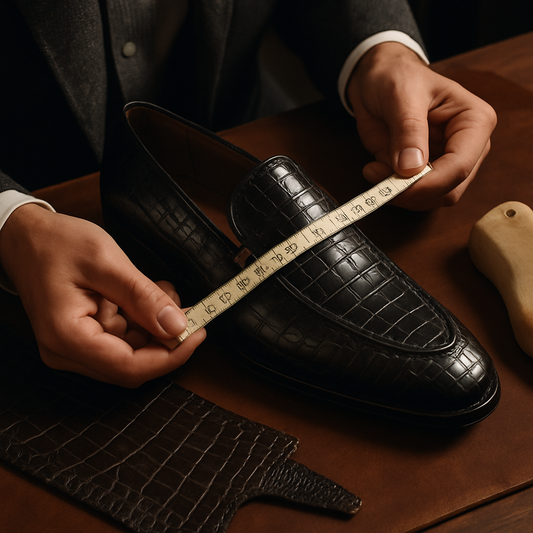
Loafers should be assessed by length, width, instep height, heel hold, and toe shape. A pair that is correct in length can still feel tight across the forefoot, while a wide foot may need a different last rather than simply a larger size.
Check the maker’s EU, US, and UK sizing information because conversions vary between brands. If you try the shoes in person, wear the type of socks you expect to use and check whether the heel lifts excessively when walking. For remote orders, send measured foot length, the widest forefoot measurement, instep circumference, and any known fitting issue. Remote measurements should be treated as a primary fitting method, not merely a substitute for trying shoes on.
Customers with a high instep or wide fit should ask about the last and available width before ordering. A loafer depends on the opening and vamp to hold the foot, so stretching a tight instep after construction may not produce the intended fit.
Caring for Crocodile Loafers
After wearing the loafers, remove surface dust with a clean, dry cloth. This should be the default method because crocodile scales and finishes can react differently to excess moisture. If a mark requires more than dry wiping, use a barely damp cloth only on the affected area, then allow the shoes to dry naturally away from direct heat.
Do not apply a generic leather cleaner or conditioner without checking that it is suitable for crocodile and for the specific finish. Conditioning does not follow a fixed calendar; the leather’s appearance, flexibility, and the maker’s care instructions are better indicators. Store the loafers away from strong heat and prolonged direct sunlight, and use suitable shoe trees if they fit without stretching the vamp.
How to Style Crocodile Loafers for Men
- Business setting: pair dark crocodile loafers with tailored trousers, a restrained belt, and a plain shirt or fine knit.
- Smart-casual lunch: wear them with chinos, an Oxford shirt, and an unstructured jacket.
- Evening occasion: use a darker loafer with wool trousers or a clean, minimal suit.
- Warm-weather dressing: combine lighter trousers with a simple knit polo or linen-blend shirt, keeping the rest of the outfit quiet so the scale pattern remains the main texture.
Color coordination depends on the whole outfit rather than a fixed matching rule. The belt can relate to the shoes, contrast with them, or be replaced by a simpler leather accessory when the crocodile pattern is already prominent.
Documentation and Legal Trade
Crocodilian leather is regulated through species-dependent international trade rules. CITES documentation concerns legal trade and origin requirements; it is not, by itself, proof of authenticity. Depending on the species and shipment, finished products such as loafers may still require the correct permits or commercial paperwork.
Buyers should ask what documentation applies to the destination country and keep any paperwork supplied with the purchase, particularly when transporting the shoes internationally.
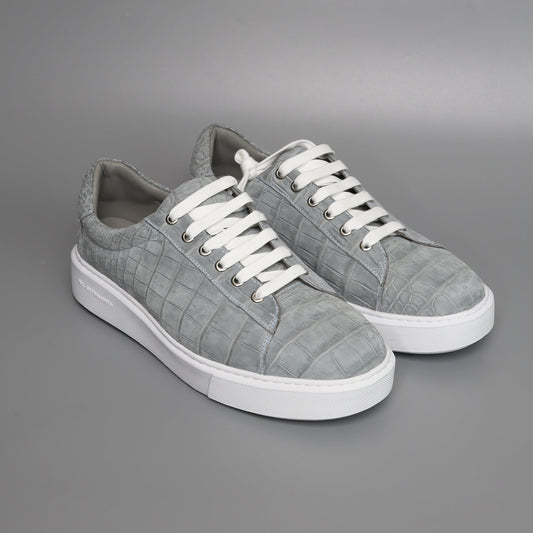
For a related pair in a different material, see the nubuck alligator leather slip-on loafers for men. For sizing or material questions, contact CrocodileViet through WhatsApp.