
How Alligator Leather Belt Men Are Made: From Hide Selection to Hand Finishing

シェア
How Men’s Alligator Leather Belts Are Made: From Hide Selection to Hand Finishing
An alligator leather belt for men usually begins with the belly area, where the scales are more regular and balanced than on many other parts of the hide.
At CrocodileViet, making a belt involves more than attaching a buckle to a strip of leather. The hide must be identified correctly, assessed for usable belly area, positioned so the scale pattern runs well along the belt, and finished in a way that protects the structure of the strap. The work below focuses specifically on genuine alligator leather belts for men, from hide selection through final hand finishing.
What makes an alligator belt different from a printed leather belt?
In production terms, the raw material is an alligator hide or skin. After tanning, it becomes leather: the finished material used for cutting and construction. This distinction matters because embossed calfskin and generic reptile-print leather can imitate an alligator pattern without containing actual alligator hide.
A genuine alligator leather belt shows the natural scale arrangement of the animal. On the belly, the scales commonly form a balanced tile-like pattern. The exact shape, size, and spacing change across the hide, so the belt’s appearance depends heavily on where the strap is cut.
Alligator and crocodile are separate animals, not interchangeable names for the same leather. Crocodile skin generally varies more in scale shape and may show visible sensory pores, often called integumentary sensory organs or ISOs. An alligator also often has an umbilical scar, while crocodile leather typically lacks that feature. These observations help specialists assess a hide, but one visual trait alone does not prove authenticity.
Step 1: Selecting the alligator hide
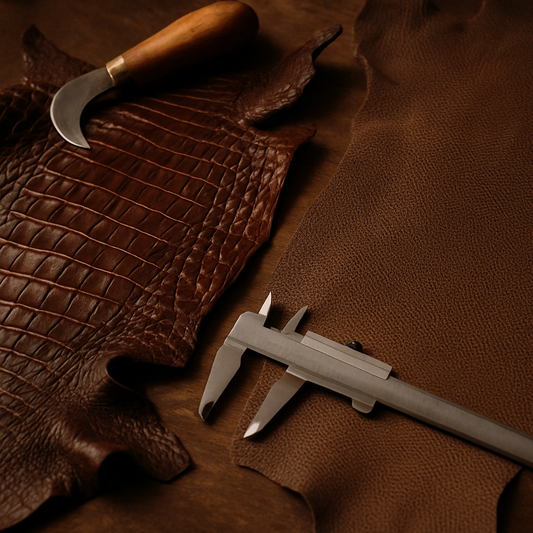
We first examine the hide for the section that can produce a balanced men’s belt. The central belly and midsection are commonly preferred because they tend to offer flatter scales and a more consistent pattern across the length of the strap.
The selection process focuses on three practical questions:
- How regular is the scale pattern through the usable belly area?
- Where are the visible defects, scars, holes, or uneven areas?
- Is there enough continuous material for the planned belt length and width?
A belt needs a long, controlled cut. A hide may look attractive overall but still provide limited usable area if a defect crosses the intended strap line. Conversely, a smaller section with a balanced pattern can be a better starting point for a belt than a larger section with interruptions.
Alligator grading is also narrower than many buyers expect. A commonly used alligator convention rates Grades 1 through 5 according to defects in the belly area, not the entire hide. Grade 1 represents the cleanest belly area within that system, while higher numbers indicate more visible or concentrated defects. Suppliers and tanneries can use different grading labels, so a grade should be read together with photographs, measurements, and the actual cut location.
Visual grade should not be confused with durability. A belt with a cleaner pattern may be valued for its appearance, while construction, leather thickness, reinforcement, stitching, buckle attachment, and daily use also affect service performance.
Step 2: Planning the cut for a men’s belt
After the hide section is selected, the strap layout is planned around the belt’s finished length and width. This stage controls how the scales appear from the buckle toward the tip. A centered cut can keep the belly pattern visually balanced, while a poorly placed cut may bring side scales, scars, or sudden changes in scale size into a prominent area.
Scale matching is especially important on a formal belt. The scales do not need to be mechanically identical, but their progression should look intentional. The belt’s center line, buckle end, tip shape, and adjustment holes all need to work with the natural pattern rather than cutting across it without planning.
Width also changes the visual result. A wider strap can display more scale columns and more of the belly pattern. A narrower strap may show fewer columns and place greater emphasis on the center row. The best width depends on the buckle, the wearer’s trousers, and whether the belt is intended for office clothing, formal tailoring, or casual denim.
Step 3: Cutting and preparing the strap
The selected alligator section is cut to the planned dimensions, with the usable belly area kept in the visible face whenever the design calls for a regular scale layout. The edge of the hide needs to be handled carefully because small changes in thickness can affect how the outer leather meets the lining or backing.
The strap is then prepared for construction. Depending on the belt design, the alligator face may be paired with a supporting leather layer. That support gives the belt a controlled thickness and helps it hold its shape during use. The face leather remains the visible material, while the inner structure contributes to firmness, comfort, and the way the belt bends around the waist.
At this point, a belt is not judged only by its surface. The cut must also provide enough material for the buckle fold, keeper area, tip, and adjustment holes. A visually attractive hide section that cannot accommodate these parts is not a practical belt cut.
Step 4: Building the buckle and adjustment areas
The buckle end receives particular planning because it carries repeated pulling force. The alligator face must be folded or joined with the supporting layers in a way that keeps the buckle attachment secure without placing excessive stress on one narrow section of the hide.
The keeper holds the loose end close to the belt. Its size should suit the finished strap rather than being treated as a separate decorative piece. The tip is shaped after the length and hole spacing have been established, so the finished end looks proportionate when worn.
Hole placement also affects fit. The center hole is not the only measurement that matters; the distance from the buckle bar to the hole group determines whether the belt sits correctly at the wearer’s actual waist. For that reason, we use the requested waist measurement and the wearer’s preferred fastening position instead of relying only on a generic small, medium, or large label.
Step 5: Stitching and hand finishing
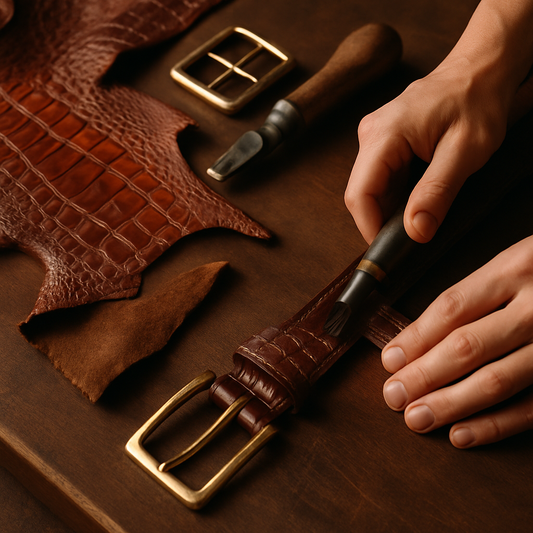
Hand finishing is the stage where the belt’s edges, joins, holes, and buckle area are checked and refined. The edge should feel controlled in the hand, without rough transitions that catch on clothing. Stitching, where used by the design, needs consistent spacing and secure starts and ends because these areas receive repeated movement.
We inspect the scale alignment again after assembly. Layers can shift slightly during construction, and the finished belt must still show the planned progression from buckle to tip. The visible face, lining, edges, keeper, and buckle should read as one constructed item rather than unrelated components.
Finishing also includes checking the buckle attachment, the hole edges, the tip shape, and the flexibility of the strap. These checks are practical: they help identify pressure points, uneven thickness, loose joins, or a buckle that does not sit correctly before the belt leaves the workshop.
How much does a men’s alligator belt cost?
There is no responsible single price for every alligator leather belt. Cost is shaped by several named factors:
| Cost factor | What it changes |
|---|---|
| Alligator species and material source | The hide type and its documented origin affect the material cost and trade-compliance requirements. |
| Belly grade and defect placement | A cleaner usable belly area generally gives the maker more freedom to place a long, visually consistent strap. |
| Usable area | A long or wide belt needs enough continuous leather after defects and edge areas are excluded. |
| Scale matching | More controlled placement and pattern selection can require more material planning and cutting time. |
| Construction | Backing layers, buckle design, lining, edge treatment, and strap thickness affect the finished build. |
| Handwork | Cutting, assembly checks, stitching, edge finishing, and final adjustment take time beyond the raw hide cost. |
CITES paperwork may also be relevant to an alligator belt because international trade is tied to species-specific permitting and documentation. CITES demonstrates trade compliance; it is not, by itself, proof that a particular belt is authentic.
How to choose the right belt size
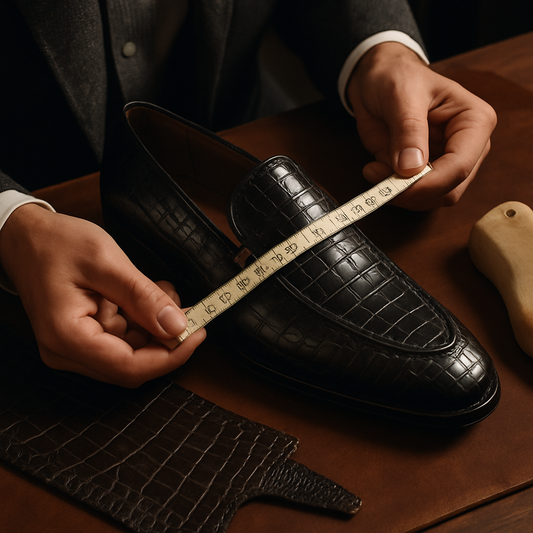
Measure from the buckle bar to the hole you use most often on a belt that fits well. Measuring around the body at the position where the new belt will sit can also work, but the method should be stated clearly because trousers, a shirt, and a jacket can place the belt at different heights.
- Length: give the measurement from the buckle bar to the preferred hole, not only your trouser size.
- Width: check that the strap passes through the belt loops of the trousers or suit you plan to wear.
- EU, US, and UK sizing: these systems can be presented differently by brands, so the actual centimeter or inch measurement is more reliable than the label alone.
- Wide fit: a fuller waist may require a longer strap, but width and buckle size still need to suit the clothing.
- Instep and body shape: if the belt is worn over a higher-rise trouser or around a pronounced midsection, measure at the real wearing position.
An in-person try-on is useful, but it is not the only workable method. For remote orders, send the buckle-to-hole measurement from a comfortable belt, the strap width, and a note about where you wear it. A clear photo of the measurement can reduce errors when a new alligator belt is made to order.
How to style an alligator leather belt for men
The scale pattern makes the belt noticeable, so styling works best when the rest of the outfit has a clear purpose.
- Business clothing: pair a dark brown or black belt with tailored trousers, a restrained buckle, and leather shoes in a related color family.
- Formal evening wear: choose a narrower strap and a low-profile buckle so the belt supports the suit rather than competing with it.
- Smart casual clothing: use a medium-width belt with chinos, an Oxford shirt, knitwear, or an unstructured jacket.
- Denim: a wider strap and stronger buckle can work with jeans, boots, or a casual overshirt, especially when the scale pattern is allowed to remain the main texture.
Shoe color, buckle finish, trouser rise, belt width, and the contrast between the alligator face and the clothing all affect the result. Matching every leather tone exactly is not required; a related brown family, a darker belt with neutral trousers, or a metal buckle that repeats another accessory can create a coherent combination.
How to care for an alligator leather belt
Store the belt flat or loosely coiled with the buckle positioned so it does not press into the visible leather. Keep it away from prolonged heat, direct sunlight, heavy moisture, and cramped storage that forces a sharp fold through the same point.
For routine dust, use a soft dry cloth. If a mark requires more than dry wiping, use only a barely damp cloth as a last resort, then allow the belt to dry naturally away from heat. Do not soak the strap or apply an untested cream, oil, or solvent, since products made for smooth cow leather may change the surface or darken the alligator scales.
There is no fixed conditioning schedule that suits every belt. The right interval depends on climate, frequency of wear, storage, and the finish applied to the leather. If the surface begins to feel unusually dry or develops a persistent mark, ask the maker which product is compatible with that specific finish before applying anything.
Questions buyers often ask
Is a crocodile leather belt the same as an alligator belt?
No single label should cover both materials. Alligator and crocodile are different animals, and their scale patterns can differ: alligator belly leather is commonly more regular, while crocodile can show greater variation and visible sensory pores. A genuine crocodile belt should be described as crocodile rather than being presented as alligator.
Does a cleaner visual grade mean the belt is stronger?
Not by itself. Visual grade mainly describes the condition of the belly area used for appearance and cutting. Strength depends on the hide, thickness, supporting layers, buckle construction, stitching, edge treatment, and how the belt is worn.
What should I ask about a genuine alligator leather belt?
Ask which species is used, where the visible strap was cut, how the belly area was graded, what the finished width and measurement are, how the buckle is attached, and what trade documents accompany the material when applicable. These questions reveal more than a broad label such as “exotic leather dress belt.”
Can I order a belt without visiting the workshop?
Remote fitting can work when you provide the buckle-to-hole measurement, preferred strap width, usual trouser position, and any wide-fit or instep considerations. An in-person fitting remains useful, but accurate measurements and photographs can give the maker enough information for many orders.
See CrocodileViet’s belt collection
To review available belt designs and discuss an alligator leather belt for men, visit CrocodileViet’s belts collection. You can also contact CrocodileViet through WhatsApp with your preferred length, width, buckle style, and measurement method.