
How Alligator Handbag Are Made: From Hide Selection to Hand Finishing

シェア
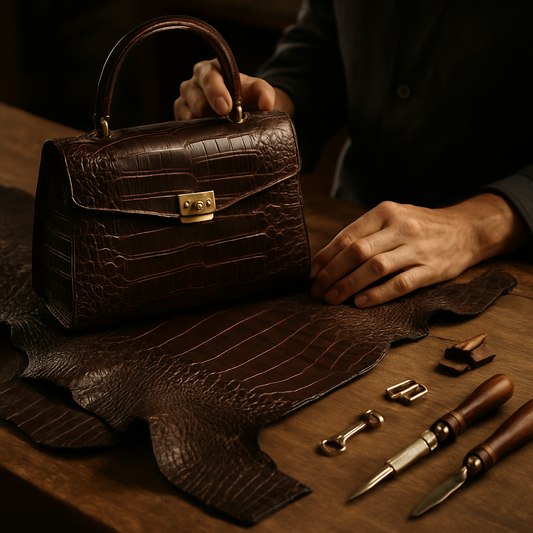
How an Alligator Handbag Is Made: From Hide Selection to Hand Finishing
An alligator handbag begins with a belly hide assessed for usable width, scale layout, visible defects, and grade—not with a generic piece of “alligator-grained” leather.
1. Identifying the right alligator hide
The first decision is whether the material is genuine alligator hide and which section of the hide is suitable for the handbag design. “Alligator-grained leather” can also describe another leather embossed with an alligator-like pattern, so the term alone does not identify the species.
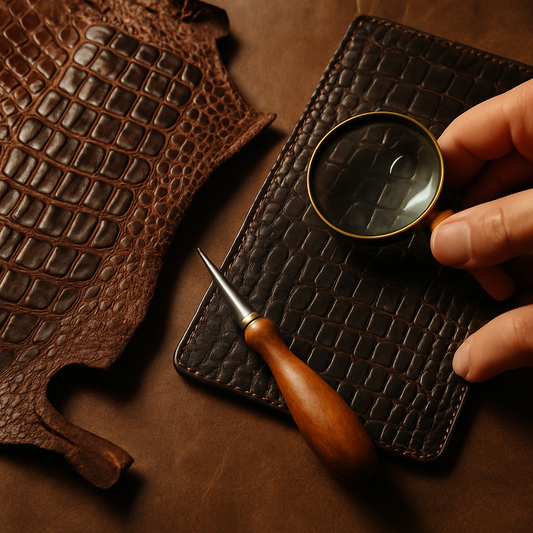
For handbag panels, makers commonly select the belly because it has a smoother surface and a regular, balanced scale arrangement. Alligator belly scales typically have rounded corners, followed by a relatively rapid transition to smaller flank scales. The belly may also show an umbilical scar, a feature commonly associated with alligator hide and generally absent from crocodile hide.
Those details help with material assessment, but one visible trait should not be treated as proof of authenticity by itself. Species identification depends on the hide, documentation, and applicable trade requirements together.
2. Measuring width and reviewing the grade
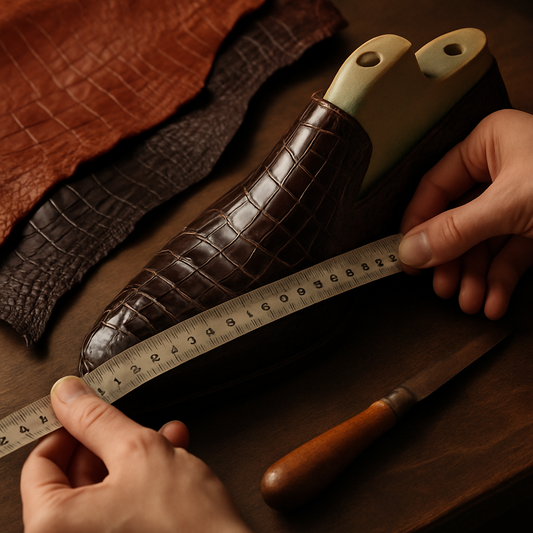
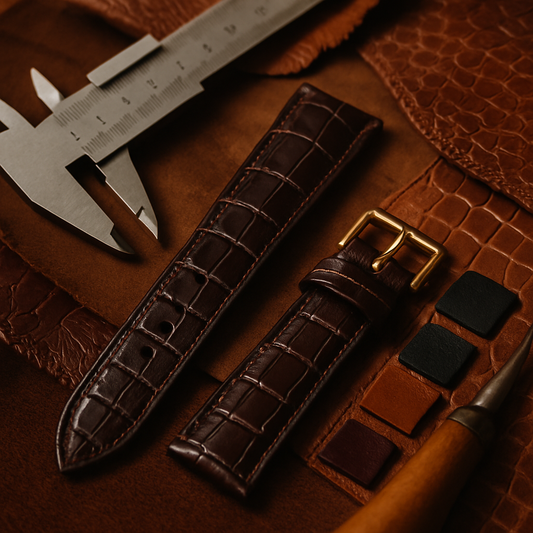
Alligator belly hides are commonly quoted by width in centimetres, measured across the widest part of the belly. This measurement matters because the available width affects the size and placement of handbag panels. A wider hide may allow a larger uninterrupted front panel, while a narrower hide may require a different layout or smaller components.
Grade generally refers to the number and position of defects rather than a universal durability certification. One grading convention divides the belly into four quadrants and assigns a higher grade when fewer quadrants are affected. Suppliers and tanneries may use different labels, however, and grading includes an element of judgement.
A higher visual grade does not automatically mean the finished handbag will be stronger or last longer. Construction, lining, hardware, seam work, daily use, and care also influence service life. For that reason, a responsible quotation should clarify both the hide grade and the construction details instead of treating the grade label as a complete quality description.
3. Planning the handbag panels
Once the hide has been assessed, the maker plans how its scale pattern will appear on the finished handbag. The central belly area is often considered for prominent panels because its scale arrangement is more regular and visually suited to a front, back, flap, or large side section.
Panel placement is not simply a matter of cutting the largest possible shape. The maker must account for the handbag’s dimensions, the direction of the scales, the location of any scar or defect, and the way adjoining pieces will look together. Smaller or less central areas may be allocated to gussets, straps, tabs, or other components.
Genuine alligator hides have natural scale variation, so their patterns do not repeat like a printed surface. That variation is part of working with real hide, while deliberate positioning keeps the most visible areas visually balanced.
4. Cutting and preparing the leather
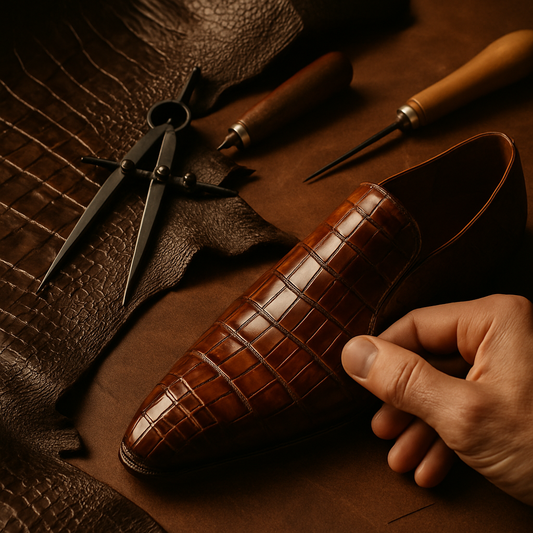
After the layout is decided, the hide is cut into the pieces required by the handbag pattern. The cutting plan must protect the character of the belly scales while leaving enough material for joining, shaping, and the intended proportions of the bag.
At this stage, the maker also has to distinguish between the face side of the alligator leather and the supporting materials used inside the bag. The alligator surface supplies the visible structure, but a handbag’s handling characteristics also depend on its internal construction, lining, reinforcement, and hardware.
For CrocodileViet production, panel planning has a practical purpose: it reduces waste in the usable hide and places the most consistent scale area where the owner will see it most often. It also helps the front and back of a bag work as a coordinated pair rather than as unrelated pieces.
5. Building the bag around the hide
The cut panels are then assembled according to the handbag’s design. A structured model may use separate front, back, gusset, flap, handle, and base pieces, while a softer design can have fewer or differently shaped sections.
The leather pattern and the bag pattern must work together. A panel that looks suitable when flat may change visually once it is folded, curved, or joined to a gusset. This is why scale direction and panel relationships are considered before the pieces are permanently assembled.
The result is determined by more than the hide alone. Edge treatment, seam alignment, handle attachment, closure placement, lining, and hardware all affect how the finished alligator handbag carries and wears. A well-selected hide cannot compensate for construction that does not suit the bag’s intended use.
6. Hand finishing and final inspection
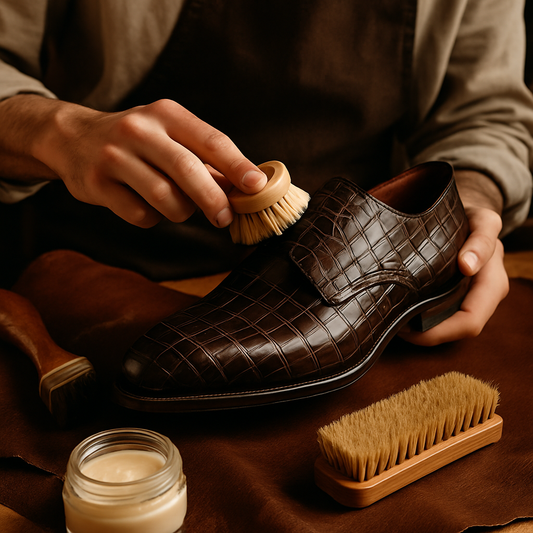
Hand finishing is the stage where the completed bag is checked as a working object and as a visible leather product. The maker reviews the surface, panel alignment, edges, seams, handles, closure, and hardware for consistency with the design.
The purpose of this inspection is practical: loose or uneven areas can affect handling, while poorly aligned panels can distract from the regular belly pattern. Finishing also provides an opportunity to remove surface dust and confirm that the leather has not been marked during assembly.
Because genuine alligator scales vary, the goal is visual balance rather than an artificially repeated pattern. Small differences between panels can be expected; the important question is whether the overall arrangement is intentional and suitable for the bag’s proportions.
Price factors for an alligator handbag
The price of an alligator handbag reflects several concrete factors:
- Usable hide width: wider belly material can support larger panels with fewer joins.
- Grade and defect placement: fewer visible affected areas may increase the usable portion for prominent panels.
- Bag size and structure: a large structured handbag generally requires more leather and supporting materials than a compact design.
- Panel complexity: multiple sections, shaped gussets, handles, and a flap require more cutting and assembly work.
- Interior and hardware: lining, closures, reinforcements, and metal components contribute to the final specification.
- Finishing requirements: additional edge, surface, or alignment work can affect labour and production cost.
Ask which section of the hide is used, how width was measured, what the supplier’s grade means, and which construction features are included. Grading labels vary, so comparing the label alone may produce a misleading price comparison.
Fit, dimensions, and everyday use
For a handbag, check length, height, base width, strap drop, and the internal space needed for your usual items. A bag can have a generous listed length but limited capacity if the base is narrow or the gussets taper sharply.
For an exotic leather shoulder bag, measure the strap drop from the top of the bag to the point where it will sit on your body. If ordering remotely, send the maker your preferred bag dimensions, the items you carry, and a measurement from your shoulder to the intended bag position. These details are more useful than relying on a general “small,” “medium,” or “large” label.
For business use, confirm whether the design accommodates documents, a tablet, or a laptop before selecting the leather. The article How to Choose Alligator Handbag for Business Wear covers those use-based decisions in more detail.
Care after hand finishing
Keep the alligator handbag away from prolonged moisture, strong heat, and direct intense sunlight. For ordinary dust, use a clean, dry cloth with light pressure. This dry-cloth approach is a safe default because vigorous rubbing or unapproved household products may affect the leather’s surface.
If the bag becomes wet, blot it gently and allow it to dry naturally away from heaters. Store it in a breathable dust bag, support its shape without compressing the scales, and avoid placing heavy objects on top of it. There is no useful fixed cleaning schedule for every owner; the right frequency depends on handling, climate, and exposure.
Frequently Asked Questions
What part of an alligator hide is used for a handbag?
The belly is commonly selected for visible handbag panels because it has a smoother surface and a regular, balanced scale pattern. The exact layout depends on the bag design, hide width, and location of natural marks.
Does a higher alligator hide grade mean a more durable handbag?
Not by itself. Grade generally describes visible defects and their distribution, while durability also depends on construction, lining, hardware, use, and care. Grading terms can vary between suppliers and tanneries.
How is alligator belly width measured?
Suppliers commonly measure across the widest part of the belly and quote the result in centimetres. The usable panel width may still be affected by defects, scars, the pattern layout, and the handbag’s shape.
Does a CITES document alone prove that an alligator handbag is lawful?
No single document should be treated as the complete answer. CITES regulates international trade in listed wildlife species and their products, while national and local laws may impose additional requirements. The applicable permits and records depend on the species and jurisdictions involved.
See the CrocodileViet alligator handbag and leather bag collection to compare available designs and proportions. For material, sizing, or custom measurement questions, contact CrocodileViet through WhatsApp.