
Custom Exotic Leather Ankle Boots: Size, Color, Finish and Personalization Guide

シェア
Custom Exotic Leather Ankle Boots: How to Choose Size, Color, Finish, and Personalization
Custom exotic leather ankle boots are specified through four separate decisions: the leather species and cut, the foot and shaft measurements, the color and finish, and the design details added to the boot.
Start with the exact leather and hide section
“Exotic leather” describes a category, not a species. A custom order should identify the actual material as alligator leather, crocodile leather, or caiman leather, followed by the hide section used. Belly, flank, and hornback cuts create different surface patterns, so the same color can look noticeably different from one pair to another.
Alligator belly leather is known for a comparatively regular, balanced scale pattern. A distinctive star-shaped umbilical scar may also appear on an alligator hide. Crocodile belly leather usually varies more by species and can retain visible sensory pores, often called integumentary sensory organs or ISOs, after tanning. Caiman is a separate crocodilian leather; its flank scales often look more uneven in size and more widely spaced than alligator flank scales.
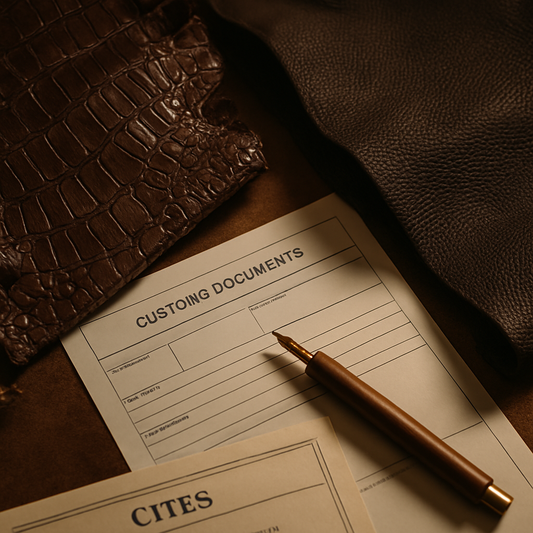
These details help describe the material, but a single visual trait should not be treated as proof of species or authenticity. Scale regularity alone is not enough to identify alligator, and sensory pores alone do not establish that a hide is genuine crocodile. For international transactions, CITES requirements depend on species, source, and transaction. CITES documentation regulates trade; it does not by itself prove that a finished pair is authentic.
At CrocodileViet, we ask customers to confirm the species and cut before discussing color because the scale layout affects how the finished ankle boot will look across the vamp, quarters, and shaft. It also prevents a customer from comparing an alligator belly reference with a crocodile flank product and expecting the same pattern.
Choose the cut for the visual effect
Belly leather
Belly leather generally offers the most regular scale arrangement. On ankle boots, it is often considered for areas that benefit from a balanced visual rhythm, such as the vamp or the full visible shaft. The scale size still depends on the hide and the placement selected during cutting.
Flank leather
Flank leather has more variation in scale size and spacing. It can create a less regular, more textured appearance, but the pattern may differ significantly between species. If you are ordering crocodile leather boots for men, ask to see the actual cut or representative photographs rather than relying only on the word “crocodile.”
Hornback leather
Hornback includes the raised dorsal area along the back of the animal. Its ridged structure produces a more pronounced surface than belly leather. Because the texture is visually dominant, it should be planned with the toe shape, shaft height, and clothing style rather than added as an afterthought.
Color: choose the tone and the amount of variation
Alligator and crocodile belly leather can take dye evenly because the leather is smooth and pliable, but tanning and the selected finish also influence the final appearance. A black, brown, burgundy, navy, or other requested color may appear different depending on whether the surface is left relatively natural, given a polished effect, or finished with additional tonal variation.
Color selection should cover more than a single name. Discuss:
- The base tone, such as black, dark brown, tan, burgundy, or blue.
- Whether the scales should read as close in tone or show darker edges and lighter centers.
- How much natural variation is acceptable between the two boots.
- Whether the lining, sole edge, welt, and laces should coordinate or contrast.
- How the color should work with suits, denim, chinos, or traditional garments.
Request a physical swatch or a representative finished sample when the color is important. Screen settings can alter perceived tone, while leather naturally shows some variation in scale surface and dye absorption. A color reference should also state the material clearly—for example, “brown alligator leather,” not only “brown exotic leather.”
Finish changes the surface character
Finish is separate from color. Two pairs made from similarly colored crocodile or alligator leather can look different because one has a softer visual sheen and the other has a stronger polished surface or tonal contrast.
Before approving a finish, clarify:
- Whether the surface should look matte, low-sheen, or more reflective.
- Whether scale edges should contrast with the centers.
- Whether the finished surface should show more of the hide’s pattern variation.
- How much visible variation is acceptable between left and right boots.
- Whether the finish should match the belt or other leather accessories.
A finish is also a practical styling decision. A lower-sheen surface can work with business-casual clothing and textured fabrics, while a more reflective finish may draw stronger attention to the footwear. Neither approach is inherently better; the right choice depends on the setting and the rest of the wardrobe.
Get the ankle boot measurements right
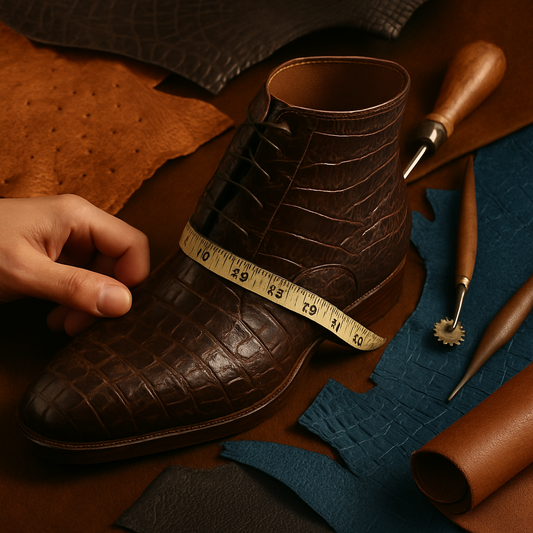
Custom sizing should include both foot measurements and the shape of the ankle and instep. A foot can have the correct length but still feel tight across the ball, instep, or ankle opening. Standard size labels also vary by system, so provide the intended EU, US, or UK size together with measurements.
| Measurement or decision | Why it matters for ankle boots | What to provide |
|---|---|---|
| Foot length | Sets the basic size and toe placement. | Measure both feet from heel to the longest toe. |
| Foot width | Helps prevent pressure across the forefoot, especially for a wide fit. | Measure around the widest part of each foot. |
| Instep circumference | Influences how easily the foot enters the boot and how the upper sits. | Measure around the highest part of the instep. |
| Ankle circumference | Controls the opening and the fit around a short boot shaft. | Measure around the ankle at the intended boot opening. |
| Boot height | Changes the visual proportion and the amount of ankle coverage. | Specify the preferred shaft height from the sole or heel reference point. |
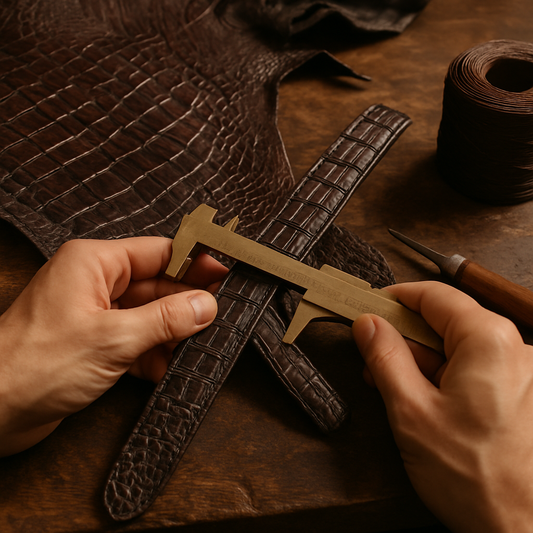
Measure both feet because small differences are common. Wear the sock thickness normally used with the boots, stand naturally, and take measurements later in the day if your feet tend to expand. For a remote order, include foot tracings, length, width, instep, ankle circumference, and clear photographs of the measuring process if the workshop requests them.
Do not convert between EU, US, and UK sizes by number alone. Tell the workshop which sizing system you normally use, the brand and size that currently fits, and whether that pair is narrow, regular, or wide. Mention a high instep, bunion area, heel movement, or previous fitting problem before the pattern is confirmed.
Personalization options for ankle boots
Personalization works best when it supports the boot’s proportions. Common choices include toe shape, shaft height, heel height, sole construction, welt color, edge color, elastic or zip placement, lining color, laces, and discreet initials. Availability depends on the workshop’s patterns, materials, and production capabilities, so confirm each requested detail before placing an order.
Toe shape has a direct effect on how the scales are displayed. A rounded toe can make the vamp appear broader, while a more tapered toe changes the direction and visible length of the scale rows. On a textured hornback design, the toe shape can also influence how strongly the ridges dominate the front of the boot.
Monograms should be positioned where they do not interrupt the main scale arrangement or receive constant abrasion. If initials are requested, specify the location, lettering style, size, and whether the marking should be visible from the outside or placed inside the boot.
What determines the price?
The price of exotic leather ankle boots depends on several concrete factors rather than on a single universal grade. Species, hide section, usable leather area, scale size, color process, finish, construction, sole and heel materials, lining, hardware, personalization, and the amount of manual work all affect the quotation.
Grading labels are not standardized across every supplier or tannery. A label such as “Grade 1” can therefore mean different things from one seller to another. Ask what the grade evaluates: scale regularity, visible scars, usable area, color consistency, surface marks, or another internal classification.
Ask whether the quoted price includes customization, sizing adjustments, shipping, taxes, and any documentation needed for an international transaction. Do not treat a higher price as automatic proof of better durability, and do not assume two pairs are comparable until their species, cut, construction, and finish are specified.
Care for custom exotic leather ankle boots
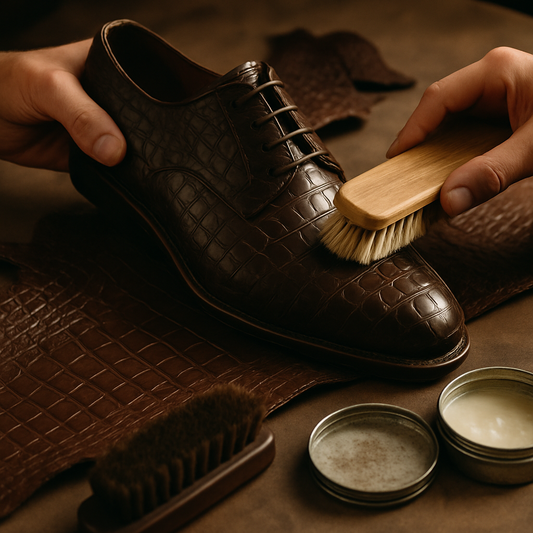
Use a dry, soft cloth as the default cleaning method after wear. This removes surface dust without adding moisture to the scales or seams. If the boots become wet, let them dry at room temperature away from direct heat, then wipe them once the surface is dry.
Keep the boots supported with suitable inserts or paper while they are stored, and avoid compressing the shaft. Store them away from strong sunlight and damp areas. Do not apply a cleaner, wax, or conditioner until its suitability for the specific alligator or crocodile finish has been confirmed; an unsuitable product can alter sheen or color.
There is no useful fixed maintenance schedule for every wearer. Climate, frequency of use, perspiration, rain exposure, and the finish all affect care needs. Inspect the surface and edges periodically, and ask the workshop about a product before using it on a custom finish.
How to style the finished pair
For office clothing, dark alligator leather boots with a restrained finish can work with navy, charcoal, or medium-gray trousers. Match the belt tone without requiring an identical scale pattern. With denim, a warmer brown crocodile or alligator finish can work with an oxford shirt, knitwear, or a field jacket, while a black pair creates a sharper contrast.
If the boot has large scales, strong contrast, or hornback texture, keep the surrounding clothing relatively quiet so the footwear has room to read clearly. A lower-profile belly pattern can be paired with patterned trousers or textured jackets more easily because the surface has less visual interruption.
For formal settings, check the dress code and choose the toe shape, finish, and color accordingly. Personalization should coordinate with the boot’s main material rather than compete with it.
Frequently Asked Questions
What is the difference between alligator and crocodile ankle boots?
Alligator belly leather usually has a more regular, balanced scale pattern and may show a star-shaped umbilical scar. Crocodile leather varies more by species and often retains visible sensory pores after tanning. These traits help with description but should not be treated as sole proof of identity.
Should I choose belly, flank, or hornback leather for custom ankle boots?
Choose belly for a comparatively regular scale layout, flank for greater variation in scale size and spacing, or hornback for a raised, ridged surface. The best option depends on the desired appearance, the boot pattern, and how much texture you want across the visible shaft and vamp.
What measurements are needed for a remote custom boot order?
Provide both-foot length, width, instep circumference, ankle circumference, preferred boot height, and your normal EU, US, or UK size. Also report whether you need a wide fit, have a high instep, or experience pressure in a current pair.
Can I choose any color or finish for alligator leather boots?
Color and finish options depend on the available leather, tanning, and workshop capabilities. Alligator and crocodile belly leather can take dye evenly, but the final appearance also depends on the finish. Confirm the requested tone and sheen with a swatch or representative sample before approval.
View the CrocodileViet exotic leather boots collection to review available designs and material directions. For measurements or customization questions, contact CrocodileViet through WhatsApp.