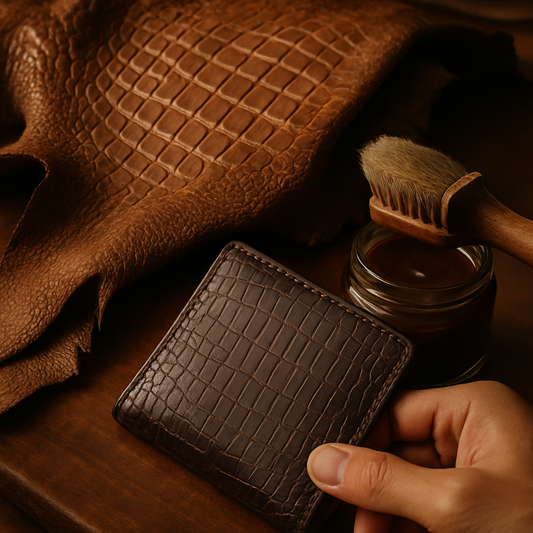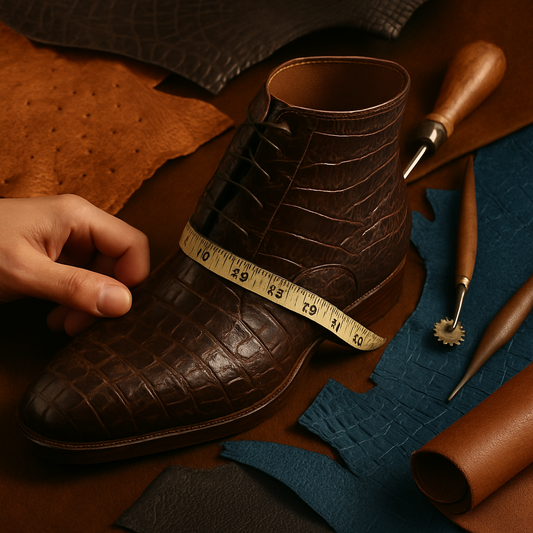

Crocodile Leather Bags Are Back for Fall 2026: How to Choose the Real Thing

シェア
Crocodile Leather Bags: How to Choose a Genuine One
A genuine crocodile bag should identify its crocodile species and material rather than relying on a label that only says “genuine leather.”
That distinction matters because crocodile, alligator, and caiman are separate categories of crocodilian leather. A bag described only as a “genuine leather bag” may be made from another leather entirely, while a crocodile-look bag may use embossed cowhide or another substitute.
Start with the species and material
Ask for the actual species stated in the product information or supporting documentation. “Porosus” refers to saltwater crocodile, while “Niloticus” refers to Nile crocodile. Neither term represents every type of crocodile leather, and neither should be treated as a general synonym for crocodile.
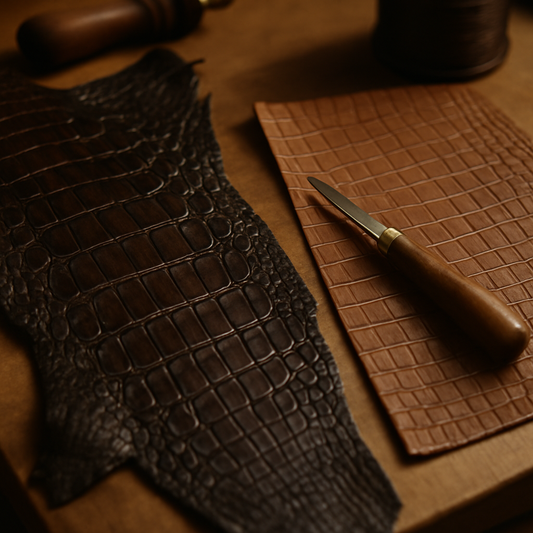
Also check whether the bag is made from crocodile skin or crocodile-embossed leather. The difference between crocodile vs croc embossed is material, not simply appearance: embossed leather carries a pressed pattern, while genuine crocodile leather comes from a crocodilian hide.
The hide area, scale structure, and usable cutting area affect how a finished bag can be made. A surface pattern alone does not identify the source material.
Compare scale clues cautiously
Crocodile scales commonly show a small sensory pore, often called an integumentary sensory organ or ISO. These pores may appear as small visible points within the scales. Alligator belly scales generally lack this pore, and alligator belly leather often has a more regular, balanced scale pattern.
An alligator may also show a distinctive umbilical scar, which crocodile generally lacks. This can be a useful clue when examining a belly panel, but it is not a standalone authentication method.
Scale shape varies by species and by hide area. For that reason, a simple rule such as “square scales mean alligator” is unreliable. Crocodile flank sections, belly sections, and different species can produce noticeably different patterns. Look for several clues together and compare them with the stated species and documentation.
| Check | What it may indicate | What it cannot establish alone |
|---|---|---|
| Small pores within scales | Commonly associated with crocodile skin | Authenticity or exact species by itself |
| Regular, balanced belly scales | Often associated with alligator belly leather | That every regular pattern is alligator |
| Umbilical scar | May help identify alligator belly leather | A complete species determination without other evidence |
| Pressed or repeated-looking pattern | May raise a question about embossed leather | Proof of a substitute material without inspecting the bag and its documentation |
Know which part of the hide you are buying
Belly, flank, and hornback describe different hide areas or cuts. Belly panels are valued for their smoother surface and more regular scales, which are often selected for front-facing handbag panels. Flank leather can show more variation in scale shape and spacing. Hornback leather retains the raised bony scutes along the crocodile’s back, creating a more textured appearance.
These are not interchangeable descriptions. A bag made with hornback leather will have a different surface structure from one made with a flat belly panel. If a listing uses a hide-area term, check whether it describes the main exterior panel, a trim section, or the entire bag.
For a business bag, the hide area also affects how a pattern can be laid out across the front, back, gusset, and flap. Buyers comparing structured work bags can also read How to Choose Alligator Handbag for Business Wear, keeping in mind that alligator and crocodile are different materials.
Read grading labels cautiously
Hide grades generally relate to visible defects and usable cutting yield in the grading area, especially the belly. They are not universal ratings for the finished bag. A grade number may also have a different meaning from one supplier or tannery to another.
When comparing crocodile leather bags, ask what the stated grade refers to:
- the raw hide or the finished leather;
- the belly area or the whole hide;
- visible marks, scale damage, or usable cutting yield;
- a supplier-specific label or a defined grading system.
A higher-sounding grade does not automatically tell you how durable the finished bag will be. Visual grade and durability are separate considerations. Construction, use, storage, and maintenance also influence how a bag performs over time, so avoid treating a grade label as a longevity guarantee.
Compare price by specific factors
There is no responsible single price for a genuine crocodile bag without knowing what is being compared. Concrete price factors include the stated crocodile species, the hide area used, the size of the bag, the amount of usable belly leather, visible defects, the complexity of the pattern layout, lining and hardware, and the labor involved in producing the finished piece.
Ask whether the price refers to a full crocodile exterior or a bag with crocodile panels and other materials. Also ask whether the supplier’s grade label applies to the hide or to the completed bag. This prevents a grade number from being mistaken for a universal measure of the whole product.
A crocodile briefcase should also be compared with the material it is actually made from, rather than with a product that only imitates crocodile. For another material comparison, see Crocodile Briefcase Men vs Lizard Leather: Which Is Better?
Check bag dimensions before ordering
For a handbag or briefcase, record the external length, height, width or gusset depth, handle drop, and shoulder-strap length. Then compare those measurements with the items you carry: a laptop, documents, charger, wallet, bottle, or cosmetic case.
Ask for internal measurements as well. Thick lining, pockets, dividers, and a structured base reduce usable capacity even when the external dimensions look generous. If you are ordering remotely, request front, back, side, base, and interior measurements in centimetres, plus a photo showing a ruler or measuring tape beside the bag.
Care for the leather with a restrained routine
Use a dry, soft cloth to remove surface dust after use. If the bag becomes damp, allow it to dry naturally away from direct heat before storing it. Avoid applying household cleaners, alcohol-based products, or an untested conditioner, because an unsuitable product can change the finish or darken the leather.
Store the bag upright with its shape supported, keep it away from prolonged humidity and strong sunlight, and avoid placing heavy objects on structured panels. There is no useful fixed cleaning schedule: frequency should depend on handling, dust, moisture, and the finish of the particular leather.
Style a crocodile bag
A crocodile bag can work as the main textured item in an outfit. Pair a darker bag with wool trousers, a plain knit, and a structured coat for office wear. With denim, a simple shirt, and low-profile shoes, a smaller crossbody or shoulder bag keeps the scale pattern from competing with several other prints.
For business use, match the bag’s structure to the setting: a firm briefcase suits documents and a laptop, while a softer tote works better for lighter daily carry. Hornback leather brings more surface texture, so it can be paired with simpler clothing. A regular belly panel gives a quieter pattern that works well with tailored jackets and solid colors.
Documentation and import checks
CITES regulates international trade in crocodilian skins and products. Many commercially traded species are listed under Appendix II, but listing status and permit requirements can vary according to species, population, source, and destination.
CITES paperwork concerns regulated trade; it does not by itself prove that a bag is authentic. Before importing, check current requirements with the relevant official authority in the exporting and destination countries. Ask the seller for species and material information that matches the product, rather than treating one document or one visual feature as complete proof.
Frequently Asked Questions
How can I tell whether a bag is genuinely crocodile rather than croc embossed?
Start with the stated species and material, then examine the scale structure, surface depth, pores, cut edges, and supporting documentation together. A repeated pressed pattern may raise questions, but no single visual trait proves authenticity.
Are regular square scales proof that a bag is alligator?
No single scale shape provides a reliable species identification. Alligator belly leather often has a regular, balanced pattern, while crocodile patterns vary by species and hide area. Pores, an umbilical scar, material information, and documentation should be assessed together.
Does a higher crocodile grade mean the bag will last longer?
Not necessarily. Grading commonly concerns defects and usable cutting yield in a grading area, especially the belly, and labels vary by supplier or tannery. Durability also depends on the finished construction, handling, storage, and care.
What should I request when buying a crocodile bag remotely?
Request the species, material description, hide area, external and internal length, width, height, gusset depth, strap or handle measurements, and relevant trade documentation. Photos of the front, back, sides, base, interior, and scale details can help you compare the description with the actual bag.
Shop genuine crocodile bags
View CrocodileViet’s crocodile bag collection at CrocodileViet crocodile bags. For dimensions, material details, or remote measurements, contact CrocodileViet through WhatsApp before ordering.