
7 Things to Check Before You Buy Nubuck Alligator Leather Online

シェア
7 Things to Check Before Buying Nubuck Alligator Leather Online
Before buying nubuck alligator leather online, confirm that the item is made from genuine alligator hide with a lightly buffed surface and clearly shown scale structure.
Online listings can hide important differences in species, finish, hide grade, sizing, documentation, and condition. These seven checks help you assess a pair of nubuck alligator shoes or another finished leather item without relying on vague descriptions.
1. Confirm that the material is nubuck alligator leather
Nubuck is genuine leather whose grain-side surface has been lightly buffed to raise a short, velvety nap. It is not the same material as suede, which is generally made from the flesh side of a hide.
The word “nubuck” describes the surface finish, while “alligator” identifies the animal species. A listing should make both points clear. Phrases such as “exotic nubuck” or “crocodile-style nubuck” do not, by themselves, confirm that the product uses alligator leather.
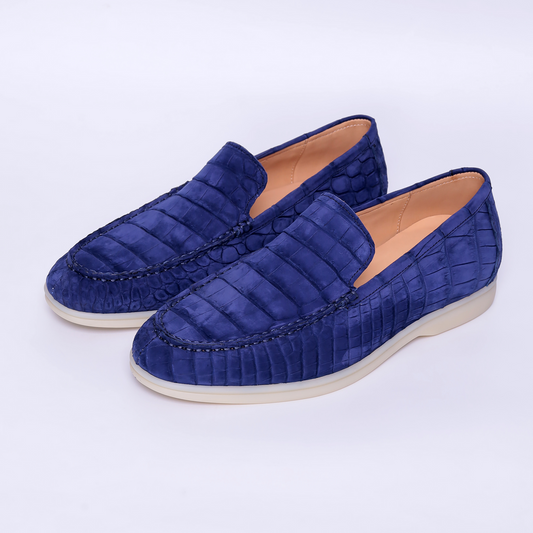
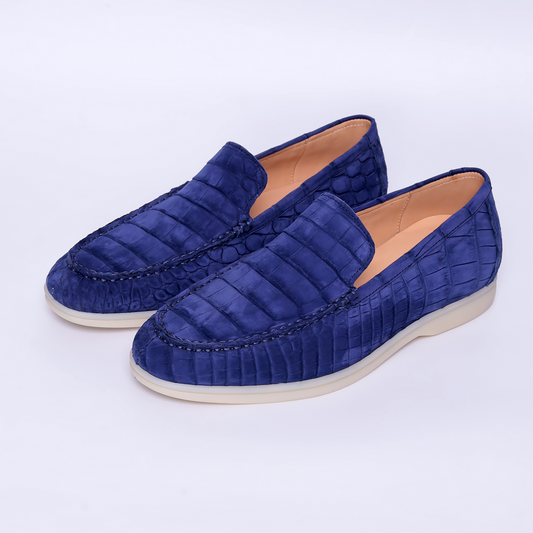
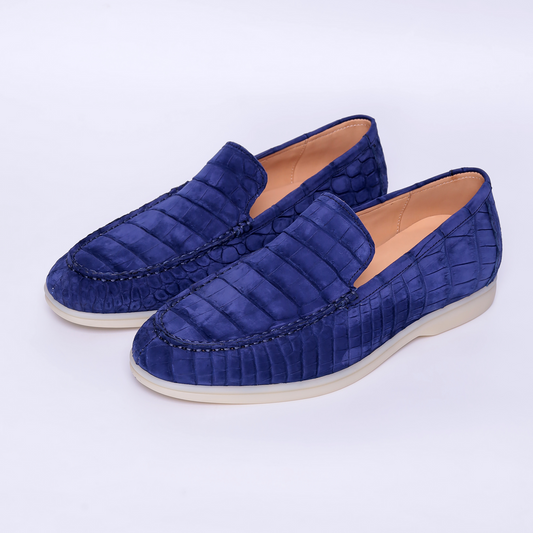
Ask whether the item uses genuine alligator skin throughout the visible upper, or whether alligator appears only on a panel, vamp, strap, or trim. This distinction affects the appearance, price, and amount of exotic leather in the finished product.
2. Inspect close-up photos of the actual hide or item
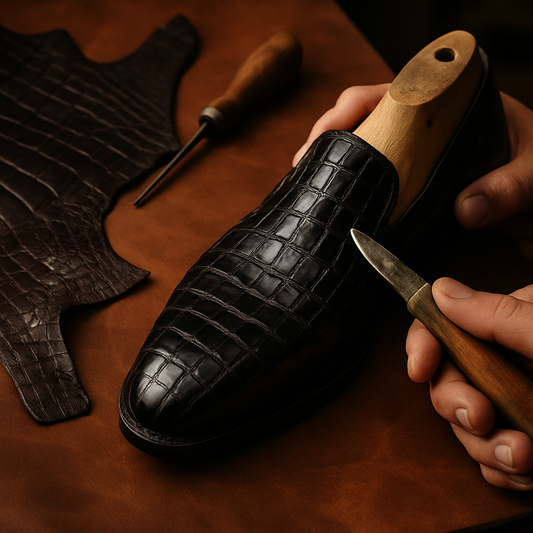
Request sharp photographs of the actual product, including the grain, edges, stitching, and finished surface. Stock photos can show a general model but may not reveal the scale layout or marks on the pair you will receive.
Nubuck’s buffed surface can soften visible scale detail. If the nap, lighting, or image resolution obscures the pattern, assessing the material becomes harder. Ask for photographs taken at an angle as well as straight on, because the nap can reflect light differently across the hide.
Useful images should show:
- The full vamp and toe area
- Individual scales at close range
- The side panels and heel
- The edge where alligator leather meets another material
- Any visible marks, scars, wrinkles, or tonal variation
- The sole, lining, and construction of a finished shoe
At CrocodileViet, our workshop manufactures alligator and crocodile leather goods in-house. That direct production setting makes it practical to ask specific questions about which parts of a finished item use alligator leather and how the surface was finished.
3. Check the species instead of treating “alligator” and “crocodile” as interchangeable
Alligator and crocodile are different materials, and a listing should identify the species accurately. Alligator belly leather commonly has a regular, balanced scale arrangement. Crocodile patterns vary more by species and may show visible sensory pores, often called integumentary sensory organs or ISOs.
Alligator may also show an elongated, web-patterned umbilical scar. Crocodile typically lacks this feature. These details can help you ask better questions, but one visual characteristic should not be treated as conclusive proof of species. A highly repetitive pattern alone does not establish that a hide is alligator.
Ask the seller for:
- The stated species and common or scientific identification, where available
- Photos of the belly or main scale area
- An explanation of whether the product is full alligator, an alligator panel, or embossed leather
- Traceable documentation for the specific item when required for the destination
For U.S. alligator skins exported internationally, the U.S. Fish and Wildlife Service requires a legal-acquisition finding, and alligator tags help support that finding. CITES tags and other documents can depend on the specimen and transaction, so confirm what applies to the specific finished product and destination. Documentation supports legal traceability; it does not, by itself, prove every detail of a product’s material or species.
4. Ask what the hide grade actually means
Alligator grading does not follow one universal scale. A supplier or tannery may count defects by hide quadrant, while grading conventions can also vary according to the supplier, tannery, and whether the skin is wild or farmed.
A higher grade generally indicates fewer or less prominent defects in the usable area. It does not identify a different species, and it does not guarantee that every part of a finished shoe is free of marks. Natural scars, healed scratches, small tonal changes, and scale variation can remain visible, especially on a nubuck surface.
Ask the seller to define the grade in practical terms:
- Which area of the hide received the grade?
- Does the grade refer to the whole skin or only the usable central section?
- Are small scars or color variations included in the description?
- Will the actual item show the same grade as the sample photograph?
A clear answer is more useful than a label such as “top grade” without a grading explanation.
5. Compare price using concrete factors
The price of nubuck alligator leather goods depends on more than the word “alligator.” Compare the actual amount of alligator leather, the hide area used, the scale location, the finish, construction, lining, sole, hardware, and whether the item is made to a standard size or customized.
For nubuck alligator loafers, also check whether the alligator covers the complete upper or only the vamp. A larger visible area generally requires more usable hide. Scale size and placement can affect cutting efficiency because the maker may need to position the pattern across the toe and side panels.
Price comparisons should also account for:
- Whether the leather is genuine alligator or an embossed substitute
- Whether the listed price covers one item, a pair, or a made-to-order variation
- Shipping, taxes, duties, and destination charges
- Exchange or return terms for international orders
- Documentation supplied with the product
- The construction and replaceability of the sole
A low price is not automatically evidence of a problem, just as a high price is not automatic proof of a higher hide grade. Compare what is included before comparing numbers.
6. Confirm fit with measurements, not only a shoe-number label
Online shoe sizing can differ between makers, so request the interior length and the widest interior measurement in centimeters or millimeters. Compare those figures with a pair that already fits you well.
Check whether the seller uses EU, US, or UK sizing and whether the size refers to men’s or women’s conversion. A conversion chart can help, but it should not replace the actual measurements.
Also ask about:
- Wide-fit availability
- Instep height and the opening of the loafer
- The shape of the toe box
- Whether the leather upper has a structured or flexible feel
- How the seller measures the insole
For remote measurement, place your foot on paper while standing, mark the heel and longest toe, and measure both feet. Measure the widest part as well. Send these figures to the seller, together with your usual size in EU, US, and UK systems. The larger foot often deserves priority, but the seller should interpret the measurements against the last used for that model.
For a slip-on, instep fit matters as much as length. A pair can have enough toe room yet feel restrictive across the top of the foot, or feel loose if the opening is cut generously.
7. Check care, color, and styling expectations
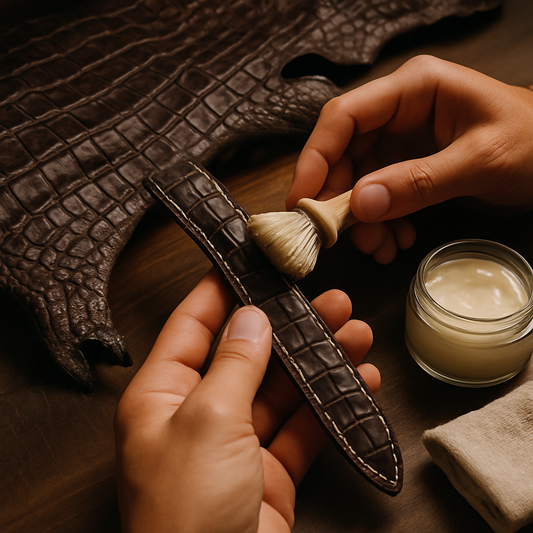
For routine care, start with a dry, clean cloth and gentle handling. Avoid rubbing hard against the raised nap, and keep the leather away from excessive water, heat, oils, and untested creams. Nubuck-specific care products should be tested on a concealed area first because they can change the shade or texture.
There is no useful fixed care schedule for every pair. Frequency depends on wear, climate, dust, and exposure. Store the shoes in a breathable dust bag, allow them to dry naturally after wear, and use suitable shoe trees if they fit without stretching the vamp.
Color can affect how the scales read. Dark brown, black, and deep burgundy may make scale boundaries less noticeable, while lighter brown, tan, or gray can show more variation in nap and tone. For styling, nubuck alligator mules can work with tailored trousers and an open-collar shirt; nubuck alligator loafers can pair with chinos, wool trousers, or a restrained suit in a compatible color. Let the shoe’s surface texture lead the outfit, using simpler belts and accessories rather than matching several textured pieces at once.
Before ordering, ask whether the photographed color is affected by studio lighting and whether natural variation is expected between the left and right shoe.
Seven checks at a glance
| Check | What to verify | Why it matters |
|---|---|---|
| Material | Nubuck finish and genuine alligator content | Separates the surface finish from the animal species |
| Photos | Actual hide, grain, edges, and finish | Reveals texture, marks, and scale detail |
| Species | Alligator identification and traceable information | Alligator and crocodile have different visual features and documentation needs |
| Grade | Supplier or tannery grading method | Shows what the grade covers rather than relying on a vague label |
| Price | Leather coverage, construction, shipping, and documentation | Creates a useful comparison between listings |
| Fit | Length, width, instep, and regional size system | Reduces sizing errors in remote purchases |
| Care and styling | Surface protection, color variation, and outfit compatibility | Sets realistic expectations after delivery |
Frequently Asked Questions
How can I tell whether online nubuck alligator leather is genuine?
Ask for close-up photos of the actual item, the stated species, a description of the nubuck finish, and traceable documentation where required. Scale pattern, pores, and an umbilical scar can support questions, but one sensory or visual trait should not be treated as proof by itself.
Is a more regular scale pattern proof that the item is crocodile?
No. Alligator belly leather can show a regular, balanced pattern, while crocodile appearance varies by species and may include visible sensory pores. Pattern repetition alone does not establish species.
What measurements should I request for nubuck alligator loafers?
Request interior length, the widest interior measurement, the shoe’s EU, US, or UK size system, and information about wide fit and instep height. Compare those figures with a pair that fits you well and provide measurements for both feet.
How should I care for nubuck alligator shoes?
Use a dry, clean cloth for routine dust removal, avoid excessive water and heat, and test any nubuck product on a concealed area first. Let damp shoes dry naturally and store them in a breathable dust bag.
See the nubuck alligator leather slip-on loafers collection for a finished example from CrocodileViet. For workwear considerations, read How to Choose Nubuck Alligator Shoes for Business Wear.
For product questions or remote measurements, contact CrocodileViet through WhatsApp. Ask about the actual pair, leather coverage, sizing, and available documentation before ordering.