
7 Things to Check Before You Buy How To Care For Alligator Leather Online

シェア
How to Care for Alligator Leather: 7 Checks Before Buying Online
Alligator leather care depends on the item’s finish, so a universal cleaner or conditioner should not be assumed safe for every product.
Buying online adds another layer of responsibility: photographs may show scale pattern and color, but they may not reveal the leather’s exact material, grading area, finish, sizing, or documentation. Before ordering an alligator belt, bag, wallet, or pair of shoes, ask questions that also help you understand how the item should be maintained after purchase.
1. Confirm that the material is genuine alligator leather
The first check is the product description, not the scale pattern alone. “Embossed alligator” describes another leather stamped with an alligator-like design. It does not mean the item is made from an alligator hide.
Genuine alligator belly leather commonly has an elongated, webbed umbilical scar. Crocodile leather lacks this feature, while crocodile scales commonly show small sensory pores called ISOs. These details can support a material assessment, but one visual trait should not be treated as proof of authenticity.
Ask the seller to state:
- The exact material and species description
- Whether the leather is genuine alligator or embossed leather
- Which part of the hide is used
- Whether the product includes documentation for regulated trade
At CrocodileViet, we recommend checking the written material description against close-up photographs because online images can make embossed patterns and genuine scale structures look similar at first glance.
2. Examine the belly pattern and hide area
Alligator belly scales usually form a regular, balanced pattern, but their sizes can vary. Scales may become larger toward the centerline, and the head, flank, tail, and belly can have noticeably different structures.
This matters because two products described as “alligator leather” may use very different hide areas. A belly-cut wallet may show a more orderly scale arrangement, while a product using side or tail sections may have more variation in scale shape and spacing.
Ask for photographs taken straight on rather than only angled lifestyle images. For a bag or large panel, request images of the front, back, base, gussets, and visible joins. For shoes, inspect both shoes separately: natural hide variation means the scale layout may not mirror perfectly from left to right.
Regular scales do not automatically indicate higher durability, and irregular scales do not automatically indicate poor leather. Scale placement is a visual and design factor, while durability also depends on leather thickness, finishing, construction, and use.
3. Ask what the grading label actually covers
Grade numbers are not universal across suppliers or tanneries. One seller’s Grade 1 may refer to a belly area with very few visible defects, while another may use a quadrant-based system. A grade number has little meaning without the supplier’s definition.
Before comparing two listings, ask:
- Which hide area was graded?
- Does the grade cover the belly, midsection, head, tail, or the complete hide?
- Are scars, healed marks, scale irregularities, and color variation included in the assessment?
- Does the stated grade apply to the leather panel or the finished product?
Some grading systems assess only the midsection or belly and exclude the head and tail. That difference can make two apparently similar grade labels describe very different materials.
At our workshop, we discuss the visible hide area with customers before confirming a custom request because the same grade wording can be interpreted differently from one supplier to another. The reason is practical: buyers need to compare the actual panel being used, not just a number presented without its grading standard.
4. Identify the finish before asking how to care for alligator leather
Finish is one of the most important care questions. Alligator leather may have a glossy, semi-gloss, matte, painted, glazed, or otherwise treated surface. The correct method for one finish may be unsuitable for another.
Request written care instructions for the exact item. Ask whether the seller recommends a particular cloth, leather product, or professional service. Do not assume that a general exotic-leather conditioner is compatible with the finish.
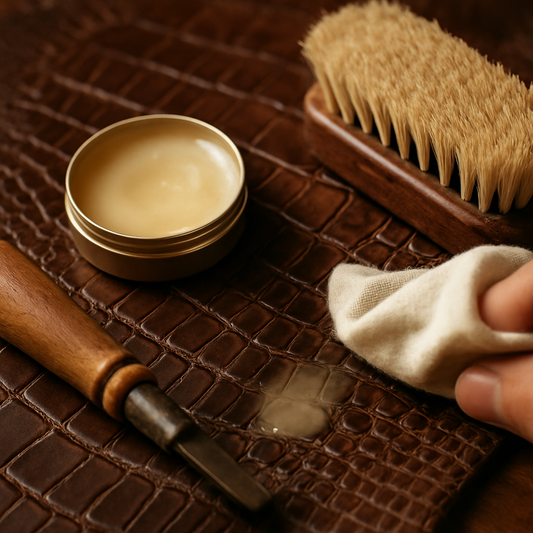
A sensible basic approach for many finished items is to remove light dust with a clean, dry, soft cloth. Use light pressure and avoid rubbing one small area repeatedly. Do not soak the leather, apply household cleaner, or use an untested conditioner simply because it is marketed for ordinary leather.
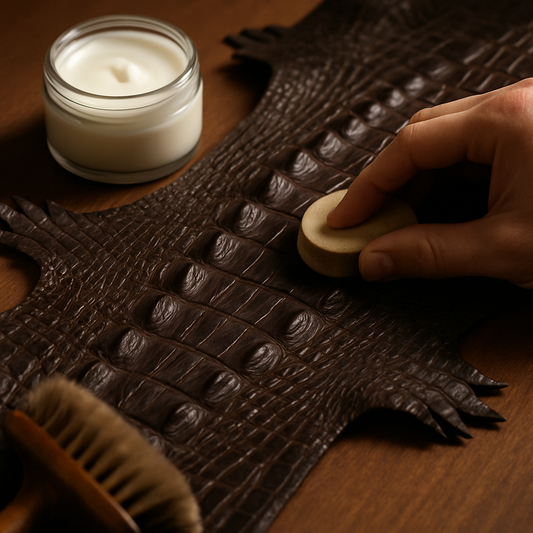
If you want to condition alligator leather, ask the maker or seller to confirm compatibility first. Test any approved product on a concealed area according to the seller’s instructions, since color and surface response can differ between finishes.
5. Check construction, contact points, and intended use
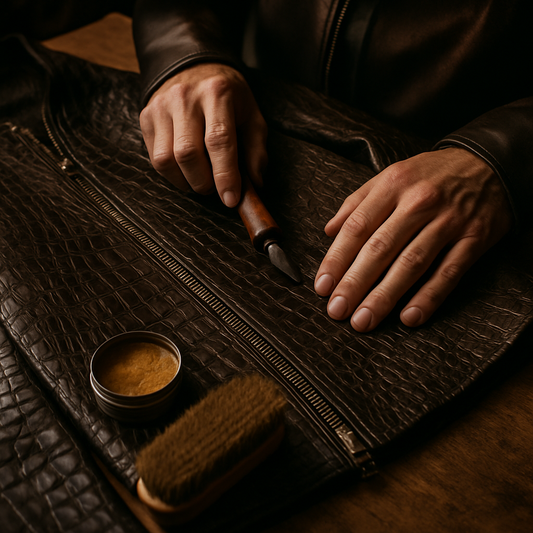
Leather care is affected by how the item is built and where it will be worn or carried. A belt experiences repeated bending at the buckle. A wallet is exposed to pocket friction and pressure. A handbag may contact clothing, vehicle seats, tables, and changing weather. Shoes face flexing, moisture, dust, and abrasion near the toe and heel.
Before buying, inspect or ask about:
- Edges and painted edge finishing
- Stitching around corners and folded sections
- Areas that bend during use
- Hardware that may rub against the leather
- Whether the item is intended for regular use or occasional wear
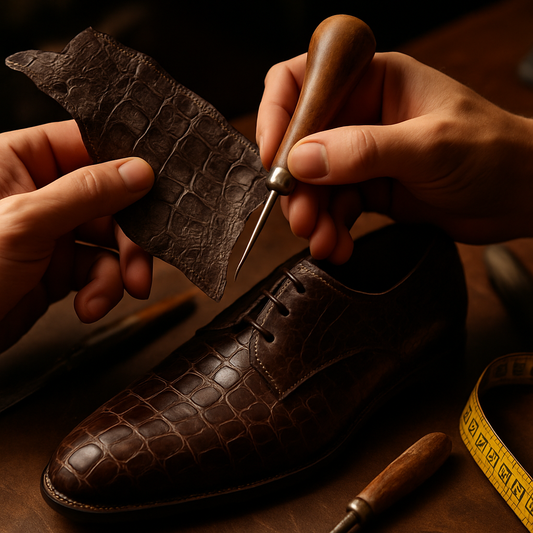
For shoes, ask how the upper is expected to flex and whether the finish requires a specific care product. If you want to clean crocodile leather shoes, do not transfer advice from a different finish or maker without checking first.
For a bag, ask how it should be supported when stored and whether the seller recommends filling it with soft, clean material. This can help reduce sharp folds, but the product’s own instructions should take priority.
6. Confirm sizing and fit from measurements
Online sizing should be based on measurements rather than a familiar label alone. For shoes, request the internal length and width, the stated size system, and information about the instep and toe shape. EU, US, and UK sizes are not interchangeable without checking the brand’s chart.
Wide-fit buyers should ask for the forefoot width and the usable space around the ball of the foot. Buyers with a high instep should ask whether the vamp is structured, elasticated, or adjustable. A shoe can have the correct length and still feel tight across the instep.
For belts, measure the distance from the buckle prong to the hole used most often, rather than relying only on trouser size. For bags, check length, height, depth, handle drop, strap adjustment, and the opening size. A product’s external dimensions may not equal its usable internal capacity.
If you are ordering remotely, provide the seller with your foot tracing, foot length, widest point, and usual size in the relevant system. For a bag, provide the objects you need to carry and compare them with the internal measurements. CrocodileViet uses these details when discussing remote orders because they reduce guesswork that a single nominal size cannot resolve.
7. Compare the price using concrete factors
Price differences should be explained by identifiable details rather than a grade label alone. Compare:
- Alligator leather against embossed leather or another material
- Hide area and scale section used
- Panel size and leather coverage
- Construction complexity and number of leather components
- Hand-finishing, edge treatment, lining, and hardware
- Custom sizing or made-to-order adjustments
- Shipping, duties, taxes, and return conditions
- Documentation requirements for regulated materials
A larger bag generally uses more material than a card holder, but material quantity alone does not explain the full price. A small item can require precise cutting to position a desirable scale section, while a larger item may combine several panels.
Be cautious with listings that use a grade number as the only explanation for a higher price. Ask what the grade means, which part of the hide was assessed, and what construction work is included.
How to clean and store alligator leather after buying
Once you have confirmed the finish, use a restrained maintenance routine. For everyday dust, start with a dry, clean, soft cloth. Wipe gently after use, especially around edges, folds, and areas that contact skin or clothing.
Keep the item away from prolonged moisture, direct heat, and strong sunlight. If it becomes wet, blot surface moisture without rubbing and allow it to dry naturally away from heaters or hairdryers. Ask the maker what to do next if the leather has absorbed water or developed a mark.
To store a crocodile leather bag, empty it first, support its shape with clean, soft material, and keep it in a breathable dust bag in a dry cupboard. Avoid compressing it beneath heavy objects. Do not store it beside damp items, strong fragrances, or materials that may transfer color.
For shoes, remove surface dust before storage and use an appropriate shoe tree if the maker confirms compatibility with the structure and finish. Keep pairs separated so hardware and wet surfaces do not rub against one another.
Documentation and international orders
Alligator and crocodilian products can be subject to CITES controls. International commercial trade generally requires the appropriate permits or certificates, and the exact requirements depend on the species, origin, transaction, and destination country.
CITES paperwork does not by itself prove every aspect of a product’s authenticity. Ask which documents accompany the shipment, who is responsible for obtaining them, and whether your country requires additional import steps. Check destination-country rules before paying, particularly for an international order.
Frequently Asked Questions
How can I tell whether an online product is genuine alligator leather?
Start with the written material description and ask whether the product is genuine alligator or embossed leather. An alligator belly commonly shows an elongated, webbed umbilical scar. A crocodile lacks this scar and commonly has sensory pores. These clues can support a review, but no single visual feature proves authenticity.
Can I use ordinary leather cleaner on alligator leather?
Do not assume ordinary leather cleaner is suitable. The correct method depends on the item’s finish. Use a clean, dry cloth for light dust and ask the seller before applying cleaner, conditioner, or another product.
What should I ask about an alligator leather grade?
Ask which hide area was graded, whether the assessment covers the belly or midsection only, which defects are included, and how that supplier defines the grade. Grading labels vary by supplier and tannery.
How should I store an alligator leather bag?
Empty the bag, support its shape with clean, soft material, and place it in a breathable dust bag away from heat, strong sunlight, dampness, and heavy objects. Follow the maker’s instructions if they specify a different storage method.
For product information and workshop enquiries, visit CrocodileViet’s leather collection and news page. You can also contact CrocodileViet on WhatsApp to ask about material, finish, measurements, care instructions, and documentation.