
7 Things to Check Before You Buy Alligator Leather Shoes Online — Part 2

シェア
7 Things to Check Before Buying Alligator Leather Shoes Online — Part 2
A genuine alligator belly can show an elongated, webbed, star-shaped umbilical scar, while crocodile belly scales commonly show small sensory pores called integumentary sense organs, or ISOs.
That detail is useful, but it is not enough to authenticate a pair of alligator leather shoes by itself. Online buyers need to compare the hide, construction, measurements, price, and sourcing information together. From our workshop perspective, these are the seven checks that reduce the risk of buying a shoe made from another leather or receiving a pair that does not fit as expected.
1. Confirm that the leather is actually alligator
Ask the seller which species was used and which part of the hide appears on the shoe. “Belly cut” describes the smoother, broader ventral scales; “hornback” describes the raised dorsal scales. These terms identify the hide section, not separate species.
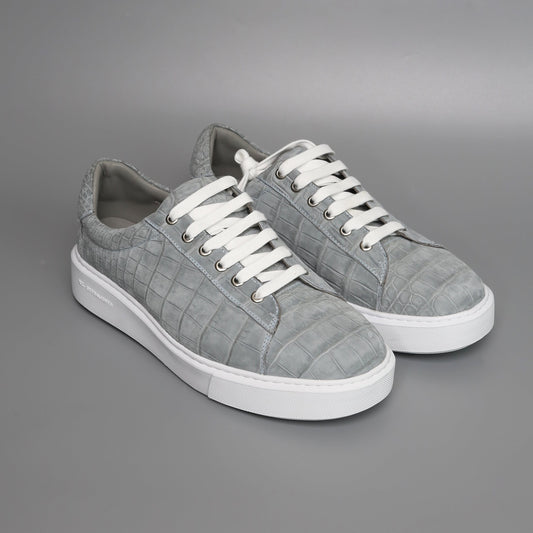
On alligator belly leather, the scale arrangement is usually comparatively regular and balanced, but it still varies naturally across the hide. The scales should not look like a repeated digital grid. Highly uniform rows with identical shapes may indicate embossed cowhide rather than genuine alligator.
Look closely at several areas instead of judging one large scale. A genuine hide can show small differences in scale size, spacing, shading, and texture. Alligator often has an umbilical scar, while crocodile generally lacks that feature and more often displays visible sensory pores across the belly scales. These observations help with species comparison, but no single visual trait proves authenticity.
Ask for clear photographs of the vamp, quarters, heel counter, and any visible lining or edge. A responsible seller should be able to state whether the product uses alligator throughout the visible upper or combines alligator with calfskin or another leather.
2. Check the hide grade without treating it as a durability rating
A hide grade usually concerns visible features such as scars, scratches, shading, scale deformities, and other surface marks. It does not automatically describe how long the shoe will last. A lower visual grade can still be used in a well-built shoe, while a visually clean hide does not compensate for weak construction or poor sizing.
Grading labels vary by supplier and tannery. One published convention uses grades from 1, with fewer visible defects, through 5, with more defects, but that numbering is not a universal industry scale. Some systems assess the belly but not the back or tail. Before comparing two listings, ask:
- What does the stated grade measure?
- Does it apply to the entire hide or only the belly area?
- Are minor scars and tonal changes accepted within that grade?
- Will the actual pair be photographed before dispatch?
At CrocodileViet, discussing the visible hide areas matters because customers may prefer regular scale placement on the vamp, less prominent natural marks, or a particular tone. The reason is practical: the same grade label can describe different levels of visible variation from one supplier to another.
3. Identify the construction behind the upper
Alligator leather describes the upper material, not the complete shoe. Ask what supports that upper and how the sole is attached. Useful questions include whether the shoe uses a leather or synthetic lining, what material forms the insole and heel, and whether the sole is stitched, cemented, or assembled by another method.
For handmade alligator shoes, request close photographs of:
- the stitching around the welt or sole edge;
- the join between the alligator and any calfskin sections;
- the heel stack and heel-to-sole connection;
- the interior lining and footbed;
- the edge finishing around the toe and quarters.
These images do not replace an in-person inspection, but they reveal whether the seller is showing the actual product rather than a generic catalogue image. At our workshop, we photograph key surface areas because scale placement and color can differ from one hide to another, and customers need to approve the specific pair where that option is available.
Pay particular attention to large scales crossing a curved toe. A well-planned pattern should account for the shoe’s shape rather than placing a section of hide without regard to distortion. This is a visual construction check, not a guarantee of future performance.
4. Compare the real price factors
The price of alligator leather shoes reflects more than the word “alligator” in the product title. Compare the following factors:
- Species and hide section: alligator belly leather and raised hornback leather require different visual judgments and may produce different layouts.
- Usable hide area: larger, cleaner belly sections can provide more flexibility when cutting a pair.
- Scale placement: matching the left and right shoes can require more planning and can increase material use.
- Construction: lining, insole, outsole, heel, stitching, and finishing affect labor and material costs.
- Pattern complexity: whole-cut, apron, cap-toe, monk-strap, and mixed-leather designs use the hide differently.
- Legal sourcing and traceability: regulated exotic leather involves documentation and supply-chain responsibilities.
- Workshop labor: cutting around natural scales and surface marks takes different time from cutting a regular cowhide panel.
A high price does not prove authenticity or durability, and a low price does not identify the exact problem without more information. Ask for a material breakdown and construction description rather than comparing prices from listings that use different leather sections or shoe specifications.
For readers comparing construction and material decisions in more depth, What Makes Luxury Alligator Dress Shoes Worth Buying? Quality, Craft and Longevity covers related considerations.
5. Verify sizing beyond the number
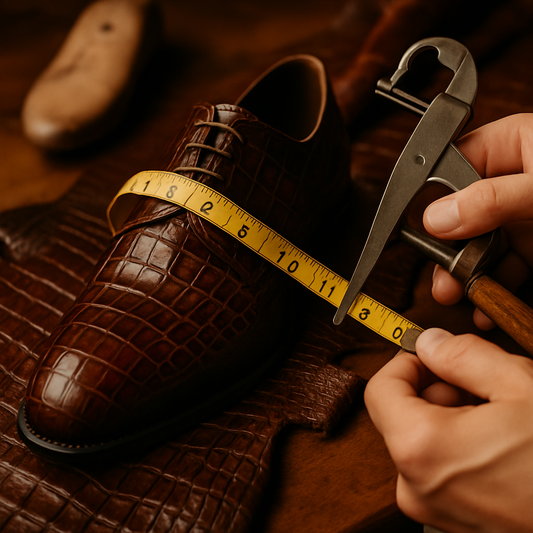
Online shoe sizing works best when you compare measurements rather than relying on an EU, US, or UK number alone. Size labels can differ between lasts and brands. Request the shoe’s internal length, outsole length, forefoot width, and instep measurement where available.
Measure both feet while standing, preferably at the end of the day. Record heel-to-toe length and the widest part of the forefoot. If one foot is longer, use that measurement when discussing the size. For a wide fit, ask whether the last is broad through the toe box or merely larger in length. A larger size does not necessarily provide enough width.
Instep height also affects the fit of loafers, monk straps, and lace-up dress shoes. A high instep may need extra volume even when the length is correct. For remote measurements, send a tracing or clear measurements taken with the foot bearing weight, and explain whether you normally wear thin dress socks or thicker socks.
At CrocodileViet, requesting these measurements helps us recommend a closer starting point because a shoe last controls the relationship between length, width, and instep. It does not replace a fitting, so confirm the seller’s exchange terms before paying, especially for made-to-order or customized shoes.
6. Ask for legal-sourcing information
American alligator is listed in CITES Appendix II, which allows regulated trade. For alligator skins exported from the United States, the U.S. Fish and Wildlife Service requires a legal-acquisition finding, with harvest tags supporting traceability.
A CITES tag is associated with the raw skin and may not accompany a finished pair of shoes. Therefore, the absence of a tag on the box does not by itself settle the question of sourcing. An online seller should be able to explain where the leather came from and provide relevant traceability information when appropriate.
CITES documentation supports regulated trade and traceability; it does not prove that a finished shoe is authentic merely because a seller mentions CITES. Ask for the species, source country, and documentation process in writing. Also check whether the seller can issue the paperwork required for delivery to your country.
For a workshop buying or producing with regulated exotic leather, this information matters because the legal status of the raw skin and the import rules for the finished product can involve different documentation.
7. Plan care and styling before you buy
Alligator leather benefits from simple handling. Use a dry, soft cloth to remove dust after wear, and let the shoes air naturally away from direct heat or strong sunlight. Avoid soaking the leather, applying household cleaners, or using a product without confirming that it is suitable for alligator.
There is no useful fixed care schedule for every owner. Climate, perspiration, frequency of wear, and storage conditions influence what the leather needs. Use shoe trees that support the shape without forcing the vamp, and rotate pairs so the leather can dry between uses. If the surface becomes stained or excessively dry, consult a specialist familiar with exotic skins before applying conditioner.
For styling, dark brown or black alligator dress shoes can work with navy, charcoal, or medium-gray tailoring when the rest of the outfit is restrained. Brown shades can coordinate with olive, tan, cream, or blue trousers, depending on the undertone. A visible scale pattern already supplies texture, so a plain shirt and a less busy tie usually keep the outfit cohesive.
For a navy pair, match the depth of the blue with the suit rather than trying to create an exact color match. The related article Navy Alligator Skin Shoes: Styling, Care and Buying Tips discusses that color in more detail.
Frequently Asked Questions
How can I tell whether online shoes use alligator or crocodile leather?
Ask for the stated species, close photographs of several scale areas, and sourcing information. Alligator belly scales often look comparatively regular and balanced and may show an umbilical scar. Crocodile belly scales often show visible sensory pores. These clues support comparison but do not individually prove authenticity.
Does a higher alligator hide grade mean the shoes will last longer?
Not necessarily. A grade generally describes visible defects such as scars, scratches, shading, or scale deformities. Construction, material support, fit, use, and care also affect wear. Since grading labels vary by supplier, ask what the seller’s grade measures.
What measurements should I request before ordering alligator leather shoes online?
Request internal length, forefoot width, instep measurement, and the applicable EU, US, or UK size conversion. Measure both feet while standing and mention whether you need a wide fit or have a high instep. A tracing or remote measurement can help the seller compare your foot with the shoe last.
Should a finished pair of alligator shoes include a CITES tag?
Not necessarily. A CITES tag is associated with the raw skin and may not stay with a finished pair. The seller should explain the leather’s legal sourcing and provide relevant traceability information, but CITES references alone do not prove that the shoes are genuine alligator.
Buy with the material and measurements in view
Review the CrocodileViet alligator leather shoes collection for available designs and material details. For questions about sizing, leather sections, or remote measurements, contact us through WhatsApp before ordering.