
Navy Handmade Alligator Jacket: Styling, Care and Buying Tips

Share
Navy Handmade Alligator Jacket: Styling, Care and Buying Tips
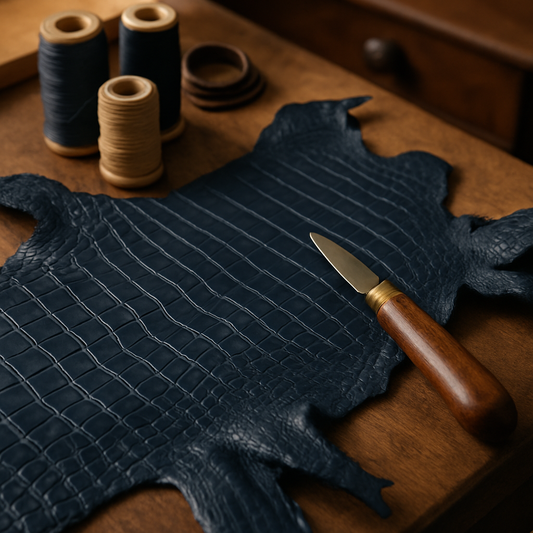
Alligator belly leather generally has a more regular, balanced scale pattern than crocodile leather, although scale shape alone cannot identify the species.
A navy handmade alligator jacket combines a distinctive hide with a color that works across formal and casual wardrobes. Buying one responsibly requires more than checking the word “handmade” or comparing alligator and crocodile photographs. The hide section, species, grading description, construction, fit, care requirements and trade paperwork all affect the decision.
What “handmade alligator jacket” should tell you
The phrase should identify two separate points: the jacket is made from alligator leather, and the maker uses hand-led production in some part of its construction. It does not, by itself, explain the hide grade, country of origin, lining, hardware, stitching, pattern layout or amount of machine work involved.
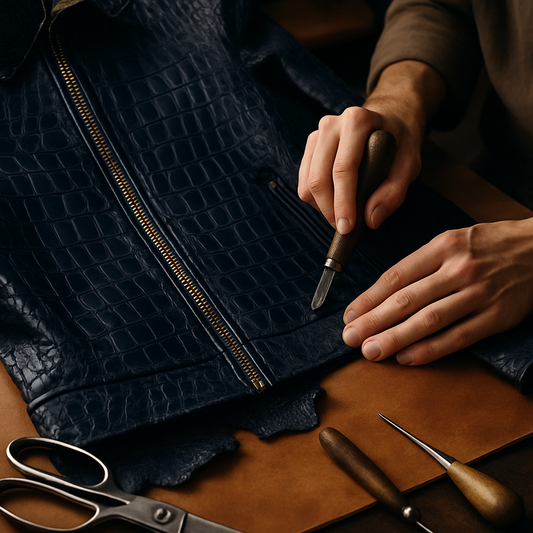
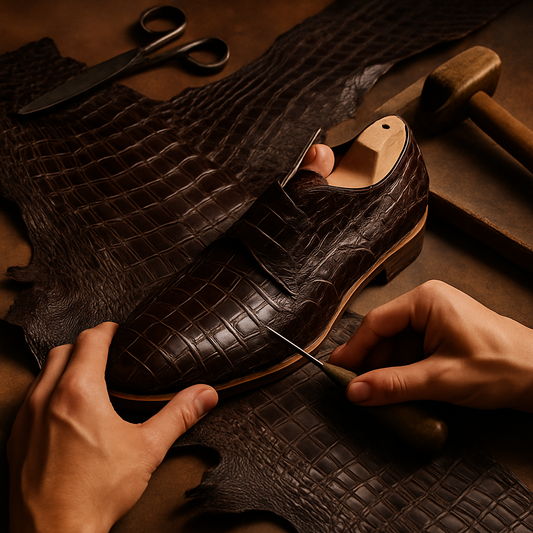
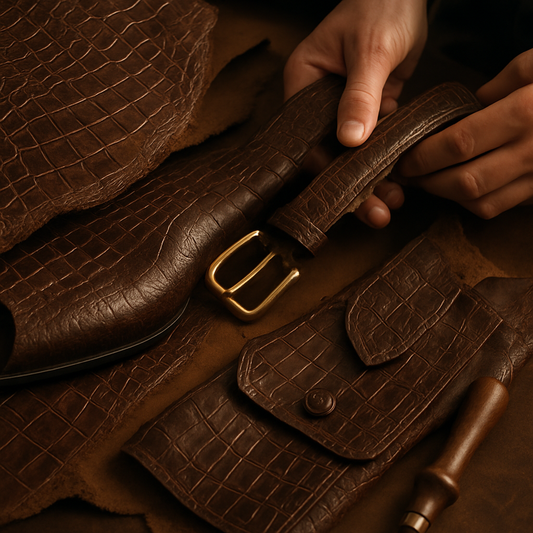
At CrocodileViet, we manufacture our own alligator and crocodile leather goods in-house. That direct workshop connection matters because questions about the hide section, measurements, finishing and available customization can be addressed against the product being made rather than treated as a generic fashion description. Ask any maker to explain what “handmade” covers in its process.
Alligator belly, hornback and crocodile: check the material first
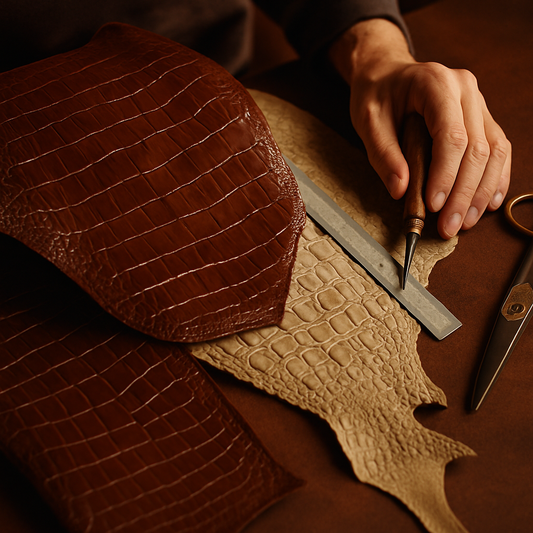
“Belly” and “hornback” describe sections of a hide, not animal species. Belly leather comes from the underside and is generally flatter, which suits a jacket with a smoother front and easier layering. Hornback leather retains raised dorsal ridges from the animal’s back, creating a more textured surface and a different visual profile.
Alligator and crocodile should not be treated as interchangeable terms. Alligator belly scales are typically smooth and balanced in their layout. An alligator hide may also show an elongated, web-like umbilical scar. True crocodile belly scales often retain small sensory pores, commonly called integumentary sensory organs or ISOs, after tanning.
These observations support an inspection, but one visual feature does not prove authenticity or species. Tanning, dyeing, photography and hide variation can affect what appears on the finished jacket. A seller should state the species and hide section in writing, rather than expecting the buyer to identify them from a navy photograph.
How to assess a navy jacket before buying
Navy can conceal some surface variation compared with a lighter color, so request clear images in daylight or neutral lighting. Look for photographs of the front, back, sleeves, collar, cuffs and any large panels. The images should make it possible to see whether the scale layout is regular, how panels are joined and whether visible scars or small marks have been disclosed.
| Decision factor | What to check | Why it matters |
|---|---|---|
| Species and hide section | Written identification of alligator or crocodile, plus belly or hornback | These materials have different surface characteristics and should not be priced or described as the same product. |
| Grade description | The supplier’s grading system, visible defects and panel placement | Grading labels vary by supplier and do not form a universal species-wide standard. |
| Construction | Seam alignment, edge finishing, lining, pockets, cuffs and fastening hardware | These features affect comfort, appearance and the work involved in producing the jacket. |
| Fit information | Garment length, chest width, shoulder width, sleeve length and hem width | Body measurements alone may not predict how a structured leather jacket will fit. |
| Documentation | Species, origin and country-specific trade paperwork | Wildlife-product requirements can differ between the exporting and importing countries. |
Grade is not the same as durability
Hide-grade terms need a clear explanation from the seller. Grading labels are not universal, and one industry approach evaluates areas or quadrants according to the amount of damage present. Fewer damaged areas may lead to a higher grade under that particular system, but another tannery or supplier may use different labels and criteria.
Ask which defects are included in the grade, where they appear on the jacket and whether the grade refers to the raw hide, the finished leather or the completed garment. A higher visual grade does not automatically mean greater durability. Wear resistance also depends on leather thickness, tanning, panel construction, seam work, lining and how the jacket is used.
Price factors for a navy handmade alligator jacket
A responsible price comparison should separate the following factors:
- Species: Alligator and crocodile are different materials, and the seller should identify which one is used.
- Hide section: Belly and hornback involve different surfaces, shaping considerations and visual results.
- Usable hide area: A jacket requires enough suitable leather for the body, sleeves, collar and smaller panels, with matching or deliberate panel placement.
- Grade and disclosed marks: Ask how the supplier defines grade and whether scars, pores, soft areas or color variation are visible in the finished garment.
- Construction: Lining, pockets, closures, cuff design, seam complexity and finishing work contribute to the total cost.
- Fit and customization: Made-to-measure work may involve additional pattern preparation and fitting communication.
- Documentation and shipping: International movement of wildlife products may require checks and paperwork that depend on the countries involved.
Do not treat “handmade” as a complete price explanation. Request a written specification covering the species, hide section, measurements, materials used for the lining and hardware, grade terminology and any defects disclosed by the maker.
Fit and sizing: measure the garment, not just the person
For a jacket, start with a well-fitting garment that you already own. Lay it flat and record the chest width from underarm to underarm, shoulder width, back length from the base of the collar to the hem, sleeve length and hem width. Double the chest and hem measurements when comparing them with a seller’s circumference chart, unless the seller already provides circumference measurements.
State your usual EU, US or UK size as a reference, but do not rely on that label alone. Sizing systems vary between brands, and alligator leather may have less forgiving movement than a soft fabric. Mention whether you plan to wear a shirt, knitwear or a heavier layer underneath.
Wide-fit customers should provide the chest, waist, hem and upper-arm measurements rather than selecting a larger size automatically. A larger size can create excess shoulder width or sleeve length while still failing to provide enough room through the upper arm. If you have a high instep, that term usually concerns footwear rather than jackets; for this garment, explain shoulder slope, arm circumference and layering needs instead.
For remote orders, send measurements in the unit requested by the workshop and ask which points were used on the size chart. Confirm whether measurements refer to the body or the finished garment. This avoids a common error in which a buyer compares a body chest measurement with a jacket’s flat width without allowing room for movement.
Styling a navy exotic leather jacket
Navy works well with medium-grey trousers, charcoal knitwear, white or pale-blue shirts, dark denim and brown or black leather accessories. For business wear, keep the rest of the outfit restrained: a plain shirt, tailored trousers and low-contrast footwear allow the hide texture to stay central without competing patterns.
For casual wear, combine the jacket with an Oxford shirt, fine-gauge sweater or clean T-shirt and straight or tapered trousers. Brown shoes can create a warmer contrast, while black footwear gives the outfit a sharper, lower-contrast direction. Match the jacket’s visual weight with substantial fabrics; very thin trousers or highly glossy accessories can make the outfit feel disconnected.
If the jacket has hornback ridges, large hardware or a strong panel layout, reduce the number of other visible textures. A smoother alligator belly jacket can work with more surface contrast, such as a knitted sweater or textured wool trousers. These are styling options rather than fixed rules, so the jacket’s cut, shine and scale size should guide the final combination.
For a business-focused wardrobe, see How to Choose Alligator Leather Jacket Men for Business Wear.
Care for alligator leather without over-treating it
Use a clean, dry, soft cloth to remove light surface dust after wear. Store the jacket on a broad, shaped hanger so the shoulders are supported, and keep it in a cool, dry, ventilated place away from direct sunlight, heaters and persistent humidity. Avoid compressing it under heavy clothing.
Do not routinely soak the jacket or apply household cleaners. Water, alcohol, solvents and unsuitable conditioners can affect the finish, dye and surface texture. There is no single fixed care schedule that suits every alligator jacket because finishes, tanning methods, lining materials and use conditions differ.
Ask the maker or a leather specialist for product-specific cleaning and storage instructions. If the jacket becomes wet, blot surface moisture with a dry cloth, allow it to dry naturally away from heat and seek professional advice before applying any product. A specialist should also handle deep stains, cracking, peeling finish or structural repairs.
Species, origin and CITES checks
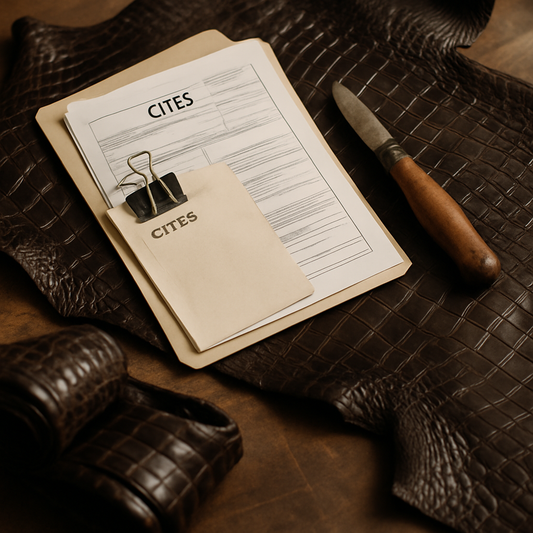
CITES controls international trade in listed wildlife and wildlife products, but the relevant listing and permit requirements for a particular alligator jacket depend on the species, origin, exporting country, importing country and route. CITES paperwork is not a blanket proof of authenticity.
Before an international purchase, ask the seller to identify the species and origin and to explain which documents accompany the shipment. Confirm the requirements with the responsible authorities in the countries involved. Keep invoices, product descriptions and permit records together, since customs questions may concern both the material and its movement across borders.
Frequently Asked Questions
How can I tell an alligator jacket from a crocodile leather jacket?
Scale shape alone cannot establish the species. Alligator belly leather is typically smooth with a regular, balanced pattern and may show an elongated umbilical scar. True crocodile belly leather often retains small sensory pores, or ISOs. Ask the seller for written species information and supporting documentation.
Does a higher alligator leather grade mean the jacket will last longer?
Not necessarily. Grade labels vary by supplier and may describe the amount or location of visible damage rather than overall wear resistance. Durability also depends on tanning, leather thickness, construction, seams, lining and use.
What measurements should I send for an alligator leather jacket men’s size request?
Send chest, waist, hem, shoulder, sleeve, back-length and upper-arm measurements, along with your usual EU, US or UK size. Include the type of layer you will wear underneath and clarify whether each measurement is from your body or a jacket that fits you.
Can I use ordinary leather cleaner on a navy alligator jacket?
Household cleaners and routine soaking are not recommended. Use a dry cloth for light dust and ask the maker or a leather specialist for a product-specific care method, since finishes and tanning systems differ.
Choose with specifications in hand
For current jacket options and product details, visit the CrocodileViet crocodile and alligator jacket collection. For measurements, material questions or documentation concerns, contact CrocodileViet through WhatsApp before ordering.