
How Bespoke Crocodile Leather Shoes Are Made: From Hide Selection to Hand Finishing

Share
How Bespoke Crocodile Leather Shoes Are Made: From Hide Selection to Hand Finishing
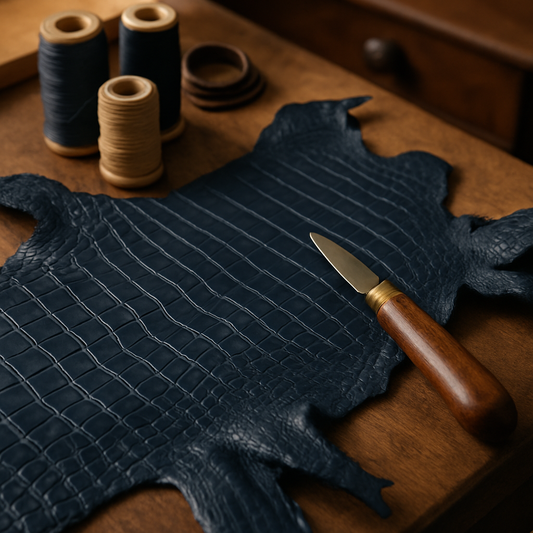
Bespoke crocodile leather shoes begin with a hide chosen for its species, belly width, scale pattern, and usable area before the first pattern piece is cut.
At CrocodileViet, crocodile leather goods are manufactured in-house, so the shoe is planned around the hide rather than treating the leather as a generic sheet. That approach matters because crocodile skin carries natural differences in scale size, pore structure, scars, and pattern direction. A good pair depends on how those features are assessed and placed throughout the build.
1. Identifying the crocodile leather
“Crocodile” is not a precise species name by itself. A hide may come from a species such as saltwater crocodile (Crocodylus porosus) or Nile crocodile (Crocodylus niloticus), and the species can affect scale proportions, belly width, texture, and sourcing requirements.
The belly, flank, and hornback describe sections of a hide rather than species. Belly leather has flatter, more orderly scales and is usually the main section selected for visible shoe panels. Flank leather transitions toward smaller side scales, while hornback comes from the ridged back and creates a more pronounced surface.
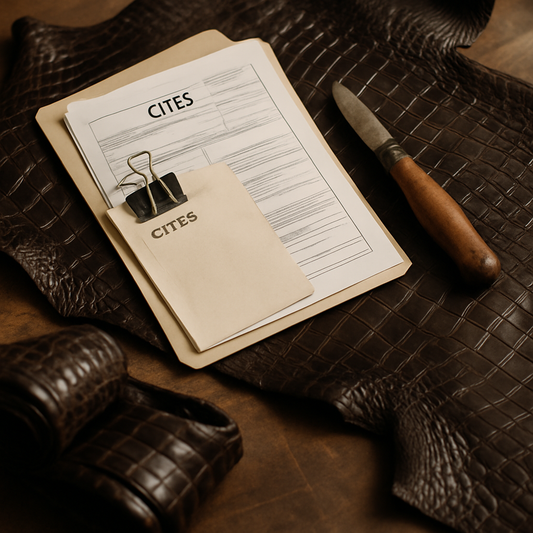
Small sensory pores may remain visible in crocodile belly scales. Scale shape alone does not establish species, so responsible identification depends on the hide’s documented source and applicable trade records. Crocodilian species are regulated under CITES, but listing conditions and commercial requirements differ by species and source. Relevant permits or certificates may be required for lawful trade.
2. Selecting the hide for a shoe project
Hide selection is based on more than color. The cutting plan must account for:
- the width and length of the usable belly area;
- scale size in relation to the shoe pattern;
- visible pores, scars, stains, holes, or cuts;
- the direction and symmetry of the scale rows;
- the amount of leather needed for the chosen shoe style and size.
Crocodile skins may be priced by factors such as belly width, usable surface, species, finish, and grade. Grading labels are not universal: one supplier’s grade system may not match another’s, and defects within the designated pattern area can affect the classification. A visual grade describes appearance and usable presentation, not the shoe’s future durability by itself.
Our workshop reviews the hide before cutting because a small defect can become highly visible if placed across the vamp, toe, or quarter. Planning around those features reduces waste and gives the finished pair a more balanced layout.
3. Planning the pattern and matching the pair
After the hide is selected, the shoe pattern is positioned over the most suitable sections. The vamp usually receives close attention because it is the broadest visible area and carries the scale pattern across the front of the shoe. Quarters, tongues, straps, and smaller panels may use adjoining sections when their scale size and direction work with the main vamp.
For a pair, “matching” does not mean making the natural scales identical. Crocodile scales are organic and vary across the hide. Matching means arranging the left and right panels so the scale size, row direction, color movement, and visible markings appear visually balanced.
This stage also affects how much of the hide can be used. A larger foot may require more belly width, while a narrow last can allow the cutter to avoid a small scar or irregular transition. A bespoke pattern gives more control than an off-the-shelf shape, but it does not remove the hide’s natural variation.
4. Cutting and preparing the components
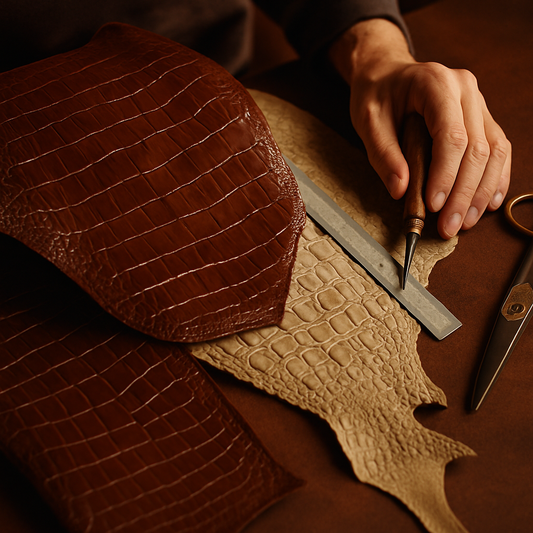
Once the layout is approved, the leather is cut according to the shoe pattern. Crocodile leather needs controlled handling because cutting through an unsuitable scale row or placing a bend over a weak area can change the appearance of the panel.
The upper components are then prepared for assembly with their intended positions kept clear. The lining, insole, outsole, heel components, and reinforcement pieces are selected to support the shoe’s construction and the wearer’s measurements. The crocodile upper remains the visual focus, but comfort depends on the complete structure underneath it.
At CrocodileViet, we plan the placement before cutting because replacing a misplaced crocodile panel is more difficult than correcting a paper pattern. This is also why a customer’s preferred toe shape, closure, sole style, and color should be settled before the hide is allocated.
5. Building the upper around the foot shape
A bespoke shoe begins with measurements that describe more than length. Useful information includes foot length, forefoot width, heel width, instep height, toe shape, and any difference between the left and right foot.
For remote orders, measurements should be taken for both feet using the workshop’s requested method. A straight length measurement is not enough for a high instep or wide forefoot. The maker may also need photographs, an existing shoe reference, or a paper outline to understand the proportions. EU, US, and UK sizes are useful starting references, but size conversions vary between lasts and do not replace actual measurements.
The upper is shaped over the last so the crocodile panels follow the intended form. The last determines the toe profile, instep line, heel position, and overall proportions. A wide fit or higher instep may require a different last or adjusted pattern rather than simply increasing the nominal shoe size.
6. Assembly, edge work, and hand finishing
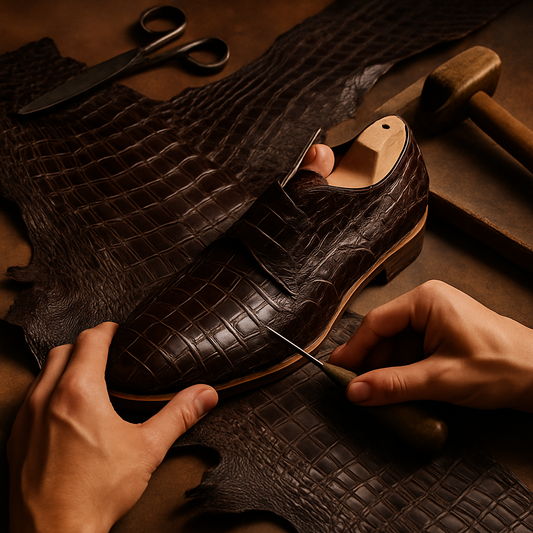
After the upper is shaped, it is joined to the insole and outsole structure according to the chosen construction. The edges are trimmed, aligned, and finished so the transition between upper, sole, and heel looks controlled. Seams must sit in positions that respect both the shoe design and the scale pattern.
Finishing may include surface cleaning, color adjustment, edge treatment, polishing, and final inspection. Crocodile leather can show variation between scales, so the objective is a consistent overall appearance without covering the character of the hide with excessive product or color.
The final inspection checks the pair as a pair: panel placement, stitching, sole alignment, symmetry of the last, closure function, and visible marks. Small differences in natural scales are expected; misplaced panels, loose stitching, or an uncomfortable fit are separate workmanship concerns.
Price factors in bespoke crocodile shoes
A quotation depends on specific project variables rather than the word “crocodile” alone. The main factors include:
- species and documented sourcing;
- belly width and usable hide area;
- scale size, pattern regularity, and surface defects;
- shoe model, toe shape, sole, heel, and construction;
- custom pattern development and measurement requirements;
- the amount of hand preparation and finishing involved.
Two hides with a similar color can therefore support different quotations if one has a narrower belly, more defects in the cutting zone, or less usable area for the requested size.
Care after delivery
Start with a dry, soft cloth to remove dust after wear. Keep the shoes away from prolonged moisture, strong heat, and direct drying near a heater. If the surface becomes wet, allow it to dry naturally before storage.
Use a shoe tree suited to the shoe shape to support the upper between wears. Conditioning should follow the finish and product guidance provided for the specific leather; applying an unsuitable cream can darken or clog the scales. There is no useful fixed care schedule for every wearer, because climate, use, and finish all differ.
Styling bespoke crocodile leather shoes
A dark crocodile pair can work with navy, charcoal, brown, or black tailoring when the belt and other leather accessories sit within a compatible color family. With lighter trousers, a restrained shoe color can keep the scale pattern as the main texture without competing with the fabric.
For business wear, the shoe’s toe shape and color usually have a greater effect on formality than the scale pattern alone. A clean wholecut or restrained Oxford layout presents differently from a heavily panelled loafer, even when both use crocodile belly leather. For more outfit-specific advice, read How to Choose Bespoke Crocodile Leather Shoes for Business Wear.
Frequently Asked Questions
Which part of a crocodile hide is used for bespoke shoes?
Belly leather is commonly selected for prominent shoe panels because its scales are flatter and more regular in arrangement. Flank and hornback sections may be used when their smaller or ridged patterns suit the design.
How are crocodile shoe pairs matched?
The two shoes are arranged for balanced scale direction, size, color movement, and visible markings. Matching does not make the natural scales identical, since each hide contains organic variation.
How should I provide measurements for remote bespoke shoes?
Provide measurements for both feet, including length, forefoot width, heel width, and instep circumference, using the workshop’s requested method. EU, US, or UK size information helps, but it should be supported by direct measurements when the fit is wide, narrow, or high over the instep.
Does a high visual grade mean crocodile shoes will last longer?
No single visual grade establishes durability. Grading systems differ by supplier, while service life also depends on construction, fit, wear conditions, storage, and care.
Discuss a bespoke crocodile shoe project
Review the bespoke crocodile leather options and send your preferred shoe style, color, measurements, and sourcing questions through the CrocodileViet contact page. WhatsApp is also available for discussing measurements and project details.